

Property disputes happen constantly in Los Angeles County, California. Boundary conflicts, lease disagreements, and contract violations create expensive legal headaches for homeowners and landlords alike.
At The Law Offices of Alan J. Carnegies, APC, we handle real estate legal cases that range from simple neighbor disputes to complex title issues. This guide breaks down the most common conflicts and what you need to know about resolving them.
Boundary Disputes and Property Line Conflicts in Calabasas, California
Boundary disputes start when neighbors disagree about where one property ends and another begins. Ambiguous deeds or outdated survey records create the confusion, but the real problem emerges when someone builds a fence, adds a structure, or claims land that the neighbor believes is theirs. These conflicts escalate quickly because property lines directly affect ownership rights and property value. A fence installed just three feet over the line might seem minor, but it reduces your usable land and complicates future sales. When a neighbor’s structure encroaches on your property, you lose both space and the ability to develop that area as you planned.
Why Surveys Establish Clear Ownership
A professional property survey is the most reliable way to resolve boundary disputes. The survey physically locates your property lines using historical deeds, previous surveys, and ground measurements. Without this documentation, you argue from assumptions rather than facts. Many boundary disputes that reach litigation could have been prevented with a current survey done before the encroachment occurred. The cost of a survey typically ranges from $400 to $1,000 depending on property size and complexity, but this investment prevents far more expensive legal battles later.
Documentation Protects Your Interests
If you purchase property or notice potential encroachments from a neighbor, order a survey immediately. This documentation provides evidence if disputes arise and protects your interests before problems escalate. Historical records (deeds, previous surveys, and property descriptions) form the foundation of any boundary dispute resolution. Neighbors who can point to clear survey documentation often resolve conflicts faster than those who rely on memory or informal agreements.
Timeline and Costs for Resolution
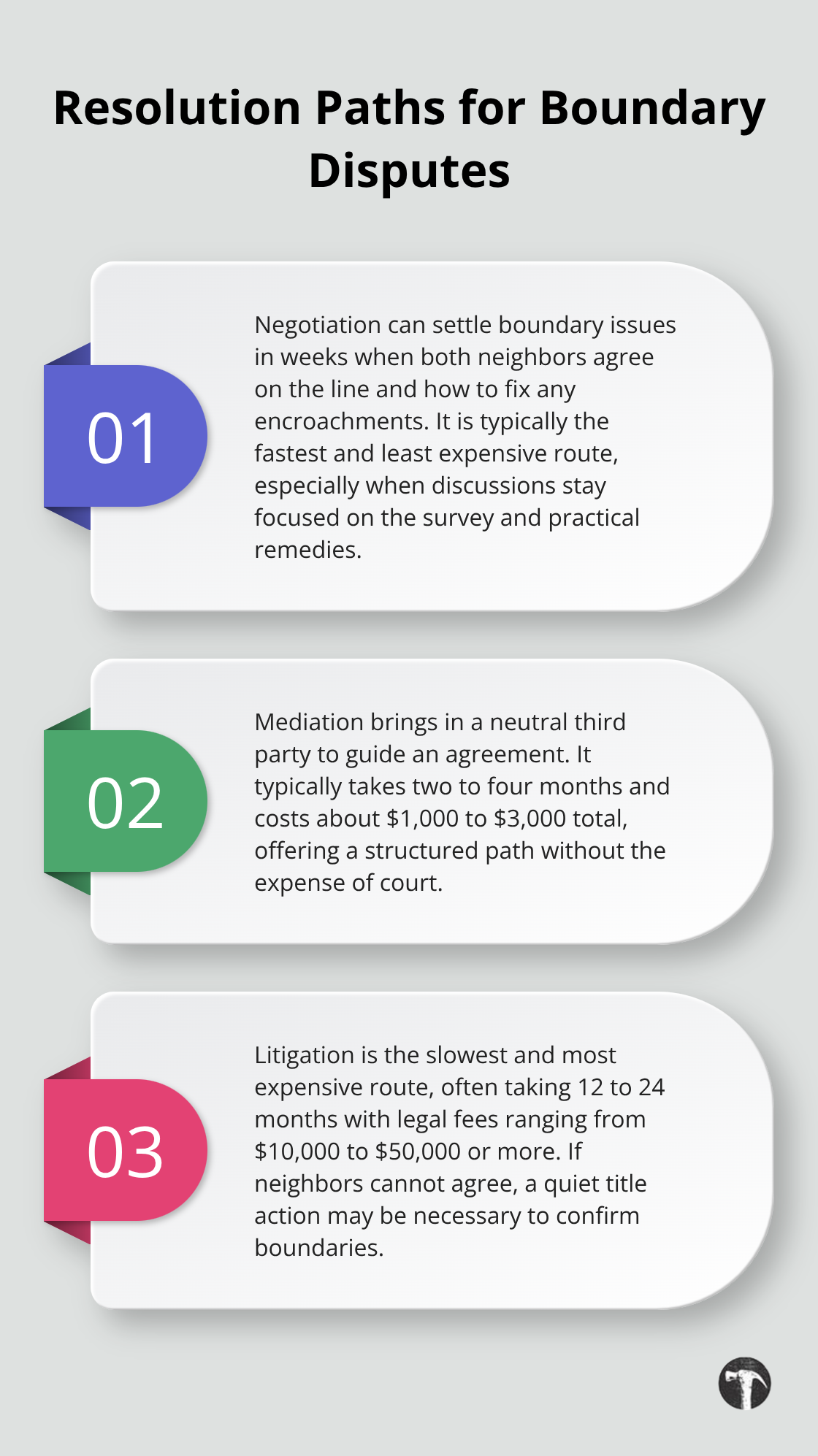
The timeline for resolving boundary disputes varies dramatically based on whether you pursue negotiation, mediation, or litigation. Direct negotiation with your neighbor can resolve matters in weeks if both parties agree to the boundary and how to handle any existing encroachments. Mediation, where a neutral third party helps both sides reach agreement, typically takes two to four months and costs between $1,000 and $3,000 total. Litigation is far more expensive and time-consuming, often stretching 12 to 24 months with legal fees ranging from $10,000 to $50,000 or more depending on complexity. Quiet title actions, which ask a court to confirm ownership boundaries, are the formal legal remedy when neighbors cannot agree.
The longer a boundary dispute remains unresolved, the more it affects your property’s marketability and your ability to refinance or develop the land.
Once you understand how boundary disputes develop and what resolution costs, the next critical area involves disputes that arise directly from lease agreements and landlord-tenant relationships.
Landlord-Tenant Disputes in Los Angeles County
Landlord-tenant conflicts consume significant time and money on both sides. Security deposit disputes top the list of complaints filed with the California Civil Rights Department, with thousands of cases involving wrongful deductions or withheld refunds annually. When a tenant moves out, landlords often deduct amounts for damage, cleaning, or unpaid rent without providing itemized documentation or the statutory notice required by California law. Tenants then dispute these deductions and file complaints, which triggers mediation or small claims court action. The LA County Dispute Resolution Program offers free or low-cost mediation services specifically for these conflicts, and mediation resolves security deposit disputes in 60 to 90 days on average, compared to six months or longer through court proceedings.
Security Deposits and Rent Increase Disputes
Rent increase disputes follow closely behind security deposit issues, particularly in Los Angeles County where median rent increased 8 percent between 2024 and 2025 according to rental market data. California law requires landlords to provide 30 or 60 days’ written notice of rent increases depending on the increase amount, and failure to follow proper notice procedures gives tenants valid grounds to contest the increase or withhold rent. Tenants should document all communications from landlords, including rent increase notices, and compare them against statutory requirements before responding.

Landlords must itemize all deductions from security deposits and return the remainder within 21 days of move-out, or tenants can pursue claims in small claims court or file complaints with the California Civil Rights Department.
Eviction Procedures and Tenant Protections
Eviction procedures in California are heavily regulated, and landlords cannot simply remove a tenant without following strict legal steps. An unlawful detainer action requires proper notice (typically 30 or 60 days depending on the reason), filing in court, serving the tenant, and obtaining a judgment before any removal occurs. Many evictions fail because landlords skip steps or use improper notice language. The De Paolo v. Rosales case from the LA County Superior Court clarified that termination notices must comply with the Tenant Protection Act, including correct notice periods, and mistakes here can completely derail an eviction. Tenants facing eviction have the right to respond in court, present defenses, and request time to cure lease violations like nonpayment.
Maintenance Obligations and Habitability Standards
Landlords must maintain habitable conditions in rental properties, which includes working heat, water, and plumbing systems. When a landlord fails to maintain these standards, tenants can claim constructive eviction and withhold rent without violating the lease. Landlords must address repair requests within reasonable timeframes and provide proof of completion to tenants. Creating a written record of required repairs and providing specific timelines protects both landlords and tenants legally. Tenants should photograph damage, document all repair requests in writing, and keep copies of all communications with landlords to establish a clear record if disputes arise.
Once you understand how landlord-tenant disputes develop and the legal protections available to both parties, the next critical area involves disputes that arise from real estate contracts and title issues.
Real Estate Contract Disputes and Title Issues in Calabasas, California
How Contract Breaches Damage Real Estate Transactions
Contract breaches in real estate transactions create immediate financial damage and often halt closings entirely. When a buyer walks away without valid cause or a seller refuses to close after meeting all contingencies, the non-breaching party faces lost time, carrying costs, and potential lost profits. California law allows sellers to pursue specific performance, which forces the buyer to complete the purchase, or to claim damages for the difference between the contract price and the current market value. A buyer who backs out of a $500,000 purchase agreement when the market has risen to $550,000 exposes themselves to a $50,000 damages claim, plus the seller’s legal fees if the contract included an attorney fee clause.
Why Written Agreements Control Everything
The written agreement controls everything in real estate disputes. Vague contingency language or missing deadlines create escape routes for either party. Before signing, have the contract reviewed to identify which party bears the risk if inspections reveal problems, financing falls through, or appraisals come in low. Purchase agreements drafted poorly create unnecessary disputes-contingencies that are either too broad or so narrow they fail when problems arise. We at The Law Offices of Alan J. Carnegies, APC handle real estate contract disputes and can review your agreement to protect your interests before you sign.
Title Defects and Ownership Problems
Title defects operate differently than contract breaches but are equally damaging to property ownership and financing. A title search might reveal undisclosed easements, inherited claims from previous owners, liens from unpaid taxes or contractors, or fraudulent conveyances that cloud your ownership rights. These defects prevent lenders from funding mortgages and buyers from obtaining title insurance, effectively freezing the property until resolved. Title insurance protects against many defects but excludes items discovered before the policy issue date, so a thorough search during escrow is your only protection. The cost of a title search typically ranges from $200 to $400, a fraction of what you’ll spend correcting defects discovered after closing.
Remedies for Contract Violations and Title Problems
Remedies for contract violations depend on what was breached and what the contract language permits. If a buyer’s financing contingency fails to close escrow, the seller can either release the earnest money deposit or pursue specific performance, though forcing someone to buy property they cannot finance is impractical and courts rarely grant it. Sellers who breach have far fewer defenses-a buyer can demand specific performance and force the sale to close, or claim damages equal to the market value difference plus closing costs and carrying expenses.
Title defects require different remedies: a quiet title action asks a court to confirm ownership despite the defect, or you file a title insurance claim if the defect was discoverable at the time of purchase. Some defects resolve through releases or subordination agreements with lien holders, which is far faster than litigation and costs $500 to $2,000 in attorney fees. If a contractor’s lien clouds the title, paying off the lien directly with the contractor often costs less than fighting it in court.

Protecting Yourself During Escrow and After Closing
Document every communication with the other party and maintain copies of all agreements and amendments. Notify your title company or lender immediately if problems surface during escrow-waiting until after closing eliminates many remedies and makes resolution exponentially more expensive. Title disputes require swift action to preserve your legal options and minimize costs.
Final Thoughts
Real estate legal cases span boundary disputes, landlord-tenant conflicts, and contract violations-each creating distinct financial and legal consequences. Early professional guidance prevents exponentially higher costs later, as a $500 survey stops a $30,000 boundary litigation, a contract review before signing eliminates ambiguous language, and a title search during escrow catches defects when solutions remain cheaper and faster. Property owners who act quickly preserve remedies and minimize losses across all dispute types.
We at The Law Offices of Alan J. Carnegies, APC represent property owners, contractors, tenants, and businesses in real estate litigation throughout Los Angeles County, handling boundary disputes, contract disputes, landlord-tenant conflicts, title issues, and HOA disputes. Our approach protects your interests through negotiation, mediation, or court action, depending on what your situation requires. Contact us today if you own property in Los Angeles County or face a real estate dispute to discuss your situation and explore your options for resolution.