
Intellectual property legal cases have shaped how businesses protect their innovations, brands, and competitive advantages. From patent disputes to trademark battles, landmark decisions have redefined what companies can and cannot do.
We at The Law Offices of Alan J. Carnegies, APC serve clients throughout Los Angeles County, California who navigate these complex IP issues daily. Understanding how pivotal cases transformed the legal landscape helps business owners make smarter protection decisions today.
How Design Patents, Genetic Patents, and Software Boundaries Shaped Patent Law in Calabasas, California
Design Patents Transformed Product Protection
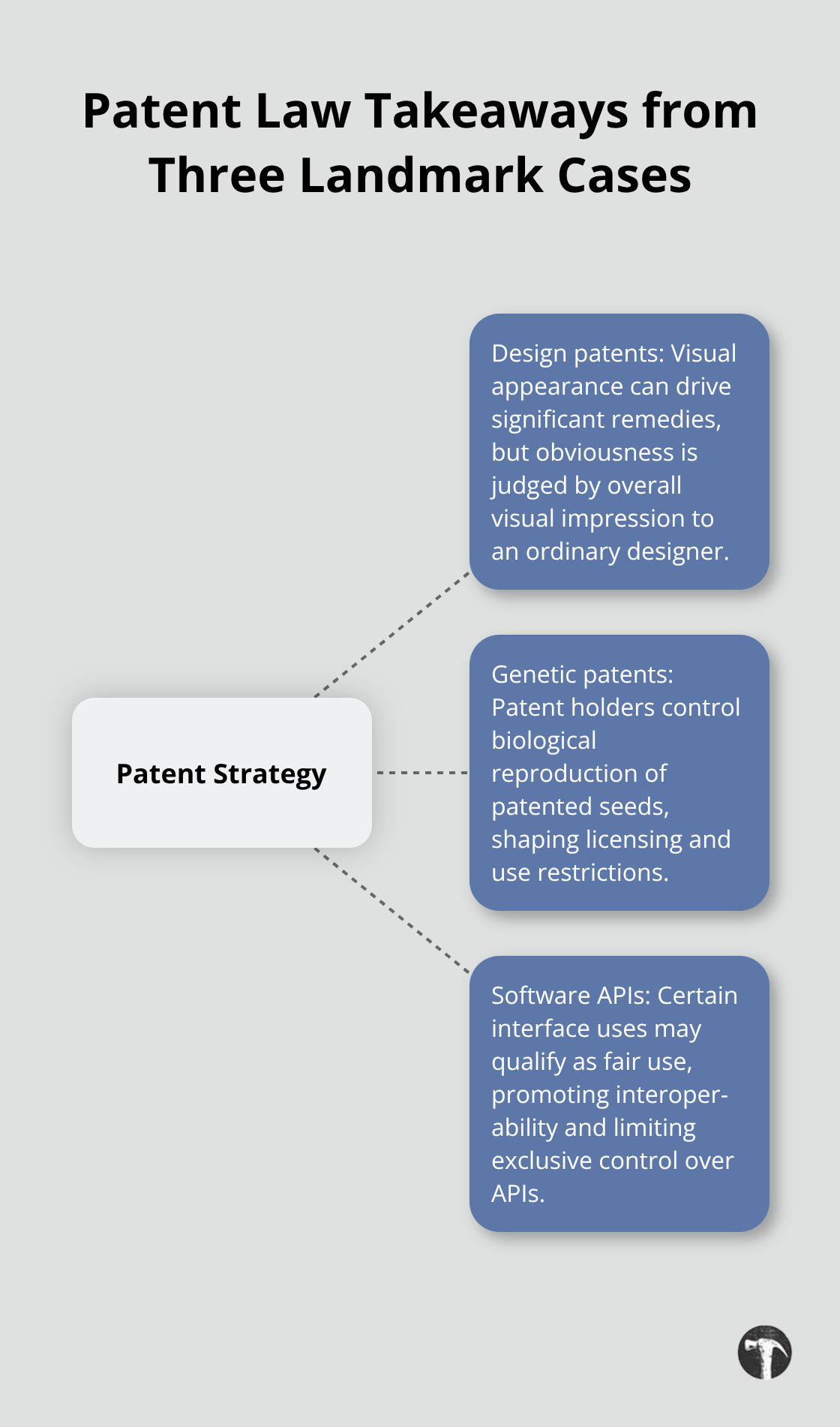
Design patents became a major weapon in the smartphone wars after Apple v. Samsung reached the Supreme Court in 2016. Apple won over 900 million dollars in damages, though the Court later reduced the award, establishing that design patents protect the visual appearance of products, not just their internal function. This case fundamentally changed how companies approach product aesthetics-design now matters as much as engineering.
The Federal Circuit’s recent decision in LKQ Corp. v. GM Global Tech Ops LLC in 2024 overhauled how courts assess design patent obviousness. The court replaced rigid tests with a more flexible approach that considers the overall visual impression from an ordinary designer’s perspective. Companies filing design patents today must document how their visual designs differ meaningfully from existing products in the market.
If your product’s appearance is distinctive, try protecting it with a design patent alongside utility patents. Without design protection, competitors can copy your visual innovations legally.
Genetic Patents and Agricultural Control
Monsanto v. Bowman addressed whether farmers could replant patented seeds, and the Supreme Court ruled in 2013 that they could not. The decision protected genetic patents and gave biotech companies control over seed reproduction, but it sparked ongoing debate about farmer rights and agricultural innovation. This ruling established that patent holders maintain control over biological reproduction of their inventions, a principle that continues to influence how biotech companies structure their licensing agreements and product strategies.
Software Boundaries and Fair Use Standards
Oracle v. Google shifted the focus to software boundaries when the Supreme Court ruled in 2021 that Google’s use of Java APIs in Android constituted fair use. This decision significantly limited copyright protection for software interfaces and code libraries, meaning companies cannot always prevent competitors from building compatible systems. The ruling encourages interoperability and reduces barriers to entry in software markets.
For businesses developing software or using third-party code libraries, understanding these boundaries prevents costly litigation. If you rely on APIs or open-source components, document your transformative use and ensure your implementation adds genuine value beyond mere copying. These three cases demonstrate that patent protection varies dramatically by industry-design patents work well for consumer products, genetic patents require careful claim drafting, and software patents face heightened scrutiny around fair use and functionality.
What These Divergent Rulings Mean for Your Business
The contrast between these three landmark decisions reveals a critical truth: patent law treats different industries and asset types with fundamentally different standards. A design that wins protection in consumer electronics may face rejection in software. A genetic innovation that receives strong patent protection may face restrictions on how farmers use it. Understanding which protection mechanism applies to your innovation-and which court decisions govern your industry-determines whether your IP strategy succeeds or fails. The next section examines how trademark law evolved through its own series of pivotal cases, where brand protection clashed with enforcement challenges and parody rights.
How Trademark Cases Redefined Brand Protection in Calabasas, California
Trademark law evolved through three pivotal cases that forced companies to rethink how aggressively they can enforce brands while respecting fair use and legitimate competition.
Counterfeit Enforcement Requires Documentation
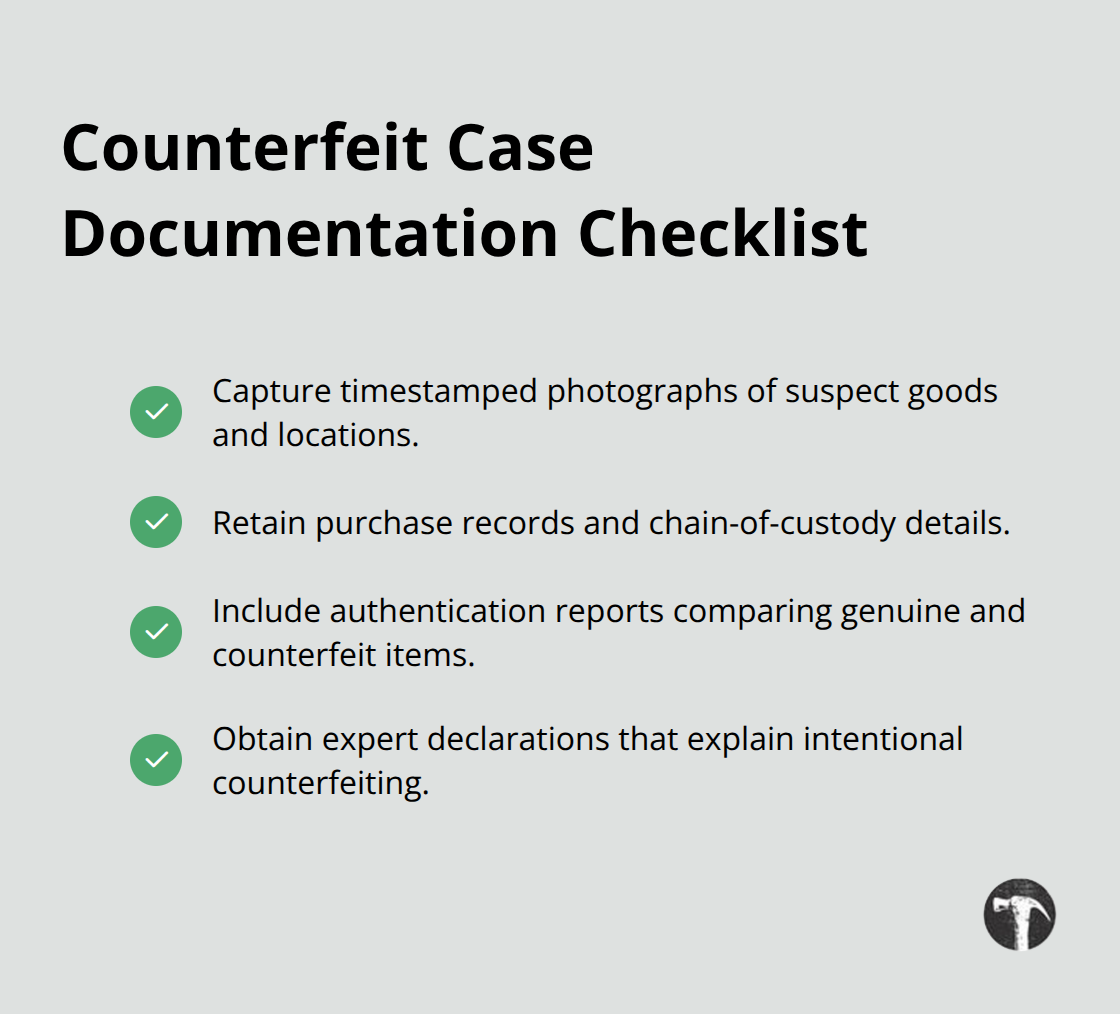
Nike v. LVMH examined counterfeit enforcement when Nike sued LVMH over counterfeit goods distribution channels in 2012, establishing that brand owners must actively monitor distribution networks and document counterfeiting patterns to win damages. Courts require concrete evidence of intentional counterfeiting, not merely suspicion. Companies filing trademark infringement claims need timestamped photographs, purchase records, authentication reports, and expert declarations that compare genuine versus counterfeit products. Without this documentation, courts dismiss cases regardless of how obvious the counterfeiting appears.
False Advertising Claims Expand Under Trademark Law
The Federal Circuit’s decision in Crocs, Inc. v. Dawgs and related cases from 2024 expanded false advertising liability under Section 43(a)(1)(B) of the Lanham Act, showing that misleading claims about patent status, exclusivity, or material composition violate trademark law. Crocs won by proving competitors falsely advertised their products as patented when they were not. This means brands can now attack misleading marketing claims through trademark law, not just patent law. If a competitor falsely claims their product has a proprietary feature you developed, you can sue for false advertising damages under trademark statutes.
Licensing Arrangements Receive Court Deference
Qualcomm v. FTC tested whether licensing practices violated competition law when Qualcomm allegedly forced smartphone manufacturers to license its patents as a condition of buying chips. The FTC initially won in 2020 but the Ninth Circuit overturned the decision in 2024, ruling that Qualcomm’s licensing terms fell within patent law’s scope. This case teaches that trademark and patent licensing arrangements receive deference from courts, even when licensing terms seem aggressive. Companies can condition sales on licensing agreements without automatically triggering antitrust liability.
Parody and Commentary Remain Protected
Louis Vuitton v. My Other Bag addressed parody when a bag maker used Louis Vuitton’s distinctive design elements ironically on their own bags. The court ruled the parody was transformative fair use under the Rogers v. Grimaldi standard, meaning artistic commentary and parody on trademarks receive protection. This decision fundamentally limited how strictly brands can police humorous or critical uses of their marks. Louis Vuitton could not stop the parody because the commentary was artistically relevant and not explicitly misleading about the bag’s origin.
These three cases reveal that trademark enforcement succeeds when companies target genuine counterfeits with solid documentation, attack false advertising claims about concrete product features, and pursue licensing arrangements that courts view as legitimate. Parody and commentary, however, remain largely off-limits even if they reference your trademark. Trade secret protection operates under entirely different rules, as the next section demonstrates through cases where companies lost control of confidential information and faced massive liability for misappropriation.
How Trade Secret Cases Expose the Cost of Losing Control in Calabasas, California
Trade Secrets Offer Indefinite Protection-If You Maintain Secrecy
Trade secret protection operates under fundamentally different rules than patents or trademarks because courts impose no time limits on protection. Your competitive advantage remains yours indefinitely as long as you maintain secrecy. The moment you lose control, however, the damage becomes irreversible. Waymo v. Uber illustrates this principle brutally. In 2017, Waymo sued Uber after discovering that Anthony Levandowski, a former Waymo engineer, downloaded over 14,000 confidential files about LiDAR technology before joining Uber’s autonomous vehicle division.
Waymo won a 245 million dollar settlement, but the real lesson extends beyond the payout. Once trade secrets enter a competitor’s hands, monetary damages cannot restore your market advantage. Uber obtained years of development work instantly, compressing their research timeline and eliminating Waymo’s first-mover advantage in autonomous vehicles. The settlement merely compensated Waymo for what it had already lost.
Restrict Access Through Documentation and Controls
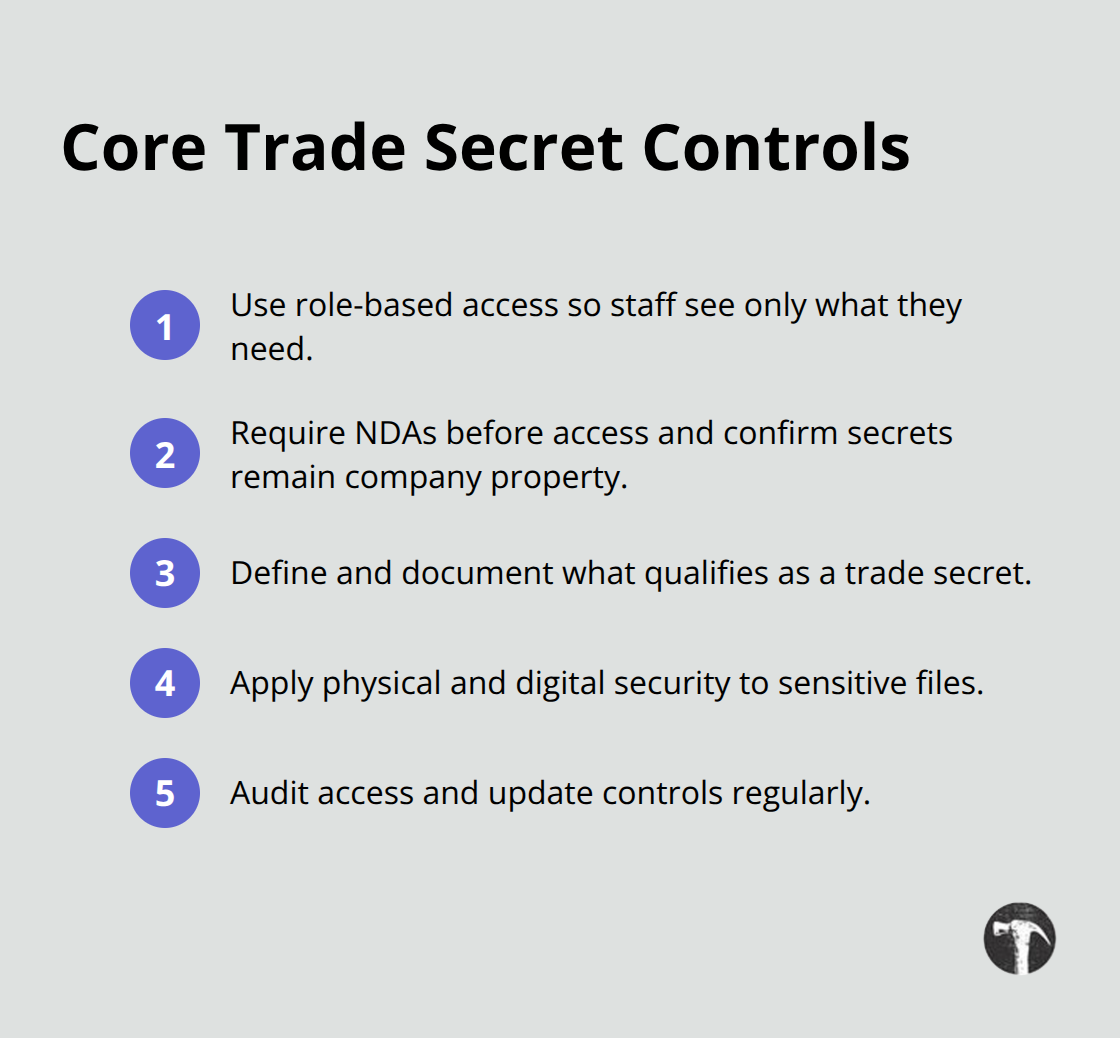
This case reveals why controlling access to sensitive information matters more than any patent filing. Companies protecting autonomous vehicle technology, AI algorithms, or manufacturing processes must restrict access to confidential files through physical and digital security measures. Implement role-based access controls where employees see only what they need. Require signed non-disclosure agreements before employees access sensitive information, and specify that trade secrets remain company property even after employment ends. Document exactly what information qualifies as a trade secret through written policies. Without this documentation, courts struggle to recognize what you were actually protecting.
Non-Disclosure Agreements Provide the Legal Foundation
Intel v. AMD addressed trade secret protection through non-disclosure agreements when AMD accused Intel of misusing proprietary information about chip manufacturing. The case settled, but it established that non-disclosure agreements provide the legal foundation for trade secret claims. Courts will not protect information you failed to mark confidential or failed to restrict access to. AMD’s ability to pursue the claim rested entirely on whether Intel had implemented reasonable security measures.
Physical Security Determines Legal Recourse
DuPont v. Christopher, a 1970 case still controlling modern trade secret law, demonstrates why physical security matters intensely. DuPont spent millions developing a new chemical process for producing methanol and took extraordinary precautions: they located the facility in a remote area, required employees to sign confidentiality agreements, and maintained restricted access. When a competitor hired aerial photographers to photograph the plant from above and reverse-engineer the process, DuPont sued and won. Courts recognized that DuPont had taken reasonable measures to maintain secrecy, making the information eligible for trade secret protection.
Today, this principle extends to digital security. If you store customer lists, pricing formulas, supplier relationships, or manufacturing specifications without encryption or access controls, courts will rule you failed to maintain reasonable secrecy measures. Competitors can then legally use information they obtain because you abandoned protection standards. Trade secret protection requires constant vigilance. Patents expire after twenty years and require public disclosure of your invention. Trademarks lose protection if you fail to enforce them actively. Trade secrets, however, protect your information indefinitely-but only if you treat it as a secret. The moment you become careless about access, documentation, or security protocols, you lose all legal recourse when information leaks.
Final Thoughts
Intellectual property legal cases have fundamentally reshaped how businesses protect their innovations and competitive advantages. Design patents now protect product aesthetics as aggressively as utility patents protect function, genetic patents grant biotech companies indefinite control over seed reproduction, and software patents face heightened scrutiny under fair use standards that favor interoperability. Trademark enforcement requires documented evidence of counterfeiting and false advertising claims, while trade secret protection demands constant vigilance over access controls and security measures.
The current business environment requires that you align your IP strategy with how courts actually rule, not how you wish they would rule. Companies filing design patents must document visual differences from existing products, trademark owners must maintain detailed records of counterfeiting patterns, and trade secret holders must implement access restrictions and confidentiality agreements before information leaks. Waiting until litigation begins to implement these protections guarantees failure.
We at The Law Offices of Alan J. Carnegies, APC help clients throughout Los Angeles County navigate complex IP disputes and develop protection strategies that courts recognize. Whether you face patent infringement claims, trademark enforcement challenges, or trade secret misappropriation, contact us at carnegielawfirm.com to discuss how we can protect your intellectual property interests.