


Construction projects in Los Angeles County often stall when contractors and property owners clash over unpaid retainage. These retainage dispute claims can drain cash flow and delay project completion for months.
At The Law Offices of Alan J. Carnegies, APC, we help construction professionals recover what they’re owed. This guide covers your legal options and how to protect your rights from the start.
What Retainage Actually Costs You
Retainage is money your client holds back from your invoice until the job finishes. On a typical Calabasas construction project, this means the owner withholds 5% to 10% of each progress payment. If your contract is worth $500,000, that’s $25,000 to $50,000 sitting in someone else’s account while you cover payroll, materials, and equipment costs. California law now caps private construction retainage at 5% of the contract price under Civil Code Section 8811, effective January 1, 2026, for contracts signed after that date.
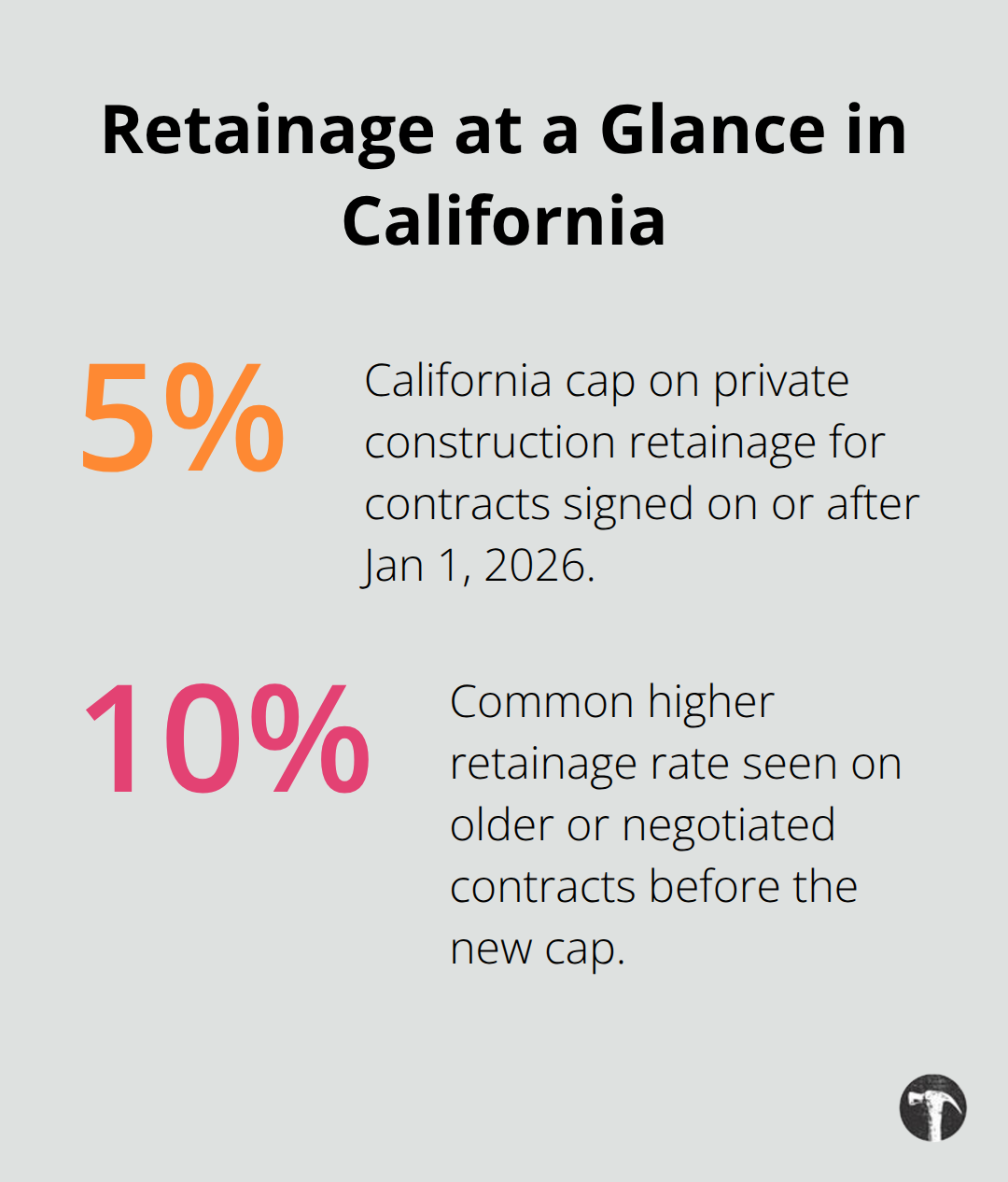
This change levels the field between private and public projects, but older contracts still operate under whatever terms were negotiated, leaving many Calabasas contractors exposed to higher withholding rates until those projects close out.
Why Owners Withhold Retainage
Owners use retainage as insurance. They hold money back until they’re satisfied the work meets quality standards and the project reaches substantial completion-meaning they can occupy and use the structure for its intended purpose. The theory sounds fair, but the practice cripples your business. Retainage typically releases in two phases: half at substantial completion and the other half after a defects liability period, often 12 months later. That means waiting a full year to collect the final 2.5% or 5% of your contract value.
The Cash Flow Squeeze for Subcontractors
For subcontractors in Calabasas, this squeeze is worse because the prime contractor withholds retainage from you while the owner withholds from the prime. Your crew finished the framing in month three, but you don’t see that money until month fifteen. You’re financing the owner’s project with your own cash, and if disputes arise over what constitutes substantial completion or acceptable quality, that money vanishes into litigation limbo. The dual withholding creates a compounding effect that strains working capital and forces you to turn down new work.
Red Flags in Retainage Clauses
Read the retainage clause before you bid. Look for language that gives the owner discretion to withhold funds to their satisfaction, or that allows set-offs across multiple projects, or that ties release to vague completion standards. These red flags invite abuse. The best contracts define substantial completion with specific, measurable criteria, set a fixed retainage percentage at or below 5%, and include a step-down clause that reduces the withhold rate once you hit 50% completion.
Alternatives to Cash Retainage
If the owner won’t negotiate the retainage terms, consider requesting a retention bond instead, where a surety company backs your performance and you receive full payment on each draw. This costs a small fee but preserves your cash flow entirely. For Calabasas projects with longer timelines or uncertain scopes, this trade-off often makes financial sense. You also need to document everything as work progresses: photos, inspection reports, emails confirming completion of specific tasks. When retainage disputes happen, detailed records show exactly what you delivered and when, making your claim for release far stronger in mediation or court. This documentation becomes your foundation when disputes over payment arise and you need to prove your entitlement to the withheld funds.
Where Retainage Disputes Actually Start
How Fuzzy Language Creates Conflict
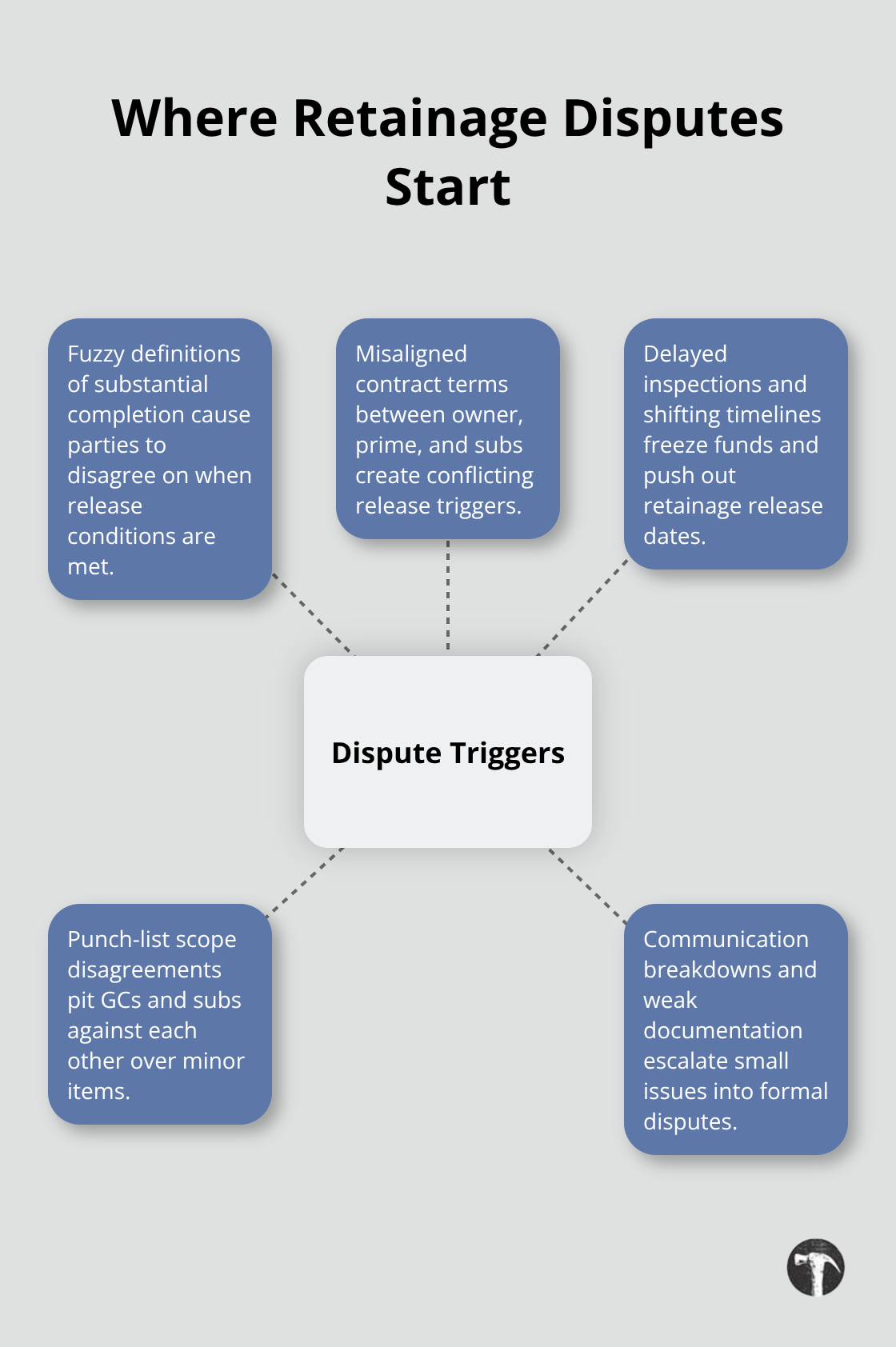
Retainage disputes in Calabasas rarely happen because someone wakes up wanting to fight. They start with fuzzy contract language and grow when communication breaks down between parties who have different definitions of the same word. The most common trigger is disagreement over what substantial completion actually means on your specific project. Your general contractor says the building is substantially complete because the owner can move in, but you’re holding back final payment from your subcontractor because punch-list items remain unfinished. The subcontractor argues those items are minor cosmetic work and shouldn’t delay their final draw. Meanwhile, the owner’s inspector flags something else entirely, and now three parties point fingers while money sits frozen in accounts.
What California Courts Say About Withholding
The California Supreme Court ruled in United Riggers & Erectors v. Coast Iron & Steel (2018) that retainage can only be withheld in good faith disputes directly related to work performed. This ruling matters because it means owners cannot simply refuse to release funds based on vague dissatisfaction or unrelated project issues. Yet disputes still erupt because the contract never defined what specific conditions trigger release, leaving each party operating from different assumptions.
Timeline Conflicts and the Three-Party Trap
Payment timeline conflicts compound this problem fast. The standard release pattern splits retainage in half: first release at substantial completion, second release after a defects liability period that typically runs 12 months. But what happens when the owner delays their final inspection by six months? What happens when change orders shift the timeline but the retainage release date stays locked in the original contract? Subcontractors in Calabasas especially suffer here because they finished their work months ago but remain unpaid while disputes over final project completion rage between the prime contractor and owner.
A prime contractor might withhold a subcontractor’s retainage while arguing with the owner over whether the project qualifies for substantial completion, leaving the subcontractor caught in the middle with no leverage and no timeline for payment. The prime contractor blames the owner, the owner blames the prime, and the subcontractor watches their cash flow collapse. These three-party conflicts breed the most expensive disputes because each party has different contract terms with different release triggers, creating a cascade of misaligned expectations. When the owner’s contract says retainage releases upon owner approval and the subcontract says it releases upon substantial completion as defined in the prime contract, litigation becomes nearly inevitable.
Taking Control Before You Sign
The solution starts before you sign anything: read the retainage clause in every contract you execute, identify when and how your money gets released, and push back on language that gives the other party unlimited discretion over release timing. Contracts that define substantial completion with specific, measurable criteria, set a fixed retainage percentage at or below 5%, and include a step-down clause that reduces the withhold rate once you hit 50% completion protect your interests far better than vague boilerplate language. If the owner won’t negotiate favorable terms, request a retention bond instead, where a surety company backs your performance and you receive full payment on each draw. This costs a small fee but preserves your cash flow entirely. For Calabasas projects with longer timelines or uncertain scopes, this trade-off often makes financial sense. You also need to document everything as work progresses: photos, inspection reports, emails confirming completion of specific tasks. When retainage disputes happen, detailed records show exactly what you delivered and when, making your claim for release far stronger in mediation or court.
Understanding these dispute triggers prepares you to spot problems in your own contracts and take action before money gets trapped in litigation.
How to Win Back Retainage Through California Law
When retainage sits unpaid beyond the agreed release date, you have three powerful legal tools at your disposal in California. The first and fastest is a mechanics lien, which creates a legal claim against the property itself and forces the property owner to address your payment demand before selling or refinancing. The second is a breach of contract claim, which attacks the other party directly for failing to meet their payment obligations under the written agreement. The third applies only to public projects: a payment bond claim, which taps into a surety company’s guarantee of payment. Understanding which tool fits your situation, and how to use it correctly, separates contractors who recover their money from those who watch disputes drag on for years. California law favors contractors who act fast and document everything, but it punishes those who miss deadlines or fail to follow strict procedural rules.
The Mechanics Lien: Your Fastest Path to Payment
A mechanics lien must be filed within ninety days of the last date you provided labor, materials, or services on the property, according to California law. This deadline is absolute, and missing it forfeits your lien rights entirely. If you finished framing on a Calabasas residential project in January but don’t file a lien until April, you lose the ability to claim against the property.
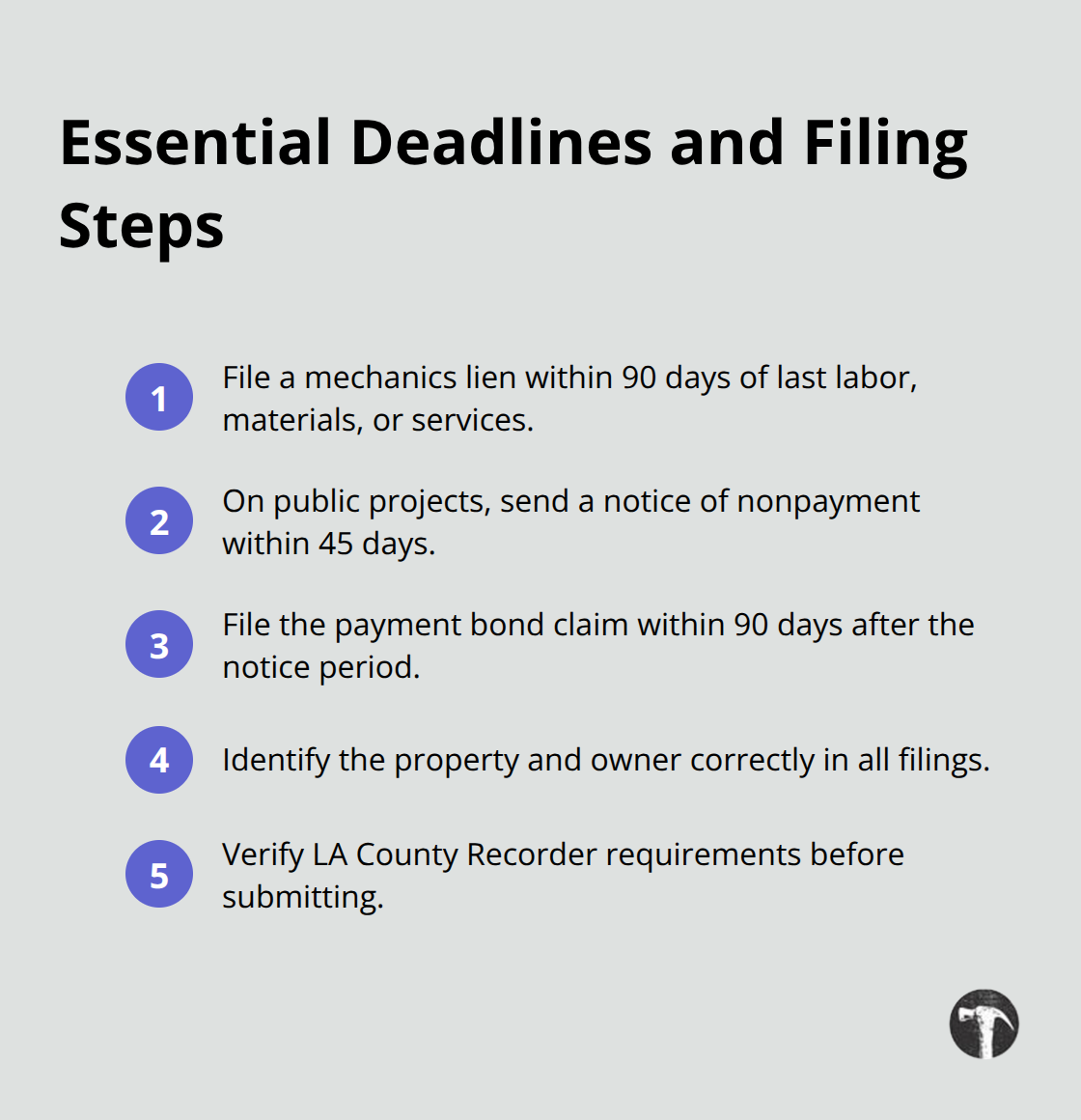
The lien must identify the property correctly, name the owner, describe the work you performed, and state the amount owed. The LA County Recorder’s offices in Norwalk, Lancaster, the LAX/Courthouse building, and Van Nuys handle filings, though you should verify filing requirements at the county clerk’s office before submitting. Many contractors file preliminary lien notices thirty days before the final lien deadline to preserve their rights and pressure the property owner to pay.
Payment Bond Claims for Public Projects
For public projects, payment bond claims follow a different, stricter timeline: you typically have forty-five days to file a notice of nonpayment and then ninety days to file the actual claim. These deadlines are equally unforgiving as mechanics lien deadlines, and missing either one eliminates your claim against the surety company. Public project owners must post payment bonds (often backed by insurance companies) to guarantee that all contractors and suppliers receive payment, so your claim targets the surety rather than the owner’s cash reserves. This approach often produces faster results because sureties want to resolve claims quickly and avoid litigation costs.
Contract Breach Claims and Damages
Contract breach claims have no lien deadline but do require proving the other party breached a specific contractual obligation and caused you measurable damages. The burden falls on you to show what the contract said, how the other party failed to comply, and what that failure cost you in lost cash flow, interest on borrowed money, or other quantifiable harm. If the contract language is ambiguous, California courts interpret it against the party who drafted it, which usually favors subcontractors and suppliers over property owners and prime contractors.
California’s New Retainage Protections
California Civil Code Section 8811, effective January 1, 2026, also prohibits waiving retainage rights and entitles the prevailing party in enforcement actions to recover reasonable attorney fees, which shifts litigation economics in your favor if you win. This statute caps private construction retainage at 5% of the contract price and requires that retention percentages flow down proportionally through all subcontracts and sub-subcontracts. The fee-shifting provision means that if you pursue a retainage claim and succeed, the other party pays your legal costs, making it financially viable to fight even smaller disputes that might otherwise be too expensive to litigate.
Final Thoughts
Retainage dispute claims succeed or fail based on what you do before and after money gets withheld. Start by documenting every phase of your work on Calabasas projects through photos of completed tasks, signed inspection reports, and emails that confirm when you finished specific work items. This documentation becomes your evidence if disputes arise over whether you met quality standards or completed work on time, and your records prove your case when the owner or prime contractor claims work is incomplete.
Before you sign any contract, read the retainage clause carefully and understand exactly when your money releases. Look for specific, measurable completion criteria rather than vague language that gives the other party unlimited discretion, and push back on clauses that allow set-offs across multiple projects or tie release to owner satisfaction without clear standards. If the contract locks in a 10% retainage rate and you cannot negotiate it down to the new 5% cap, request a retention bond instead so you receive full payment while a surety backs your performance.
If retainage remains unpaid after the agreed release date, act immediately and file a mechanics lien within ninety days of your last work date (or file a payment bond claim on public projects within the required forty-five-day notice window). California law now entitles the prevailing party in retainage enforcement actions to recover attorney fees, which makes pursuing your claim financially viable even for smaller disputes. We at The Law Offices of Alan J. Carnegies, APC represent contractors, subcontractors, and property owners in construction disputes throughout Los Angeles County, and we can help you explore your legal options before deadlines pass and your rights disappear-contact us today.