


Construction defects can cost homeowners tens of thousands of dollars in repairs and significantly reduce property value. Whether it’s foundation problems, water damage, or faulty materials, these issues demand immediate attention and proper legal action.
We at The Law Offices of Alan J. Carnegies, APC help property owners throughout Los Angeles County understand their construction defect claims and recover the compensation they deserve. This guide walks you through identifying defects, investigating your case, and navigating the claims process.
Common Types of Construction Defects in Calabasas, California
Structural Failures That Compromise Buildings
Foundation cracks wider than one-quarter inch, concrete displacement, and load-bearing failures represent the most dangerous structural defects-ones that compromise the entire building’s integrity. These problems remain hidden behind walls and under slabs until moisture seeps in or settlement accelerates. The damage spreads silently, weakening the structure’s core before any visible warning appears.
Visible Defects That Cost Thousands
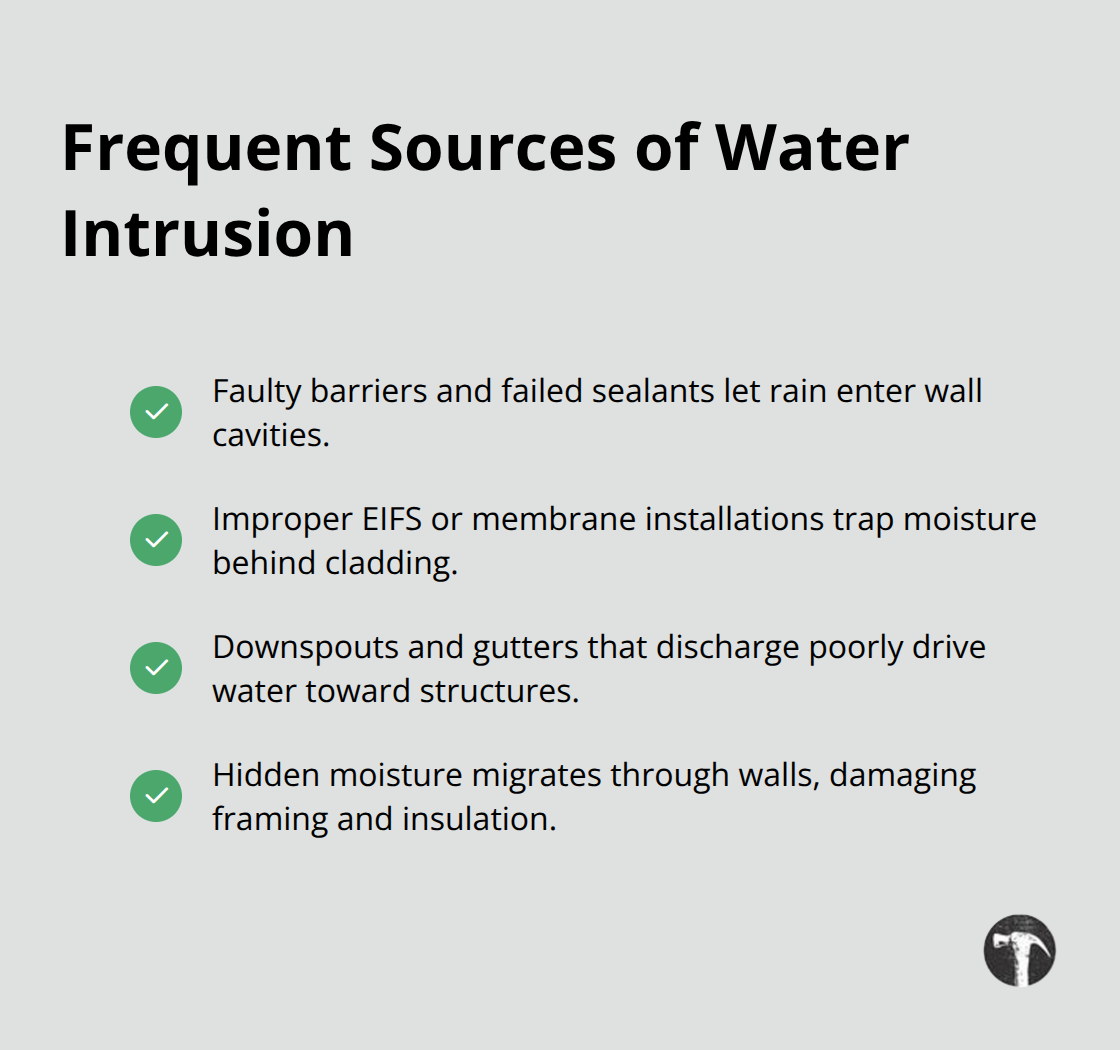
Mold growth, defective or improperly installed doors, windows, floors, and decks are far more visible, but equally costly to repair. Water intrusion from faulty barriers, caulking, sealants, EIFS cladding, membranes, downspouts, and gutters ranks among the most frequent claims filed in Southern California. Water damage often goes undetected for years because moisture travels silently through walls, rotting framing and insulation before visible signs appear.
The Hidden Threat of Latent Moisture
Latent moisture intrusion-water that penetrates barriers without obvious leaking-remains nearly impossible for a property owner to spot without invasive testing. This is why the discovery rule in California matters: your three-year statute of limitations for real property damage and fraud claims begins only when you discover the damage or reasonably should have discovered it, not when the defect first occurred. The law recognizes that some defects cannot be found through ordinary inspection.
Water Damage Behind Walls and Finishes
Improper waterproofing behind tile, inadequate drainage on decks and balconies, and missing moisture barriers create conditions where structural damage accelerates silently. Retaining walls with poor drainage, exterior stairs that shed water directly into the structure, and EIFS systems installed without proper flashing all trap moisture that eventually damages framing, concrete, and foundations. Defective or missing sealants around windows and doors allow rain to penetrate into wall cavities where it can sit for months. Drywall, roofing, and siding failures compound the problem by letting water past the first line of defense.
Calculating Repair Costs and Taking Action
The cost to remediate these defects is substantial-structural repairs, full replacement of exterior cladding, interior demolition, and mold treatment can easily exceed $50,000 to $200,000 depending on the building’s size and the extent of hidden damage. Document any signs of water staining, soft spots in wood, or musty odors immediately and obtain a forensic engineer’s assessment to identify moisture sources and calculate repair costs accurately. Early action preserves your claims and prevents further deterioration that multiplies damages over time. Once you understand what defects look like and how they hide, the next step involves identifying warning signs before they become catastrophic.
How to Spot Construction Defects Before They Worsen in Calabasas, California
Warning Signs That Demand Immediate Attention
Musty odors in closets or crawl spaces indicate moisture accumulation long before mold becomes visible on drywall. Soft spots in wooden window frames, door jambs that stick or won’t close properly, and cracks wider than one-eighth inch signal structural movement or water damage beneath the surface. Discoloration on ceilings or walls, even faint water staining, means moisture has already traveled through multiple layers. Check bathrooms and kitchens first-these areas concentrate water exposure, and defects here spread rapidly into framing and insulation.
Creating a Documented Record of Defects
Take photographs dated and timestamped on your phone; this creates a visual record that proves when you first noticed problems, which matters enormously for California’s discovery rule and your three-year statute of limitations. Document any communications with contractors about repairs or concerns, even casual conversations. Many property owners wait until visible damage appears, but by then remediation costs have doubled or tripled.
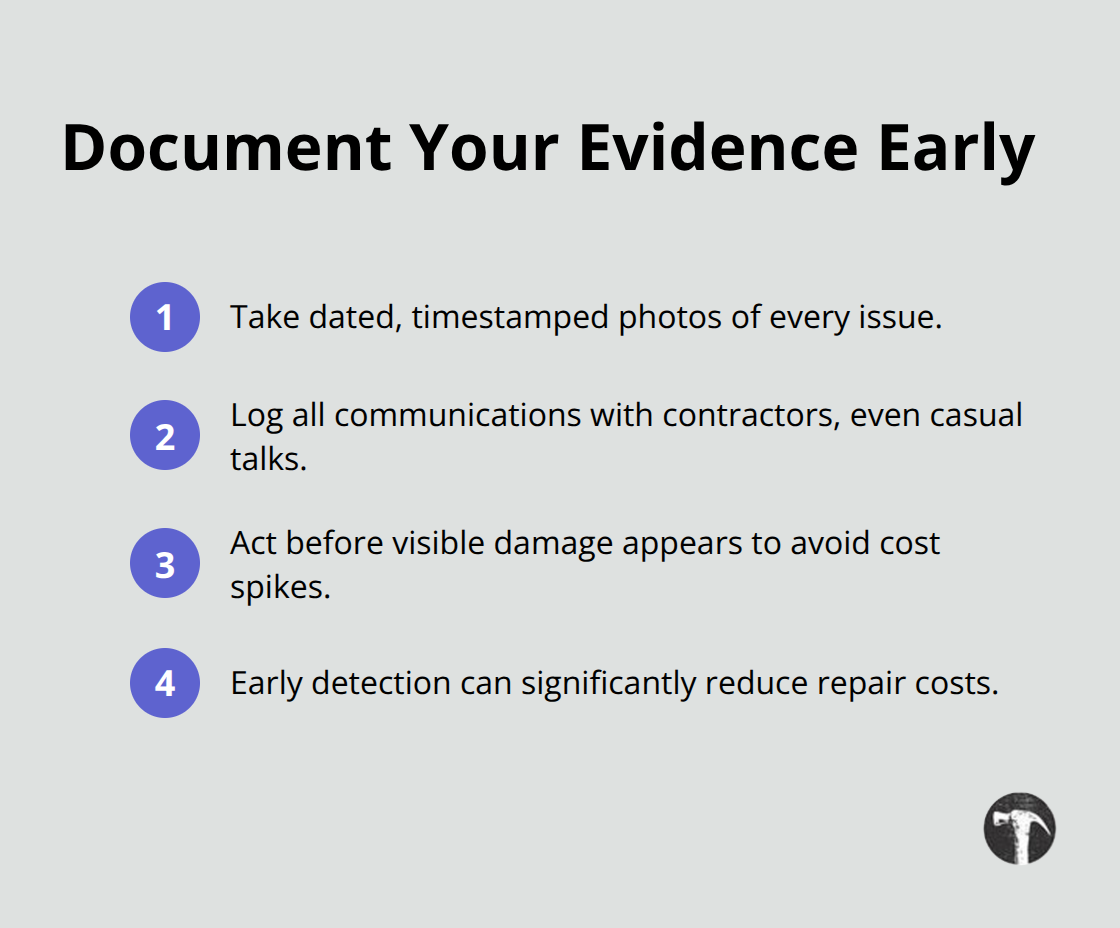
Early detection can cut repair expenses significantly.
Selecting the Right Investigator for Your Case
Hiring the right investigator separates successful claims from failed ones. You need a forensic engineer or structural inspector who understands moisture pathways, not a general home inspector who conducts cursory walk-throughs. The investigator should use moisture meters to measure water content in wood and concrete, thermal imaging cameras to identify temperature variations that suggest hidden moisture, and if necessary, non-destructive testing or invasive probing to locate water sources behind walls and cladding.
What to Ask Potential Investigators
Ask potential investigators about their experience with latent defects specifically-how many cases have they handled where moisture remained hidden for years? Verify they hold current engineering licenses and liability insurance. A qualified investigator will produce a detailed written report with photographs, measurements, and repair cost estimates that forms the foundation of your claim. Preserve all original reports, test data, and photographs in their native formats; never alter or compress evidence. This material becomes critical in settlement negotiations and, if necessary, at trial.
Moving Forward With Your Investigation
Once you have identified defects and retained a qualified investigator to document them, you face the next critical step: understanding the legal deadlines and claim procedures that govern construction defects in California. Your investigation findings will support the claims you file, but only if you act within the statutory windows that California law provides.
Navigating Claims and Recovering Damages in Calabasas, California
California’s Deadlines Will End Your Claims if You Miss Them
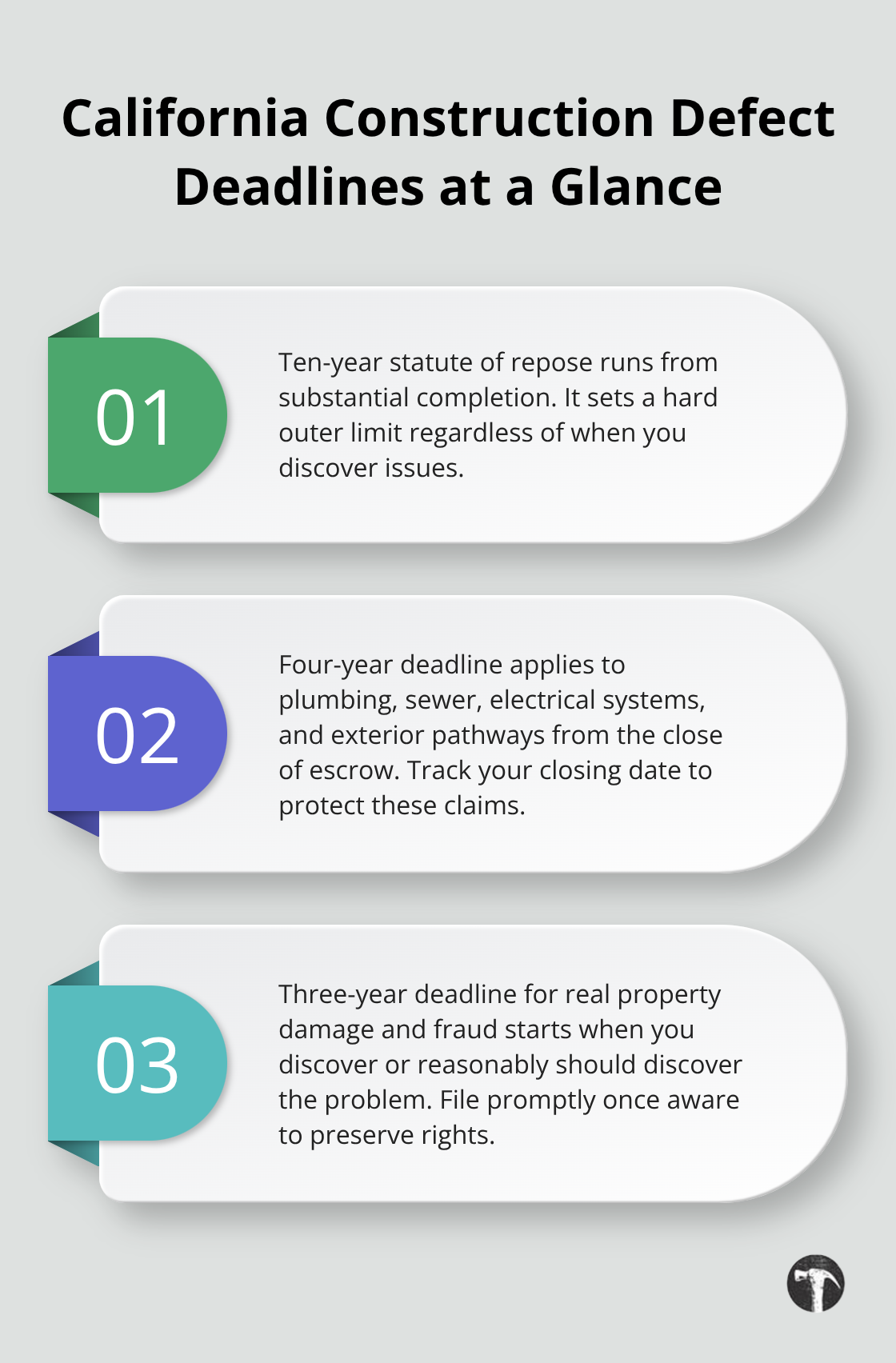
California imposes strict time limits on construction defect lawsuits that operate independently of each other, creating a maze that catches unprepared property owners. The overall statute of repose runs ten years from substantial completion of the project, but specific defect categories have much shorter windows. Plumbing, sewer, electrical systems, and exterior pathways have a four-year deadline measured from the close of escrow. Real property damage and fraud claims carry a three-year deadline that begins only when you discover the damage or reasonably should have discovered it under California law. This discovery rule is your lifeline for latent defects like hidden moisture intrusion that remain undetectable without invasive testing, but it also means the clock starts ticking the moment you know or should know about the problem. File your claim as soon as you become aware of defects because these deadlines do not pause for any reason, including property owner negligence or contractor deception. The prudent approach is to file a lawsuit immediately upon discovering problems to preserve all potential claims across every applicable deadline.
Equitable tolling or equitable estoppel might delay when the limitations period starts in narrow circumstances, but relying on these doctrines is gambling. Equitable estoppel requires proving the contractor made a misrepresentation that repairs would be made, you reasonably relied on that promise, the promise proved false, and you pursued claims diligently once you learned the truth. Courts apply this standard sparingly, and satisfying it presents significant obstacles.
Identifying Which Parties to Sue
The parties responsible for construction defects depend entirely on how the project was organized. In traditional design-bid projects, you contract separately with the architect and the general contractor, creating two independent relationships where both parties owe you duties. The architect designed the building; the general contractor built it according to those designs. If the architect specified defective waterproofing details and the contractor installed them exactly as drawn, both parties may share liability. In design-build projects, you contract only with the general contractor, who then hires the architect and subcontractors. Your claim flows through the general contractor to reach designers and subcontractors. Delegated design arrangements, where the design professional of record delegates portions of design to the contractor and specialty designers, create overlapping responsibilities that require careful investigation to untangle.
Map all parties to the project with a flowchart showing who contracted with whom before filing any claim. Put every potentially liable party and their insurer on written notice of your defect claim within the applicable deadline windows. Notice requirements vary, but failing to notify a subcontractor or manufacturer within the required timeframe can permanently bar your claim against that party.
Calculating Repair Costs and Damages
Damages in construction defect cases include remediation costs for structural repairs, full replacement of defective components, interior demolition and mold treatment, and the cost of engineering assessments that diagnosed the problem. Calculate repair expenses by obtaining competitive bids from qualified contractors experienced with the specific defect type. Do not rely on the original builder’s cost estimates because they have financial incentives to minimize repair scope. Hire an independent forensic engineer to prepare a detailed repair plan with cost projections that withstands scrutiny in settlement negotiations or at trial (your total damages claim should include direct repair costs plus diminution in property value, though courts apply these differently depending on whether repairs are actually performed).
Final Thoughts
Construction defect claims demand swift action and informed decision-making. The three-year statute of limitations for real property damage and fraud claims in California begins the moment you discover defects or reasonably should have discovered them, making early detection your strongest advantage. Waiting months or years to investigate suspected problems erodes your legal position and allows damage to compound, multiplying repair costs exponentially. Document everything from the first sign of trouble-photographs, communications with contractors, moisture readings, and professional assessments-because this evidence forms the backbone of your claim.
The path from discovery to damages involves identifying all responsible parties, understanding which deadlines apply to your specific defects, and calculating repair costs through independent forensic engineers rather than relying on builder estimates. Structural failures, water intrusion, and defective materials each trigger different legal timelines and require different investigative approaches. Missing a single deadline can permanently bar your claim against a subcontractor or manufacturer, so treating these statutory windows as non-negotiable is essential.
We at The Law Offices of Alan J. Carnegies, APC represent property owners throughout Los Angeles County in construction defect claims, helping clients navigate the complex legal landscape and recover full compensation for repairs and damages. Early consultation with a construction litigation attorney protects your rights and prevents costly mistakes that undermine your case. Contact us today at carnegielawfirm.com to discuss your situation and learn how we can help you secure the recovery you deserve.