

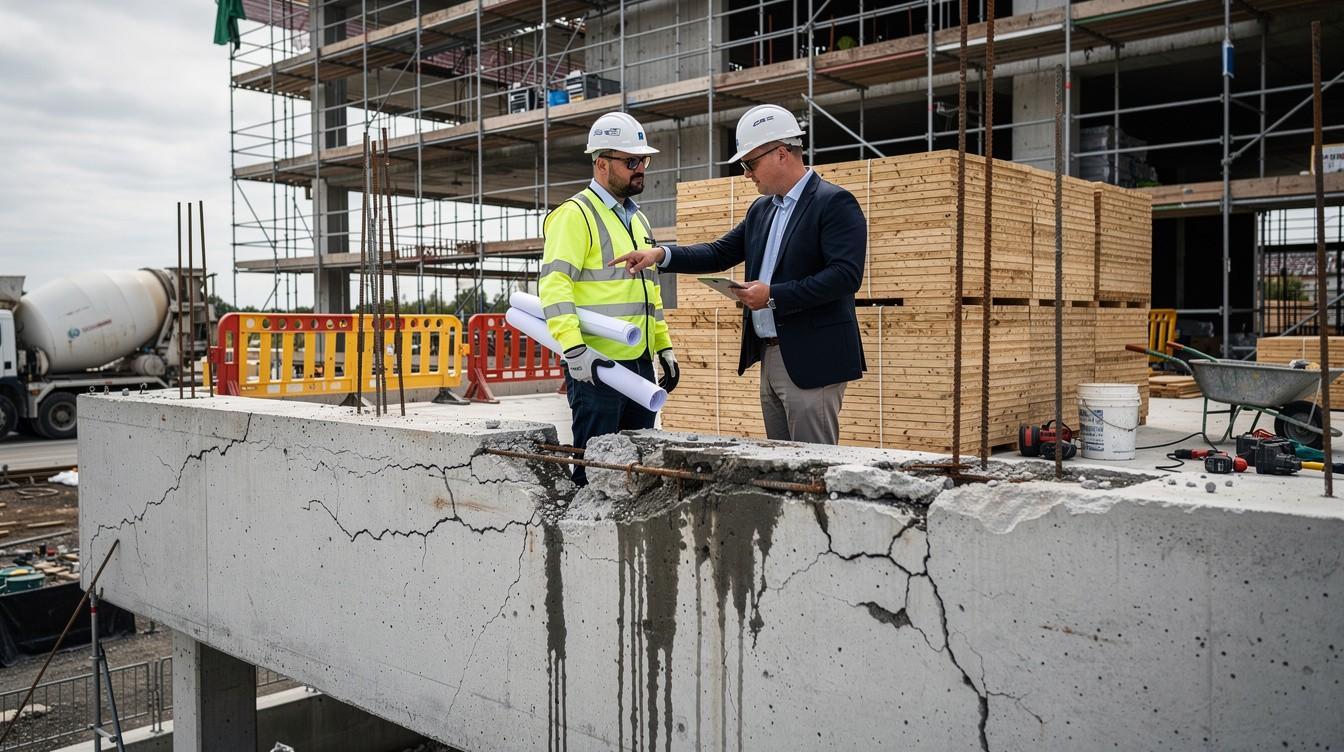
Construction defects in Los Angeles can cost property owners tens of thousands of dollars in repairs and legal fees. Whether you’re dealing with foundation problems, water damage, or faulty electrical work, understanding your rights matters.
We at The Law Offices of Alan J. Carnegies, APC serve property owners throughout Los Angeles County, including Calabasas, California, who face these costly issues. This guide walks you through what qualifies as a defect, how the legal process works, and what resolution options exist for your situation.
What Counts as a Construction Defect
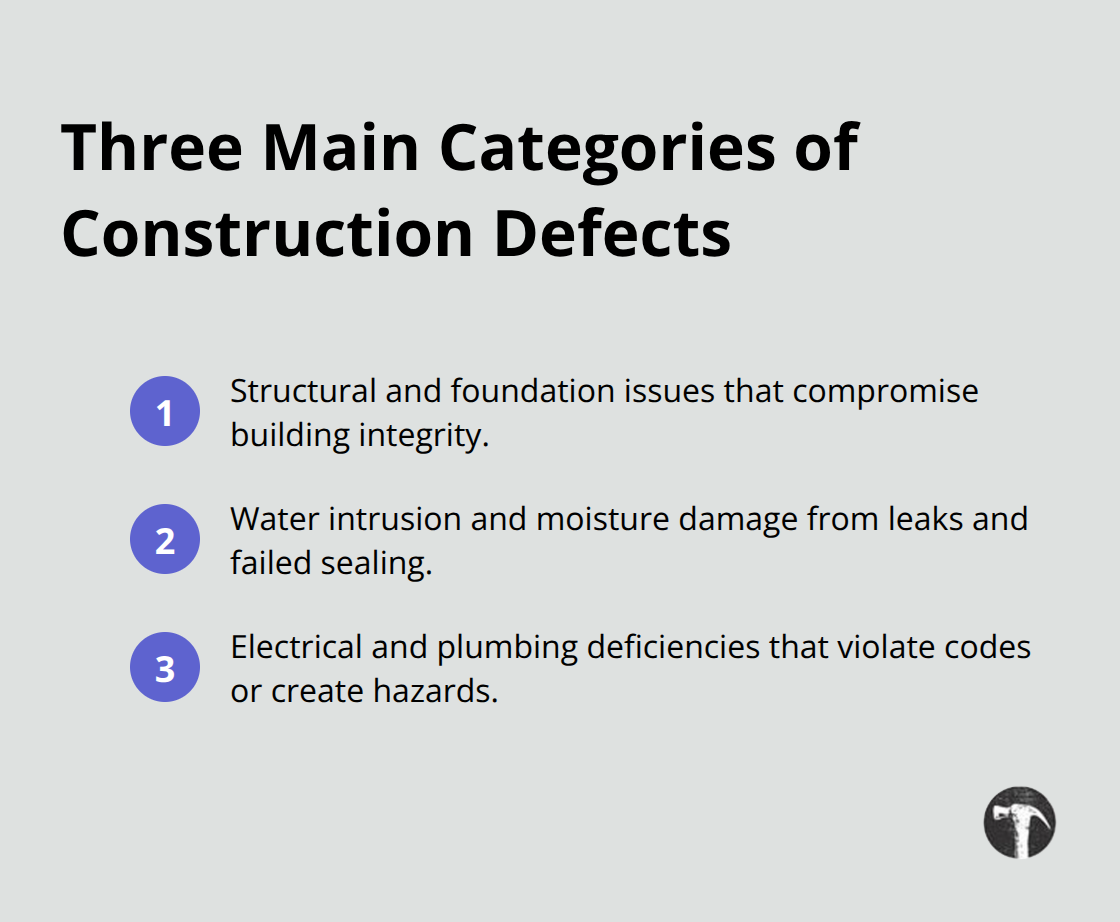
Three Main Categories of Defects
Construction defects fall into three main categories that property owners in Los Angeles County, including Calabasas, California, encounter most often. The first involves structural and foundation problems that compromise the integrity of the building itself. Foundation settlement, cracking in concrete slabs, improper grading that causes water to pool against the foundation, and framing issues that affect load-bearing walls all represent serious structural concerns. The second category covers water intrusion and moisture damage, which occurs when roofs leak, windows fail to seal properly, exterior walls allow water penetration, or drainage systems malfunction. The third involves electrical and plumbing deficiencies, such as faulty wiring that creates fire hazards, outlets installed incorrectly, pipes that corrode prematurely, or systems that fail to meet current building codes. Most defects become apparent within the first few years after construction, though some remain hidden for longer.
Distinguishing Defects from Normal Wear
What separates a genuine defect from normal wear and tear matters significantly for your claim. A defect means the construction work failed to meet applicable building codes, industry standards, or the specifications outlined in your construction contract. Foundation cracks wider than one-quarter inch, visible mold growth from water damage, or electrical systems that malfunction all qualify as defects. Minor cosmetic issues like paint touch-ups or small drywall blemishes do not. The California Building Code sets the baseline for what constitutes proper construction, and any deviation from these standards strengthens your position.
Moving Forward with Your Claim
Understanding whether your property has a valid defect claim requires careful evaluation of the damage and applicable legal standards. The next section explains how the legal process works once you identify a defect and decide to pursue a claim.
The Legal Process for Construction Defects
Document Every Defect with Professional Evidence
The path from identifying a defect to reaching resolution requires following specific procedural steps that California law mandates. Your first move involves photographing every defect, writing detailed descriptions, and obtaining professional inspection reports. Hire a licensed general contractor or engineer to inspect the property and create a detailed report identifying what failed to meet building codes or contract specifications. This documentation becomes your foundation for everything that follows. The inspector’s report carries significant weight because courts recognize these professionals as qualified to assess construction quality against established standards.
Provide Written Notice Before Filing a Lawsuit
California law requires you to provide written notice to the builder or developer before filing a lawsuit. This notice must describe the defects with specificity and give the builder a reasonable opportunity to respond, typically 30 days. Many property owners overlook this step, but skipping it can jeopardize your case. The builder’s response determines your next move. If they deny liability or refuse to repair, you move toward filing a formal claim. If they express willingness to repair, negotiation may resolve the matter without litigation.
File Your Complaint and Enter Discovery
Filing a construction defect claim in Los Angeles County involves serving the defendant with a complaint that outlines each defect, the cost to repair, and your legal theories for recovery. The process then begins, where both sides exchange documents, inspection reports, and expert opinions. Expect this phase to last several months as contractors, engineers, and insurance companies gather evidence about construction quality and causation. During discovery, you’ll receive the original construction plans, building permits, inspection records, and communications between the builder and subcontractors (these documents often reveal whether defects resulted from negligence, breach of contract, or violations of building codes). The discovery phase is where cases often shift toward settlement, as both sides gain clarity about the strength of their positions and the costs of continuing litigation. Understanding what resolution options exist helps you evaluate settlement offers and determine whether to proceed further.
Resolution Options for Construction Defect Disputes
Settlement Negotiations After Discovery
Most construction defect cases settle before trial, and understanding how to navigate settlement discussions positions you to reach favorable terms. After discovery concludes, you’ll have solid evidence about what went wrong, repair costs, and the builder’s liability. This is when settlement discussions gain momentum because both sides can evaluate their actual exposure rather than guess. The builder’s insurance company typically enters negotiations at this stage, armed with their own inspection reports and legal analysis.
Settlement offers in Los Angeles construction defect cases vary dramatically based on repair scope and timeline. A minor water intrusion claim might settle for $40,000 to $80,000, while structural foundation problems frequently command settlements exceeding $200,000. The key to effective negotiation involves presenting your professional engineer’s report as non-negotiable evidence of the defect and repair costs. Builders and their insurers respect hard data from licensed professionals far more than estimates or arguments.
Don’t accept the first offer. Initial settlement proposals typically fall 20 to 35 percent below what the case is genuinely worth, according to construction law practitioners. Counter with a detailed demand that includes repair costs, diminished property value, and reasonable attorney fees. Most settlements occur when both parties recognize that continued litigation will cost more in legal fees and expert witness fees than simply paying to resolve the dispute.

Mediation as a Cost-Effective Alternative
Mediation offers a middle path between informal settlement talks and full litigation. In mediation, a neutral third party helps both sides communicate and negotiate without the formality and expense of court proceedings. Los Angeles County mediators who handle construction disputes charge between $300 and $500 per hour, with most mediations resolving in one or two sessions totaling 4 to 8 hours. This costs substantially less than discovery and trial preparation, which easily exceed $50,000 in attorney fees alone.
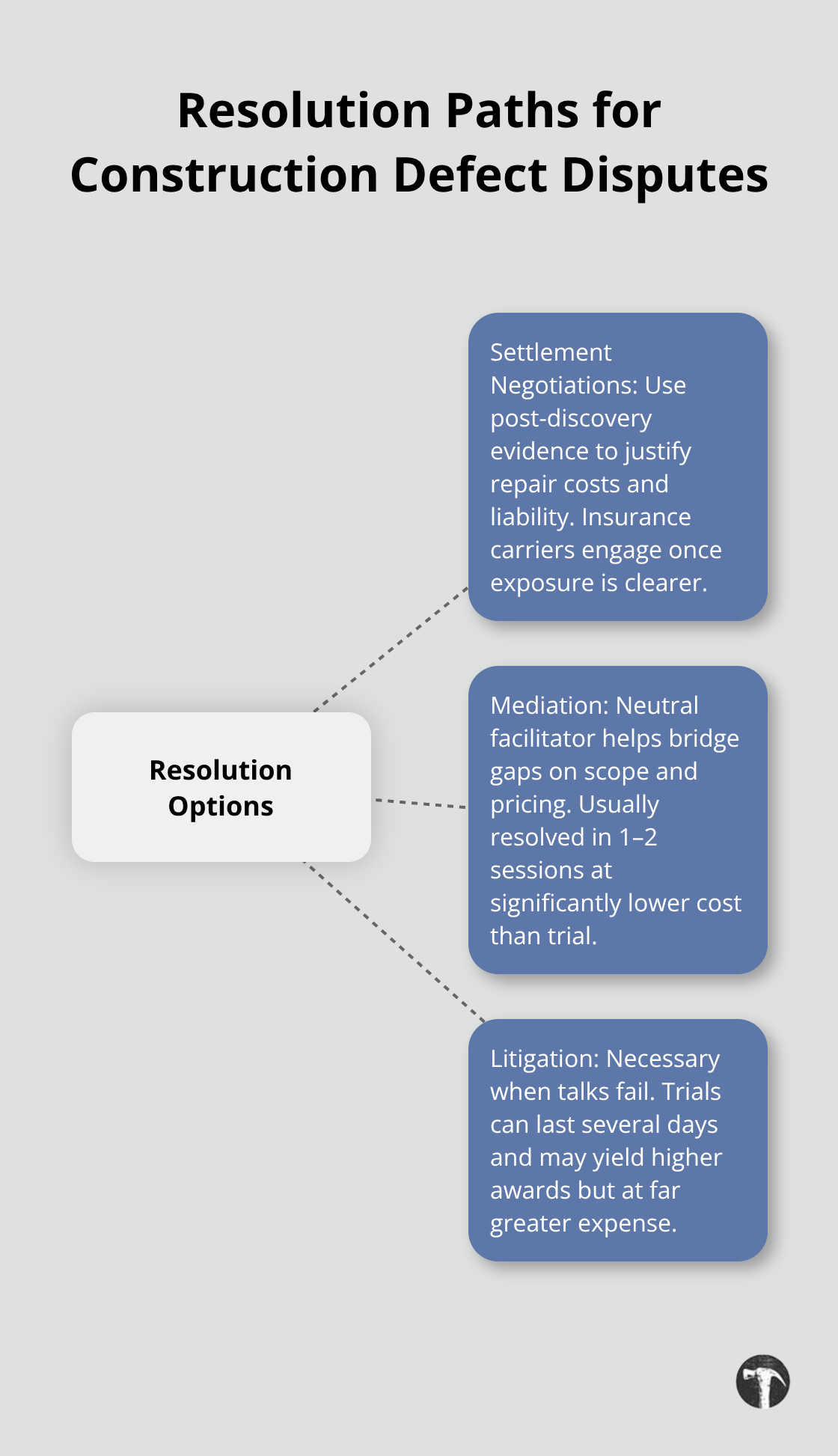
Mediation works particularly well when the builder acknowledges the defect exists but disputes the repair cost or scope. The mediator can help both parties find common ground on repair methodology and pricing. If mediation fails, you retain the right to pursue litigation, and nothing said during mediation can be used against you in court.
Litigation When Settlement Fails
If settlement and mediation don’t work, litigation becomes necessary. Trial preparation requires your engineer to testify about defect causation and repair specifications, while the builder’s expert contradicts your findings. Trials in Los Angeles County construction defect cases typically last three to seven days, and juries must decide whether the builder breached its obligations and what damages you deserve.
Court costs, expert witness fees, and attorney time during trial can reach $75,000 to $150,000, making this the most expensive resolution path. However, trials sometimes result in larger awards than settlement offers, particularly when juries find the builder acted negligently or recklessly. Property owners throughout Los Angeles County, including Calabasas, California, should carefully weigh the financial commitment and timeline of litigation against the potential recovery before proceeding to trial.
Final Thoughts
Construction defects in Los Angeles demand immediate attention because delays multiply repair costs and property damage. The path from identifying a defect to reaching resolution requires documentation, legal notice, and strategic decision-making about whether to settle, mediate, or litigate. Property owners who gather professional inspection reports early, understand California’s notice requirements, and evaluate settlement offers realistically achieve better outcomes than those who rush into litigation or ignore defects hoping they’ll disappear.
Legal representation matters because construction defect cases involve technical building code violations, complex causation arguments, and insurance company tactics designed to minimize payouts. Builders and their insurers have teams of lawyers and engineers working to deny or reduce claims. You need someone equally prepared to counter their arguments with solid evidence and courtroom experience.
Property owners throughout Los Angeles County, including Calabasas, California, should contact The Law Offices of Alan J. Carnegies, APC to discuss their construction defect situation. We handle the full range of construction litigation, from initial assessment through trial if necessary. Schedule a consultation to review your inspection reports, discuss the defects you’ve identified, and determine what resolution strategy makes sense for your property and financial situation.