

Employment disputes in California are costly and disruptive. Whether you’re an employer facing a wage claim or an employee dealing with unfair treatment, understanding your rights and obligations matters.
At The Law Offices of Alan J. Carnegies, APC, we help clients throughout Los Angeles County navigate these conflicts with clarity and confidence. This guide covers the disputes you’ll encounter, the laws that govern them, and your options for resolution.
What Employment Disputes Cost California Workers and Employers in Calabasas, California
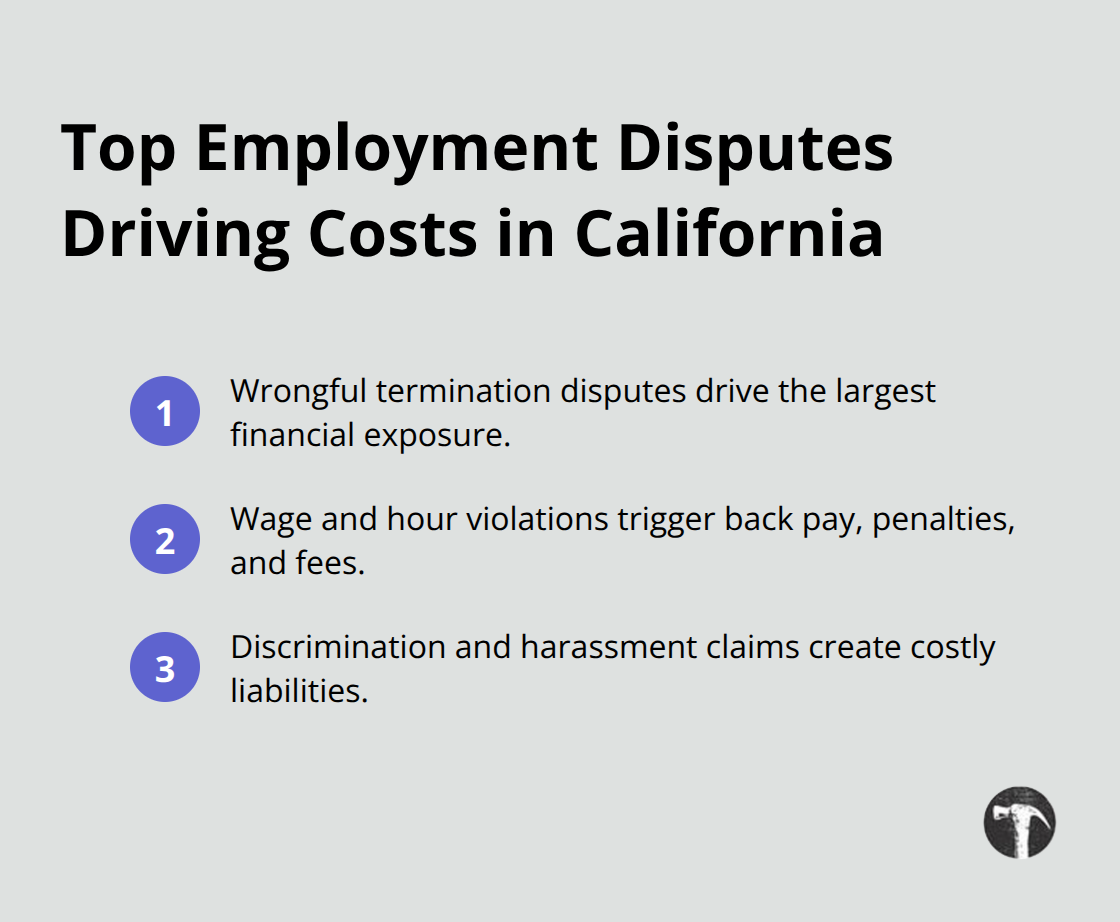
Wrongful Termination: The Costliest Disputes
Wrongful termination claims represent the most financially damaging disputes in California’s employment landscape. The California Department of Fair Employment and Housing received over 76,000 complaints in fiscal year 2022, with many resulting in significant settlements. When an employer terminates someone without legitimate cause or in violation of public policy, the employee can recover lost wages, benefits, emotional distress damages, and attorney fees. These cases drain resources quickly.
An employee fired for reporting safety violations, jury duty, or family medical leave has strong legal grounds. California courts take these protections seriously because the law recognizes that workers shouldn’t face retaliation for exercising their rights. The financial exposure extends beyond immediate compensation-employers also pay legal costs and face reputational damage that affects recruitment and retention.
Wage and Hour Violations: A Widespread Problem
Wage and hour violations affect millions of California workers annually. The state’s minimum wage reached $16.00 per hour in January 2024, and employers who fail to pay this rate face significant liability. Misclassifying workers as independent contractors when they should be employees remains one of the most common violations we observe in California employment disputes.
Employees denied meal breaks, rest periods, or overtime compensation can recover unpaid wages plus penalties. The Labor Commissioner’s office in California recovers millions annually for workers through wage claims. A single wage violation case can expose an employer to years of back pay calculations and multiplied penalties that accumulate quickly.
Discrimination and Harassment: Rising Claims
Discrimination and harassment cases have intensified in recent years, with claims involving race, gender, age, disability, and religion creating hostile work environments. An employee experiencing harassment has the right to report it without fear of retaliation, and employers who fail to investigate complaints or punish the reporter face substantial damages.
These three categories of disputes share one reality: they’re preventable through proper policies, consistent documentation, and swift corrective action when problems surface. Understanding how California employment law addresses each type of dispute helps both employers and employees prepare for potential conflicts and their financial consequences.
California Employment Laws and Compliance Requirements in Calabasas, California
At-Will Employment and Its Legal Exceptions
California operates under the at-will employment doctrine, meaning employers can terminate employees for any reason or no reason, and employees can quit without notice or cause. However, this doctrine has more exceptions than the rule itself, and employers who ignore these exceptions face serious liability. California courts have carved out protections that make wrongful termination one of the costliest employment disputes in the state.
An employer cannot fire someone in violation of public policy, such as terminating an employee for serving on jury duty, reporting wage violations to the Labor Commissioner, or taking protected medical leave under the Family and Medical Leave Act. The California Supreme Court established in Tameny v. Atlantic Richfield Co. that firings contradicting fundamental public policy create liability even in at-will relationships. Additionally, California recognizes implied contracts when an employer makes oral or written promises about job security, and those statements can override at-will status.
Any written communication about performance expectations, disciplinary procedures, or job tenure can modify at-will rights. Courts interpret these statements as potential contract modifications that limit termination rights. Employers must review all written materials carefully to avoid unintended contractual obligations.
Documentation Requirements That Protect Employers
Documentation practices separate compliant employers from those facing litigation. California law requires employers to maintain written policies covering meal and rest periods, anti-discrimination and harassment procedures, wage payment schedules, and expense reimbursement. The California Labor Code mandates that employers provide a copy of wage and hour policies to new hires, yet many companies skip this step entirely.
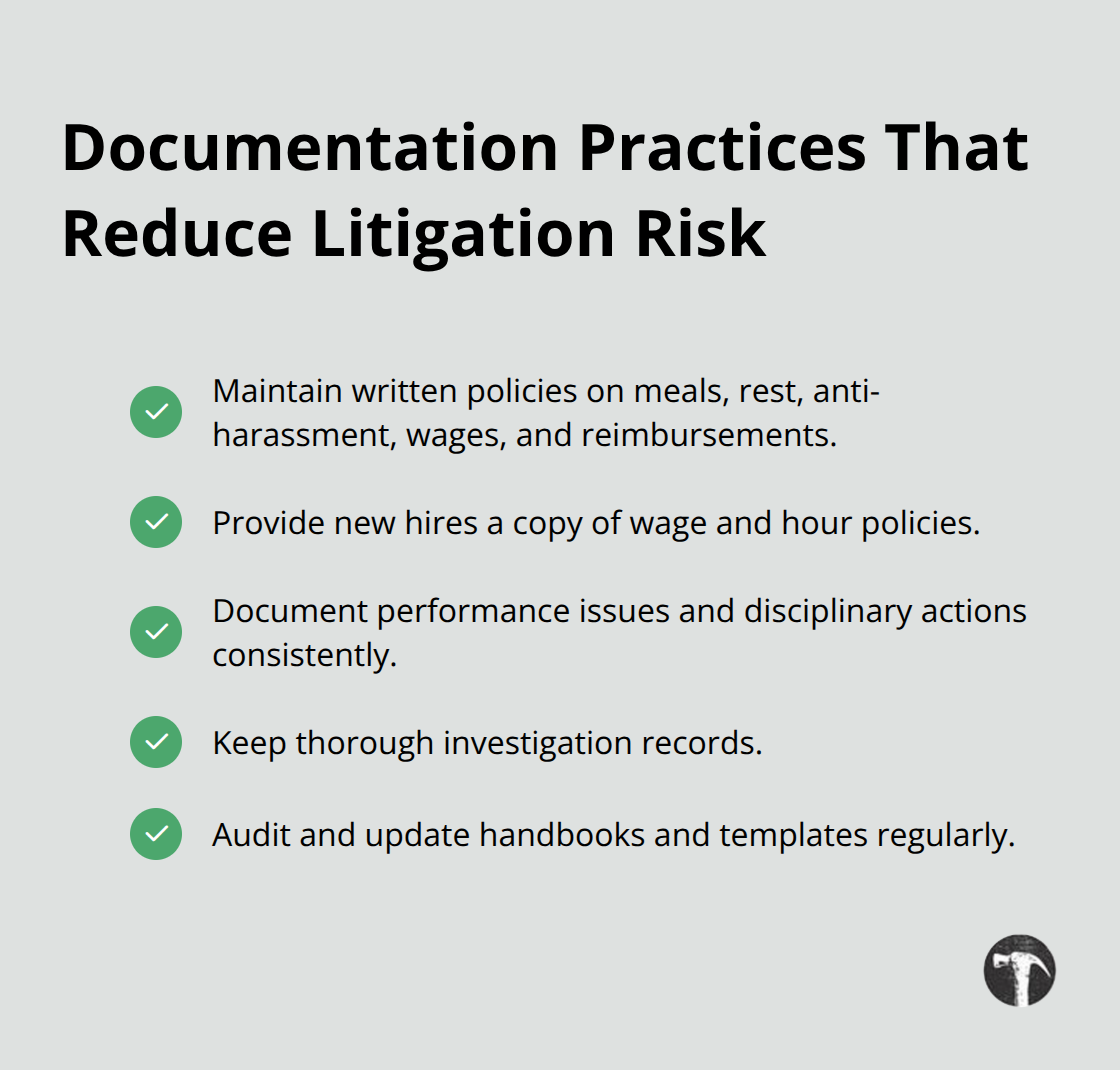
Employers must document performance issues, disciplinary actions, and investigations thoroughly because the absence of records signals discrimination or retaliation to juries and regulators. When an employee claims wrongful termination, the first question is whether the employer documented a legitimate, non-retaliatory reason for the termination. This documentation becomes your strongest defense in litigation.
Federal and State Regulatory Obligations
Federal requirements add another layer of compliance responsibility. Employers with 50 or more employees must comply with the Family and Medical Leave Act, while those with 5 or more employees must follow California’s Fair Employment and Housing Act protections against discrimination and harassment. State regulations also require posting specific notices about worker rights, minimum wage rates, and paid leave entitlements in locations where employees can see them.
The California Department of Industrial Relations updates these required postings regularly, and outdated materials create liability. Employers should conduct compliance audits annually to verify that policies align with current law because California updates employment regulations frequently and retroactive violations can result in penalties. This proactive approach prevents costly disputes before they start.
Moving Forward With Compliance
Staying compliant requires more than good intentions-it demands systematic policies, consistent documentation, and regular updates to reflect changing laws. The next section addresses what happens when disputes arise despite your best efforts at prevention.
Resolving Employment Disputes Before and During Litigation in Calabasas, California
Pre-Litigation Strategy and Settlement Positioning
When an employment dispute surfaces, the path forward depends on timing, evidence, and whether both parties want to avoid the expense of trial. Most employment disputes in California settle before reaching a courtroom, but settlement requires understanding your leverage and what the case is actually worth. The pre-litigation phase determines whether you settle reasonably or waste months fighting over positions that won’t hold up under scrutiny.
Start by gathering all relevant documentation: email chains, performance reviews, attendance records, wage statements, and communications about the disputed conduct. This evidence either strengthens your position or reveals weaknesses that should influence your settlement posture. Demand letters carry weight when they reference specific facts and applicable law, and they signal that you’re serious about resolution without filing suit.
Understanding Damage Calculations in California Employment Cases
California’s employment disputes often involve damage calculations that surprise parties unfamiliar with the law. Wrongful termination cases can include lost wages, fringe benefits, emotional distress damages up to several hundred thousand dollars, and attorney fees that shift to the losing party. Settlement negotiations work best when both sides understand these potential outcomes because unrealistic expectations waste time and money on litigation that produces similar results anyway.
Discovery Phase and Litigation Costs
Once litigation begins, the discovery phase consumes significant time and expense as both parties exchange documents, interrogatories, and deposition testimony. Discovery in employment cases typically involves 12 to 18 months of exchanges, depositions, and expert reports before trial, and the costs accumulate quickly through attorney time and expert fees. Many cases settle during or immediately after depositions when witnesses perform poorly or documents contradict previous positions.
Mediation and Alternative Dispute Resolution
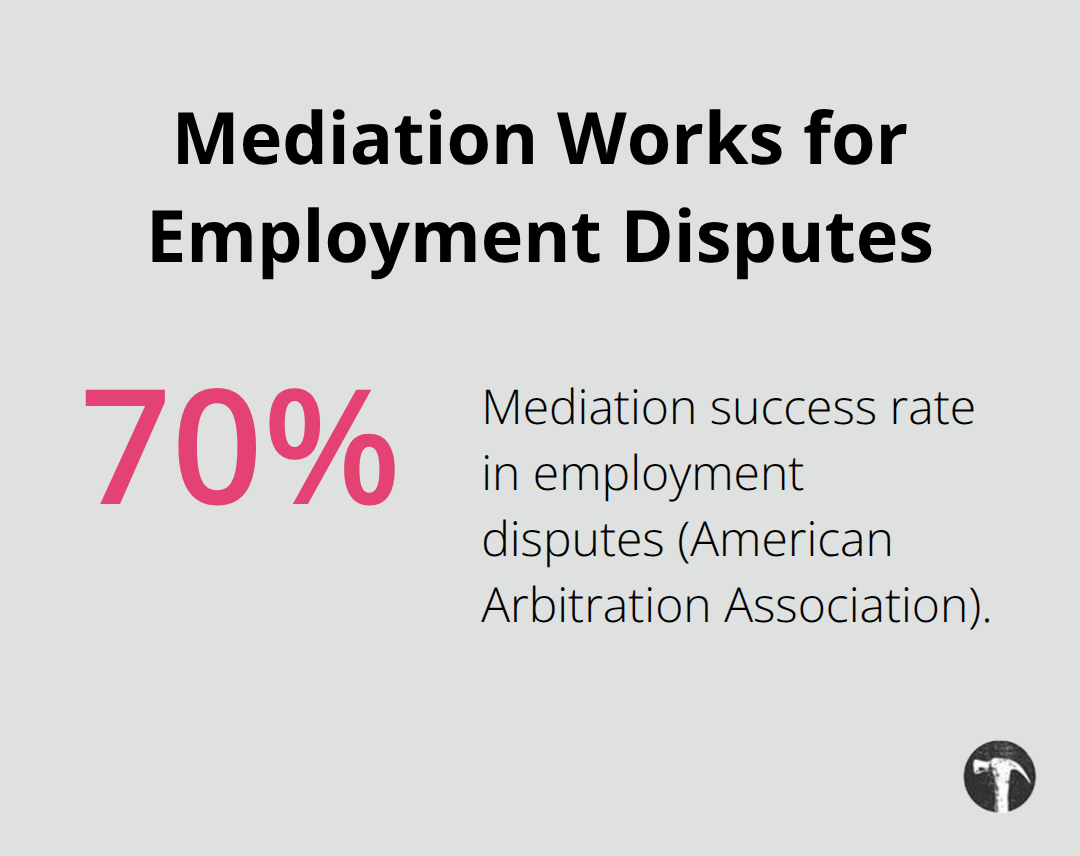
Alternative dispute resolution methods like mediation offer a faster path to resolution than trial, with many employment mediators in Los Angeles County charging between $3,000 and $8,000 for a full-day session. Mediation success rates in employment disputes hover around 70 percent according to the American Arbitration Association, making it a practical choice for parties who want control over the outcome rather than leaving decisions to a judge or jury. Arbitration clauses in employment agreements force disputes into private arbitration rather than court litigation, which typically reduces timeline and costs but eliminates the right to appeal and limits discovery scope.
Trial Outcomes and Strategic Decisions
If your case proceeds to trial, California employment cases average 5 to 10 days in court, with juries often sympathetic to individual employees facing large employers (which means damages awards can exceed settlement offers significantly). The decision to litigate aggressively or settle strategically should depend on the strength of your evidence, witness credibility, and realistic damage projections rather than emotional investment in vindication.
Final Thoughts
Employment disputes in California create financial and operational consequences that extend far beyond the initial conflict. Wrongful termination claims, wage violations, and discrimination cases typically stem from inadequate documentation, unclear policies, or failure to address problems when they first surface. Prevention costs far less than defending litigation or paying settlements, which makes compliance investments worthwhile for any employer.
When employment disputes California situations arise despite preventive measures, settlement often makes financial sense because most cases resolve before trial through negotiation or mediation. Understanding potential damage awards and realistic case value helps both parties make informed decisions about settlement versus continued litigation. The path forward depends on timing, evidence, and whether both sides want to avoid the expense of trial.
We at The Law Offices of Alan J. Carnegies, APC represent parties throughout Los Angeles County in employment disputes and many other complex litigation matters. Contact us today to discuss your situation and learn how we can protect your interests.