

Contract lawsuit deadlines in Calabasas, California can decide a dispute before anyone argues about who broke the deal. A vendor who never delivered, a client who stopped performing, or a partner who walked away from a written commitment may all give you a valid claim, but California’s statutes of limitations set a firm window for filing it, and a strong case filed late is usually a case lost.
We at The Law Offices of Alan J. Carnegies, APC help business owners, property owners, and contractors throughout Los Angeles County understand where they stand before time runs out. This guide explains how these deadlines actually work, how to protect your claim while you try to resolve the dispute, and the mistakes that most often take away the right to sue, so you can move forward with confidence.
How Contract Deadlines Actually Work in California
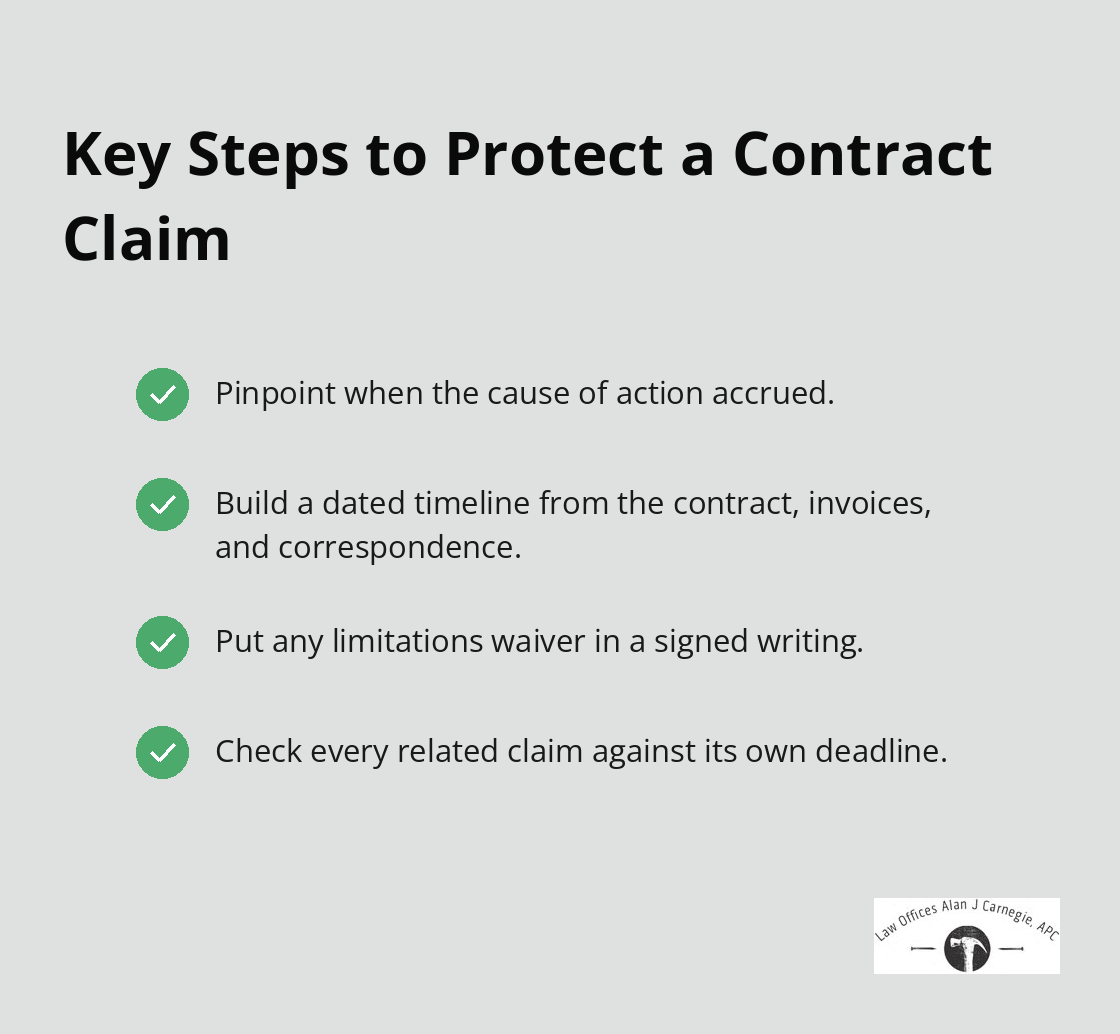
A statute of limitations is the period the Legislature allows for starting a lawsuit. Code of Civil Procedure section 312 states the general rule plainly: civil actions, without exception, can only be commenced within the periods prescribed in that title after the cause of action has accrued, unless a different limitation is prescribed by statute in special cases. Two questions therefore drive every deadline analysis. The first is which time period applies to your claim. The second is when the clock started. Getting either one wrong can make an otherwise solid claim impossible to bring.
Written Contracts Carry a Four-Year Window
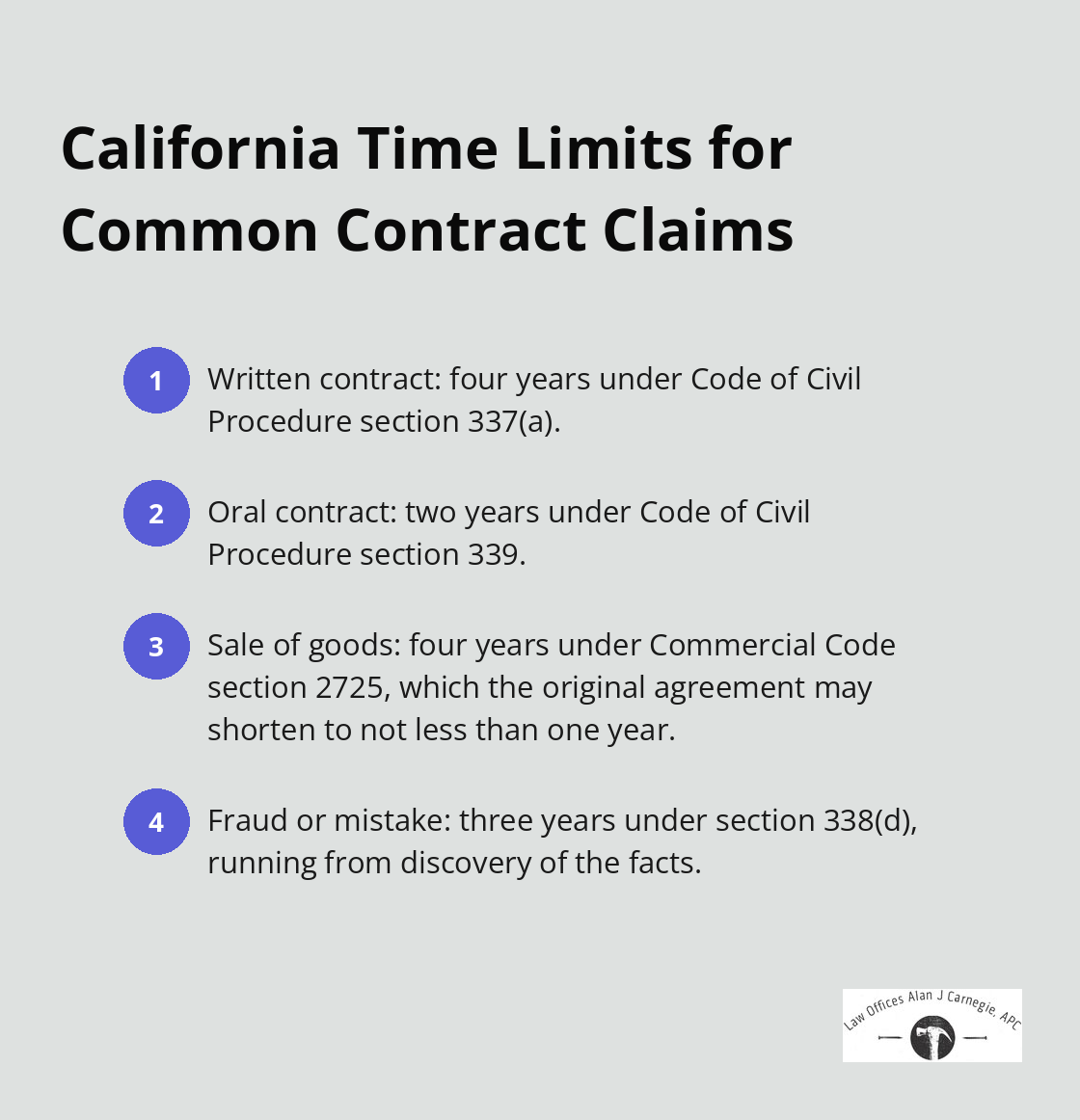
For agreements put in writing, the controlling rule is Code of Civil Procedure section 337(a). It allows four years for an action upon any contract, obligation, or liability founded upon an instrument in writing, subject to limited exceptions in the statute. Section 337(c) also gives four years for an action based on rescission of a written contract, with the time running from the date the facts entitling the party to rescind occurred. When the ground for rescission is fraud or mistake, that clock does not begin until the aggrieved party discovers the facts constituting the fraud or mistake. Signed purchase agreements, service contracts, commercial leases, and construction agreements typically fall within these written-contract rules.
Oral Agreements Have a Shorter Deadline
Many Calabasas businesses still operate on handshake deals, email understandings, and long-standing verbal arrangements. Code of Civil Procedure section 339 sets a two-year limit for an action upon a contract, obligation, or liability not founded upon an instrument of writing, with exceptions that include Commercial Code section 2725. Section 339 also allows two years for an action based on rescission of a contract not in writing. The difference between two years and four years is often the single most important fact in a late-discovered dispute, which is why the question of whether a contract was truly in writing deserves careful attention early.
Contracts for the Sale of Goods
When the dispute involves a contract for the sale of goods, such as equipment, inventory, or materials, Commercial Code section 2725 applies. It requires an action for breach of any contract for sale to be commenced within four years after the cause of action has accrued. The statute also allows the parties, in their original agreement, to reduce that period to not less than one year, although they may not extend it. Under section 2725(2), the cause of action accrues when the breach occurs, regardless of the aggrieved party’s lack of knowledge of the breach. Supply agreements with shortened limitation clauses are common, so read the fine print before assuming you have the full four years.
Protecting Your Claim While You Work Toward Resolution
Most contract disputes start with phone calls, emails, and negotiation rather than a complaint. That is often the right approach, but negotiation does not pause the statute of limitations on its own. The safest path is to keep talking while also managing the deadline deliberately, so that a promising settlement discussion does not quietly turn into a lost claim.
Identify When the Clock Started
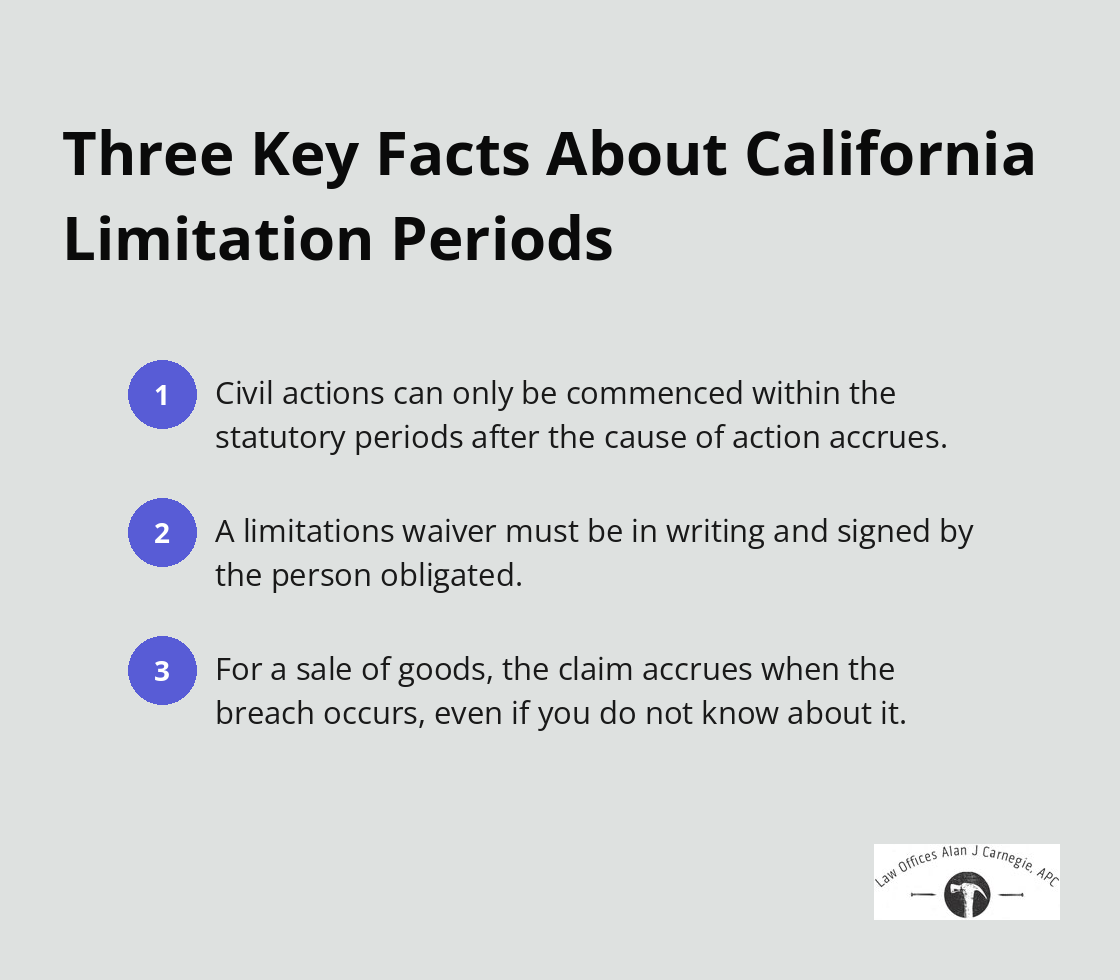
Because section 312 measures time from accrual, the first task is pinpointing when the cause of action arose. In many contract cases that is the date of the breach, such as the day a delivery deadline passed or a required performance did not occur. For contracts with ongoing obligations, separate breaches can arise at different times. Gather the agreement, any amendments, invoices, correspondence, and notes about key dates. Building a clear timeline from these records gives you an accurate picture of how much time remains and keeps everyone working from the same facts.
Get Any Extension in Writing
If both sides want more time to negotiate, California law offers a way to do that safely, but only on paper. Code of Civil Procedure section 360.5 provides that no waiver bars a limitations defense unless the waiver is in writing and signed by the person obligated. A waiver signed before the limitations period expires cannot be effective for more than four years from that expiration date, although waivers may be renewed and made successively. Similarly, section 360 states that no acknowledgment or promise is sufficient evidence of a new or continuing contract to take a case out of the limitations rules unless it is contained in a writing signed by the party to be charged. Verbal assurances that the other side will not raise the deadline offer no real protection.
Watch for Related Claims With Different Deadlines
A single business dispute often involves more than one legal theory, and each can carry its own time limit. Code of Civil Procedure section 338(d) allows three years for an action for relief on the ground of fraud or mistake, and the cause of action is not deemed to have accrued until the aggrieved party discovers the facts constituting the fraud or mistake. Construction disputes add another layer. Under section 337.1, claims for patent deficiencies in construction of an improvement to real property generally must be brought within four years after substantial completion, and under section 337.15, claims for latent deficiencies generally cannot be brought more than ten years after substantial completion. Mapping every potential claim against its own deadline prevents surprises.
Mistakes That Can Derail Your Right to Sue
Missed deadlines rarely come from ignoring a dispute altogether. They usually come from reasonable-sounding assumptions that turn out to be wrong. Recognizing these patterns can help you avoid them.
Assuming Talks Stop the Clock
Owners often believe that as long as the other side is responding to emails or promising to make things right, the deadline is on hold. Without a signed written waiver or a qualifying written acknowledgment, that belief can be dangerous. Months of friendly back-and-forth can consume much of a two-year window for an oral agreement. If negotiations are stretching on, put a written tolling or waiver agreement in place that complies with section 360.5, or be prepared to file to preserve the claim while discussions continue.
Misjudging Whether the Contract Was Written
Not every business relationship fits neatly into one category. A deal may start with a signed proposal, change through phone calls, and expand through informal emails. Whether a particular obligation is founded upon an instrument in writing under section 337 or falls under the two-year rule in section 339 can depend on exactly which promise was broken and where it appears. Treat the shorter deadline as the working assumption until the documents clearly support the longer one.
Overlooking Contract Clauses That Shorten the Period
Commercial agreements sometimes include clauses that set their own claim deadlines, and in contracts for the sale of goods, section 2725 expressly permits the parties to reduce the period to as little as one year by their original agreement. Many owners never reread these provisions until a dispute arises. Review your agreements now, especially supply and equipment contracts, so you know which deadlines apply before you need them.
Relying on Memory Instead of Records
When a dispute surfaces years after a deal began, memories about key dates tend to blur. One side remembers the breach happening last spring, while the emails show it happened the year before. Because the limitations period runs from accrual, a mistaken date can make a claim look timely when it is not. Pull the original documents, delivery records, and correspondence before relying on anyone’s recollection, and keep a dated file of every notice you send or receive. An accurate paper trail protects your deadline and strengthens your position on the merits at the same time.
Final Thoughts
Contract lawsuit deadlines in Calabasas, California follow clear statutory rules, but applying them takes care. Written contracts generally carry four years under section 337, oral agreements two years under section 339, and sales of goods four years under Commercial Code section 2725 unless the contract shortens that period. Fraud claims, construction defects, and written waivers each add their own rules, and the clock runs from accrual, not from the day you decide to act.
The good news is that deadline problems are among the most preventable mistakes in litigation. A clear timeline, written extensions when you need more time, and an early review of every potential claim can keep your options open while you pursue a practical resolution.
If you are facing a contract dispute in Calabasas or anywhere in Los Angeles County, contact The Law Offices of Alan J. Carnegies, APC to review your timeline and options. We will help you understand which deadlines apply, protect your claim, and choose the right next step.