
Intellectual property disputes can threaten your business and drain resources quickly. Whether you’re facing patent infringement, trademark violations, or trade secret theft, understanding your options matters.
We at The Law Offices of Alan J. Carnegies, APC help clients throughout Los Angeles County navigate intellectual property disputes resolutions and remedies. This guide walks you through the methods available to protect what you’ve built.
What Types of IP Disputes Should You Watch For
Patent Infringement: Direct Threats to Your Invention
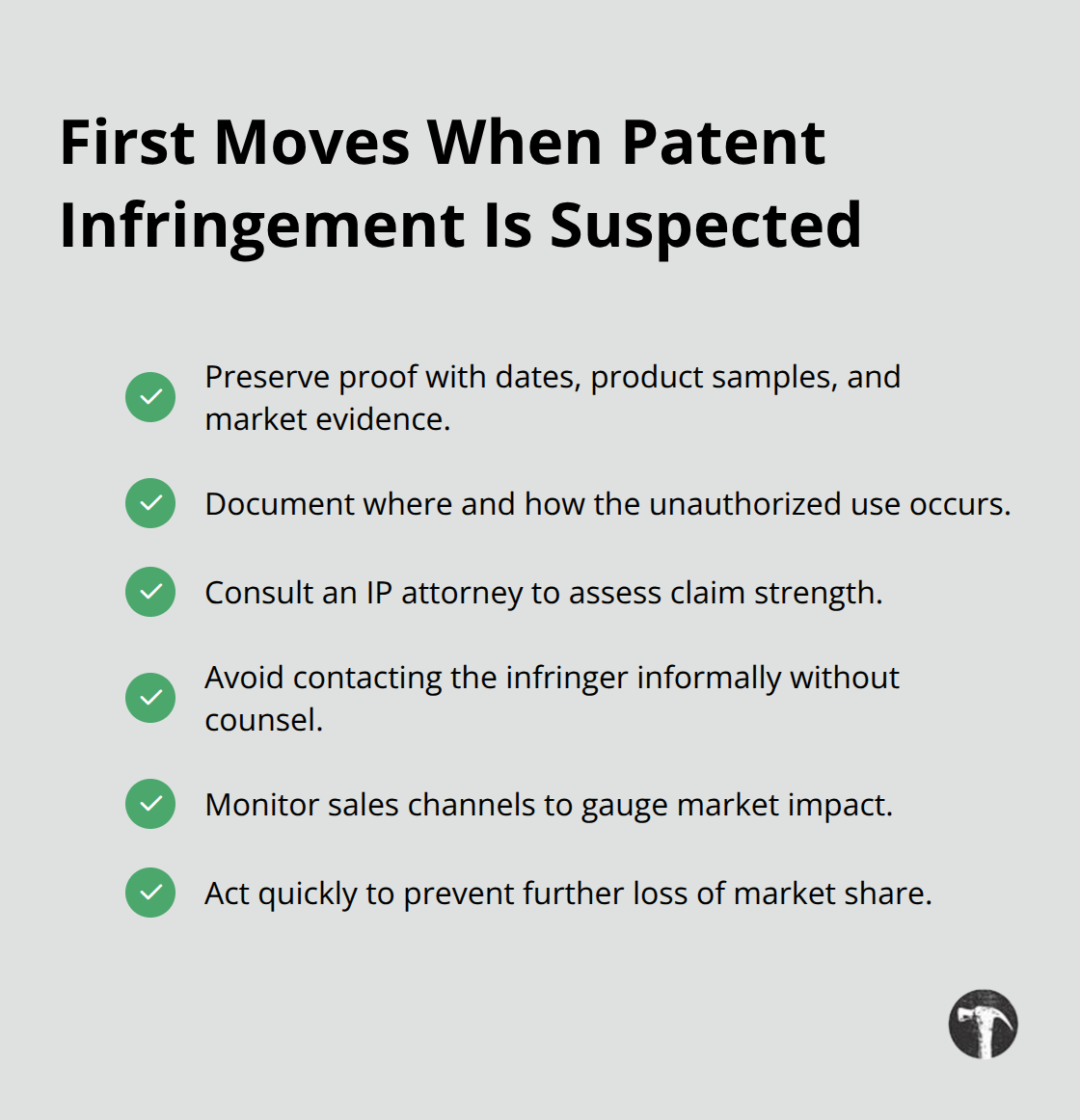
Patent infringement occurs when someone manufactures, uses, or sells your patented invention without permission. This represents the most direct violation of patent rights. If you hold a patent on a manufacturing process, a mechanical device, or a software algorithm, competitors or bad actors can infringe by replicating your work and deploying it commercially. The moment you suspect infringement, contact an attorney to evaluate the strength of your claim and document the unauthorized use with dates, product samples, and market evidence. Waiting costs money-every day an infringer operates, they capture market share and revenue that should be yours.
Trademark and Copyright Violations: Brand and Creative Work Theft
Trademark infringement occurs when someone uses a confusingly similar logo, name, or slogan to identify their products or services, creating consumer confusion and diluting your brand identity. Copyright infringement involves unauthorized reproduction, distribution, or public display of your creative works-whether that’s software code, written content, music, films, or designs. Both violations damage your business directly and undermine the value you’ve built in your intellectual property.
Trade Secret Misappropriation: The Hidden Threat
Trade secret misappropriation targets confidential methods, formulas, or business practices that give you a competitive edge. An employee departure, a vendor breach, or corporate espionage can expose trade secrets that took years to develop. Unlike patents and copyrights, trade secrets require no registration, which means protecting them relies on documented confidentiality measures, non-disclosure agreements, and restricted access.
Understanding Your Legal Protections
The Copyright Act, Trademark Act, and Patent Act each provide distinct protections, but all three require you to prove both ownership and unauthorized use. Proving valid IP rights and that the infringer violated those rights is essential to succeed in enforcement. You must gather and analyze evidence to understand the scope of your rights and potential enforcement options before taking action.
Taking the First Step Toward Resolution
Each type of infringement demands a different enforcement strategy, and the evidence you collect now shapes your options later. The resolution methods available to you depend on which type of IP violation you face and how quickly you respond to the threat.
How to Resolve IP Disputes Without Going to Trial
Start with a Cease and Desist Letter
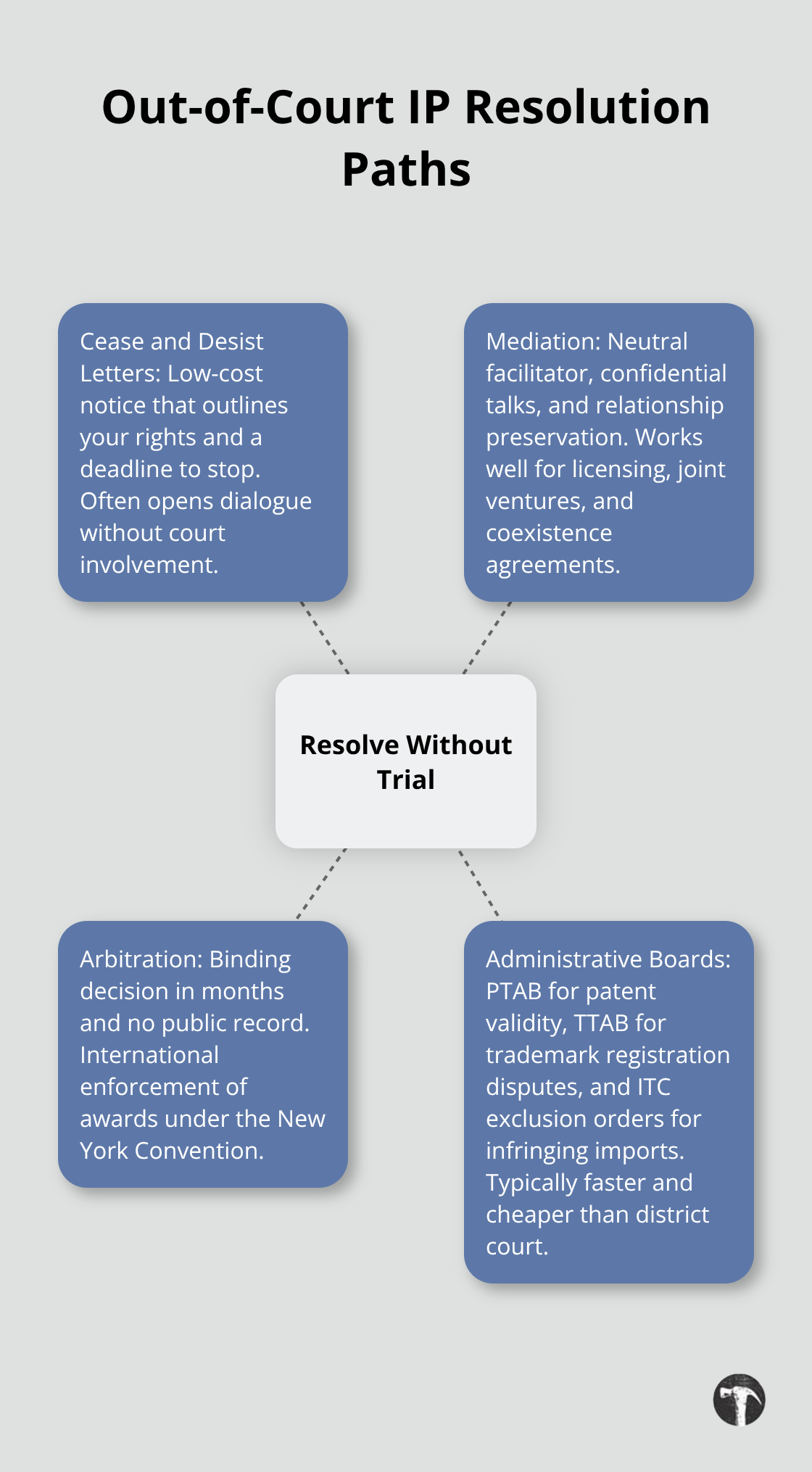
Direct negotiation offers the fastest path to resolution before you spend money on formal proceedings. Contact an infringer with documented evidence of unauthorized use, and many respond to a cease and desist letter that outlines your legal rights and sets a deadline to stop. This first step costs far less than litigation and often opens dialogue without court involvement. A well-crafted letter establishes your seriousness while leaving room for settlement discussions.
Mediation: Preserve Relationships While Resolving Disputes
If the infringer ignores your letter or disputes your claim, mediation offers a faster alternative than federal court. A neutral mediator helps both parties discuss the dispute confidentially, and mediation preserves business relationships better than adversarial litigation. The WIPO Arbitration and Mediation Center handles IP disputes globally and shows that mediation works particularly well for licensing disputes, joint ventures, and coexistence agreements where parties have ongoing business interests.
Arbitration: Binding Resolution Without Public Records
Arbitration produces a binding decision without a jury trial or public record. An arbitrator with IP technical knowledge resolves your dispute in months rather than years, and the New York Convention recognizes arbitral awards across 137 member states, making enforcement straightforward across borders. This approach protects your trade secrets and sensitive business terms from public disclosure while you reach a final resolution.
Administrative Proceedings: Faster Alternatives to District Court
Federal court litigation remains necessary when informal resolution fails or when you need injunctive relief to stop ongoing harm immediately. However, administrative boards offer faster and cheaper alternatives depending on your IP type. If your patent faces validity challenges, the Patent Trial and Appeal Board allows you to challenge the patent itself rather than defend infringement in litigation. For trademark disputes, the Trademark Trial and Appeal Board resolves registration conflicts without monetary damages but with lower cost and faster resolution than federal court. The International Trade Commission handles imported infringing goods and can issue exclusion orders to block products at the border (which works well when competitors import knockoff products).
Choosing Your Path Forward
Each resolution method has different costs, timelines, and outcomes, so the choice depends on your IP type, the infringer’s location, and whether you need money damages or simply want to stop the unauthorized use. The faster you move-whether through a cease and desist letter, mediation, or administrative proceedings-the sooner you protect your revenue and market position. Once you understand which resolution method fits your situation, you can then evaluate the specific remedies and damages available to you.
What Remedies Can You Actually Get from an IP Dispute
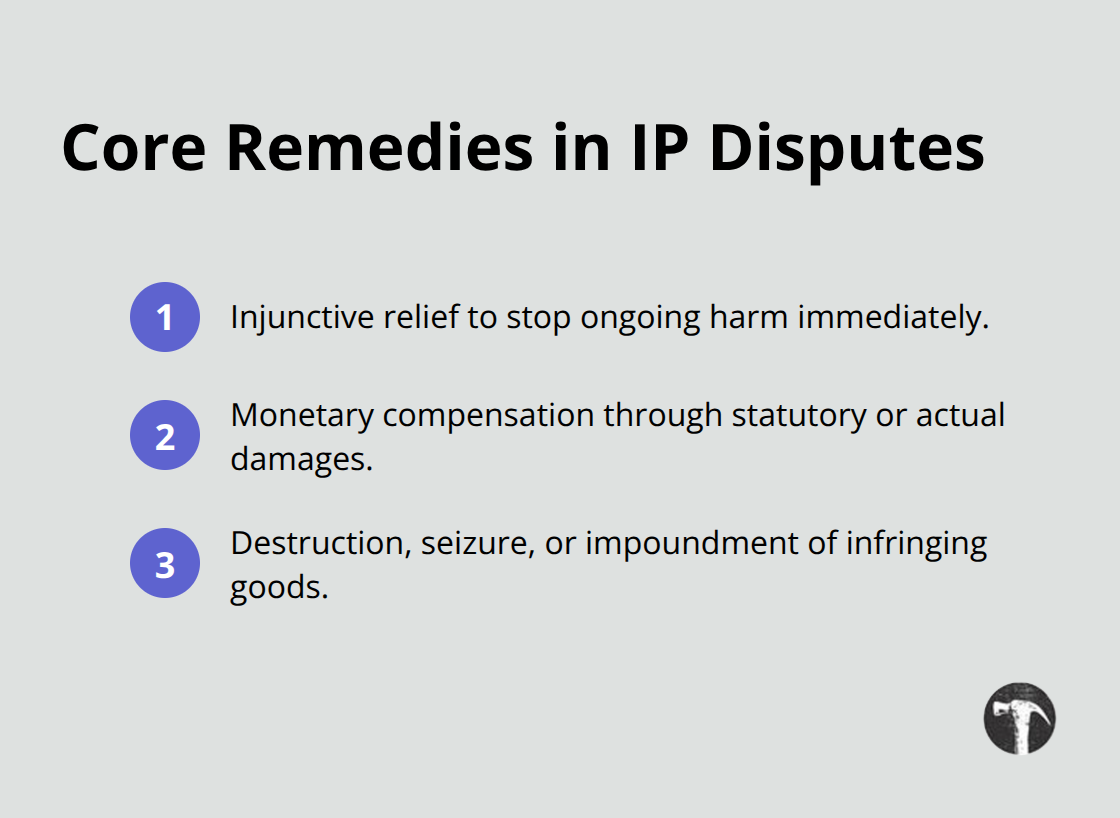
Once you’ve chosen your resolution path, you need to understand what remedies you can realistically obtain. Courts and arbitrators award three main types of relief in IP disputes: orders that stop the infringing activity immediately, monetary compensation for your losses, and destruction of infringing goods.
Injunctive Relief Stops Harm Fast
Injunctive relief represents the most powerful remedy because it halts ongoing harm to your business right now. A preliminary injunction can block an infringer before trial ends, protecting your market share while the case proceeds. Permanent injunctions, issued after you win, prevent future violations and carry real teeth because violating a court order results in contempt charges and additional penalties. Stopping the bleeding matters more than anything else when a competitor is stealing your IP.
The cease and desist letter you sent earlier becomes evidence of willfulness if the infringer ignores it and continues anyway, which strengthens your position in negotiation or arbitration. Courts also order the seizure, impoundment, or outright destruction of infringing products and materials, eliminating inventory that would otherwise flood the market and undercut your pricing.
Statutory Damages Provide Fixed Compensation
Monetary damages fall into two categories: statutory damages and actual damages. In copyright and trademark cases, statutory damages provide predetermined compensation ranging from five hundred dollars to five thousand dollars per work infringed, or up to thirty thousand dollars if willfulness is proven, according to the Copyright Act. This matters because you don’t have to prove exactly how much money you lost-the law presumes harm and deters future violations through these fixed amounts.
Actual Damages Require Proof of Loss
Actual damages require financial records, expert testimony on lost profits, and market analysis to quantify what the infringement cost your business. Courts may also order an account of profits, forcing the infringer to disclose revenue generated from your IP and transfer those earnings to you. Attorney fees and litigation costs are recoverable in some cases, particularly trademark disputes and copyright claims involving willful infringement, which shifts the financial burden to the wrongdoer rather than leaving you to absorb legal expenses alone.
Administrative and Border Remedies
Administrative proceedings like the Patent Trial and Appeal Board typically award no monetary damages but instead invalidate patents, eliminating infringement liability entirely and removing the threat without requiring you to prove lost profits. The International Trade Commission similarly focuses on exclusion orders rather than money, blocking infringing imports at the border and protecting your domestic market from cheap knockoffs.
Align Your Remedy with Your Business Goal
Your choice of remedy should align with your business objective. If you need to recoup losses and deter future violations, pursue actual damages combined with injunctive relief in federal court or arbitration. If you simply want a competitor off your back with minimal cost and speed, administrative proceedings or mediation leading to a licensing agreement often deliver faster results than fighting over dollars.
Final Thoughts
Intellectual property disputes demand swift action, and every day an infringer operates costs you money in lost market share and revenue. You now understand the three main dispute types-patent infringement, trademark violations, and trade secret theft-and you know that each requires different evidence and enforcement strategies. Your resolution path depends on your situation: a cease and desist letter costs little and often works, mediation preserves relationships when both parties want to move forward, arbitration delivers binding decisions faster than federal court, and administrative boards offer cheaper alternatives when you need to challenge validity or registration disputes.
The remedies available to you matter just as much as the resolution method. Injunctive relief stops the bleeding immediately, statutory damages in copyright and trademark cases provide fixed compensation without proving exact losses, actual damages compensate your specific losses through lost profits and market analysis, and destruction of infringing goods removes inventory that undercuts your pricing. Choose your remedy based on whether you want to recoup losses, deter future violations, or simply stop the infringer with minimal cost and speed.
Contact The Law Offices of Alan J. Carnegies, APC to evaluate your intellectual property disputes resolutions and remedies options. We represent clients throughout Los Angeles County in patent infringement, trademark disputes, and other business litigation matters. Schedule a consultation to protect what you’ve built before the damage spreads further.