
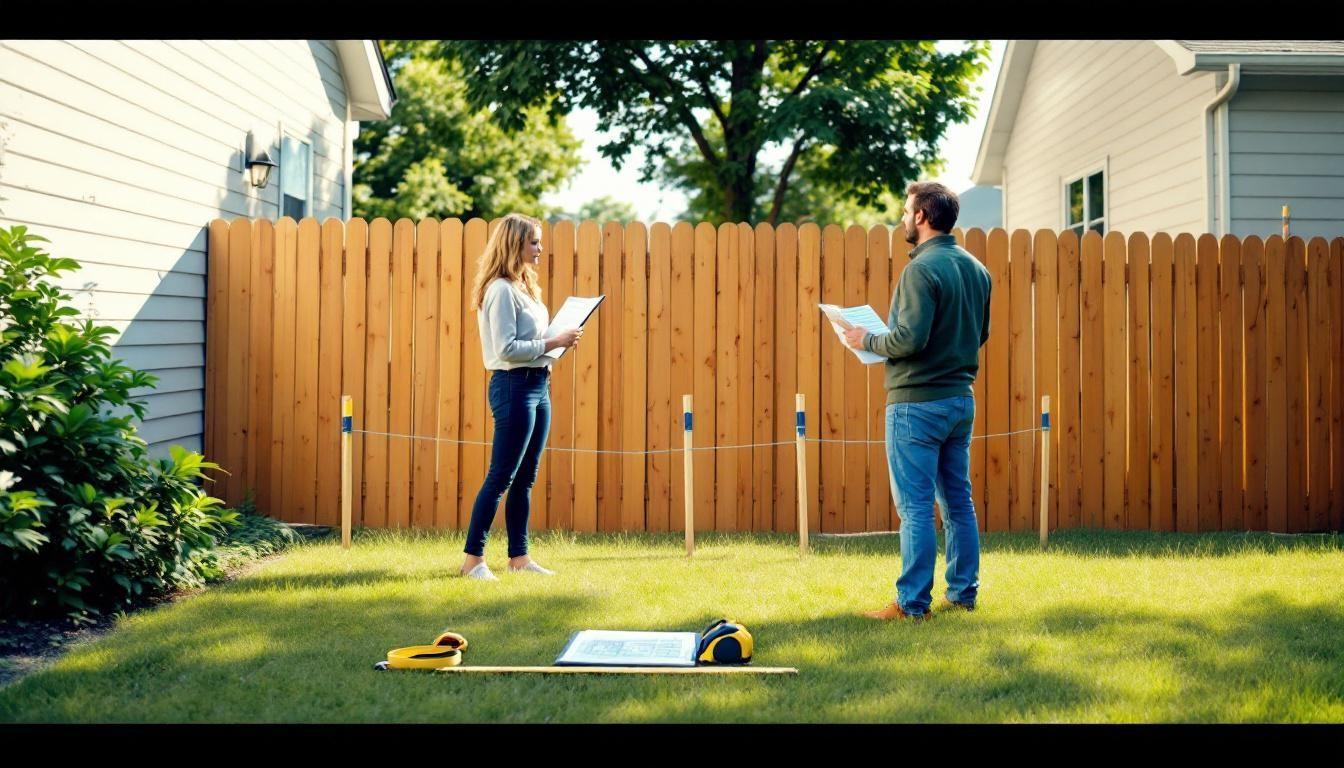
A fence between properties should bring peace of mind, not conflict. Yet property line fence disputes in Calabasas, California and throughout Los Angeles County happen more often than you’d think, leaving homeowners confused about their rights and next steps.
We at The Law Offices of Alan J. Carnegies, APC have seen how quickly these disagreements escalate when neighbors lack clarity on boundaries and responsibilities. This guide walks you through what causes these disputes, what the law says, and how to resolve them.
What Causes Property Line Fence Disputes
Outdated Property Records Create Hidden Conflicts
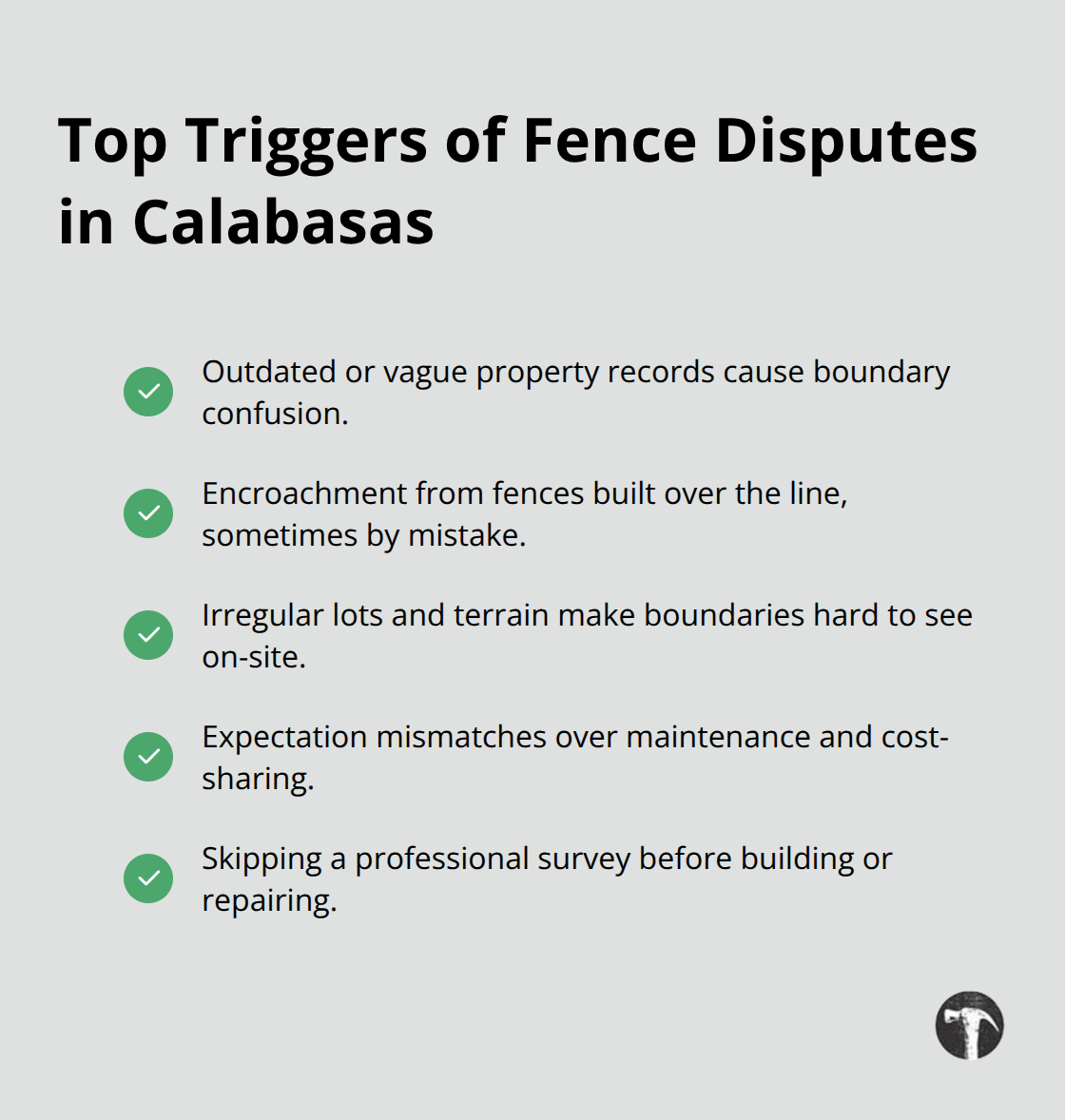
Outdated property records act as the silent killer in fence disputes. Many homeowners rely on old deeds or informal descriptions like “the big oak tree” to understand their boundaries, but these records often contradict current conditions or newer surveys. Los Angeles County property records date back generations, and boundary descriptions shift over time as properties change hands and land gets subdivided. The moment you want to build a fence, these vague descriptions become a real problem. A survey costs between $300 and $1,000 depending on property size and complexity, but skipping this step almost guarantees conflict.
A professional boundary survey before any fence work begins protects you far better than waiting until a dispute erupts.
Encroachment and Unclear Boundaries
Encroachment occurs when a neighbor’s existing fence sits partially on your property, or when they build without confirming the exact line. This isn’t always intentional-contractors sometimes misread old plans or neighbors genuinely believe they’re building on their own land. The problem intensifies in Calabasas and surrounding Los Angeles County areas where properties have irregular shapes, shared driveways, or topography that makes boundaries visually unclear. Disagreements over maintenance and cost-sharing follow naturally when one party installed a fence years ago and now expects the other to contribute to repairs.
California’s Cost-Sharing Law and Notification Requirements
California Civil Code Section 841 presumes that boundary fences benefit both properties equally and should be maintained and paid for equally, but this presumption only holds if the fence sits on the actual property line and both neighbors received proper written notice. Without that 30-day advance notice in writing, cost-sharing disputes become litigation waiting to happen. Many homeowners also confuse local zoning rules with property rights-Calabasas limits residential fences to six feet in height and requires setbacks from property lines, but these regulations don’t determine who owns the fence or who pays for it.
When Disputes Accelerate
The real friction starts when one neighbor wants a new fence for safety or aesthetics while the other questions whether the cost is reasonable or whether both parties truly benefit equally. Disputes accelerate when neighbors skip the conversation entirely and proceed with construction, permits, or repairs without informing the adjacent property owner. These communication breakdowns transform what could be a straightforward negotiation into a costly legal battle that neither party anticipated.
Understanding what triggers these disputes helps you avoid them. The next section explains your legal rights and what the law actually requires of you and your neighbor.
What the Law Requires You to Know About Property Lines and Fences in Calabasas, California
California Civil Code Section 841: The Foundation of Fence Law
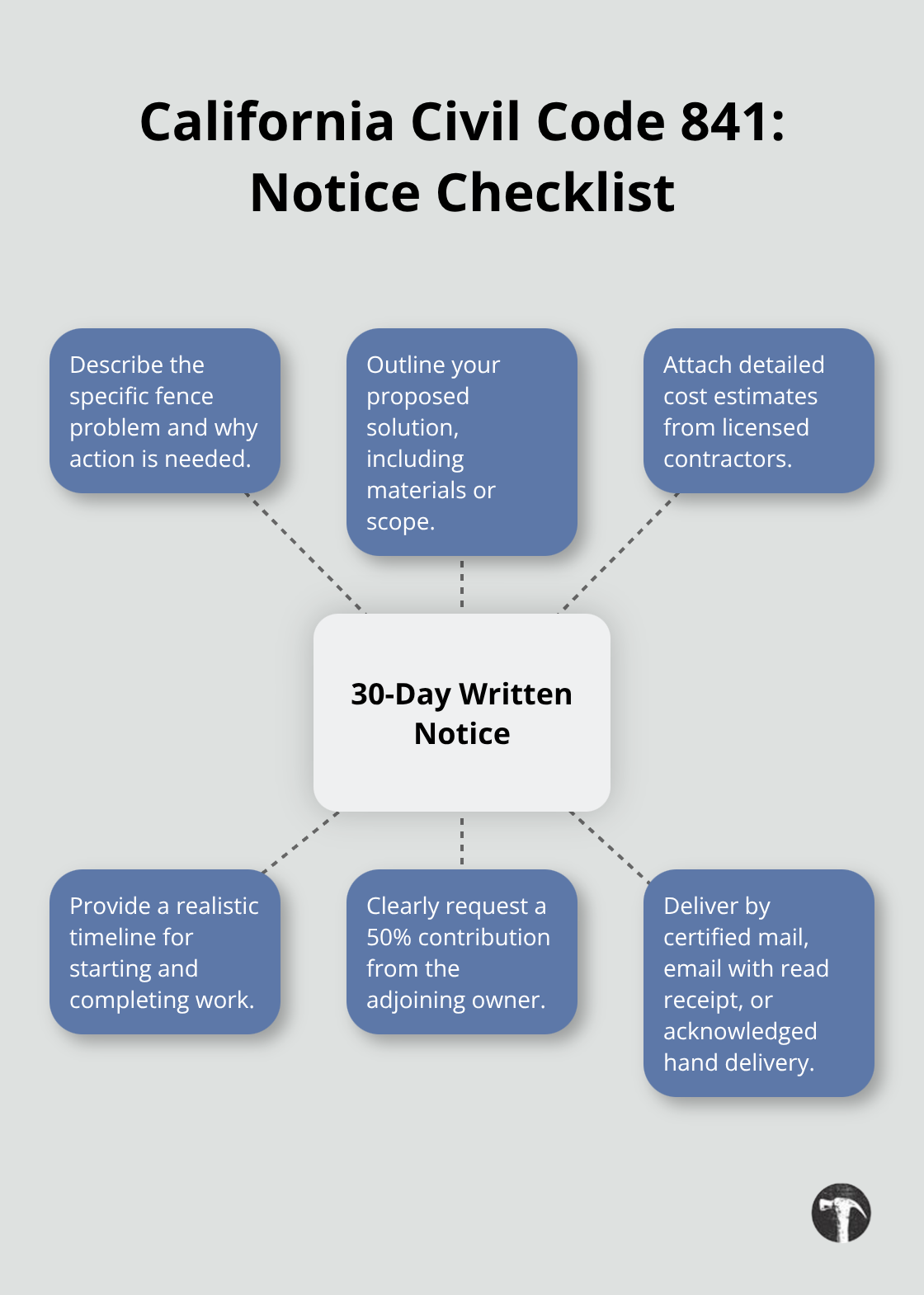
California Civil Code Section 841 establishes that when a fence sits on the boundary between two properties and both owners benefit from it, they share responsibility for maintenance and repair costs equally unless a written agreement states otherwise. This law applies throughout Los Angeles County, including Calabasas, and it has real teeth-if you ignore it, you risk losing your right to cost recovery later. The statute requires that you give your neighbor 30 days of written notice before starting any boundary fence work, and this notice must describe the problem, outline your proposed solution, include detailed cost estimates from licensed contractors, specify the timeline, and clearly request a 50% contribution. Verbal notice, text messages, or rushed timelines do not satisfy this requirement.
Courts have consistently enforced this notification rule, meaning that proceeding without proper written notice can bar you from recovering half the costs even if you win the dispute.
Proper Notice Protects Your Rights
The notice must be delivered by certified mail, email with read receipt, or hand delivery with a signed acknowledgment to be defensible. A boundary survey confirming the exact property line should precede any fence work, and hiring a licensed surveyor typically costs between $300 and $1,000 depending on your property’s size and terrain. Without a survey, you cannot definitively prove the fence sits on the boundary, which undermines your entire claim under Civil Code 841. The survey becomes your strongest evidence in any future dispute and protects you from accidentally building on your neighbor’s land.
Local Zoning and Permit Requirements in Calabasas
Calabasas residential zoning limits fences to six feet in height and requires setbacks from property lines that vary by zone, so check with the City of Calabasas Department of Regional Planning or Building and Safety before finalizing your design. Local permits may be required even for standard fences if they involve structural work or exceed height limits, and the City of Calabasas processes permit requests in the order received without expedited options. Compliance with local codes protects you from costly removal orders and fines that can exceed the original fence cost.
Liability and Encroachment Issues
Fences that encroach onto your neighbor’s property or that damage existing structures create liability exposure for you, not your neighbor. If your fence causes damage to a brick wall, landscaping, or other improvements on adjoining property, you are responsible for repair costs. If your neighbor’s fence encroaches on your land and you allow it to remain for five years or more without objection, California law may grant them an easement or prescriptive right, making removal much harder later. Document the encroachment immediately with photos, dated notes, and a written notice to your neighbor stating that you do not consent to the encroachment. If the fence damages your property, photograph the damage and obtain repair estimates to establish your losses. Liability also extends to gate access; if a shared gate is left open and livestock, pets, or unauthorized persons enter either property, both owners may bear liability depending on the circumstances and any written easement agreement.
Moving Forward With Confidence
The bottom line is that a fence on or near the boundary triggers shared responsibility, but only if proper notice was given and the fence genuinely benefits both properties. If you skip the survey, skip the notice, or build without permits, you lose leverage in any future dispute. Understanding these legal requirements positions you to either resolve disputes amicably or protect yourself if conflict arises. The next section shows you exactly how to document disputes and when negotiation becomes necessary.
Resolving Fence Disputes Before They Reach Court
Document Everything Immediately
Start by recording everything the moment you suspect a boundary problem. Take dated photographs from multiple angles showing the fence location, any encroachment onto your property, damage to existing structures, and visible boundary markers or survey stakes if they exist. Write down the date you first noticed the issue, what you observed, and any conversations with your neighbor about the fence. Save all written communication including emails, text messages, and letters. If your neighbor sent you a notice about fence work, keep it with the date received clearly marked. This documentation becomes your strongest defense if the dispute escalates to mediation or court. Courts in Los Angeles County consistently favor parties who can produce timestamped photos and written records over those who rely on memory alone.
Obtain a Professional Boundary Survey
Request a boundary survey from a licensed surveyor if one doesn’t already exist on file. The cost of $300 to $1,000 now is far cheaper than litigation later, and the survey provides objective proof of where your property line actually sits. Once you have the survey, you know whether the fence truly encroaches or sits properly on the boundary. This document protects you from accidentally building on your neighbor’s land and strengthens your position in any future negotiation.
Initiate Direct Conversation With Your Neighbor
Approach your neighbor directly before involving lawyers or mediators. Many fence disputes stem from misunderstanding rather than malice, and a calm conversation often resolves what seems like an intractable conflict. Contact them in writing to schedule a time to discuss the fence issue, and keep that initial outreach professional and non-accusatory. Explain what you observed, share your survey results if you have them, and ask for their perspective. If they claim they gave notice under California Civil Code Section 841, ask to see the written notice and review the dates carefully. If they cannot produce written notice, they likely forfeited their right to cost-sharing.
Turn to Mediation When Direct Talks Stall
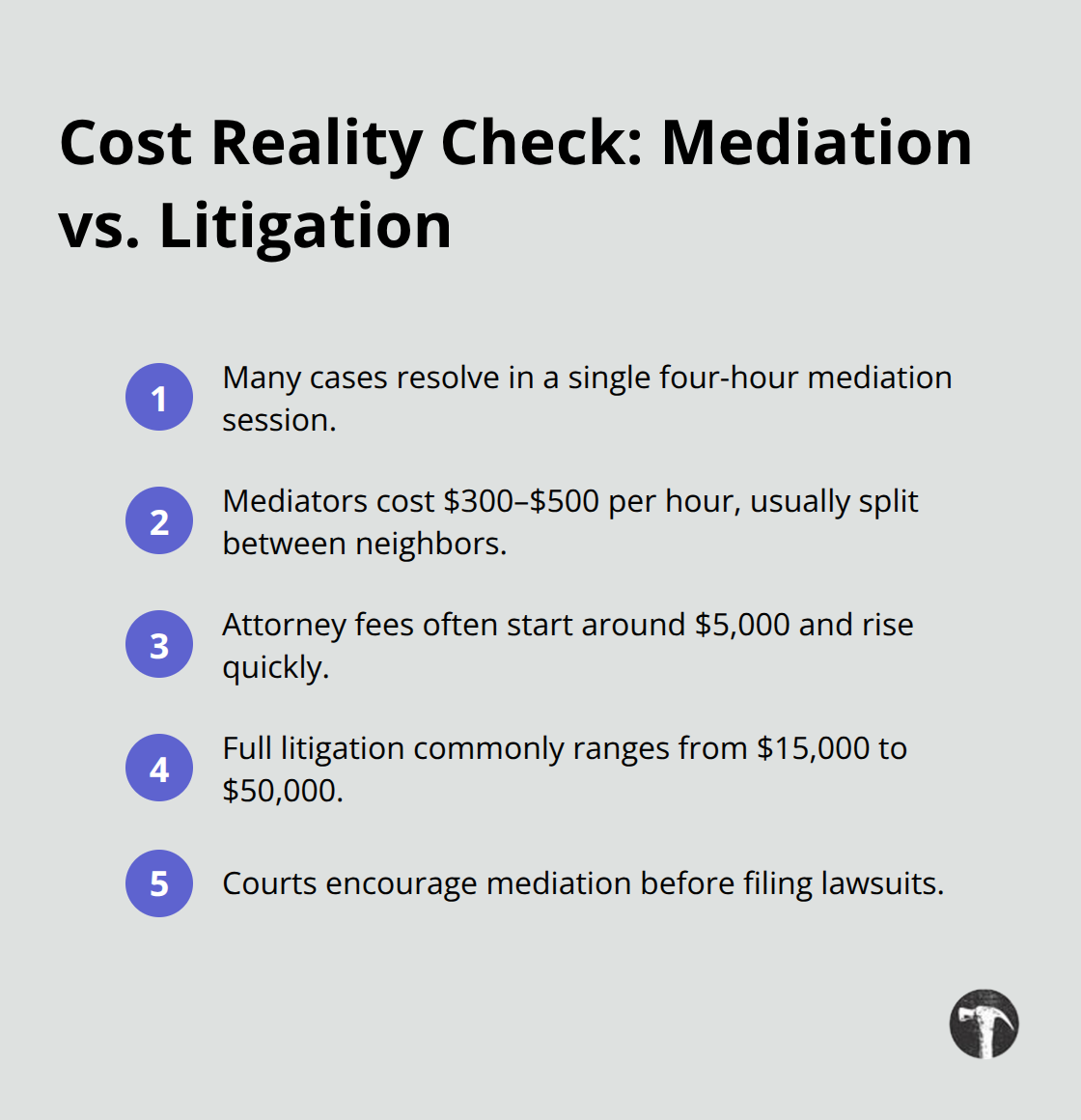
If your neighbor becomes defensive, refuses to communicate, or denies responsibility despite clear evidence, mediation becomes your next step. Los Angeles County courts encourage mediation before litigation, and many disputes resolve in a single four-hour session. Mediators typically cost $300 to $500 per hour split between parties, which beats attorney fees that start at $5,000 and climb quickly.
A neutral third party can often find middle ground that both neighbors accept, such as splitting costs differently based on who benefits more from the fence or agreeing to delay work pending further investigation.
Seek Legal Counsel When Mediation Fails
If mediation fails or your neighbor refuses to participate, contact The Law Offices of Alan J. Carnegie, APC to discuss your options. We represent property owners in real estate disputes, including boundary conflicts and fence disagreements. Litigation should be your last resort because court battles over fence disputes typically cost $15,000 to $50,000 depending on complexity, and judges often split costs anyway under Civil Code 841 unless one party acted in clear bad faith.
Final Thoughts
Property line fence disputes in Calabasas, California and throughout Los Angeles County require action before they spiral into costly litigation. You protect your interests by obtaining a boundary survey, providing written notice under California Civil Code Section 841, and attempting negotiation with your neighbor before conflict escalates. Most disputes stem from miscommunication rather than genuine disagreement over rights, and a calm conversation often resolves what appears intractable.
When direct negotiation and mediation fail, or when the dispute involves complex boundary questions or significant property damage, contact The Law Offices of Alan J. Carnegies, APC to discuss your options. We represent property owners in real estate disputes, including boundary conflicts and fence disagreements throughout Los Angeles County. Protecting your property rights early prevents costly mistakes and positions you for a favorable resolution.
Your property is likely your largest investment, and protecting it requires proactive steps. Document encroachments immediately, obtain professional surveys when boundaries are unclear, and keep all written communication with your neighbor. These actions position you to resolve property line fence disputes fairly or defend yourself if conflict becomes unavoidable.