

Property disputes in Calabasas, California can threaten your investment and peace of mind. From boundary conflicts to construction defects, these issues demand swift action.
We at The Law Offices of Alan J. Carnegies, APC help property owners throughout Los Angeles County navigate California real estate litigation and protect what matters most.
What Disputes Most Damage Property Values in Calabasas
Boundary Encroachments Cost Property Owners Thousands
Boundary disputes rank among the costliest property conflicts in Los Angeles County. When a neighbor’s driveway, fence, or landscaping encroaches onto your land, the financial and emotional toll compounds quickly. California Civil Code Section 841, the Good Neighbor Fence Act, requires adjoining landowners to share reasonable fence costs but mandates 30 days’ written notice before you incur expenses.
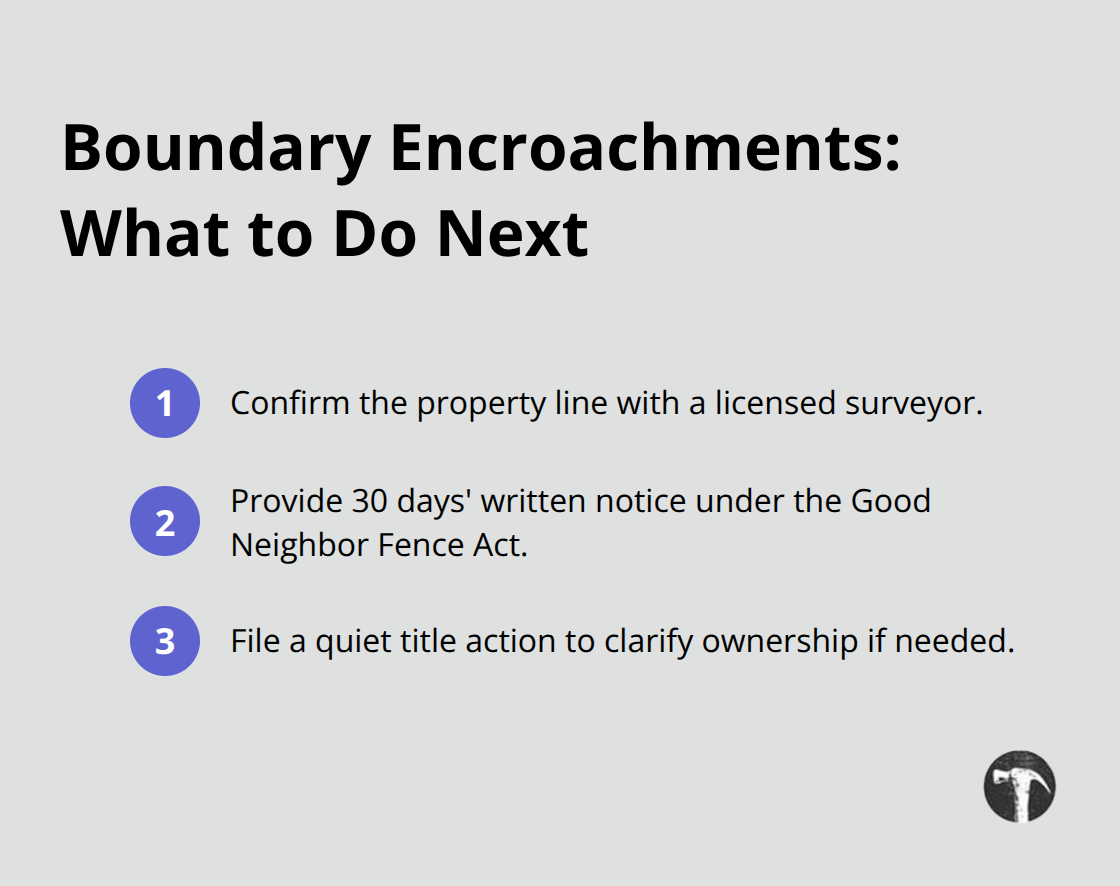
Property owners often discover encroachments during sales or renovations, when a licensed surveyor reveals the true property line. These conflicts frequently require a quiet title action to clarify ownership and prevent future disputes.
Construction Defects Reduce Property Value and Create Safety Risks
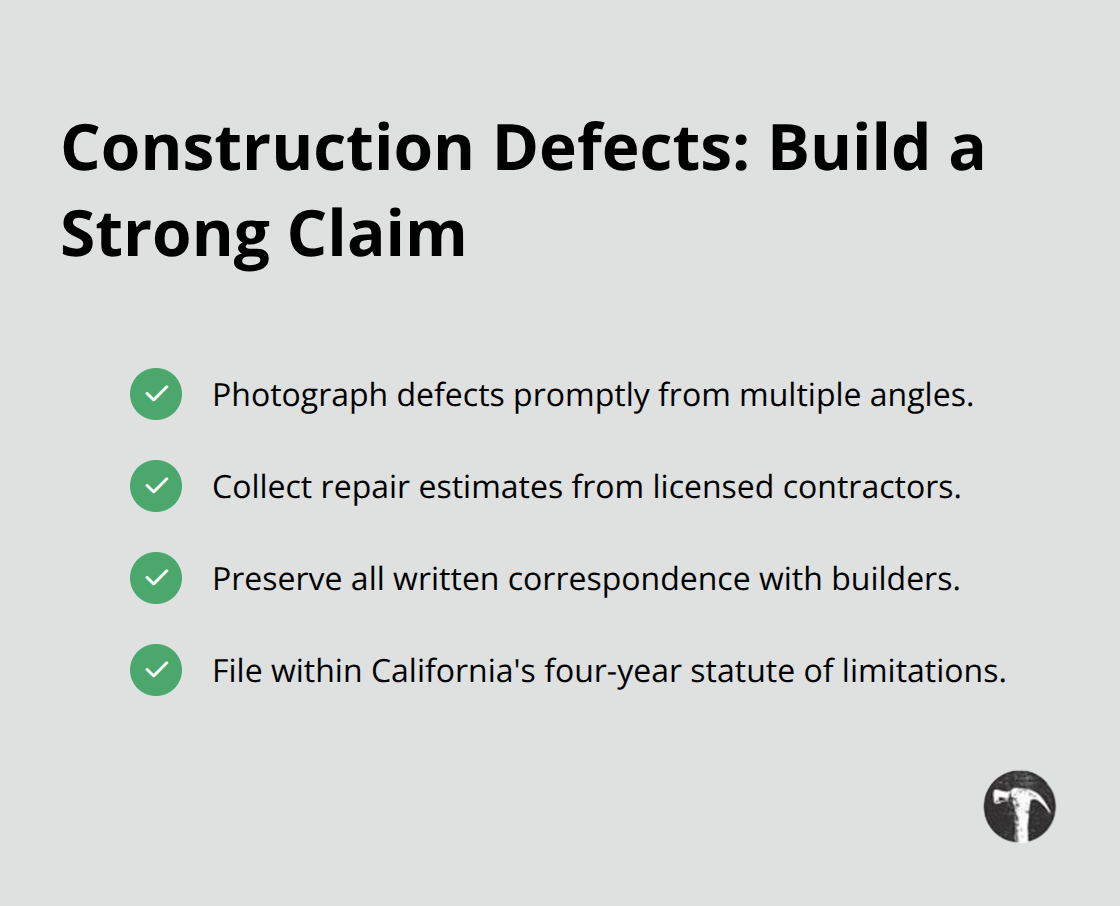
Construction defects present a different threat-substandard materials, code violations, or poor workmanship reduce property value significantly and create safety hazards. Defects often surface years after completion, making documentation of all communications with contractors and builders essential. You should photograph damage, collect repair estimates, and preserve all written correspondence with builders. This evidence strengthens your position in settlement negotiations or litigation. California’s statute of limitations for construction defect claims is four years, so you must act within that window to protect your rights.
Tree Root Damage Triggers Substantial Financial Recovery
Tree root damage from a neighbor’s property poses a third major challenge. Roots crossing property lines damage foundations, driveways, and underground utilities, leading to expensive repairs. California Civil Code Section 3346 imposes treble damages in cases of willful tree damage, substantially increasing financial recovery when a neighbor acts with knowledge of harm. You should document the damage with photos, repair estimates, and professional assessments to strengthen your position before negotiation or litigation. Acting quickly matters-California’s statute of limitations for property damage claims is four years, but delays weaken evidence and allow damage to worsen. The earlier you notify a neighbor and document the issue, the stronger your leverage in settlement discussions or court proceedings.
What Legal Remedies Recover Your Losses
Monetary Damages Compensate for Actual Losses
When boundary encroachments, construction defects, or tree root damage harm your property, California law provides concrete pathways to financial recovery. Monetary damages compensate you for repair costs, diminished property value, and lost income-but the amount depends on proving your actual losses with documentation. Courts award compensatory damages based on repair estimates, professional appraisals showing reduced value, and lost rental income if the property was income-producing. For tree root damage under California Civil Code Section 3346, willful damage triggers treble damages, meaning a neighbor liable for $50,000 in repairs could owe $150,000 if they acted knowingly.
Construction Defect Claims Have a Four-Year Window
Construction defect claims follow California’s four-year statute of limitations, so you must file within that window to preserve your right to damages. This deadline applies whether you pursue settlement negotiations or litigation. Missing this deadline eliminates your ability to recover compensation, making prompt action essential when defects surface. Collect repair estimates, photographs, and professional assessments immediately after you identify the defect to strengthen your position.
Injunctive Relief Stops Ongoing Harm Immediately
Injunctive relief stops ongoing harm before it worsens-a court order can force a neighbor to remove an encroaching fence, halt construction activity, or trim damaging tree roots. This remedy matters when waiting for trial would allow irreversible damage; for instance, a neighbor’s ongoing construction trespass requires immediate court intervention rather than waiting months for a damages verdict. Courts grant injunctions when you demonstrate that monetary damages alone cannot adequately compensate you for the harm.
Title Clarification Removes Ownership Clouds
Title clarification through a quiet title action removes cloud on your ownership and prevents future disputes with potential buyers or lenders who question your rights. When boundary lines remain unclear, a quiet title action compels the court to examine deeds, surveys, and historical records to declare who owns what-eliminating the ambiguity that weakens your position in transactions or financing. This action protects your ability to sell, refinance, or develop your property without title defects blocking the transaction.
Building Your Case Requires Professional Documentation
Securing these remedies demands documented evidence and professional assessments to maximize your recovery and protect your investment. Property appraisers, surveyors, and construction inspectors provide the objective findings that courts rely on when determining liability and damages. The stronger your documentation, the more leverage you gain in settlement negotiations or the more persuasive your case becomes at trial. With the right evidence in place, you’re positioned to move forward with confidence toward resolution.
How to Protect Your Property Rights in Calabasas, California
Act Immediately When You Spot Property Damage
The difference between a contained property dispute and a financial catastrophe often comes down to how fast you respond and what evidence you collect in the first days after discovering a problem. Property owners who wait weeks or months to document boundary encroachments, construction defects, or tree root damage lose critical leverage in negotiations and weaken their legal position considerably. California’s four-year statute of limitations sounds generous until you realize that courts favor parties with contemporaneous evidence-photographs taken the day damage appears carry far more weight than recollections from months later.
Document Everything With Precision and Immediacy
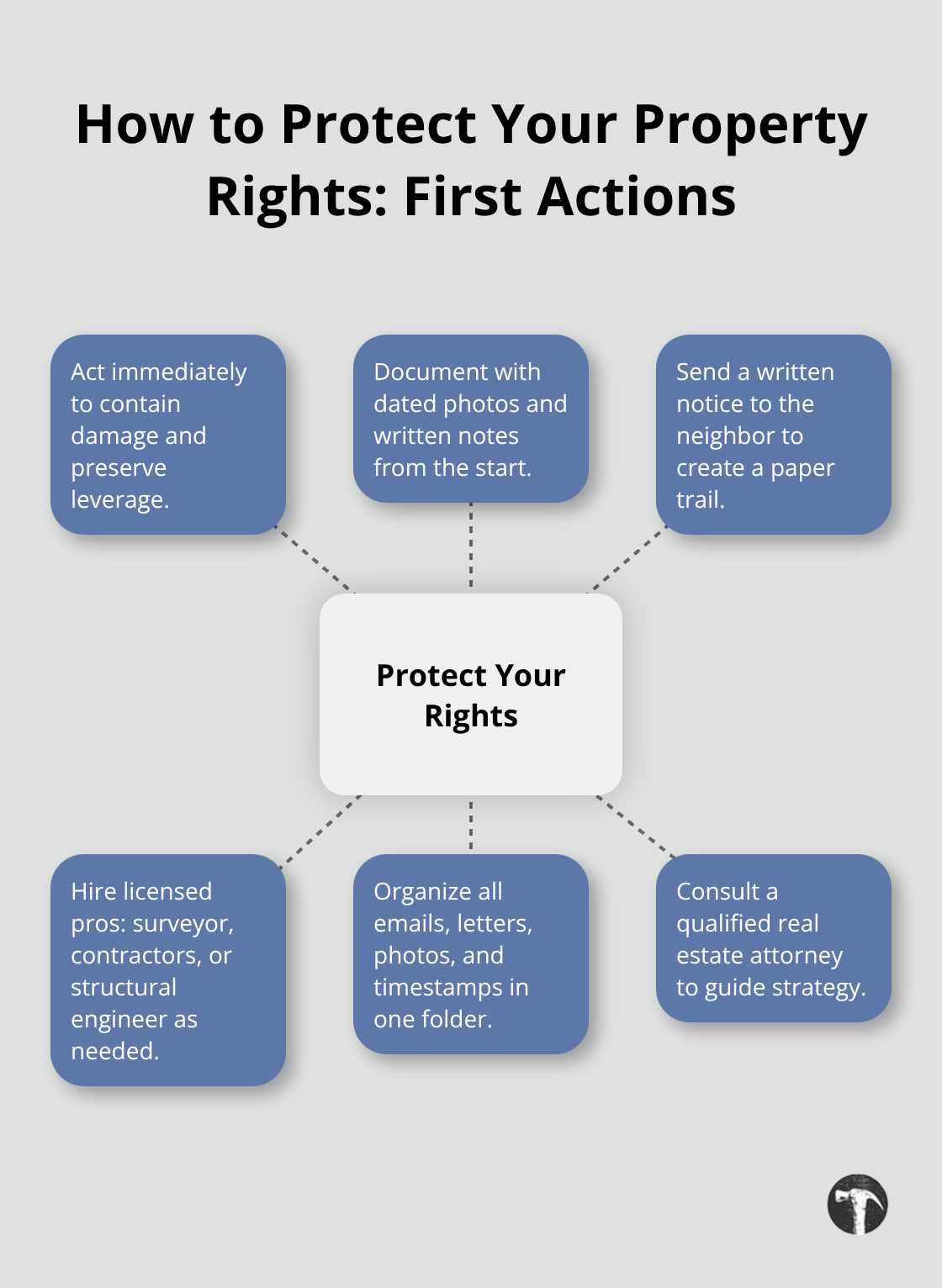
Start recording observations the moment you spot an issue: take dated photos from multiple angles, record the time and weather conditions, and write down exactly what you observe without interpretation. If a neighbor’s fence crosses your property line, photograph it with your property marker visible in the frame. If tree roots buckle your driveway, capture the damage and the tree’s location on your neighbor’s land. Simultaneously, send a written notice to the neighbor describing the problem and requesting a meeting to discuss resolution. This letter creates a paper trail showing you acted in good faith and gives the neighbor a chance to respond before legal action escalates. Keep copies of everything-emails, texts, letters, photographs, and timestamps-in a single organized folder. Courts and mediators view this documentation as evidence of diligence and responsibility.
Hire Professional Assessors to Strengthen Your Position
Professional assessments amplify the value of your documentation exponentially because they provide objective findings that your own observations cannot match. Hire a licensed surveyor within two weeks of discovering a boundary issue; the cost runs between $500 and $2,000 depending on property size and complexity, but the resulting survey becomes the foundation of any boundary dispute resolution. For construction defects, obtain written estimates from at least two licensed contractors describing the defect, repair scope, and costs-these estimates establish the baseline for damages claims and settlement discussions. If tree roots damaged your property, hire a structural engineer or foundation specialist to assess whether damage is cosmetic or poses safety risks; this professional finding determines whether you pursue injunctive relief to force root removal or focus on monetary recovery for repairs.
Use Documentation to Shift Settlement Negotiations
When you bring documented evidence and professional assessments to settlement negotiations, the opposing party recognizes immediately that you’re serious and prepared, which dramatically shifts the negotiation dynamic. Weak documentation invites delay and denial; strong documentation invites settlement offers. The moment you have a complete file of evidence, contact a qualified real estate attorney to review your position, estimate potential recovery, and determine whether negotiation, mediation, or litigation serves your interests best. We at The Law Offices of Alan J. Carnegie, APC represent property owners in boundary disputes, construction defects, and tree root damage claims throughout Los Angeles County, and we can help you evaluate your options after you’ve assembled your documentation.
Final Thoughts
Property disputes in Calabasas demand swift action because delays compound financial losses and weaken your legal position. Documentation collected in the first days after discovering a boundary encroachment, construction defect, or tree root damage carries far more weight than recollections gathered months later. Professional assessments from surveyors, contractors, and engineers transform your observations into objective findings that courts and opposing parties cannot dismiss.
California real estate litigation requires navigating complex statutes, procedural rules, and local court practices that vary across Los Angeles County. Boundary disputes demand understanding the Good Neighbor Fence Act and quiet title procedures. Construction defect claims require meeting strict deadlines and proving damages with repair estimates and professional inspections. Tree root damage claims hinge on demonstrating willful conduct to trigger treble damages under California Civil Code Section 3346.
We at The Law Offices of Alan J. Carnegies, APC represent property owners throughout Los Angeles County in boundary disputes, construction defects, tree root damage claims, and other real estate conflicts. Contact us today to discuss your property dispute and learn how we can help protect your real estate interests. The sooner you act, the stronger your position becomes.