
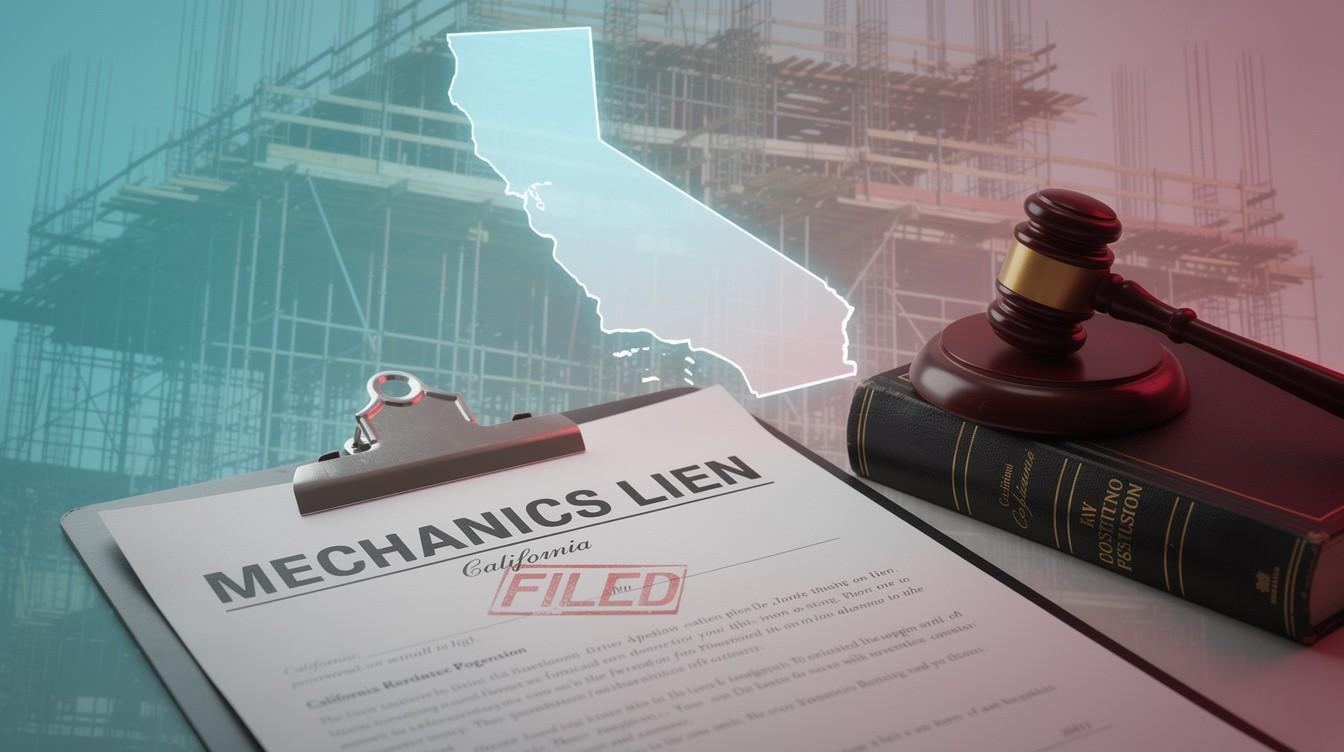
If you haven’t been paid for your construction work, a mechanic’s lien in California is your legal tool to recover what you’re owed. This right protects contractors, suppliers, and workers who contribute to property improvements but face payment disputes.
At The Law Offices of Alan J. Carnegies, APC, we help construction professionals throughout Los Angeles County understand and enforce their lien rights. The process involves strict deadlines and specific procedures that, when missed, can cost you everything.
What Counts as a Mechanic’s Lien in California and Who Can File One
Definition and Legal Power
A mechanic’s lien is a legal claim against a property that secures payment for work or materials provided during construction. Under California Civil Code sections 8000 through 8050, this lien attaches directly to the property’s title, creating a financial encumbrance that prevents the owner from selling, refinancing, or obtaining credit until the debt is resolved. The lien requires no prior agreement with the property owner-it exists by law once work begins and payment obligations arise. This power comes from the fact that the lien bypasses contract disputes and goes straight to the property itself.
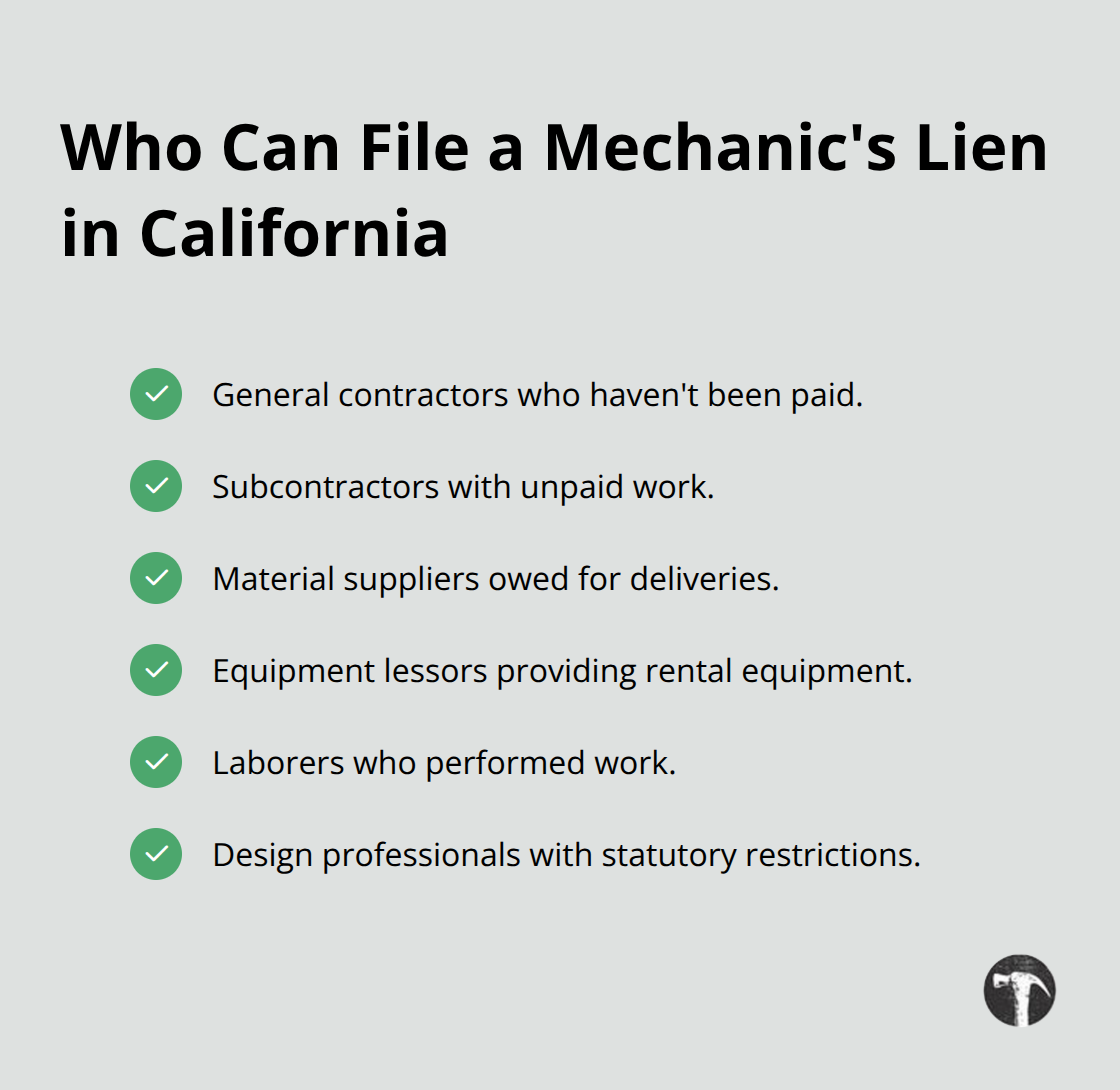
Who Can File a Mechanic’s Lien
A general contractor who hasn’t been paid can file a lien. So can a subcontractor, material supplier, equipment lessor, laborer, or design professional, though design professionals face restrictions. A design professional can only file if the work hasn’t started yet, the owner has defaulted on payment, and at least 10 days’ notice has been given. The one major limitation: design professional liens cannot apply to single-family, owner-occupied residences where construction costs are under $100,000.
Laborers and general contractors don’t need to file a preliminary notice to preserve their rights, but subcontractors and material suppliers must serve one within 20 days of starting work or delivering materials. Missing that 20-day window means losing lien rights for any work completed before the notice was served.
The Full-Price Advantage and Property Coverage
California is a full-price lien state, which means the entire unpaid amount gets secured by the lien, even if the general contractor has already been paid in full by the property owner. This creates real leverage in payment disputes. The lien covers residential homes, commercial buildings, vacant land improvements, and equipment installations-essentially any property where construction work adds value.
Recording and Enforcement Requirements
Once recorded with the county recorder in the county where the property sits, the lien becomes part of the public record and appears on title searches. Recording a lien is only the first step. The lien must be enforced through a foreclosure lawsuit within 90 days of recording, or it becomes void and worthless. Many contractors file liens but then miss the enforcement deadline, losing their security interest entirely.
The property description on the lien must be detailed enough for identification, and the lien must include the claimant’s name, address, the amount claimed, what was provided, and the hiring party. Errors in these required elements can invalidate the entire lien. The next section covers the specific notice requirements and deadlines that determine whether your lien will hold up in court.
Getting Your Lien on Record and Enforced Within California’s Strict Timelines
The 20-Day Preliminary Notice Window
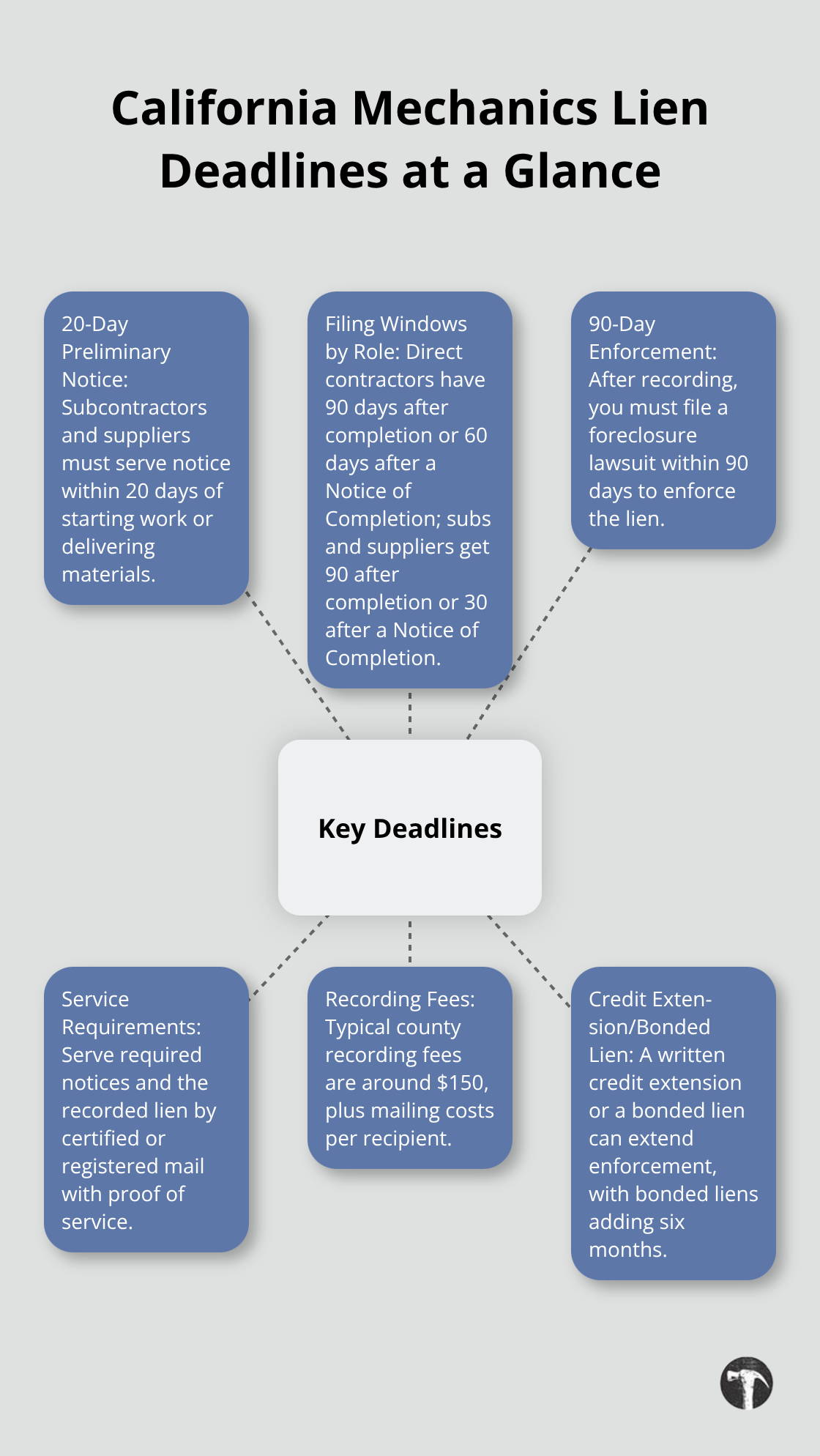
Subcontractors and material suppliers have exactly 20 days from the moment work starts or materials arrive to serve a preliminary notice. This is not a suggestion-it is the gate that keeps your lien rights alive. The notice must travel by certified or registered mail to the property owner, the general contractor, and any construction lender involved. If you miss this window, you lose lien rights for all work completed before the notice was served, and only work done in the 20 days before service remains covered. General contractors and laborers skip this step entirely, but subcontractors and suppliers who ignore it face catastrophic loss.
Once you serve the preliminary notice with proper proof of mailing, you preserve the foundation for your claim. The certified mail receipt becomes your proof that the notice reached its destination on time.
Recording Requirements and Content Standards
Recording the mechanics lien requires precision that most contractors underestimate. The lien must include the exact property description, the claimed amount, what you provided, the owner’s name, your name and address, the hiring party, and a signed proof of service affidavit. California Civil Code section 8416 specifies every required element, and missing even one invalidates the entire lien. You file the lien with the county recorder in the county where the property sits, and recording fees run around $150.
After recording, you must serve a copy of the lien on the property owner by certified mail with proof of service. This service requirement stands separate from the preliminary notice and cannot be skipped.
Filing Deadlines Based on Your Role
Direct contractors have 90 days after project completion to file their lien, or 60 days after a Notice of Completion is recorded-whichever comes first. Subcontractors and suppliers get 90 days after completion or only 30 days after a Notice of Completion. The Notice of Completion is filed by the property owner and significantly shortens your filing window, so tracking when it is recorded becomes critical to your timeline.
The 90-Day Enforcement Deadline
Once you record the lien, the clock starts on your enforcement deadline: you have exactly 90 days to file a foreclosure lawsuit, or the lien becomes worthless and unenforceable. Many contractors record liens but never follow through with enforcement, losing their leverage entirely. Missing the enforcement deadline is permanent and cannot be extended except through a written credit extension agreement signed by both parties or through a bonded lien, which gives you six additional months.
Costs and Next Steps
The total cost to file a lien typically runs $150 in recording fees plus $10 per certified mailing recipient, with foreclosure legal fees potentially recoverable if you win the case. These overlapping deadlines demand attention to detail and a system that tracks each milestone. The next section addresses the common challenges that arise when contractors and suppliers attempt to enforce their liens and the defenses that property owners and contractors raise in response.
Common Challenges in Mechanic’s Lien Claims
The 90-Day Enforcement Deadline That Destroys Valid Liens
The gap between recording a lien and winning payment is where most contractors lose their claims. You can have a perfectly valid lien that becomes worthless because you missed a single deadline or failed to enforce it properly. The 90-day enforcement window is absolute.
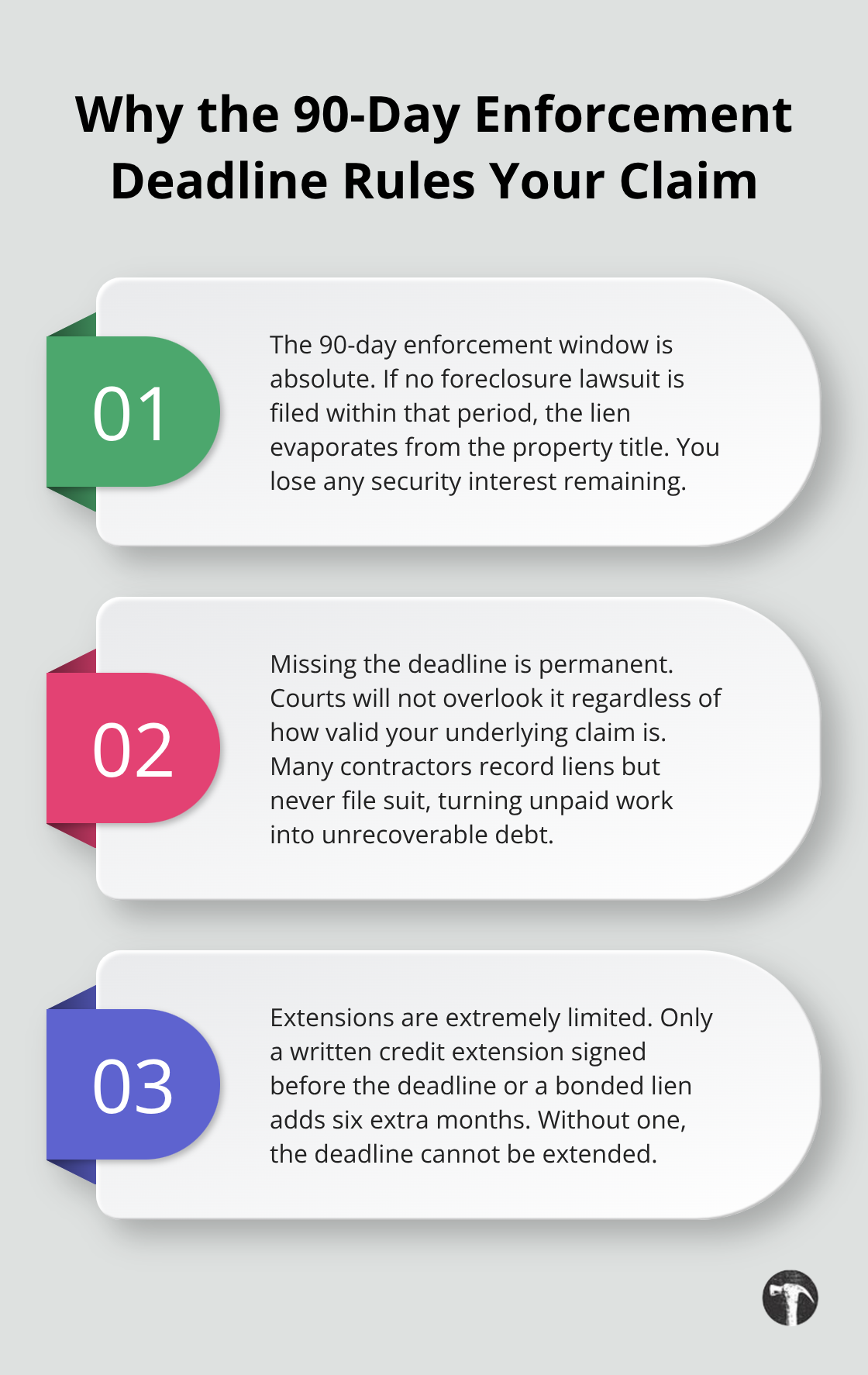
Once that period closes without a foreclosure lawsuit filed, the lien evaporates from the property title and you have no security interest remaining. No extensions exist unless you signed a written credit extension with the property owner before the deadline passed, or unless you filed a bonded lien that adds six extra months to your enforcement period. Many contractors record liens but never file the lawsuit, turning months of unpaid work into an unrecoverable debt. Courts will not overlook this deadline, no matter how valid your underlying claim might be.
Property Owner and Contractor Defenses That Invalidate Liens
Property owners and contractors raise defenses that can undermine your lien claim even when deadlines were met. An owner might argue the lien contains inaccurate property descriptions, missing required information, or insufficient proof of service-any of which invalidates the entire lien under California Civil Code section 8416. Contractors sometimes claim they paid you through the general contractor, creating disputes over who actually owes the debt and whether you have the right to lien the property. If you failed to serve the preliminary notice within 20 days as a subcontractor or supplier, the owner will argue you lost lien rights for all work performed before that notice was served.
Some owners file a notice of nonresponsibility to shield themselves from liens by parties they did not hire directly, though this defense only works if the notice was properly signed, recorded, and served according to strict statutory requirements. You must verify that every element of your lien complies with California law because even technical errors give defendants grounds to challenge validity. Construction dispute attorneys can help you navigate these complex defenses.
Disputes Over Amount Owed and Licensing Status
Disputes over the amount owed frequently arise when you claim the work was worth more than what the owner disputes. You must prove both the scope of work performed and its fair market value. If you were unlicensed and the work value exceeded $500, California law prohibits you from foreclosing on your lien at all, eliminating your remedy entirely.
Documentation Requirements That Determine Success or Failure
These defenses require you to document everything from the start: contracts, change orders, photos of completed work, invoices, delivery receipts, and proof of all notices served. Without this documentation, you cannot overcome owner arguments that challenge your lien’s validity or the amount owed. The difference between a recoverable claim and a total loss often comes down to whether you maintained records that prove each step of the process.
Final Thoughts
Your mechanics lien in California only holds value when you meet every deadline and maintain complete documentation from start to finish. The 20-day preliminary notice window, the filing deadlines that shift based on your role, and the 90-day enforcement period are absolute requirements that separate successful claims from worthless liens. Missing even one deadline transforms a valid claim into an unenforceable ghost lien that provides no leverage and no path to payment.
Contractors and suppliers who maintain detailed records from day one-contracts, invoices, delivery receipts, photos of completed work, and proof of every notice served-overcome the defenses that property owners raise in court. Without this documentation, you cannot prove the scope of work, the amount owed, or that you followed proper notice procedures. Property owners sometimes file notices of nonresponsibility or argue that your lien contains technical errors in the property description, and unlicensed contractors face the additional barrier that work valued over $500 cannot be foreclosed upon at all.
When disputes arise over payment amounts or when enforcement deadlines approach, the cost of legal guidance costs far less than missing a deadline that destroys your entire claim. Contact The Law Offices of Alan J. Carnegies, APC to discuss your mechanics lien claim and protect your rights throughout Los Angeles County. We help contractors, suppliers, and property owners navigate construction disputes and ensure you meet every deadline that stands between recovery and loss.