

Construction projects in Los Angeles County involve complex legal frameworks that catch many property owners and contractors off guard. Los Angeles construction disputes arise from payment disagreements, defective work, and unclear liability-issues that can derail timelines and drain budgets.
At The Law Offices of Alan J. Carnegies, APC, we help clients navigate these conflicts with practical solutions grounded in California law. This guide covers mechanic’s liens, payment disputes, construction defects, and the remedies available to you.
What Types of Disputes Disrupt Los Angeles Construction Projects in Calabasas, California
Payment failures and scope disagreements dominate Los Angeles construction disputes more than any other issue. Vague scope-of-work definitions create misaligned deliverables and completion standards, leaving contractors and owners fighting over what was actually promised. When a handshake deal overrides a written contract, disputes multiply-particularly around change orders that should have been documented in writing but weren’t. California law requires clear written evidence for modifications, yet many projects skip this step entirely, turning minor adjustments into major legal battles.
Payment Disputes Drive Most Conflicts
Non-payment and delayed payment rank as the leading dispute drivers in Los Angeles County projects. Contractors file mechanic’s liens when payments stall, which protects their right to payment but signals that the project relationship has broken down. Change orders without proper documentation fuel these tensions because neither party has a clear record of what work was included and what price was agreed. Projects that establish basic written documentation at the outset avoid these costly conflicts later. Missed deadlines and subpar materials also trigger breach-of-contract claims, with significant financial and legal consequences when either party fails to meet project standards.
California’s Regulatory Environment Shapes Dispute Resolution
California enacted changes to over 50 statutes in the past year, with 14 directly affecting contractor licensing and construction practices. This tighter regulatory compliance landscape means Los Angeles projects now face stricter labor requirements, prevailing wage applicability on certain projects, and expanded liability exposure for contractors. AB 2696 expanded direct contractor liability by allowing joint labor-management committees to sue general contractors for unpaid wages and related damages on private works-a change that increases direct exposure significantly. AB 3190 broadened prevailing wage applicability to affordable housing projects funded by tax credits, aligning these projects with public works labor standards. These regulatory shifts mean that what worked on a project two years ago may now violate current law, making current legal guidance essential.
Dispute-Resolution Paths Vary by Contract Type
Los Angeles projects must navigate mandatory mediation requirements, arbitration clauses governed by the California Public Contract Code, and dispute-resolution procedures that vary by contract type. California courts generally enforce arbitration clauses in construction contracts if they are fair and clearly drafted, but many disputes still proceed through mediation first because many contracts require it. Understanding which dispute-resolution path applies to your specific project (whether mediation, arbitration, or litigation) determines both cost and timeline.

Design defects and misrepresentations between designers and builders often result in finger-pointing and litigation, particularly when plans contain errors or miscommunications about specifications occur.
Why Strategic Legal Guidance Matters Now
The complexity of California’s legal framework means that disputes rarely resolve themselves. Construction conflicts require legal counsel familiar with current statutes and local Los Angeles practice from the first sign of trouble. We at The Law Offices of Alan J. Carnegie, APC represent property owners, contractors, and other parties in construction disputes, including mechanic’s liens, construction defects, and construction contract disputes. Understanding how payment disputes escalate and how regulatory changes affect your project positions you to act before conflicts spiral into costly litigation. The next section examines mechanic’s liens in detail-the tool contractors use to protect payment rights and the mechanism that often forces disputes into formal resolution.
Mechanic’s Liens Protect Contractors and Force Payment Disputes to Resolution in Calabasas, California
A mechanic’s lien is the legal tool that contractors and suppliers use to claim a security interest in property when payment fails. In California, filing a mechanic’s lien creates a claim against the property itself, not just against the owner’s bank account, which gives contractors real leverage to recover unpaid wages and materials. The lien attaches to the real property and survives even if the property changes hands, making it a powerful enforcement mechanism that property owners take seriously.
Preliminary Notice Requirements Start the Clock
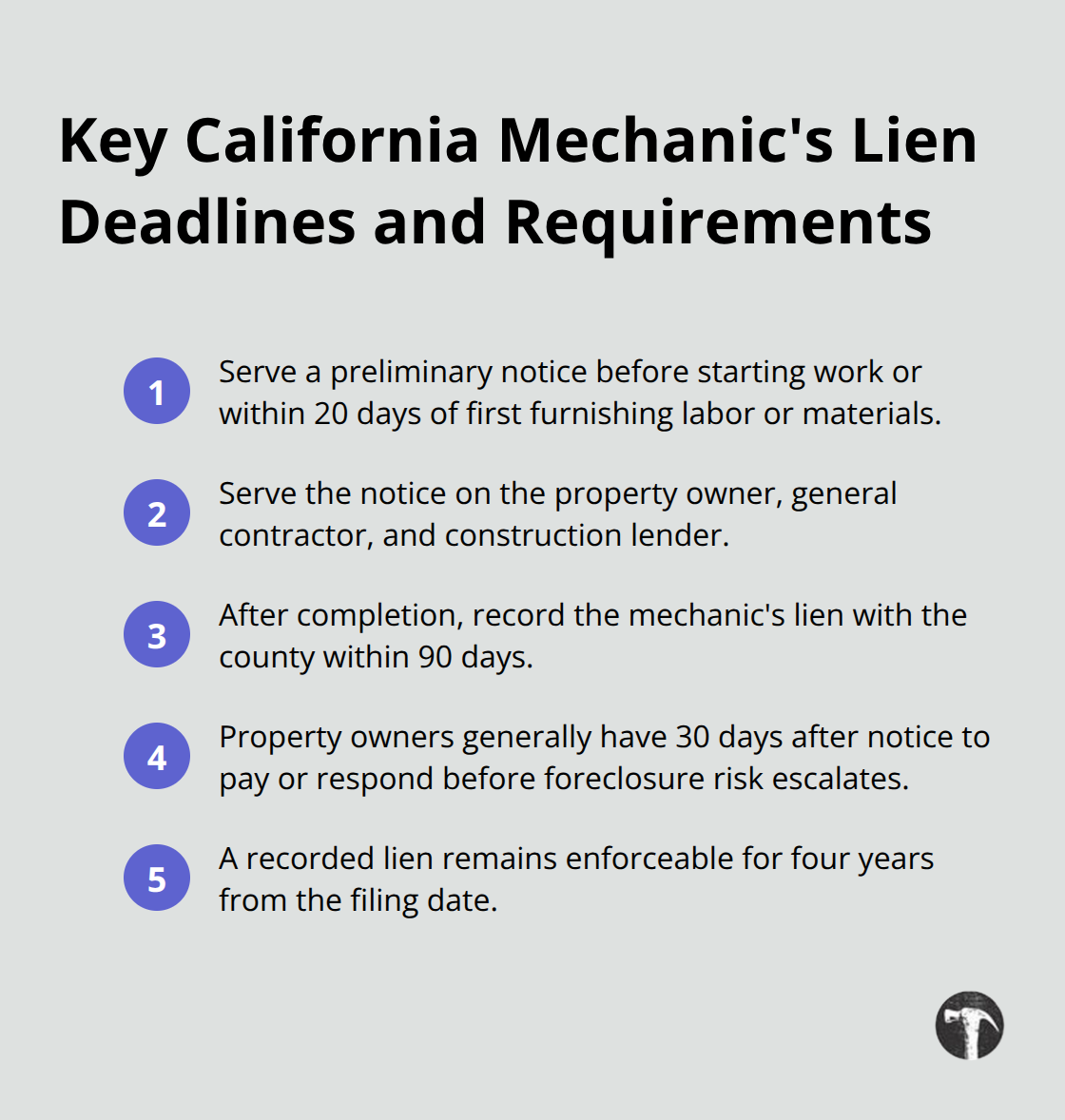
Contractors must file a preliminary notice before starting work or within 20 days of first providing labor or materials to preserve lien rights under California law. This notice must be served on the property owner, general contractor, and construction lender. Missing this deadline eliminates lien rights entirely, which is why contractors who skip written documentation at the project’s start often lose their ability to file a lien later. Once work is complete, contractors have 90 days to file the actual mechanic’s lien with the county recorder, and they must include specific information about the property, the amount owed, and the work performed.
Property Owners Face Real Consequences
Property owners who receive a mechanic’s lien notice have 30 days to pay the amount or respond in writing, but ignoring it allows the contractor to foreclose on the property to satisfy the debt. The lien remains enforceable for four years from the date of filing, creating a cloud on the title that prevents the owner from selling or refinancing until it is resolved. This encumbrance forces most property owners to address the dispute rather than let it linger.
Documentation Determines Lien Validity
Resolving payment disputes before a lien is filed always costs less and preserves the business relationship, which is why written change orders and regular payment schedules matter from day one. Contractors should document every scope change in writing and require owner sign-off before proceeding, because California courts will not infer a promise to pay for undocumented work no matter how reasonable the request seemed at the time. If a contractor fails to serve the preliminary notice properly, the owner has a defense to the lien claim, but this defense must be raised before the lien is enforced, not after.
Strategic Response Protects Your Interests
Property owners who receive a mechanic’s lien should contact legal counsel immediately rather than ignoring it, because the lien holder can file a lawsuit to foreclose on the property within four years, and delaying response only increases legal costs and uncertainty. Payment disputes that spiral into mechanic’s lien filings almost always require either negotiation backed by the threat of foreclosure or litigation to determine whether the lien was properly filed and whether the amount claimed is correct. The most practical path is to establish clear written terms at the start of any construction project, including a payment schedule tied to completion milestones, a change order process that requires written approval before work begins, and a dispute-resolution procedure that gives both parties a chance to resolve disagreements before liens and lawsuits follow. Once a lien is filed, the stakes shift dramatically-property owners face title encumbrance and potential foreclosure, while contractors must prove their claims in court if the owner contests the lien amount or validity.
Construction Defects and Liability in Calabasas, California
Construction defects fall into two categories: design errors and installation failures. Design defects originate from plans that contain errors, miscalculations, or incomplete specifications-problems that cascade through the entire project because builders follow flawed instructions from the start. Installation defects result from poor workmanship, substandard materials, or failure to follow specifications, and these often emerge months or years after project completion when structural movement, water intrusion, or material degradation becomes visible.
Design Errors vs. Installation Failures
The distinction between these two defect types matters because design defects typically implicate architects and engineers, while installation defects point toward contractors and subcontractors. Property owners frequently face finger-pointing between these parties, with designers blaming contractors for not following plans correctly and contractors claiming the plans were impossible to execute as written. California law does not excuse either party based on this blame-shifting; both designers and builders owe property owners a duty to perform their work properly and to communicate when problems arise.
When a design error surfaces during construction, the contractor must notify the owner and designer immediately rather than proceeding with defective work and hoping no one notices later. Courts view silence as tacit acceptance of the defect, which eliminates the contractor’s ability to claim the design was faulty and shifts liability entirely onto the builder.
Determining Liability and Financial Responsibility
Determining who pays for defect remediation depends on whether the defect resulted from breach of contract, negligence, or both. A contractor who installs materials that do not meet specification has breached the contract and must correct the work at no cost to the owner. A designer whose plans contain errors may face liability under professional negligence standards, which require proof that the designer failed to exercise the care and skill expected of professionals in the field.
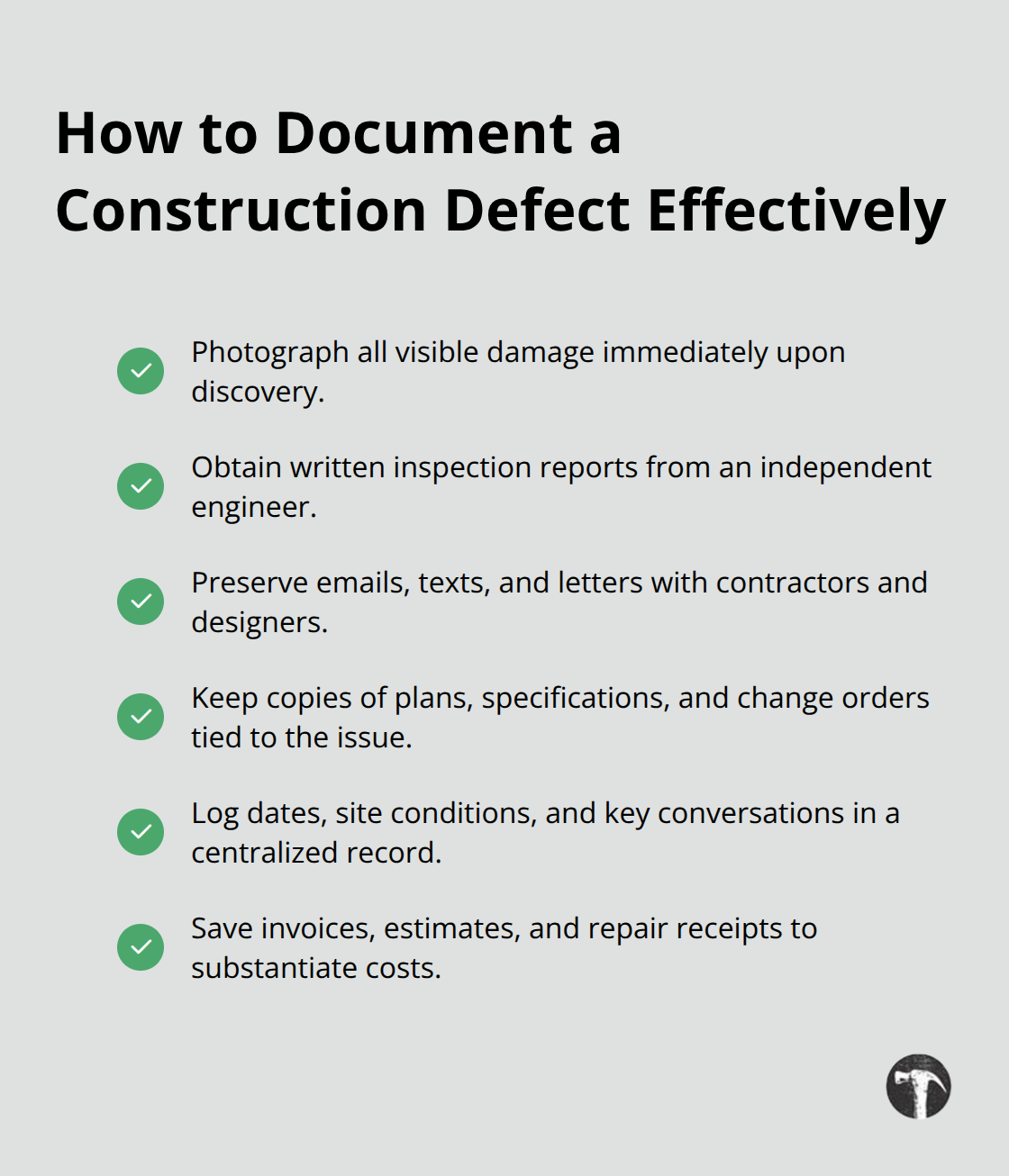
Property owners should document defects immediately upon discovery-photograph the damage, obtain written inspection reports from independent engineers, and preserve all communications about the defect with the contractor and designer. These records become critical evidence if litigation follows.
Recovery Options for Property Owners
California allows property owners to recover the cost of repairs, diminution in property value, and in some cases emotional distress or economic losses, but only if the owner can prove the defect existed and was caused by the defendant’s failure to perform. The statute of limitations for construction defect claims is generally four years from discovery of the defect, though some disputes involve latent defects that remain hidden for years before visible damage appears.
We at The Law Offices of Alan J. Carnegies, APC represent property owners in construction defect claims, helping clients identify the responsible parties and recover the full cost of remediation and associated losses. Our firm serves all of Los Angeles County, California, and handles the complex liability questions that arise when multiple parties share responsibility for defective work.
Final Thoughts
Los Angeles construction disputes stem from payment failures, scope disagreements, and defective work-problems that escalate quickly without clear written documentation and prompt legal action. The regulatory changes affecting California construction have tightened compliance requirements around prevailing wages, contractor liability, and labor standards, making current legal guidance essential for any project in Los Angeles County. Property owners and contractors who understand mechanic’s lien deadlines, preliminary notice requirements, and design versus installation defects position themselves to resolve conflicts before they spiral into costly litigation.
The most practical protection is prevention. Establish written contracts with explicit scope definitions, payment schedules tied to completion milestones, and change order procedures that require written approval before work begins. Document all communications, site conditions, and modifications from day one, and respond immediately when disputes arise rather than hoping the problem resolves itself-a mechanic’s lien filed against your property or a construction defect claim can cloud your title and drain your budget for years if left unaddressed.
If you face a construction dispute or want to reduce risk on an upcoming project, we at The Law Offices of Alan J. Carnegies, APC can help you navigate the complexities of Los Angeles construction disputes. We represent property owners, contractors, and other parties in mechanic’s liens, construction defects, and construction contract disputes across Los Angeles County, and we serve all of Los Angeles County, California. Contact our firm today to discuss your situation and learn how we can protect your interests before disputes escalate.