
Construction contract disputes in California cost projects thousands in delays and legal fees. At The Law Offices of Alan J. Carnegies, APC, we see these conflicts stem from unclear terms, payment issues, and scope changes.
The good news: most disputes are preventable with proper planning and documentation. This guide walks you through the causes, your legal options, and concrete steps to protect your project.
What Causes Construction Disputes in Calabasas, California and Across Los Angeles County
Scope Changes Create Immediate Conflict
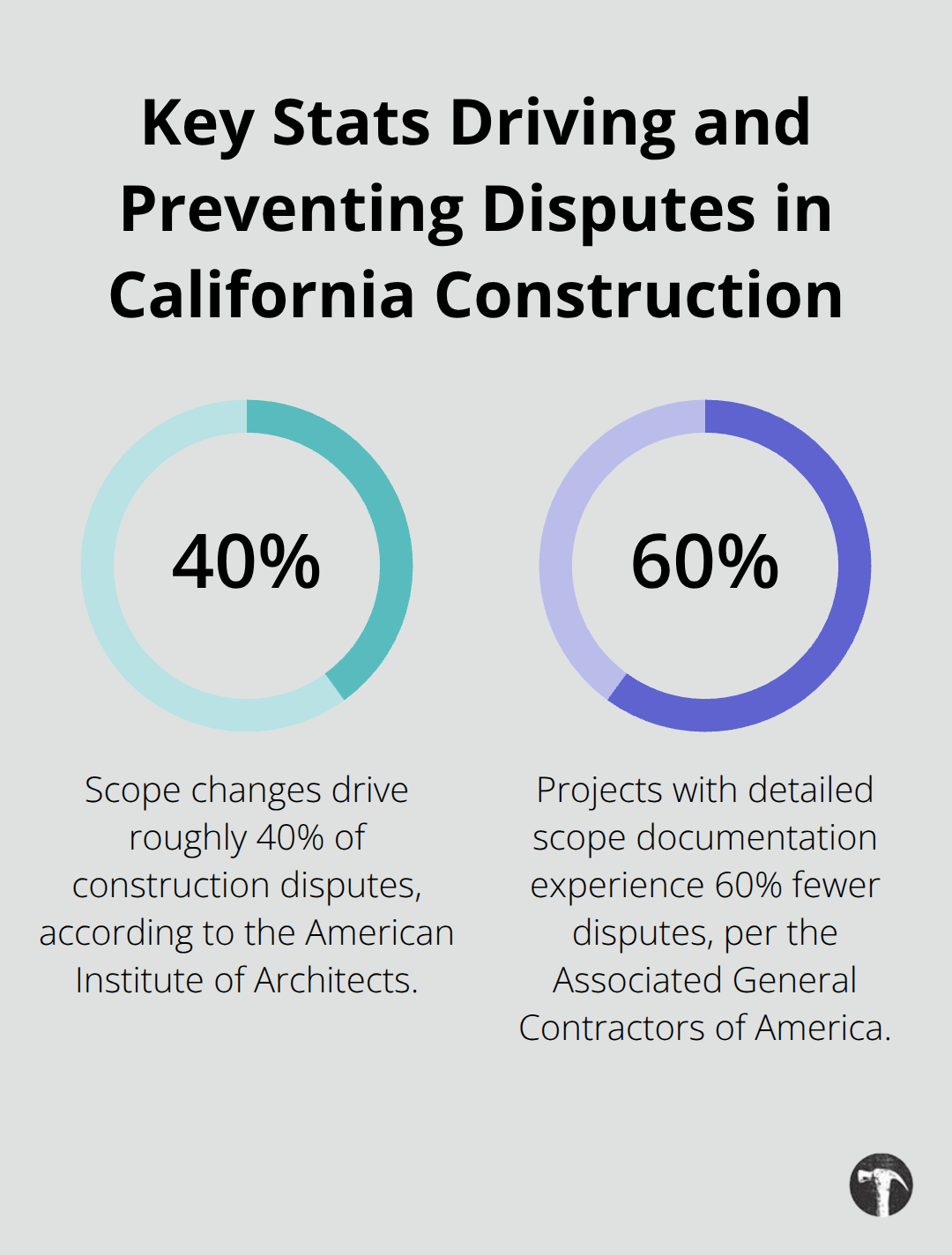
Scope creep destroys construction projects faster than almost anything else. A client requests a minor change-add a window, upgrade materials, relocate a wall-and suddenly the contractor and owner disagree on whether that change was included in the original contract price. The American Institute of Architects reports that scope changes account for roughly 40 percent of construction disputes. The problem isn’t the changes themselves; it’s that most contracts lack precise language defining what happens when work expands beyond the original agreement.
Contractors often interpret vague contract language as permission to charge extra, while owners believe changes should be absorbed into the project cost. Without a clear change order process documented in writing, both parties end up in conflict.
Payment Delays Trigger Cascading Problems
Payment disputes follow a similar pattern and rank among the top three reasons construction projects fail, according to the Associated General Contractors of America. Contractors don’t receive payment on time, so they can’t pay their subcontractors or suppliers. Owners claim invoices don’t match work performed or that quality issues warrant payment holds. The cash flow tension in construction creates a pressure cooker-one delayed payment triggers a cascade of problems down the line.
Unrealistic Timelines Breed Resentment
Timeline conflicts emerge because construction schedules are often unrealistic from the start. Weather delays, material shortages, and labor availability rarely align with initial timelines, yet contracts frequently impose rigid deadlines without contingencies. When a project falls behind, owners lose money on carrying costs while contractors face penalty clauses or breach claims.
Quality Disputes Escalate Quickly
Quality disputes create the deepest resentment because they’re subjective. What one party considers acceptable workmanship, the other views as defective. A concrete finish, paint color, or installation method becomes a battleground. California’s construction defect laws give property owners significant leverage-they can file mechanics liens, pursue warranty claims, and demand remediation years after a project completes. These disputes often escalate because neither party wants to absorb the cost of fixing allegedly defective work.
Understanding these four conflict sources matters because they compound when parties lack clear contractual protections and communication protocols. The legal framework governing construction disputes in California offers multiple paths to resolution, each with distinct advantages and costs depending on your situation and goals.
How California Law Shapes Your Construction Dispute Options
California’s Statutory Framework Controls Your Timeline
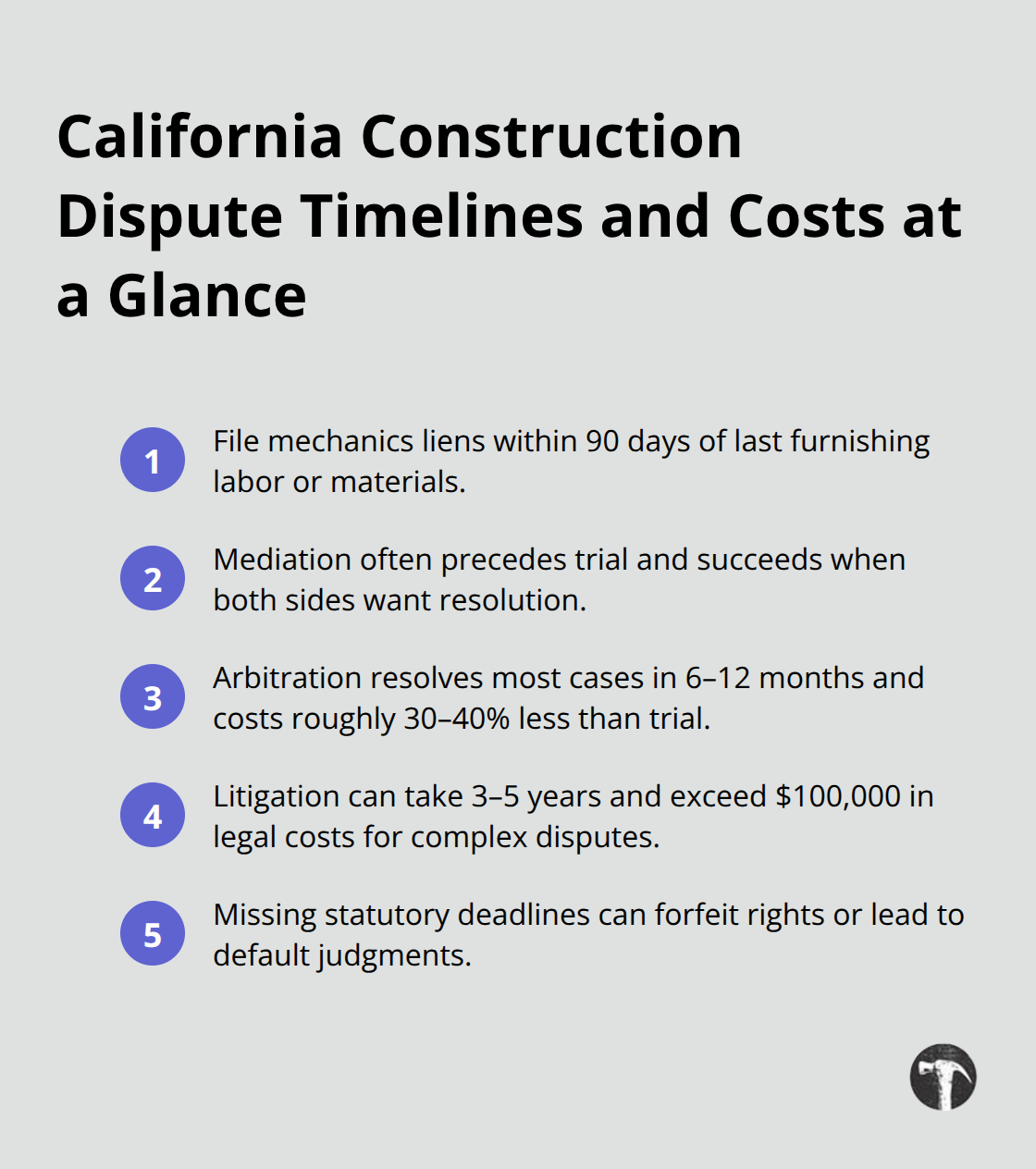
California construction law creates a structured framework that gives you multiple paths to resolve disputes, each with different timelines, costs, and outcomes. The state’s legal system recognizes that construction conflicts demand faster resolution than typical civil litigation, which is why California has developed specialized mechanisms for handling these disputes. Timing matters more than strategy in many cases because delays in construction disputes compound costs exponentially. California requires contractors to file mechanics liens within 90 days of last furnishing labor or materials, and this deadline is absolute-miss it and you lose your lien rights entirely. Property owners must respond to liens within specific timeframes or face judgment by default.
These statutory deadlines shape every construction dispute in the state.
Mediation and Arbitration Offer Speed Over Litigation
Mediation and arbitration have become the dominant resolution methods in California construction disputes because they move faster than courtroom litigation. The Construction Industry Arbitration Rules, administered through the American Arbitration Association, allow parties to resolve disputes in 6 to 12 months rather than the 2 to 4 years typical litigation requires. Arbitration costs roughly 30 to 40 percent less than trial in most cases, according to construction law studies, because discovery is limited and the process streamlines evidence presentation. However, arbitration has a critical weakness: you have minimal appeal rights if the arbitrator makes a factual error or misinterprets the contract.
Mediation works differently-a neutral third party helps both sides negotiate but doesn’t impose a binding decision. Mediation succeeds when both parties genuinely want resolution, but it fails when one side uses it as a delay tactic. California courts increasingly push construction parties toward mediation before trial, and many construction contracts now mandate it.
Litigation Provides Full Appeal Rights at Higher Cost
Litigation through California courts gives you full appeal rights and the ability to recover attorney fees if your contract includes a prevailing party clause, but expect 3 to 5 years and legal costs exceeding $100,000 for complex disputes. If mediation fails, arbitration or litigation becomes necessary. The choice between these paths depends on your specific dispute, contract language, and desired outcome.
Mechanics Liens Remain Your Most Powerful Leverage Tool
The mechanics lien system deserves separate attention because it’s California’s most powerful tool for unpaid contractors and suppliers. Filing a lien creates a legal claim against the property itself, forcing owners to resolve the debt or face forced sale of the property to satisfy the lien. Understanding how to properly file, enforce, or defend against a mechanics lien determines whether you recover payment or lose your leverage entirely. This is where the distinction between different dispute resolution paths becomes critical-your lien rights interact with mediation, arbitration, and litigation in ways that affect your negotiating position and ultimate recovery.
Stop Construction Disputes Before They Start
Write Contracts That Leave No Room for Interpretation
The difference between a smooth project and a nightmare comes down to contract precision and documentation habits established on day one. Most contractors and owners believe they can handle disputes informally through phone calls and handshake agreements, then panic when disagreements surface and no written record exists. Construction contracts in California must spell out exactly what work is included, what triggers extra charges, how changes receive approval, and what happens when timelines slip. Vague language like “reasonable quality” or “standard industry practices” creates immediate conflict because parties interpret these terms differently. Your contract should define payment schedules tied to specific milestones, not arbitrary dates. It should include a formal change order process requiring written approval before any scope expansion, with explicit pricing for additional work.
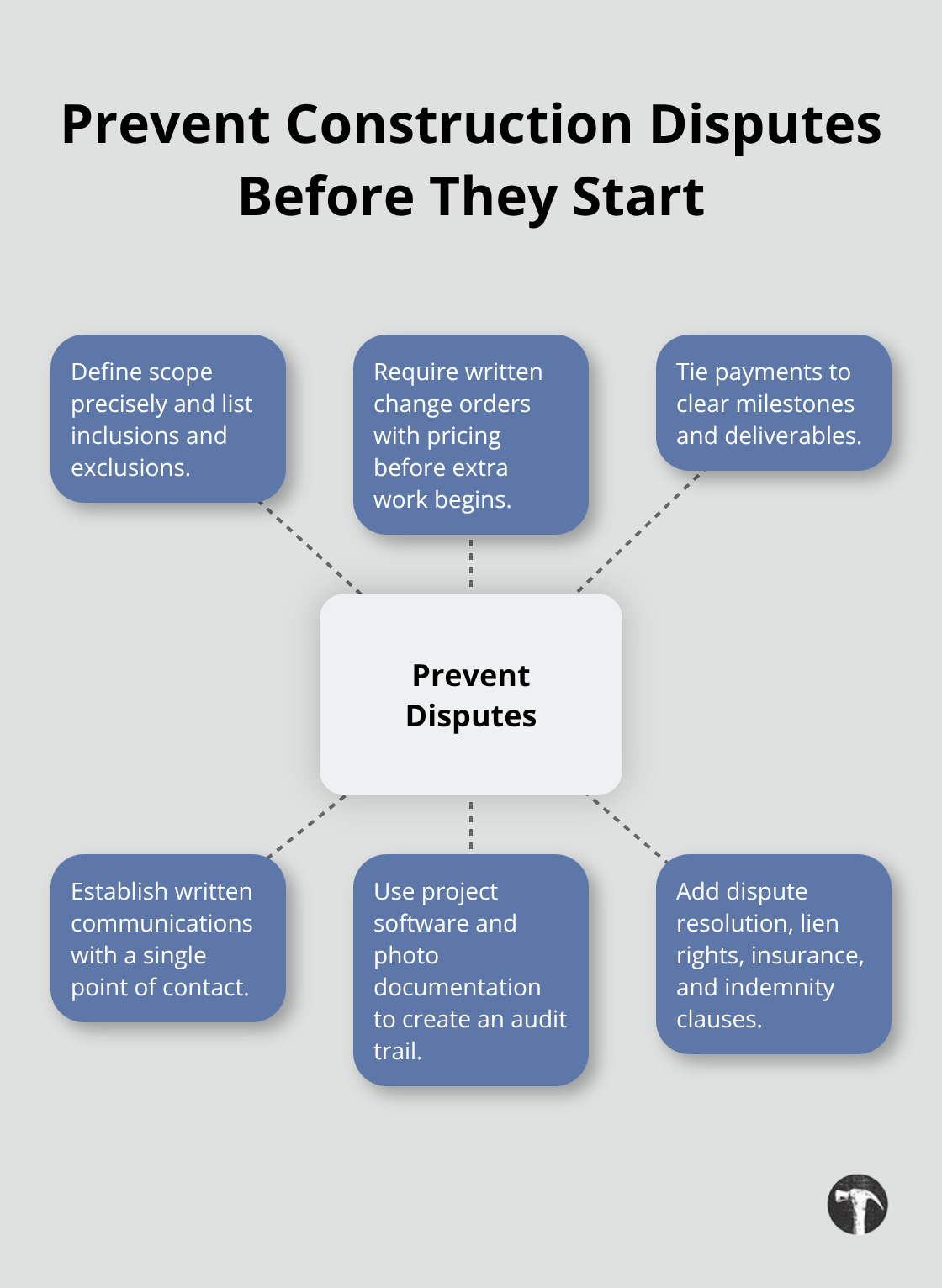
The Associated General Contractors of America found that projects with detailed scope documentation experience 60 percent fewer disputes than those with generic contracts. Include dispute resolution clauses specifying whether you’ll pursue mediation, arbitration, or litigation, because waiting until conflict erupts to decide this wastes time and money. California construction contracts should also address mechanics lien rights, insurance requirements, and indemnification clearly so no party discovers surprise obligations mid-project.
Document Every Decision in Writing
Communication protocols matter as much as contract language because construction involves dozens of decisions weekly. Establish a single point of contact on each side, require written confirmation for all decisions via email or project management software, and schedule weekly coordination meetings with documented attendance and action items. When a client requests changes, the project manager should immediately create a written change proposal showing scope additions, cost impact, and timeline effects before work begins. This prevents the common scenario where work proceeds, invoices arrive, and owners claim they never authorized the extra cost. Documentation systems like Procore or Touchplan create automatic records of all decisions, reducing disputes by forcing transparency. Photograph and document existing conditions before work starts and after each major phase completes, because quality disputes hinge on evidence of what was actually completed versus what was promised. When issues arise during construction, address them immediately in writing rather than hoping they resolve themselves, because small problems compound into major conflicts. The cost of implementing these systems is negligible compared to even a single mediation or arbitration proceeding, which typically runs $15,000 to $50,000 in fees and lost project time.
Protect Your Rights With Professional Legal Review
Construction contracts contain technical language and legal obligations that most project participants misunderstand. Having an attorney review your contract before you sign protects you from hidden liability exposure and ensures your dispute resolution strategy aligns with your business goals. We at The Law Offices of Alan J. Carnegies, APC represent property owners, contractors, and other parties in construction disputes throughout Los Angeles County, California, including Calabasas. A brief legal review costs far less than recovering from a poorly drafted contract that leaves you vulnerable to mechanics liens, payment disputes, or defect claims.
Final Thoughts
Construction contract disputes in California stem from preventable mistakes that parties make by failing to establish clear expectations upfront. Scope creep, payment delays, timeline conflicts, and quality disagreements repeat across projects because contracts lack precision and communication protocols break down. You now understand what causes these disputes and how California’s legal framework provides multiple resolution paths tailored to your situation.
Prevention beats litigation every time because a well-drafted contract with precise language, a documented change order process, and consistent written communication eliminate most disputes before they start. When you implement these practices, you protect your cash flow, timeline, and reputation while avoiding the substantial costs of mediation, arbitration, or courtroom proceedings. The investment in upfront contract review and documentation systems pays for itself many times over.
If disputes do arise despite your precautions, you have options that range from mediation to mechanics liens to formal litigation. Construction law contains technical requirements and strategic decisions that significantly affect your outcome, which is why professional legal guidance matters before you sign contracts or respond to disputes. We at The Law Offices of Alan J. Carnegies, APC represent property owners, contractors, and other parties in construction contract disputes throughout Los Angeles County, California, and we can help you protect your interests and resolve your dispute efficiently.