Property boundary conflicts in California happen more often than most homeowners realize. Unclear surveys, neighbor encroachments, and disagreement over easements create real problems that can cost thousands to resolve.
We at The Law Offices of Alan J. Carnegies, APC help property owners throughout Los Angeles County protect their boundaries and avoid costly disputes. This guide walks you through the causes, solutions, and legal options available to you.
What Causes Boundary Disputes in Calabasas, California and Across Los Angeles County
Outdated Surveys Create the Foundation for Conflict
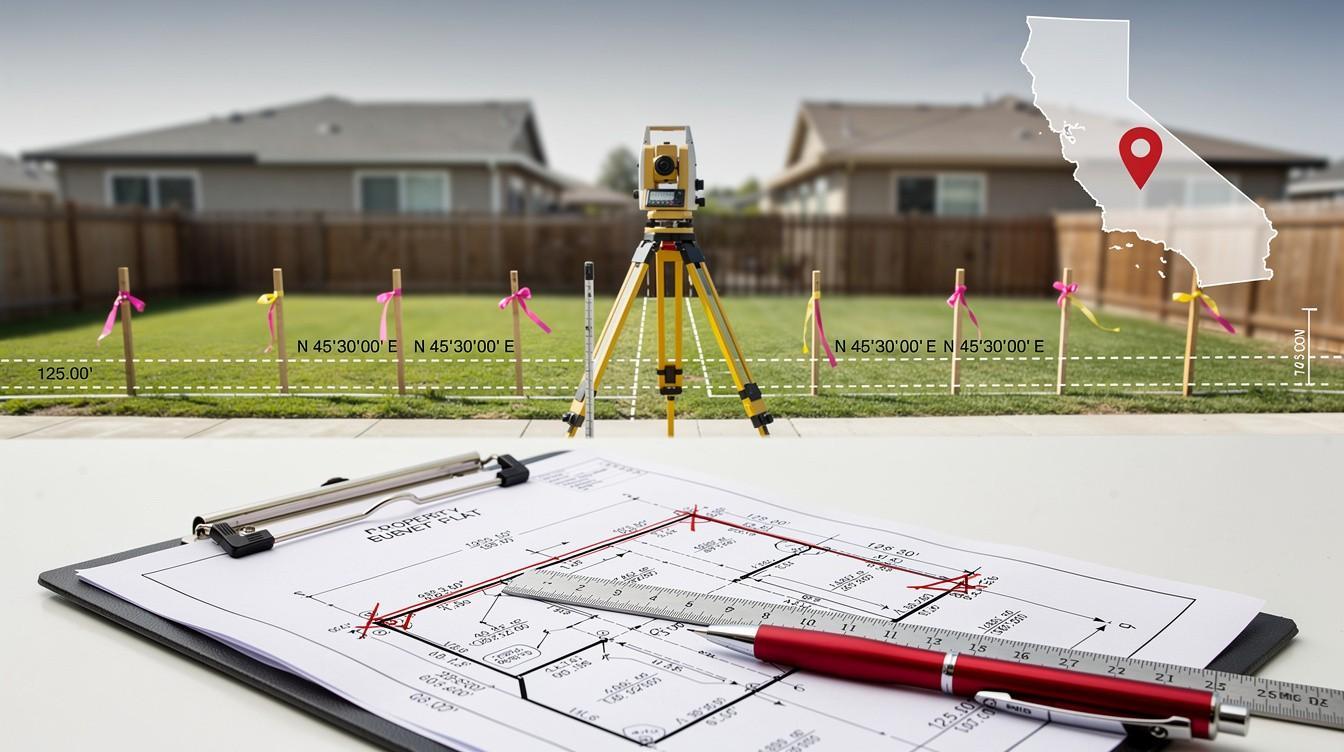
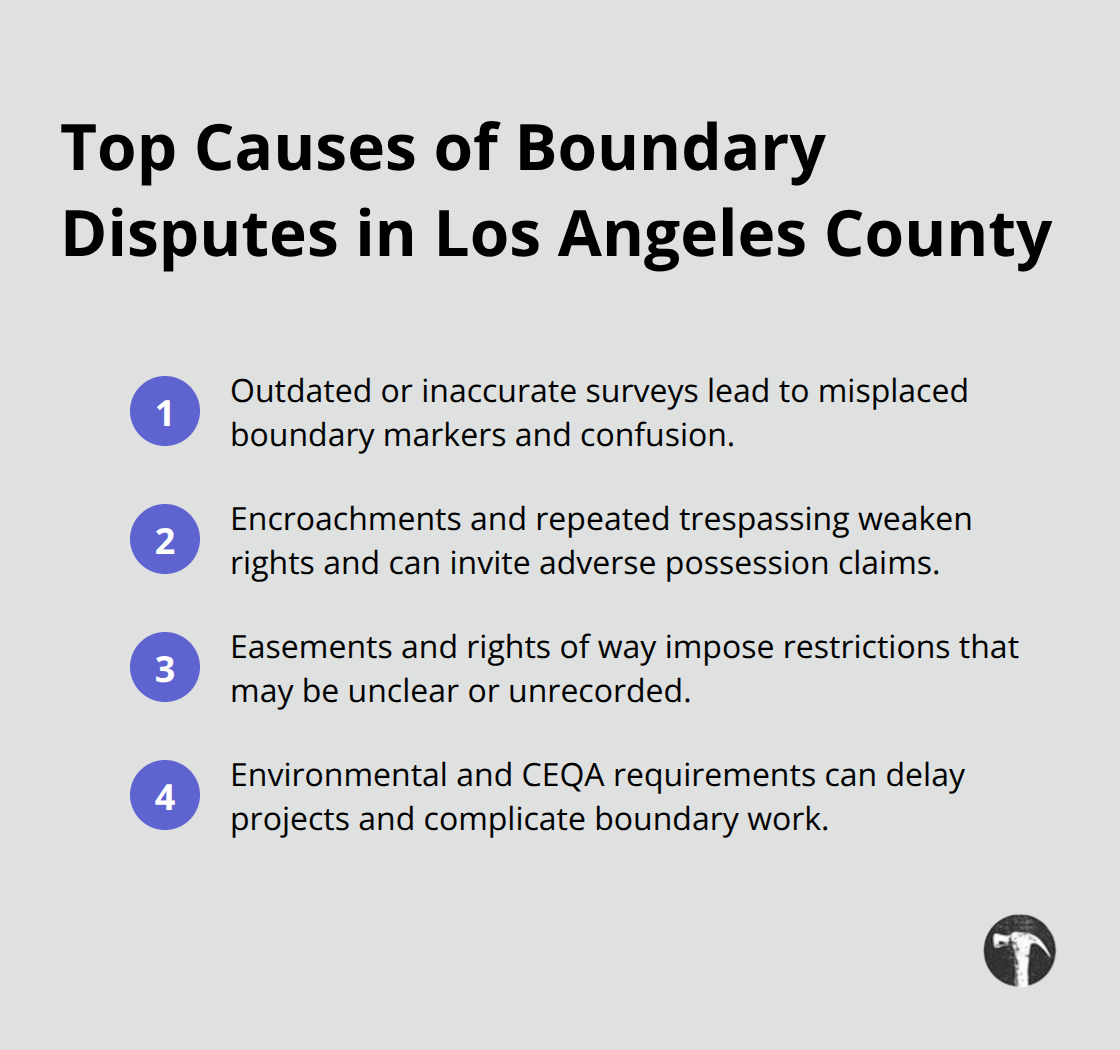
Outdated surveys sit at the root of many boundary conflicts in Los Angeles County. California Civil Code Section 658 defines real property as land and its fixtures, but when a survey is ten, twenty, or thirty years old, the boundary markers it identified may have shifted, disappeared, or been misinterpreted. A licensed land surveyor conducting a current boundary assessment typically costs between $100 and $600, yet many homeowners skip this step and rely on decades-old documents instead. This creates the first major problem: when neighbors eventually disagree about where the line actually sits, neither party has reliable proof. The survey that exists may show one boundary, but soil erosion, fence replacements, or simple monument loss can mean the actual line is somewhere else entirely. Without current professional documentation, you work blind.
Encroachments and Trespassing Erode Your Rights Over Time
Encroachments happen when a neighbor’s structure, tree, or improvement crosses onto your property. A fence that sits six inches over the line sounds minor until you try to sell the home or refinance and the title company flags it as a defect. Trespassing differs from encroachment in that it involves temporary or repeated unauthorized entry rather than a permanent structure, but both erode your property rights over time. California Civil Code Section 813 warns that inaction can lead to adverse possession claims, where long-term, open, and exclusive use by another person can eventually transfer ownership to them. If a neighbor has been using a corner of your land for ten years without objection, that neighbor may have legal grounds to claim it as theirs. This is why written notices and boundary markers matter immediately, not later.
Easements and Rights of Way Create Hidden Restrictions
Easements and rights of way create another layer of complexity because they are often invisible yet binding. An easement grants someone else access to or use of your property for a specific purpose (utility lines, drainage, or a shared driveway are common examples). These may be recorded with the county or may have arisen through long use as prescriptive easements. When you purchase property, you inherit whatever easements are attached to the title, but many sellers and agents fail to explain what these restrictions mean for future development or privacy. Disagreements arise when a neighbor claims an easement that is not recorded or when the scope of an existing easement is unclear. If an easement allows utility access but the neighbor interprets it as permission to park vehicles on your land, conflict follows.
Environmental Regulations Add Complexity to Boundary Work
Before any construction, fencing, or major improvement, you must obtain a current title report and have a licensed surveyor identify all easements and boundary lines. The California Environmental Quality Act (CEQA) adds another layer: if your property is in an area subject to CEQA review, any boundary-related development may require environmental impact analysis, delaying projects and raising costs. These overlapping issues-unclear surveys, encroachments, adverse possession risk, and easement disputes-do not resolve themselves. Understanding what causes these conflicts is the first step toward protecting your boundaries.
The next section walks you through the concrete steps you can take to resolve disputes before they escalate into expensive litigation.
How to Resolve a Boundary Dispute Before It Escalates
Start with a Professional Survey
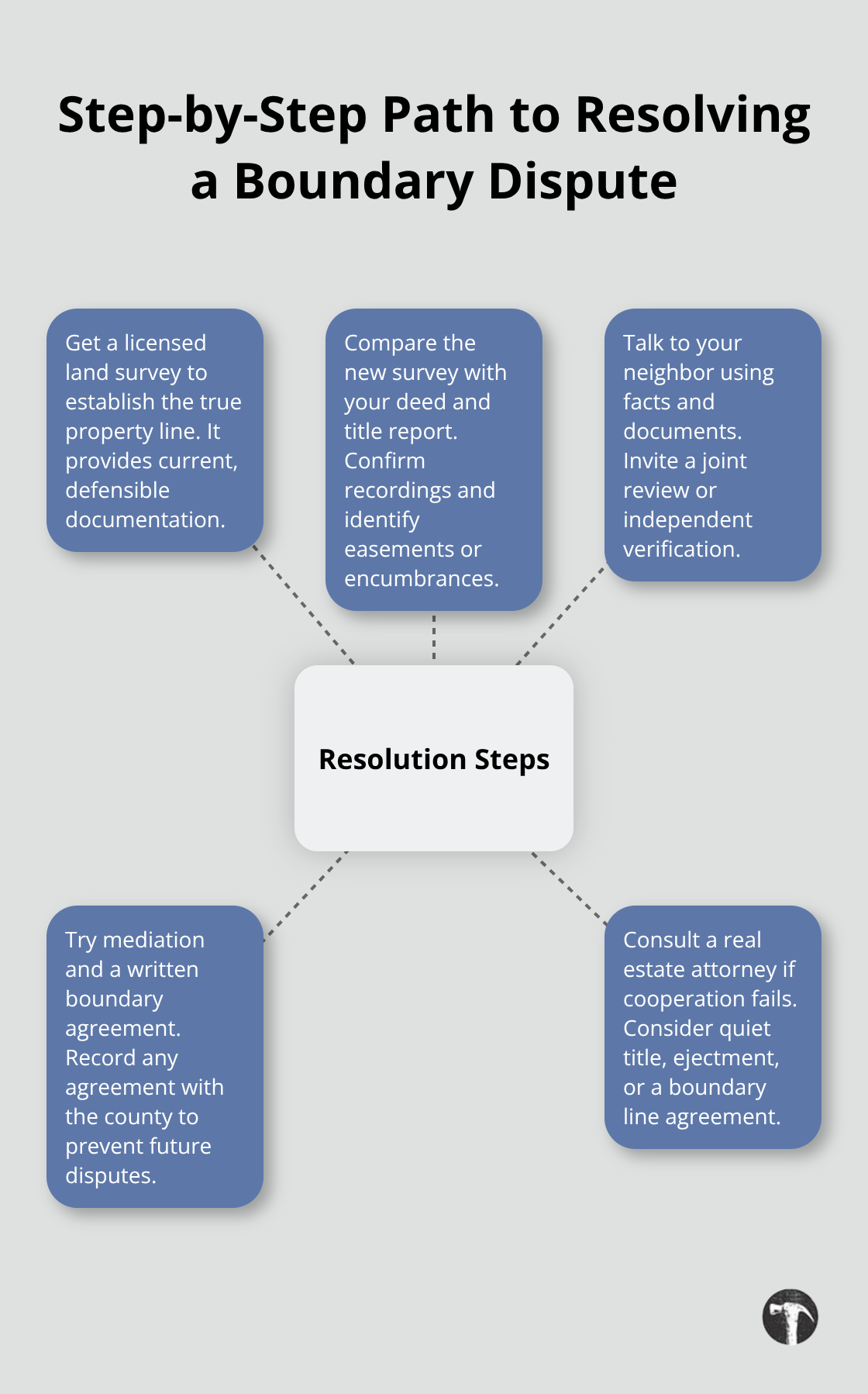
The moment you suspect a boundary problem, stop waiting for it to resolve itself. Most boundary disputes worsen over time, especially when one party takes action while the other remains passive. The first and most critical step is hiring a licensed land surveyor to establish where your property line actually sits. A professional survey costs $100 to $600 depending on property size and complexity, and this investment will either confirm your suspicions or reveal that no real conflict exists. The surveyor will locate boundary monuments, use GPS coordinates, and produce a formal map that serves as legal documentation. Without this document, any conversation with your neighbor amounts to guesswork.
Compare Your Documents to Survey Results
Once you have the survey in hand, pull your original property deed and title report from your county recorder’s office and compare them side by side with the new survey results. Look for discrepancies between what the old documents claim and what the surveyor found on the ground. California Civil Code Section 1213 emphasizes the importance of recording deeds with the county, so verify that your deed is properly recorded and check whether any easements, liens, or other encumbrances appear on your title. If the survey reveals that your neighbor’s fence sits on your property or that an easement exists where you thought you had exclusive use, you now have concrete evidence to support your position.
Approach Your Neighbor with Facts
Approach your neighbor with the survey results and title documents in hand, presenting the facts without accusation. Most boundary disputes can be resolved through civil conversation if both parties understand the legal reality. Propose a joint review of the survey or suggest that your neighbor hire their own surveyor to verify the findings, though many neighbors accept professional survey results once they see them. If the neighbor refuses to cooperate or disputes the survey, do not escalate immediately to litigation.
Explore Mediation and Written Agreements
California strongly encourages mediation and alternative dispute resolution, which costs far less than court proceedings and preserves the relationship. A mediator can help both parties understand each other’s concerns and explore solutions such as a boundary line agreement, cost-sharing for fence relocation, or an easement arrangement that formalizes what already exists in practice. If your neighbor built a fence or structure on your property, you can propose a written boundary agreement that documents the encroachment and either requires removal, establishes an easement, or allows the structure to remain with compensation to you. Any boundary agreement should be recorded with the county recorder to create a public record and prevent future disputes.
Know When to Contact an Attorney
If negotiation and mediation fail, contact an attorney who handles real estate disputes. We at The Law Offices of Alan J. Carnegies, APC represent property owners throughout Los Angeles County in boundary disputes and can evaluate whether a quiet title action, ejectment proceeding, or other legal remedy fits your situation. Do not delay this step if your neighbor has ignored written notices or if the encroachment threatens your ability to develop or sell the property. When informal resolution attempts have exhausted themselves, the legal options available to you become the path forward-and understanding each option helps you make the right choice for your circumstances.
When Negotiation Fails: Your Legal Remedies in Calabasas, California
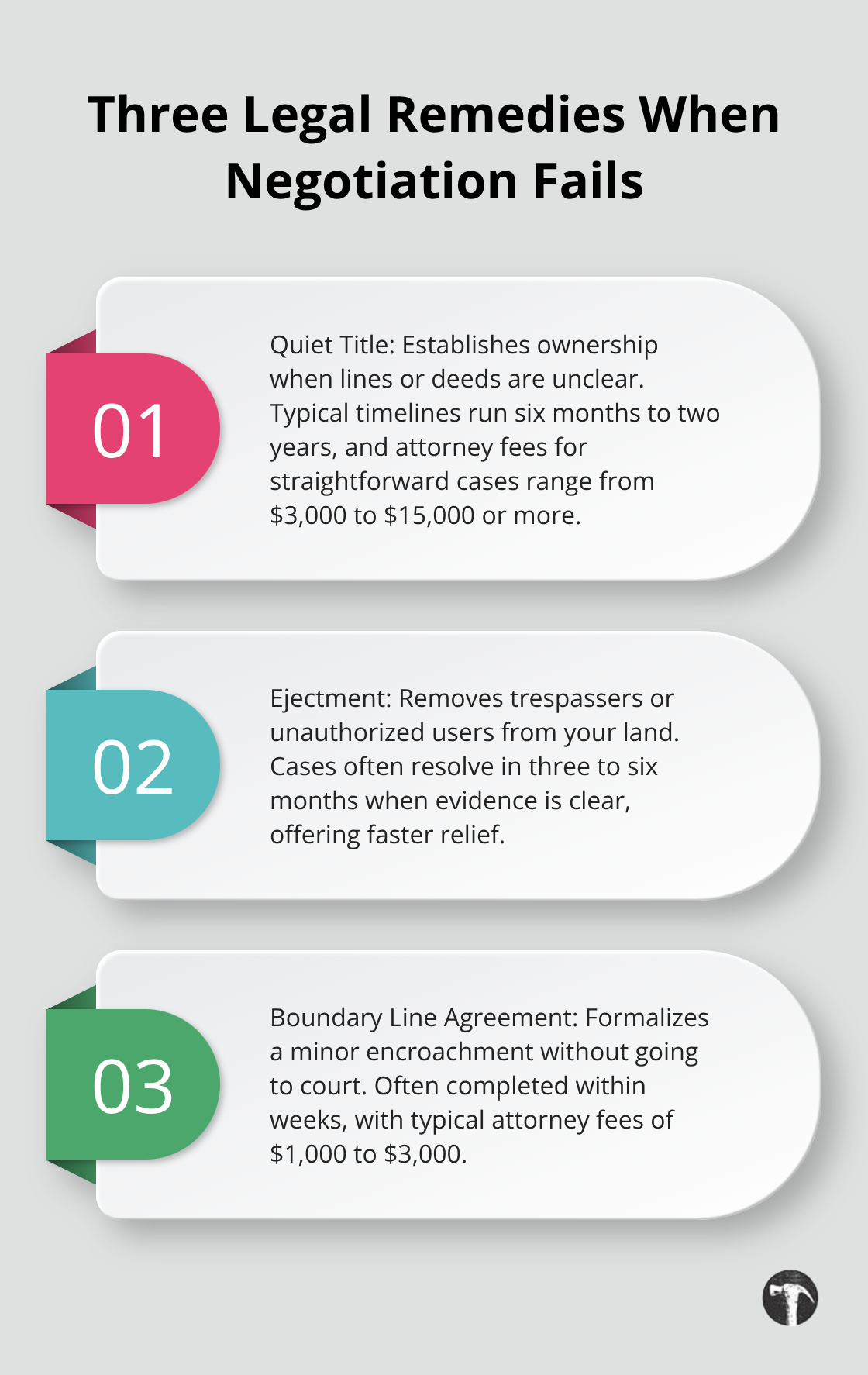
When mediation and written agreements do not resolve the boundary dispute, California law provides three main legal pathways: quiet title actions, ejectment proceedings, and formalized boundary line agreements filed with the county. Understanding which remedy applies to your situation determines how quickly and affordably you can regain full control of your property.
Quiet Title Actions Establish Ownership in Court
A quiet title action is a civil lawsuit filed in court to establish ownership when the boundary line, deed, or title is unclear or contested. This remedy works best when the survey confirms encroachment or when a deed error has created ambiguity about where your boundary actually sits. The process typically takes six months to two years depending on court schedules and whether the other party contests the action, with attorney fees ranging from $3,000 to $15,000 or more for straightforward cases.
You file the lawsuit naming your neighbor as defendant, present your survey and deed evidence, and ask the court to declare the true boundary line. California courts view quiet title actions favorably because they resolve disputes that might otherwise drag on indefinitely. However, this remedy does not remove existing encroachments or structures, so if your neighbor’s fence sits on your property, a quiet title action confirms you own the land underneath but does not automatically remove the fence.
Ejectment Proceedings Remove Trespassers from Your Land
Ejectment proceedings are more aggressive and appropriate when someone actively uses your property without permission and refuses to leave. This legal action seeks to remove the trespasser and recover possession of the land. Ejectment differs from quiet title in that it focuses on removing the person rather than clarifying who owns what.
If a neighbor has parked vehicles on your land, used your driveway, or occupied a portion of your property for years, ejectment can force them off. These cases move faster than quiet title actions, sometimes resolving within three to six months if the evidence is clear. The faster timeline makes ejectment attractive when you need immediate relief from ongoing trespass.
Boundary Line Agreements Avoid Court and Create Certainty
Boundary line agreements offer a third path that avoids court entirely by formalizing what already exists between the parties. If your survey reveals a minor encroachment and the neighbor is willing to acknowledge it in writing, a boundary line agreement documents the encroachment, may include compensation to you, and gets recorded with the county recorder. This agreement becomes part of the public record and binds future property owners, preventing the same dispute from resurfacing when either property changes hands.
Many boundary line agreements also address cost-sharing for fence maintenance or specify that an existing structure will remain as-is in exchange for a formal easement. The advantage is speed and cost: a recorded boundary line agreement can be drafted and executed within weeks rather than months or years, and attorney fees typically run $1,000 to $3,000. The disadvantage is that both parties must agree; if your neighbor refuses to sign, you move to court remedies.
Choosing the Right Legal Path for Your Situation
Courts in California strongly prefer settlements and recorded agreements over litigation because they preserve property values and neighborhood relationships while providing legal certainty for future transactions. The choice between quiet title, ejectment, and a boundary line agreement depends on whether your neighbor will cooperate, how long the encroachment has existed, and whether you need immediate removal of a structure or person from your property.
If your neighbor has ignored written notices or if the encroachment threatens your ability to develop or sell the property, contact an attorney who handles real estate disputes. We at The Law Offices of Alan J. Carnegies, APC represent property owners throughout Los Angeles County in boundary disputes and can evaluate which remedy fits your situation. When informal resolution attempts have exhausted themselves, the legal options available to you become the path forward-and understanding each option helps you make the right choice for your circumstances.
Final Thoughts
Property boundary conflicts in California demand action, not patience. A $300 survey today prevents a $10,000 lawsuit tomorrow, and recording boundary agreements with the county creates a permanent public record that protects you and future owners. Marking your boundaries clearly, maintaining documentation of improvements and surveys, and addressing encroachments promptly form the foundation of protection-these preventative measures cost far less than litigation and preserve your relationship with neighbors while securing your property rights.
When informal resolution fails, quiet title actions, ejectment proceedings, and recorded boundary line agreements provide clear paths forward. These remedies work best when you have already gathered evidence, attempted negotiation, and documented everything in writing. Waiting months or years to act weakens your position and may allow adverse possession claims to mature against you.
We at The Law Offices of Alan J. Carnegies, APC represent property owners throughout Los Angeles County in boundary disputes and real estate litigation. If your neighbor has ignored written notices, if a survey reveals encroachment that threatens your ability to develop or sell, or if you need guidance on which legal remedy fits your situation, contact us to discuss your options. Your property is often your most valuable asset-protecting it requires knowledge, vigilance, and legal counsel when disputes escalate beyond negotiation.