

Business disputes can derail operations and drain resources faster than most owners anticipate. At The Law Offices of Alan J. Carnegies, APC, we’ve seen how the right strategy transforms costly litigation into manageable resolution.
Whether you’re facing contract conflicts, partnership disagreements, or employment claims, preparation matters. This guide walks you through real approaches that work across Los Angeles County, California.
Common Types of Business Disputes in California
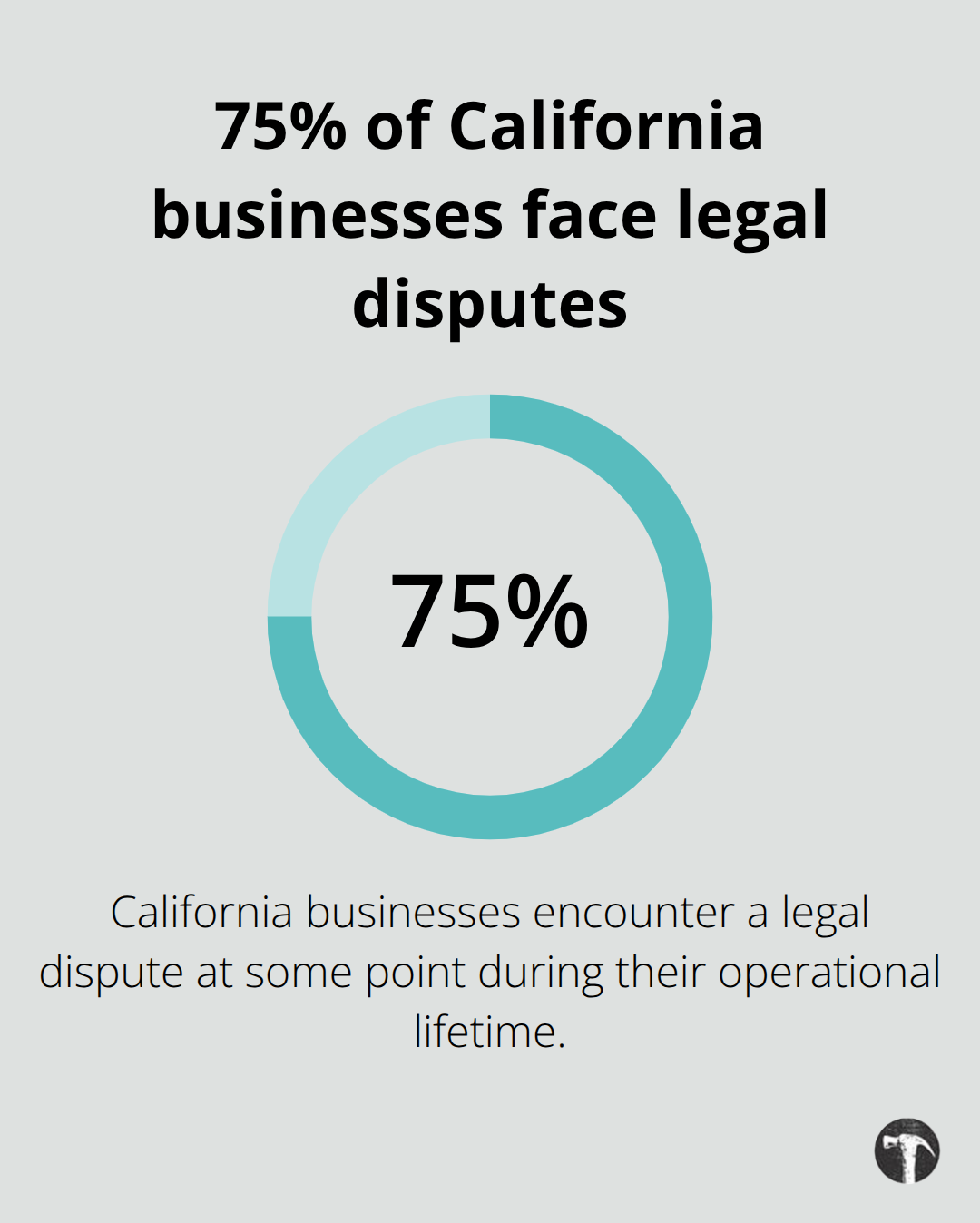
Contract disputes rank as the most frequent business litigation issue, with approximately 75% of California businesses facing some form of legal dispute during their operational lifetime. Non-performance and delayed payments represent the most common contract problems, followed by disagreements over contract interpretation and termination rights. The financial impact extends beyond immediate losses-many business owners underestimate the hidden costs of unresolved disputes, including operational disruption, damaged vendor relationships, and lost growth opportunities.
A well-documented chronology of events, payment records, and communication history transforms a weak position into one with real leverage during early negotiations. Most contract disputes settle before trial when one party demonstrates clear damages and a credible threat of litigation. The difference between a business that resolves conflicts efficiently and one that bleeds resources comes down to how quickly they document their position and quantify losses.
Partnership and Shareholder Conflicts
Partnership disputes in California demand deep knowledge of fiduciary duties and dissolution procedures, frequently involving forensic accounting and business valuation. Conflicts typically center on management authority, profit distribution disagreements, unequal contributions, misconduct, or embezzlement. These disputes escalate faster than contract matters because they involve personal relationships and control of the business itself.
Shareholders and LLC members often discover that bylaws and operating agreements contain gaps or contradictory language that creates openings for disputes. The cost of resolving ownership conflicts rises dramatically when parties wait-early intervention by counsel clarifies what each party actually owns, what they’re entitled to, and what exit options exist. Understanding your actual leverage before positions harden prevents unnecessary escalation and expense.
Employment Claims and Wrongful Termination
California employment disputes operate under the California Fair Employment and Housing Act, which provides significantly broader protections than federal law. Wage-and-hour claims, PAGA actions, and class action exposure create financial stakes that dwarf typical contract disputes. Many employment disputes arise from poor documentation-insufficient records of performance issues, inconsistent discipline, or unclear policies create liability even when termination decisions were sound.
Companies that maintain detailed performance files, contemporaneous written warnings, and consistent application of policies reduce litigation exposure substantially. The fastest path to resolving employment claims involves early assessment of liability exposure and a realistic damages analysis, which often leads to settlement discussions before litigation becomes necessary. Each of these three dispute categories demands different preparation strategies-and that preparation determines whether your business controls the outcome or reacts under pressure.
How to Resolve Business Disputes Without Draining Your Resources
Most California business disputes never reach trial. According to the California Judicial Branch, the vast majority of civil disputes settle during negotiation, mediation, or court-ordered settlement conferences. The difference between a resolution that costs $50,000 and one that costs $500,000 comes down to strategy and timing.
Build Leverage Through Documentation
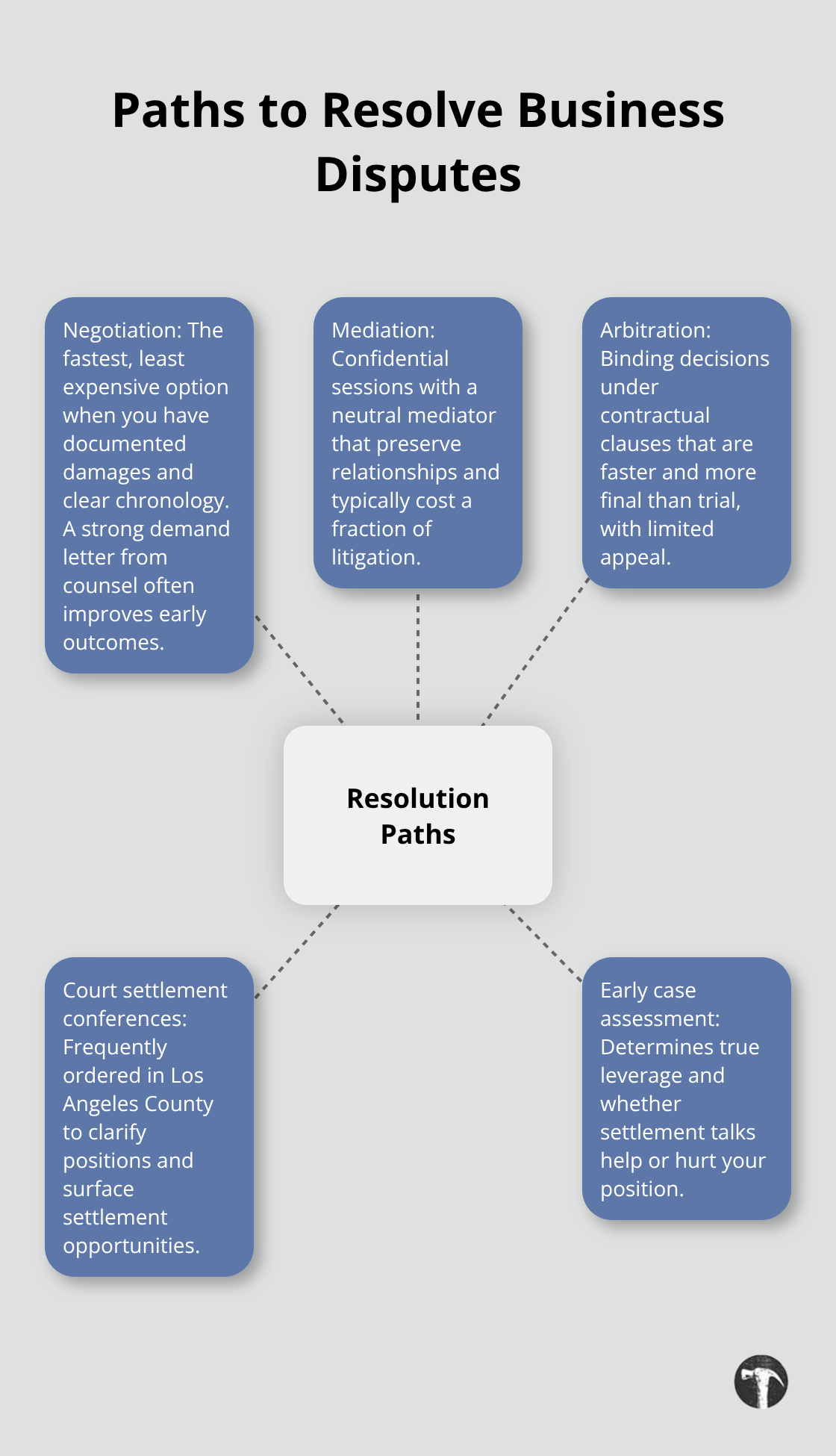
Negotiation remains your fastest and least expensive path forward when you enter discussions with documented damages, a clear chronology of events, and realistic leverage. A demand letter from experienced counsel signals seriousness and often secures better early resolution than informal discussions alone. Courts in Los Angeles County frequently order settlement conferences before trial, where a judge or neutral third party helps clarify positions and identifies settlement opportunities.
The worst mistake is waiting to respond. When disputes escalate without intervention, costs multiply and positions harden. Court costs, expert fees, deposition expenses, and discovery obligations mount quickly once litigation begins.
Explore Mediation and Arbitration Options
Private mediation offers a confidential alternative where both parties meet with a neutral mediator to explore resolution without binding either side. This approach preserves business relationships, keeps sensitive information private, and typically costs a fraction of litigation. Arbitration provides another structured option when your contract includes a mandatory arbitration clause-the arbitrator’s decision is binding and generally not appealable, making it faster and more final than trial.
The key is knowing which path fits your situation. Early case assessment determines whether you have genuine leverage or whether settlement discussions would weaken your position.
Prepare for Litigation if Settlement Fails
A realistic budget prepared early prevents surprises and helps you decide whether settlement makes financial sense. If negotiation fails and litigation becomes necessary, your preparation determines whether the case resolves quickly or drags on for years. Documents preserved early, witness statements collected promptly, and damages calculated thoroughly provide the foundation for either settlement leverage or trial readiness.
Each dispute category-contract, partnership, employment-requires different timing and different resolution strategies. The principle remains constant: act early, document thoroughly, and build leverage before positions become entrenched. Understanding which resolution path works best for your specific situation requires careful analysis of your position, your opponent’s exposure, and your business objectives.
Prepare Your Business Before Conflict Strikes in Calabasas, California
The single best investment a business owner can make is establishing systems that prevent disputes from becoming expensive litigation. Documentation practices matter far more than most owners realize, and the difference between a business that resolves conflicts efficiently and one hemorrhaging resources comes down to preparation that happens before any dispute emerges. Treat every agreement as if it will eventually land in court, because some will. This mindset shifts how you draft contracts, how you communicate with partners and employees, and how you preserve evidence of decisions.
Write Contracts That Prevent Disputes
Written agreements must contain specific language about obligations, payment terms, dispute resolution procedures, and remedies for breach. Vague contracts create disputes because each party interprets unclear language differently, and courts cannot read minds. Include mandatory mediation or arbitration clauses in partnership agreements, vendor contracts, and employment arrangements-this forces parties toward resolution outside the courtroom and typically saves 60 to 70 percent of litigation costs. California courts recognize and enforce arbitration clauses routinely, making them one of the most practical dispute-prevention tools available.
Document Every Business Decision
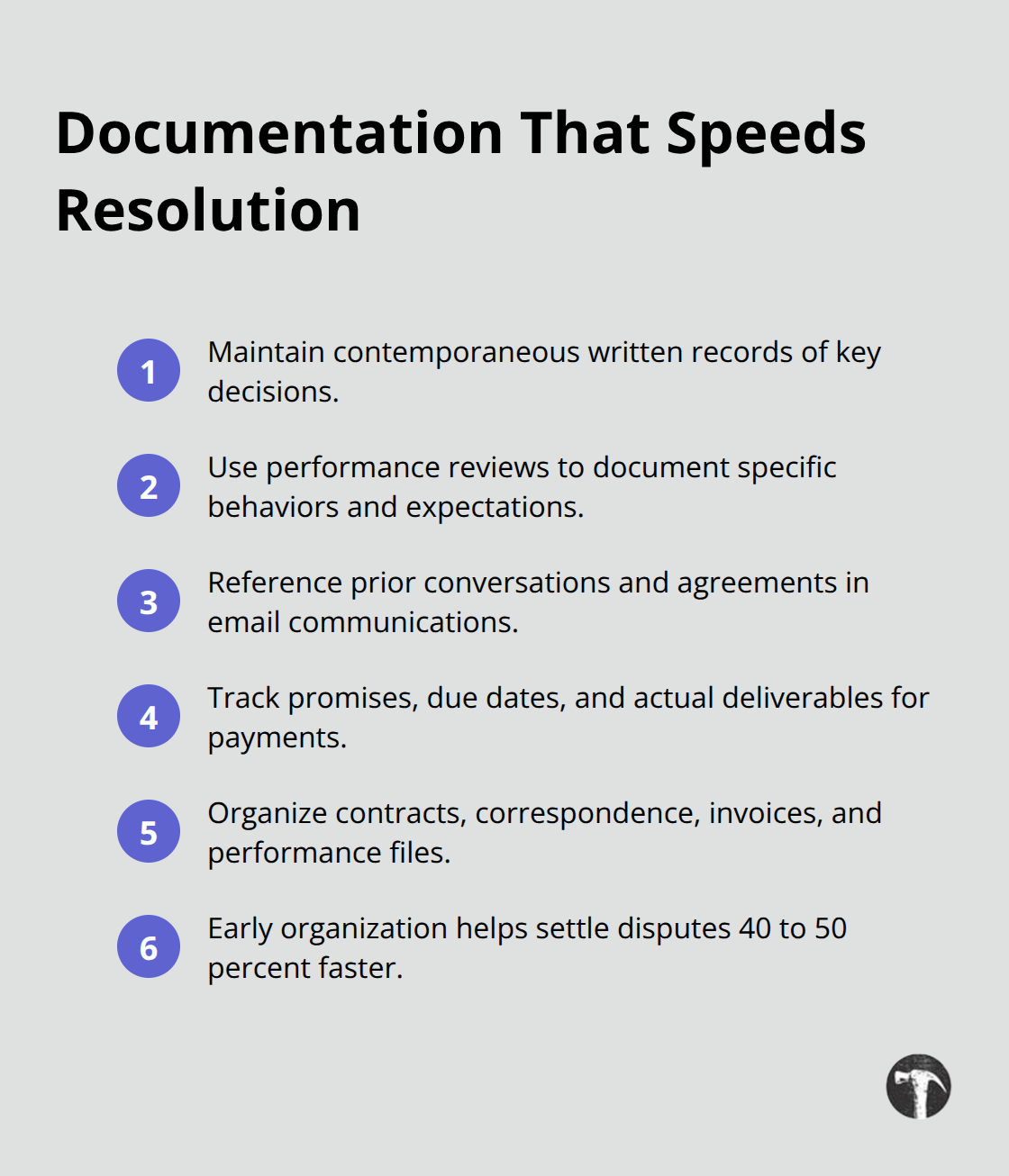
Maintain contemporaneous written records of all significant business decisions. Performance reviews for employees should document specific behaviors and expectations, not general impressions. Email communications with partners or vendors should reference prior conversations and agreements to create a clear record. If a payment dispute arises later, you need records showing exactly what was promised, when deliverables were due, and what actually occurred. Companies that maintain organized files of contracts, correspondence, invoices, and performance documentation settle disputes 40 to 50 percent faster than those scrambling to reconstruct events months or years later.
Understand California Business Law Requirements
California business law imposes specific requirements on different entity types, and understanding these requirements prevents problems that courts later weaponize against you. LLC operating agreements and corporate bylaws must address how disputes between owners are handled, what happens if an owner wants to exit, and how profits are distributed. Missing or contradictory provisions in these documents create litigation opportunities. Partnership agreements should specify fiduciary duties, buyout procedures, and what constitutes cause for removal.
Employment handbooks must comply with California wage-and-hour laws, anti-discrimination statutes, and leave requirements under the California Family Rights Act and Americans with Disabilities Act. Many employment disputes arise not from termination decisions themselves but from documentation gaps that make it impossible to prove the decision was sound. The California Fair Employment and Housing Act provides significantly broader protections than federal law, and violations expose businesses to statutory damages plus attorney fees.
Establish Legal Counsel Before Problems Emerge
Schedule a strategic consultation to review your current contracts, operating agreements, and employment practices. This consultation identifies gaps and exposes vulnerabilities while you still control the timeline and costs. Early legal involvement costs far less than defending against a claim you could have prevented through better documentation or contract language. Many business owners wait until they receive a demand letter or lawsuit to contact counsel, at which point leverage shifts to the other party and costs multiply immediately.
A lawyer familiar with Los Angeles County courts and California business law understands how local judges interpret contracts, what defenses work in your jurisdiction, and what settlement ranges look like for disputes similar to yours. This knowledge proves invaluable when you need to decide whether settlement makes financial sense or whether your position justifies litigation.
Final Thoughts
Business litigation in California demands action before disputes consume your resources and control. The businesses that emerge from conflicts with minimal damage prepared before problems arose, establishing documentation systems and clear contracts that transform disputes from existential threats into manageable situations. Start by reviewing your current contracts and operating agreements with counsel who understands Los Angeles County courts and California business law, then identify gaps in your documentation practices and fix them now while you control the timeline.
Waiting until you receive a demand letter or lawsuit notification puts you in a reactive position where costs multiply and leverage shifts to the other party. Establish clear communication protocols with partners, employees, and vendors so that future disagreements have a documented foundation, and recognize that early assessment of your position and realistic damages analysis determine whether resolution happens quickly or drags on for years. We at The Law Offices of Alan J. Carnegies, APC help business owners across Los Angeles County navigate complex disputes before they escalate into expensive litigation, whether you face partnership conflicts, contract disagreements, or employment claims.
Contact us today to schedule a strategic consultation and review your current exposure. The investment in preparation now prevents far greater expenses later.