
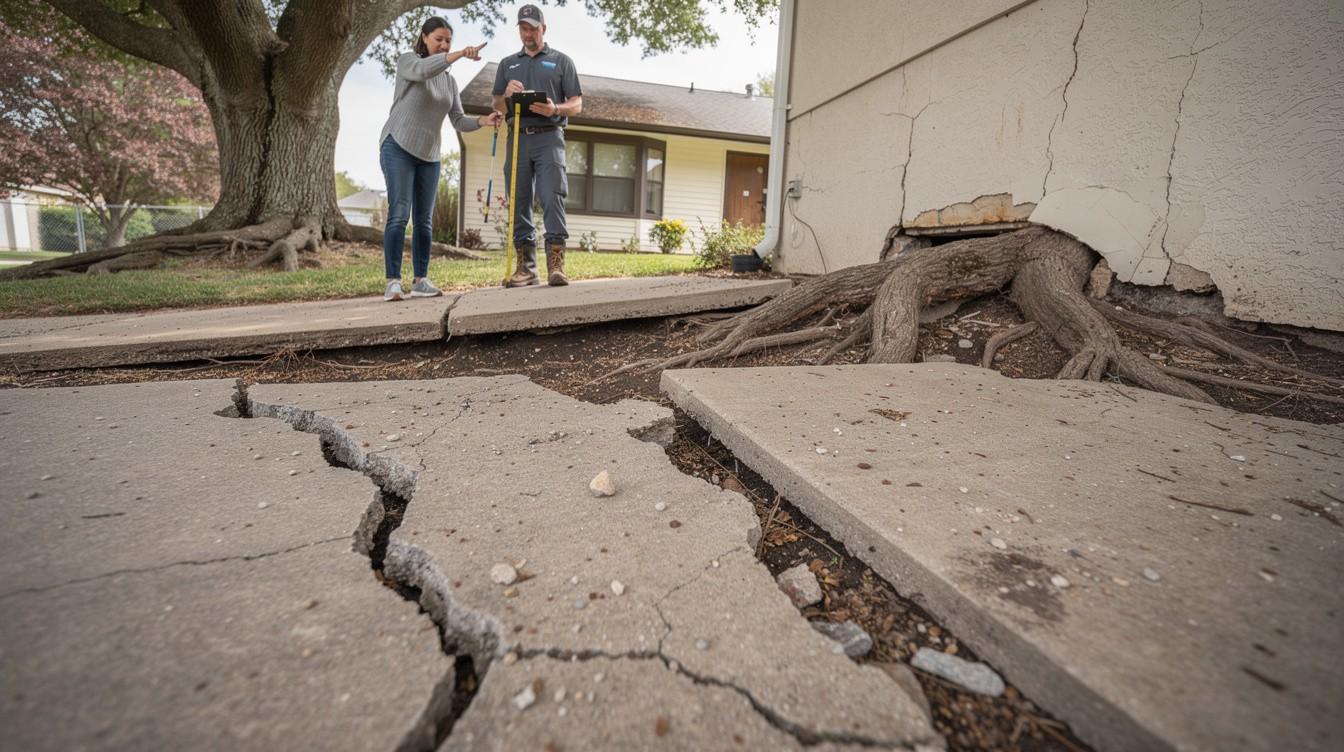
Tree root damage can cost thousands of dollars to repair, yet many property owners don’t understand who actually pays for it. The answer depends on California law, negligence standards, and your insurance coverage.
We at The Law Offices of Alan J. Carnegies, APC help Los Angeles County residents navigate tree root damage liability claims. This guide breaks down your rights and responsibilities.
Who Pays When a Neighbor’s Tree Roots Damage Your Property
Negligence Determines Liability, Not Ownership
California property owners often assume their homeowners insurance or their neighbor’s insurance will cover tree root damage, but the reality is far more complex. Liability for tree root damage hinges on negligence, not simply on whose tree caused the problem. Under California law, a property owner is only liable for tree root damage if they knew or should have known about a dangerous condition and failed to take reasonable action. This negligence standard, established through California case law, means that merely owning a tree with roots that damage a neighbor’s foundation, driveway, or underground utilities does not automatically make you responsible. The key question courts ask is whether the property owner exercised reasonable care in maintaining the tree. If tree roots visibly damaged your neighbor’s property and the owner ignored the problem or refused to trim the roots, liability shifts to that owner. However, if the damage occurred without any visible warning signs, proving negligence becomes significantly harder for the injured party.
Documentation Proves Your Case
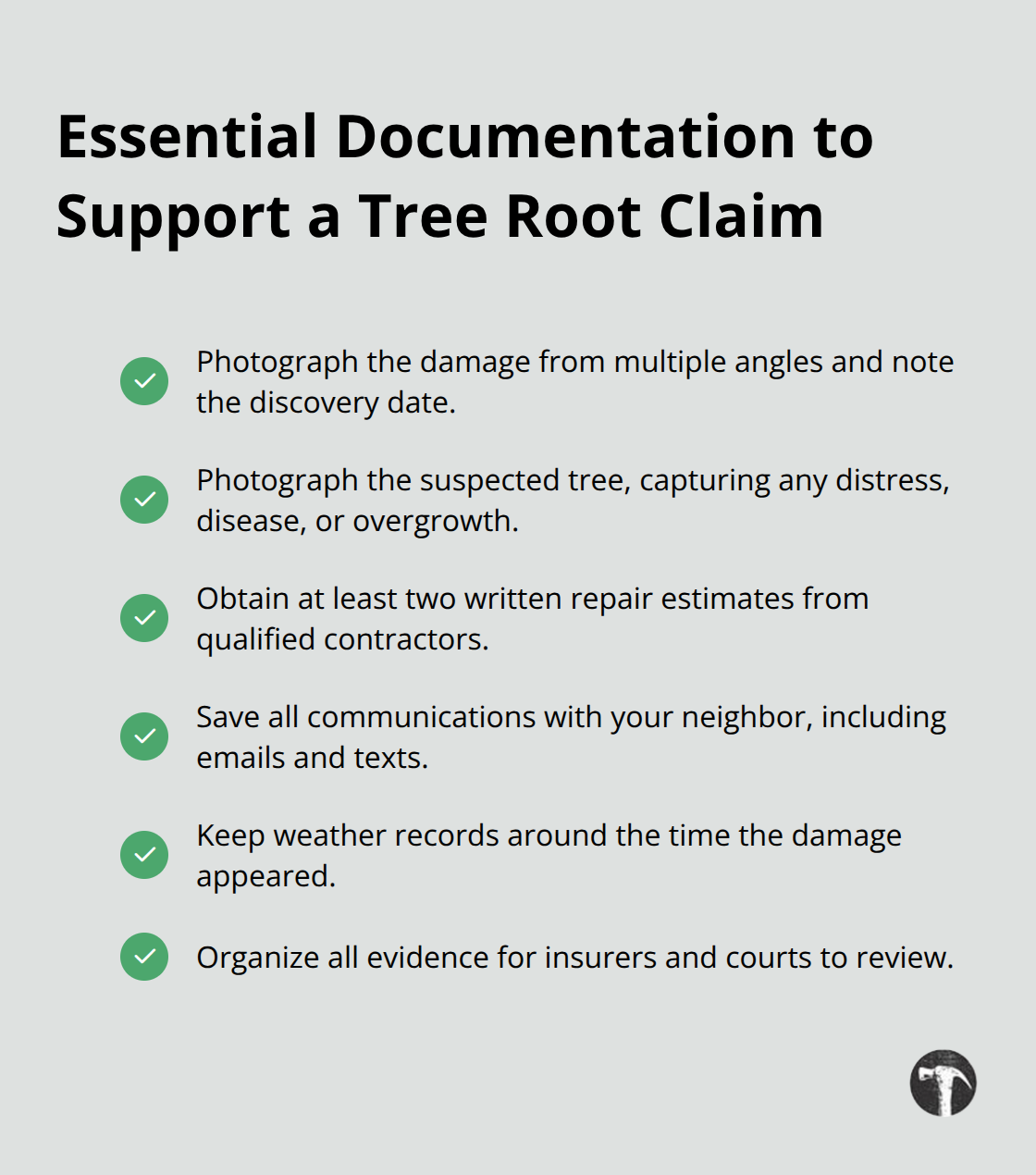
Documentation matters tremendously in these situations. When tree root damage first appears on your property, photograph the damage from multiple angles and document the date you discovered it. If you can identify which tree caused the problem, photograph that tree as well, including any visible signs of distress, disease, or overgrowth. Get written estimates from at least two contractors for the repair costs, as insurance adjusters and courts rely on these figures to determine claim value. Keep records of any communication with your neighbor about the tree, including emails, text messages, or letters requesting they address the problem. This documentation proves whether the neighbor had notice of the dangerous condition. Weather records also strengthen your case; if heavy rains or storms preceded the damage, they demonstrate that the tree’s root system was inadequate for the conditions.
Professional Assessment Carries Weight in Court
Many homeowners mistakenly believe that hiring an arborist to document root damage is optional, but it is actually essential. An arborist’s report carries significant weight in liability disputes because it establishes whether the tree was properly maintained and whether the roots posed an unreasonable risk. California courts in similar disputes have increasingly required this type of professional assessment. If you suspect a neighbor’s tree caused damage to your property, contact an arborist within days of discovery, not weeks or months later. Delays weaken your position because they suggest the damage was not urgent and may indicate you lack confidence about causation.
How to Communicate With Your Neighbor
When communicating with your neighbor about the damage, avoid accusations and stick to facts. State clearly what damage you observed and when you observed it, then request that they have the tree evaluated by a professional. Keep copies of everything. If your neighbor refuses to acknowledge the problem or take action, this refusal becomes important evidence that they failed to exercise reasonable care. Once you have gathered solid documentation and professional assessment, the question of insurance coverage and recovery options becomes your next priority.
California’s Tree Root Damage Laws in Calabasas, California
Negligence, Not Ownership, Determines Liability
California law does not hold property owners automatically liable for tree root damage simply because they own the tree. The state applies a negligence standard that requires the injured party to prove the property owner knew or should have known about a dangerous condition and failed to take reasonable action. This distinction matters enormously in practice. A neighbor whose tree roots destroyed your foundation cannot win a claim unless they can demonstrate that you were aware of the problem or that a reasonable property owner would have been aware of it. Courts in California have consistently rejected the idea that tree ownership alone creates liability. In one notable case, a California appellate court ruled that a property owner was not responsible for tree root damage when the roots grew underground without visible warning signs on the surface. The plaintiff had to prove actual or constructive knowledge of the hazard, which they could not do. This means you need concrete evidence that the property owner either knew about the dangerous condition or should have discovered it through reasonable inspection and maintenance practices.
The Reasonable Care Standard in Action
California’s reasonable care standard requires property owners to maintain their trees in a condition that poses no unreasonable risk to neighboring properties. If a tree is visibly diseased, leaning dangerously, or has a history of root problems, the owner must take action through pruning, root barriers, or removal. Waiting until damage occurs and then claiming ignorance does not satisfy California’s reasonable care obligation. The burden falls on you as the claimant to gather documentation showing that the property owner either ignored visible warning signs or failed to inspect the tree adequately. Weather records, photographs taken before damage occurred, and professional arborist assessments all strengthen your position. If a property owner had notice of the hazard (through your written requests, visible damage, or prior complaints), their failure to act establishes negligence under California law.
Understanding the Four-Year Filing Window
The statute of limitations in California gives you four years from the date you discover tree root damage to file a claim, but this timeline is deceptively short when you factor in the investigation and documentation time required. Starting the claims process immediately after damage appears is essential because delays weaken your evidence and may suggest you lack confidence about causation. California courts will dismiss your claim if you file after the four-year window closes, regardless of the merits of your case. This compressed timeline means that gathering professional assessments, obtaining repair estimates, and documenting the property owner’s knowledge of the problem must happen quickly. The longer you wait, the harder it becomes to establish when the property owner should have known about the dangerous condition and what steps they took (or failed to take) in response.
Building Your Evidence for Liability Claims
Courts require concrete evidence to establish negligence in tree root damage cases. Photographs of the damage, repair estimates from multiple contractors, and arborist reports all carry significant weight in liability disputes. If you can produce written communication showing that you notified the property owner about the tree problem before damage occurred, this evidence proves they had actual knowledge of the hazard. Weather records also matter because they demonstrate whether the tree’s root system was adequate for the conditions your area experiences.
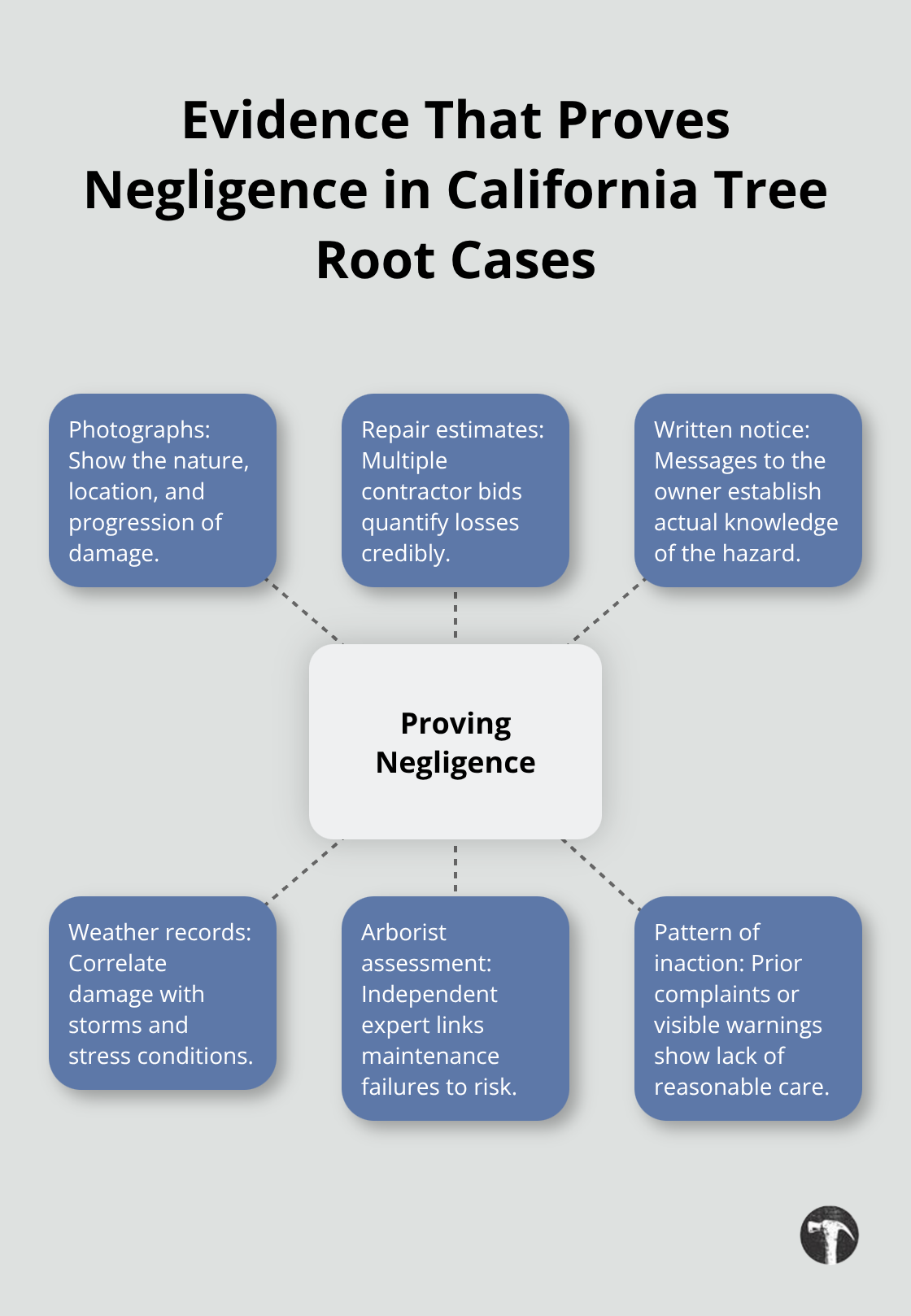
Professional arborist assessments establish whether the tree was properly maintained and whether the roots posed an unreasonable risk. The combination of these documents creates a compelling case that the property owner failed to exercise reasonable care. Without this documentation, proving negligence becomes nearly impossible, even when the damage is obvious and severe.
Moving Forward With Your Claim
Once you understand California’s negligence standard and have gathered solid documentation, the question of insurance coverage and recovery options becomes your next priority. Your homeowners insurance policy may cover some or all of the damage, depending on your specific coverage limits and exclusions. The property owner’s homeowners insurance may also be responsible for paying your claim if you can prove negligence. Understanding how insurance fits into the liability picture helps you determine whether to pursue a claim directly against your neighbor, file with their insurance company, or pursue legal action.
Does Your Homeowners Insurance Cover Tree Root Damage in Calabasas, California?
Standard Policies Exclude Tree Root Damage
Your homeowners insurance policy likely contains exclusions that leave you exposed to tree root damage costs. Most standard homeowners policies exclude coverage for tree root damage to structures, driveways, and underground utilities, meaning you cannot file a claim even when a neighbor’s negligence caused the problem. Insurance companies classify tree root damage as a maintenance issue rather than a covered peril. However, some policies do cover damage caused by tree roots if the damage results from a covered event like a falling tree or storm. If a neighbor’s tree falls over during a storm and the roots uproot your driveway, your policy may cover the damage. If the same tree’s roots gradually crack your foundation over months without the tree falling, your policy almost certainly will not cover it.
How to Review Your Policy Coverage
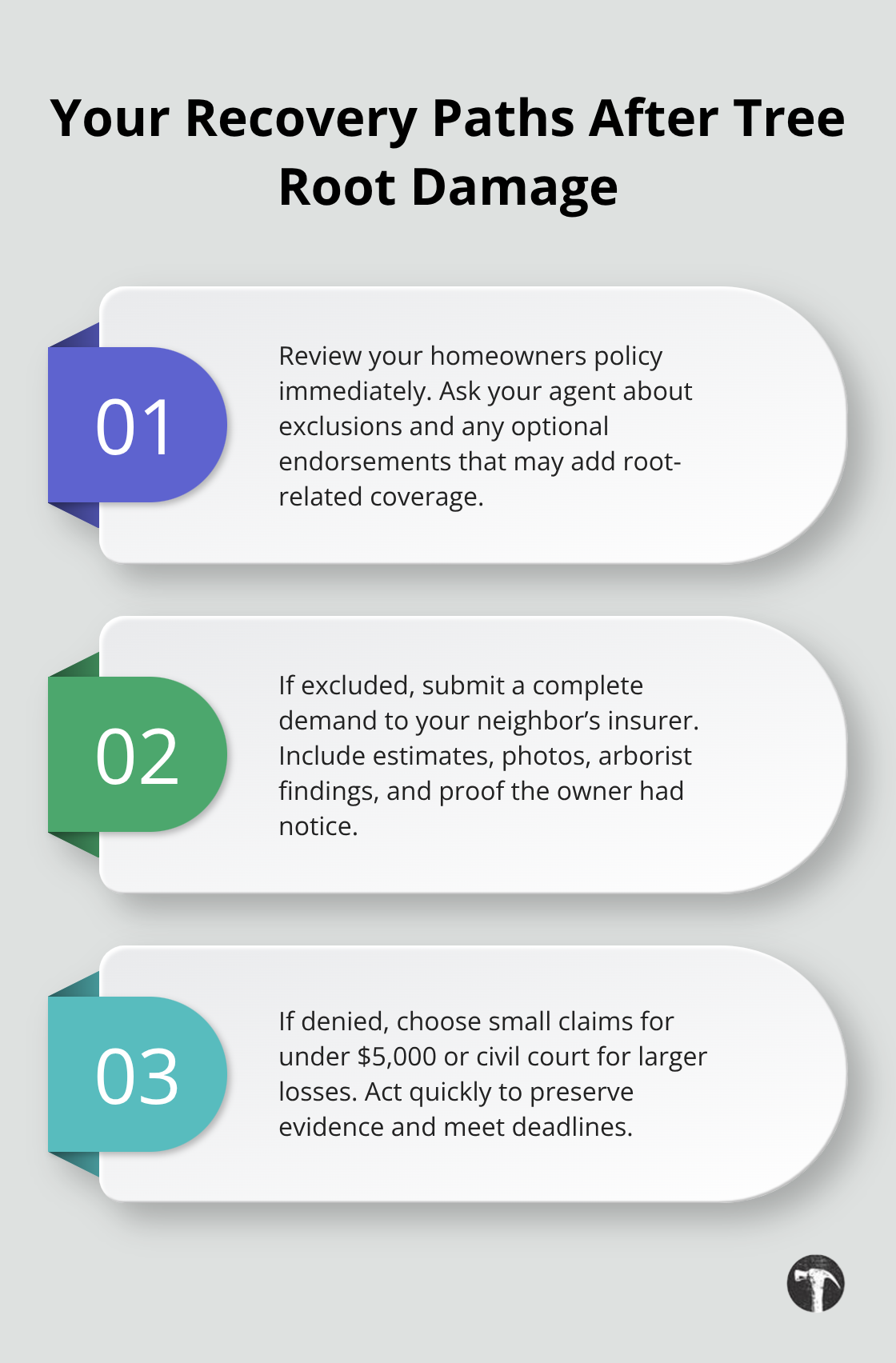
Contact your insurance agent immediately after you discover tree root damage and ask them to review your policy language around tree-related damage. Do not assume your policy excludes coverage without checking first, because some insurers offer optional endorsements that add tree root coverage for an additional premium. Your agent can clarify whether your specific policy includes any tree-related protections and what conditions must exist for coverage to apply. This conversation takes minutes but can save you thousands of dollars in repair costs.
Pursuing Claims Against Your Neighbor’s Insurance
If your policy excludes coverage, you have two remaining options: pursue a claim against your neighbor’s homeowners insurance or file a lawsuit against your neighbor directly. Your neighbor’s insurance may cover the damage if you can prove negligence, which requires the documentation and professional assessments discussed earlier. The property owner’s insurance company will deny your claim if you cannot establish that they knew or should have known about the dangerous tree condition. Filing a claim against your neighbor’s insurance requires submitting a detailed demand letter that includes repair estimates, photographs, arborist reports, and evidence that the property owner had notice of the problem. Insurance adjusters evaluate these claims strictly, and weak documentation results in immediate denial.
Taking Legal Action When Insurance Fails
If the neighbor’s insurance company denies your claim, you can pursue legal action against your neighbor in small claims court for damages under five thousand dollars or in civil court for larger amounts. We at The Law Offices of Alan J. Carnegies, APC represent Los Angeles County property owners in tree root damage disputes and help clients navigate insurance claims and litigation. Many property owners wait months before filing claims or contacting their insurance company, which weakens their position significantly because adjusters question whether the damage was actually caused by the tree or whether the property owner discovered it later than claimed. Acting quickly after damage appears strengthens your evidence and demonstrates to insurance companies that you took the matter seriously.
Final Thoughts
Tree root damage liability in California hinges on proving negligence, not on tree ownership. You must show that the property owner knew or should have known about a dangerous condition and failed to act reasonably. This standard protects property owners from automatic liability while giving injured parties a clear path to recovery when negligence is documented.
Act immediately after you discover damage by photographing the affected area and the tree from multiple angles on the day you notice the problem. Obtain written repair estimates from at least two contractors within days of discovery, contact a professional arborist to assess the tree’s maintenance and risk level, and document any communication with your neighbor about the tree. Gather weather records from the time period when damage likely occurred, as this documentation creates the foundation for any insurance claim or legal action.
Contact your insurance agent immediately to review your policy language around tree root damage coverage. If your policy excludes coverage, submit a detailed demand letter to your neighbor’s homeowners insurance with repair estimates, photographs, and arborist reports. If the neighbor’s insurance denies your claim, you can file a lawsuit in small claims court or civil court depending on the damage amount. We at The Law Offices of Alan J. Carnegies, APC represent Los Angeles County property owners in tree root damage liability disputes and help clients navigate insurance claims and litigation. Contact us today to discuss your tree root damage claim.