
Landlord tenant litigation in Southern California involves complex legal issues that affect thousands of property owners and renters. Disputes over evictions, maintenance, lease violations, and security deposits happen regularly across Los Angeles County, California.
We at The Law Offices of Alan J. Carnegies, APC help both landlords and tenants understand their rights and obligations under California law. This guide breaks down the key disputes, protections, and remedies you need to know.
Common Landlord-Tenant Disputes in Calabasas, California
Non-Payment of Rent Triggers Most Litigation
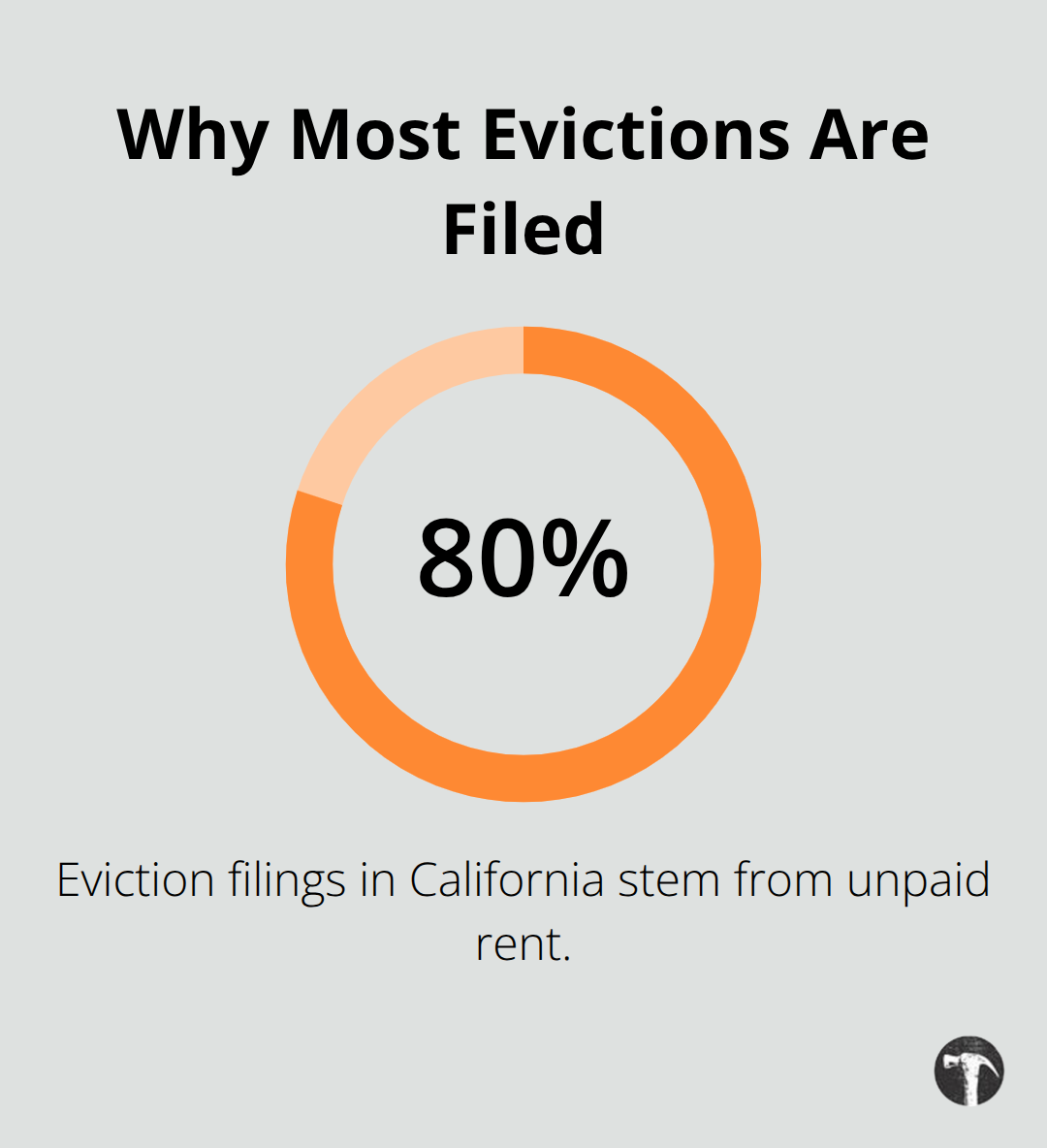
Non-payment of rent remains the most common trigger for landlord-tenant litigation across Los Angeles County. According to the U.S. Census Bureau, approximately 3.7 million renter households faced eviction threats during 2023, and unpaid rent accounts for roughly 80% of all eviction filings in California.
When rent goes unpaid for even one month, landlords face a difficult decision: pursue legal action or absorb the loss. The problem intensifies when tenants claim they withheld rent due to maintenance issues-a common defense that complicates straightforward non-payment cases.
Lease Violations and Property Damage Create Friction
Lease violations extend beyond simple rent defaults. Property damage claims, unauthorized occupants, running a business from a residential unit, or keeping pets against lease terms all create friction that frequently escalates into formal disputes. What makes these situations particularly contentious is that both sides often believe they have legitimate grounds. A tenant might argue the damage was pre-existing, while a landlord possesses photos showing new destruction. The California Department of Consumer Affairs receives thousands of complaints annually about deposit disputes alone, suggesting that property condition disagreements happen far more often than many property owners realize.
Habitability Failures Carry Significant Legal Weight
Habitability failures represent the third major category and carry particular weight under California law. When a rental unit lacks functioning heating, hot water, adequate plumbing, or structural integrity, tenants have strong legal grounds to withhold rent or break leases without penalty. The state takes these violations seriously because safe housing is considered a fundamental right, not a luxury. Landlords sometimes underestimate how quickly maintenance issues transform into legal liability. A broken heater in January, a roof leak that goes unaddressed for months, or mold growth from poor ventilation can each trigger tenant complaints to local housing authorities, which then opens investigations. Los Angeles County has specific housing codes that landlords must follow, and violations can result in fines ranging from hundreds to thousands of dollars.
How Disputes Interconnect and Escalate
Maintenance complaints often precede rent withholding and formal litigation. These three dispute categories-non-payment, lease violations, and habitability issues-rarely exist in isolation. A tenant facing a broken water heater might stop paying rent, claim the landlord is retaliating when served with an eviction notice, and simultaneously file a complaint with the housing authority. This interconnected nature of disputes is precisely why understanding tenant rights under California law matters before situations spiral into costly litigation.
Tenant Rights and Protections in Calabasas, California
Safe and Habitable Housing as a Legal Foundation
California law grants tenants substantial protections that many renters don’t fully understand until a dispute arises. The right to safe and habitable housing stands as the foundation of tenant protections across Los Angeles County. California Civil Code Section 1941 mandates that rental units must have functioning heating systems, hot water, adequate plumbing, weatherproofing, and structural integrity. Landlords cannot lease uninhabitable units, and tenants can withhold rent, repair-and-deduct from rent payments, or terminate leases without penalty if these conditions aren’t met. The California Attorney General’s office has documented that habitability complaints spike during winter months when heating failures become apparent, and landlords who ignore these complaints face liability for all rent withheld during the violation period.
Protection Against Retaliatory Evictions
Tenants possess strong protections against illegal evictions under California law. Landlords cannot evict tenants for filing housing complaints, requesting repairs, or exercising legal rights-a practice called retaliatory eviction. The statute of limitations for retaliation claims is one year, so if a landlord serves an eviction notice within 180 days of a tenant complaint, the law presumes retaliation unless the landlord proves otherwise. This presumption places significant burden on landlords to document legitimate, non-retaliatory reasons for eviction. California also requires landlords to follow strict procedural steps before eviction can occur (proper notice periods, specific notice language, and court filings must all comply with state law). Evictions conducted without these procedures are void, and tenants can sue for damages.
Security Deposit Rules and Common Violations
Security deposit regulations represent another area where California law heavily favors tenants, and violations occur frequently enough to generate consistent litigation. Landlords must return security deposits within 21 days of lease termination, along with an itemized list of any deductions. California law limits deductions to actual damages beyond normal wear and tear-routine maintenance costs, carpet cleaning, or painting cannot be deducted.
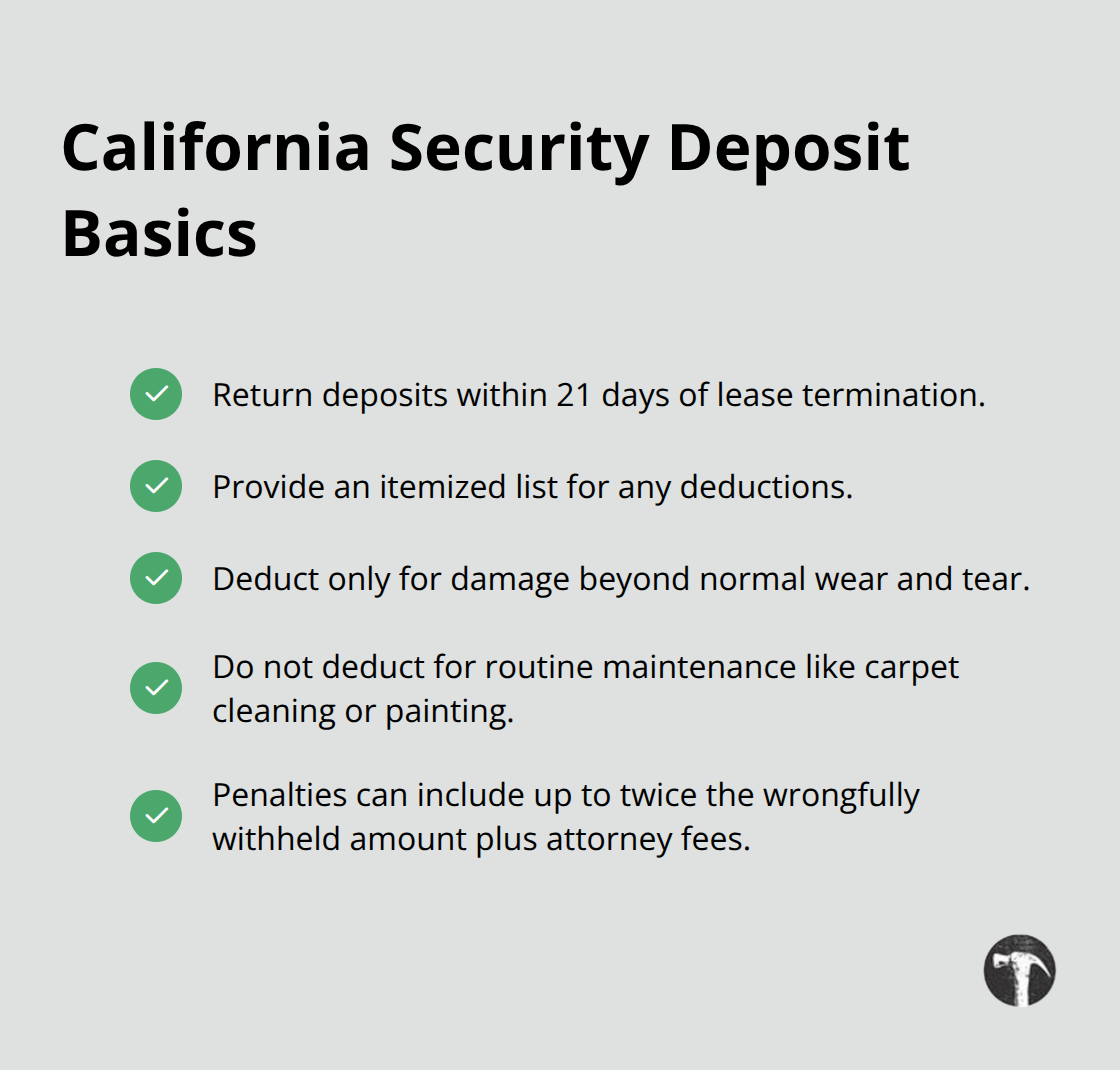
If a landlord fails to return a deposit or provides an inadequate itemization, tenants can recover the full deposit amount plus up to twice the wrongfully withheld amount as penalty damages, plus attorney fees. The Department of Consumer Affairs reports that security deposit disputes account for a significant portion of landlord-tenant complaints statewide.
Documentation Protects Tenant Interests
Tenants should photograph units before moving in and document the condition in writing, then photograph again upon move-out. This documentation becomes critical evidence if a landlord claims damage that tenants dispute. Photographs with timestamps and written condition reports create a clear record that protects tenants when disputes arise over deposit deductions. Landlords who attempt to deduct for pre-existing damage face legal liability when tenants present photographic evidence contradicting their claims.
When Landlord Violations Require Legal Action
Landlords who violate these protections expose themselves to significant liability, and tenants have multiple legal remedies available. Understanding these rights helps tenants recognize when a landlord has crossed the line from legitimate property management into illegal conduct. The next section examines what rights landlords retain and what remedies they can pursue when tenants breach their obligations.
Landlord Rights and Remedies in Calabasas, California
Landlords in Los Angeles County possess meaningful legal remedies when tenants breach lease terms or fail to pay rent, but these remedies require strict adherence to California procedural law. The eviction process cannot start with a lockout or self-help measures-landlords must follow specific statutory steps that courts enforce rigidly.
The Three-Day Notice and Unlawful Detainer Process
A three-day notice to pay rent or quit initiates the formal eviction process. This notice must include exact language prescribed by California law and be served properly on the tenant. If the tenant does not comply within three days, the landlord files an unlawful detainer action in court, not a simple eviction.
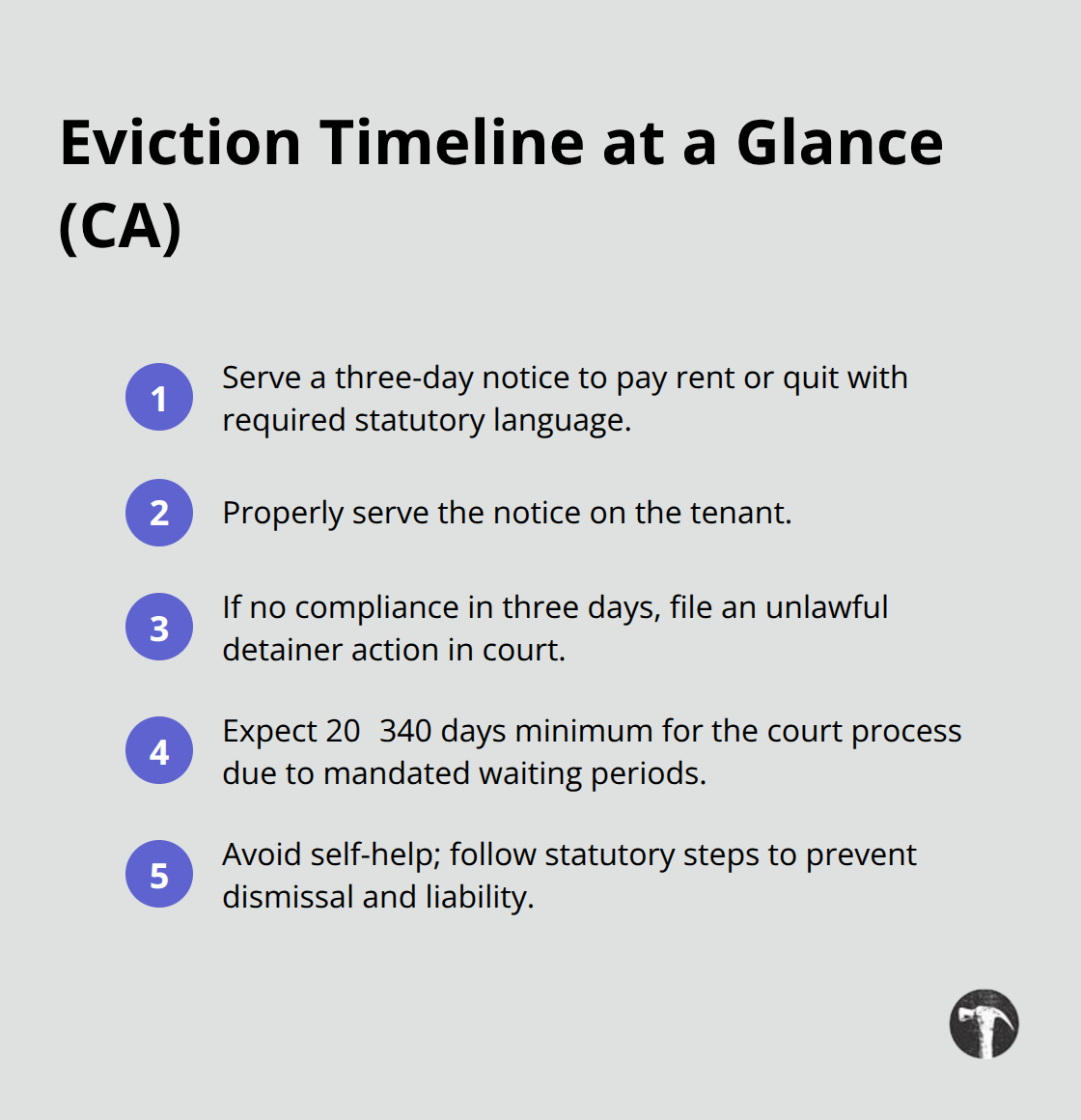
The court process typically takes 20 to 40 days minimum, even when the case is uncontested, because California law mandates waiting periods between filing stages.
Landlords who skip these procedures face liability for damages and attorney fees, and courts will dismiss improperly conducted evictions. The Judicial Council of California reports that improper notice language remains one of the most common reasons eviction cases fail, costing landlords months of delay and additional legal fees. Strict compliance with notice requirements protects landlord interests and prevents costly dismissals.
Rent Collection Through Judgment and Enforcement
Beyond eviction, landlords can pursue rent collection through judgment and wage garnishment or bank levies, though collecting money from tenants who lack resources proves difficult in practice. A judgment establishes the landlord’s legal right to payment, but actual collection depends on the tenant’s financial situation and available assets.
Landlords should document all rent payment records and communicate non-payment in writing to create a clear record for court proceedings. This documentation strengthens the landlord’s case and demonstrates that the tenant received proper notice of the debt.
Damage Claims and Security Deposit Deductions
Damage claims require clear documentation-photographs, repair estimates, and invoices that demonstrate damage exceeds normal wear and tear. California law allows landlords to deduct legitimate repair costs from security deposits, but only when deductions are itemized and documented within 21 days of move-out. If a landlord deducts improperly, the tenant can recover the wrongfully withheld amount plus twice that amount as penalty damages.
Landlords must photograph damage immediately after tenant move-out and obtain written repair estimates to support deduction claims. This documentation protects the landlord if the tenant disputes the deductions in court.
Lease Enforcement for Non-Monetary Violations
Lease enforcement for non-monetary violations (such as unauthorized occupants or business operations) requires similar notice procedures before eviction can proceed. A notice to cure or quit gives the tenant an opportunity to correct the violation within a reasonable timeframe. If the tenant fails to cure the violation, the landlord can then file an unlawful detainer action.
Property owners throughout Los Angeles County must navigate these requirements correctly to protect their interests while complying with California’s strict procedural demands. The Law Offices of Alan J. Carnegies, APC represents property owners in landlord-tenant disputes and can help ensure that all legal procedures are followed properly.
Final Thoughts
Landlord-tenant litigation in Los Angeles County stems from disputes that clear communication and legal knowledge can prevent. Property owners and tenants who understand California law avoid costly court battles that drain time and money from both sides. The stakes affect everyone involved: tenants face displacement, landlords lose rental income and incur legal fees, and both parties experience stress that extends far beyond the immediate dispute.
Landlords must follow strict procedural requirements for evictions, document all property conditions and damages, and comply with security deposit laws or face penalty damages. Tenants should photograph units before moving in, understand their right to habitable housing, and recognize that retaliation for filing complaints violates state law. Neither side benefits from ignoring these rules or hoping disputes resolve themselves without legal consequences.
California law heavily regulates landlord-tenant relationships because housing affects fundamental human needs, and courts enforce these regulations consistently. When disputes escalate beyond simple disagreements, legal representation becomes necessary for tenants facing improper evictions, landlords dealing with rent withholding claims, or either party confronting security deposit disputes. We at The Law Offices of Alan J. Carnegies, APC represent property owners and tenants in landlord-tenant disputes throughout Los Angeles County-contact us today to protect your interests and navigate these disputes effectively.