
Tree root damage from a neighbor’s property can be costly and frustrating. You may be entitled to compensation, but navigating liability laws in California requires understanding your rights.
We at The Law Offices of Alan J. Carnegies, APC help residents throughout Los Angeles County resolve these disputes. This guide walks you through your legal options, from negotiation to court action.
What Causes Tree Root Damage and Who Pays
How Tree Roots Damage Property
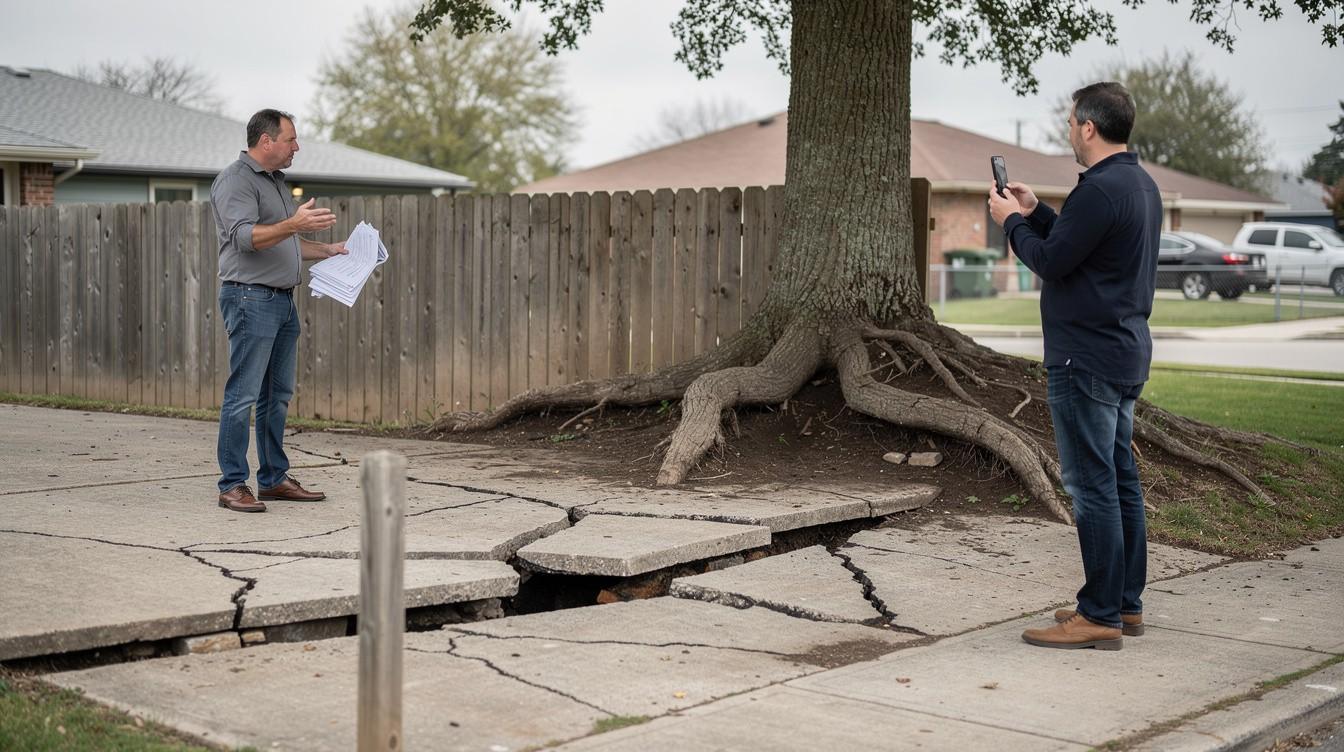
Tree roots ignore property lines. They grow horizontally and vertically through soil, seeking water and nutrients, and can travel 20 to 40 feet from the trunk depending on the species. When roots encounter underground infrastructure, damage accumulates quickly. Foundation cracks, broken sewer lines, lifted concrete, and damaged underground utilities result from this invasion. A single mature tree can cost tens of thousands of dollars to repair. In California, where property owners face frequent tree disputes, courts recognize that root damage provides a legitimate basis for claims against neighboring property owners-but liability doesn’t happen automatically.
California’s Negligence Standard for Tree Liability
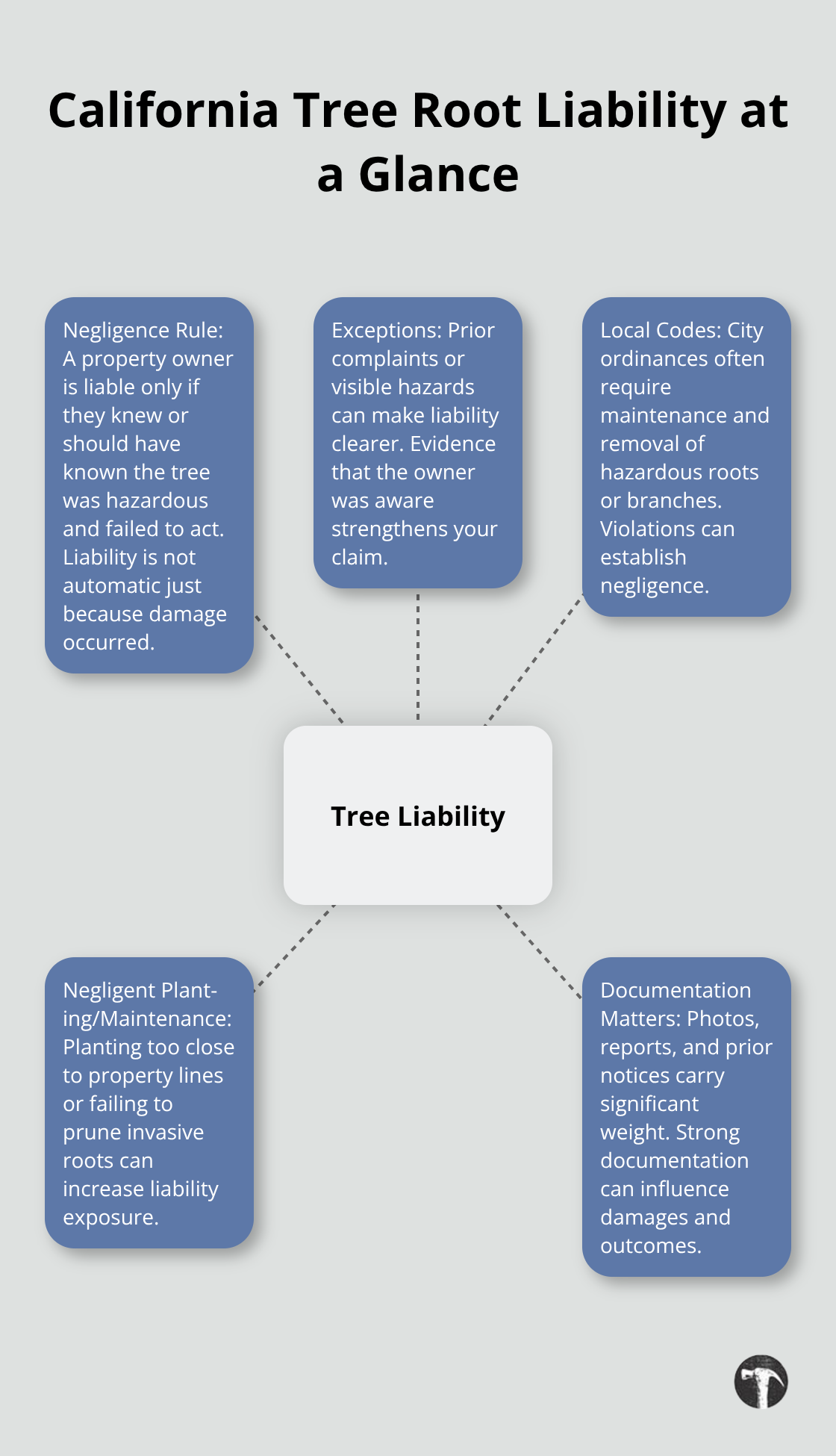
California follows the common law rule of tree liability, which holds a property owner responsible for damage caused by their tree only if they knew or should have known the tree was hazardous and failed to take action. This standard is stricter than strict liability, meaning you cannot simply sue because a neighbor’s tree caused damage. You must prove negligence. However, important exceptions exist. If a neighbor’s tree roots damaged your property and the neighbor was aware of the problem (perhaps you complained about it previously or visible signs showed deterioration), liability becomes clearer. Documentation of prior complaints or visible hazards strengthens your position significantly.
Local Codes and Negligent Maintenance
California Civil Code Section 833 and local municipal codes in Los Angeles County add another layer of responsibility. Many cities require property owners to maintain trees and remove hazardous branches or roots. If your neighbor violated local ordinances by neglecting their tree, that violation can establish negligence in a damage claim. Additionally, if the neighbor planted or maintained the tree negligently-such as planting too close to property lines or failing to prune invasive roots-you have stronger legal ground. The distinction matters because it determines whether you recover full damages or only partial compensation.
Understanding these liability rules helps you assess your case before taking action. The next step involves documenting the damage and determining your best approach to resolve the dispute.
Gathering Evidence Before You Approach Your Neighbor in Calabasas, California
Document the Damage Immediately
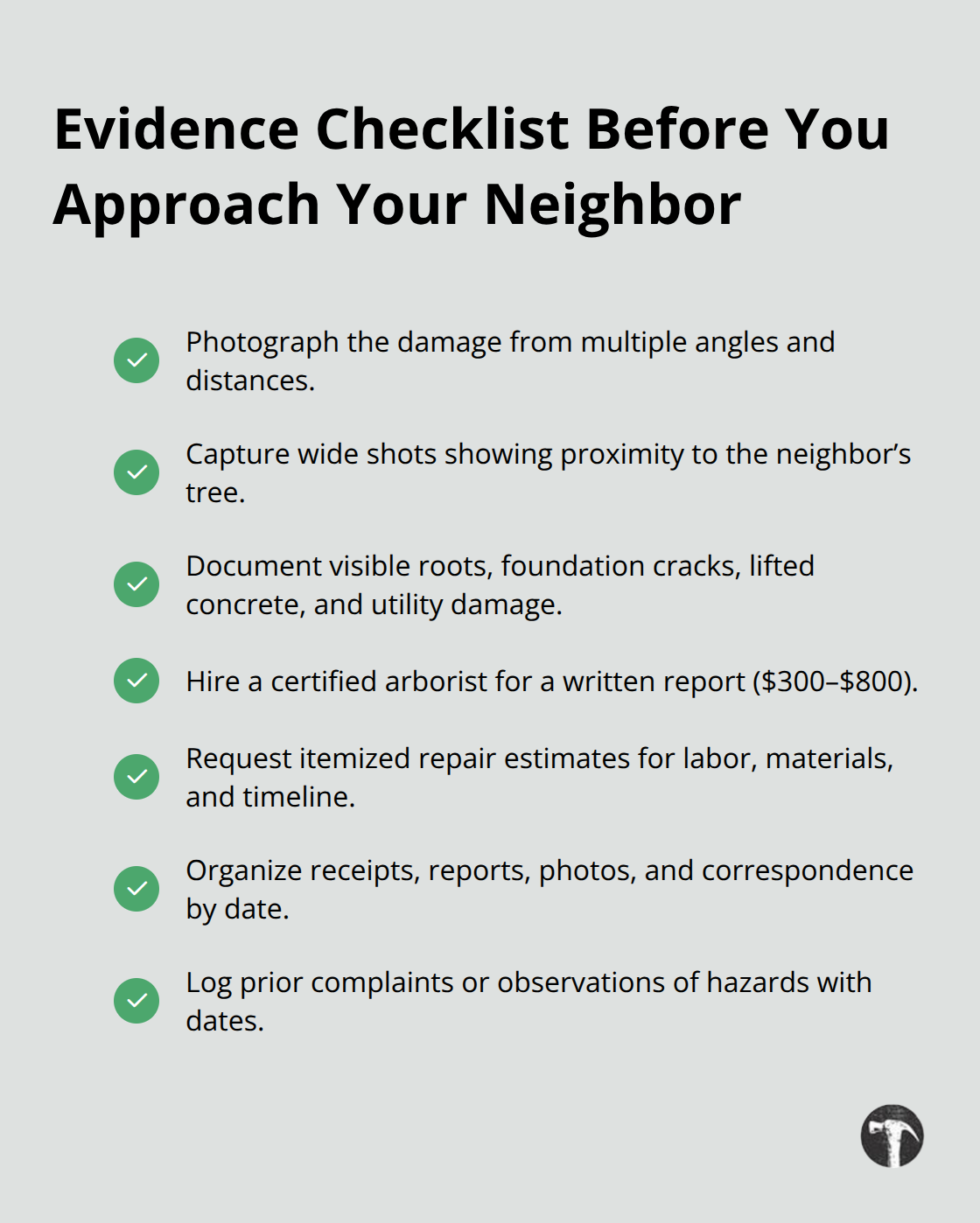
You must collect documentation the moment you discover root damage. Photograph and video the damage from multiple angles and distances, showing the affected area clearly and the neighbor’s property in the frame. Capture visible roots, foundation cracks, lifted concrete, or damaged utilities. Wide shots establish the proximity between the neighbor’s tree and your damaged property. A certified arborist can inspect the tree and provide a written report identifying the species, root system characteristics, and the likelihood that the roots caused your specific damage. This report costs between $300 and $800 but becomes invaluable in negotiations or court. Request written estimates from contractors for repair costs, ensuring each estimate itemizes labor, materials, and timeline separately.
Organize Your Records
You should keep all receipts, inspection reports, photographs, and correspondence in a single folder organized by date. If you previously complained to your neighbor about the tree or noticed visible signs of hazard, document those interactions with dates and details. This documentation establishes that your neighbor knew or should have known about the problem, which strengthens your negligence claim under California law. The longer you wait to compile this evidence, the harder it becomes to establish that the damage resulted from the neighbor’s tree rather than other causes.
Send a Formal Written Notice
You must send your neighbor a formal written notice before filing any legal action. Email works, but certified mail with return receipt provides better proof that they received your message. Keep your tone professional and factual rather than accusatory. State the specific damage, reference your arborist’s report, include repair cost estimates, and explain your legal basis for the claim citing California’s negligence standard for tree liability. Request a response within 14 days and propose a reasonable resolution such as the neighbor reimbursing repair costs or splitting them based on comparative negligence. Many neighbors respond to formal written notice because they recognize the seriousness of your position.
Contact Insurance Companies
If your homeowners or renters insurance covers tree root damage, contact your insurance company during this stage. Most California homeowners policies exclude tree root damage from underground utilities, though some policies cover damage to structures. Your insurance adjuster can provide an official damage assessment and may contact the neighbor’s insurance company directly, which sometimes accelerates resolution. If the neighbor’s homeowners insurance covers the damage, the insurance company has financial incentive to settle quickly rather than face litigation costs. When negotiation stalls or your neighbor refuses to respond, legal action becomes necessary-and understanding your court options helps you decide the best path forward.
When Court Becomes Your Best Option
Small Claims Court for Damages Under $10,000
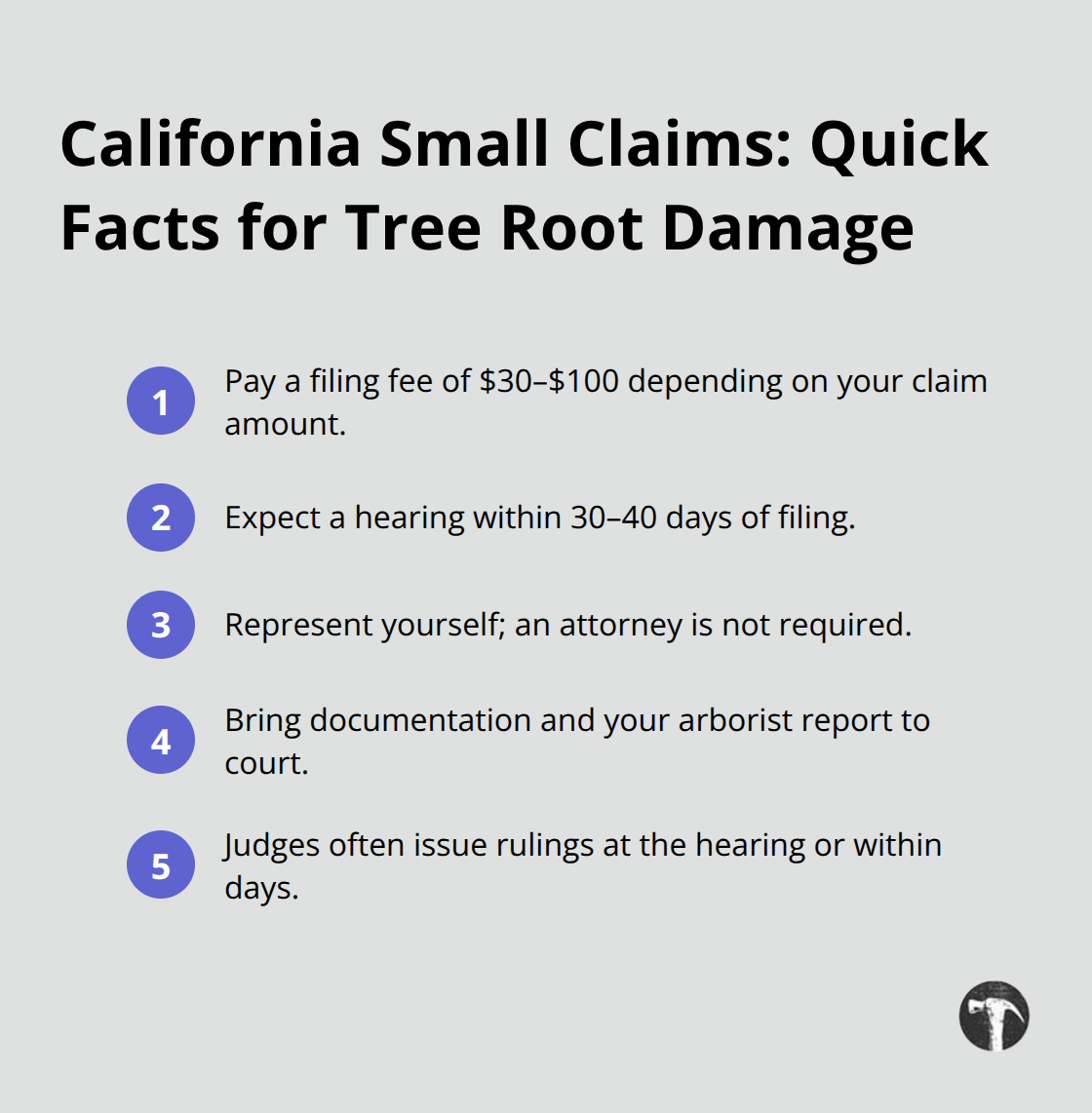
Small claims court in California handles cases up to $10,000 in damages, making it an attractive option for tree root damage claims under that threshold. Los Angeles County small claims courts process hundreds of property damage cases annually, and the process moves quickly compared to civil litigation. You file a small claims complaint at your local courthouse, pay a filing fee between $30 and $100 depending on your claim amount, and the court schedules a hearing within 30 to 40 days. You represent yourself without an attorney, present your documentation and arborist report to the judge, and the judge issues a ruling immediately or within days.
The downside is binding-you cannot appeal a small claims judgment if you lose. However, if your repair costs exceed $10,000, small claims won’t work, and you’ll need to pursue a civil lawsuit instead.
Civil Litigation for Larger Damage Claims
A civil lawsuit in Los Angeles County Superior Court allows you to recover larger damages but requires significantly more time, expense, and preparation. Filing costs range from $200 to $400, plus service of process fees and potential discovery expenses that accumulate as both sides exchange documents and take depositions. Civil litigation typically takes 18 to 36 months from filing to trial, though many cases settle during mediation or settlement conferences before reaching court.
Your strongest cases involve clear documentation showing the neighbor knew about the hazardous tree, visible root damage connected to their property, and repair estimates exceeding the small claims limit.
Building Your Case for Court
An attorney reviewing your evidence can identify weaknesses in your documentation before you file, potentially saving you court costs and time on cases unlikely to succeed. Judges view professionally presented cases with greater weight than self-represented claims. If your neighbor refuses settlement and court action becomes necessary, having legal representation matters significantly because the presentation of your case affects the outcome.
We at The Law Offices of Alan J. Carnegies, APC handle tree root damage claims throughout Los Angeles County, including Calabasas, California, and can evaluate whether small claims or civil litigation serves your situation best.
Final Thoughts
Tree root damage from a neighbor’s property demands swift action and strategic planning. You must photograph damage immediately, obtain an arborist’s report, and gather repair estimates before contacting your neighbor. California’s negligence standard requires you to prove your neighbor knew or should have known about the hazard, making documentation your strongest asset in any dispute.
Small claims court works well for damages under $10,000 and moves quickly without requiring an attorney, while civil litigation in Los Angeles County Superior Court handles larger claims but demands more time and resources. Insurance companies often accelerate settlements when contacted early, potentially saving you months of frustration. When tree roots damage neighbor property and settlement discussions stall, professional legal guidance becomes invaluable.
We at The Law Offices of Alan J. Carnegies, APC represent property owners throughout Los Angeles County, including Calabasas, California, in tree root damage disputes and real estate conflicts. Contact us today to discuss your specific situation and determine whether small claims or civil litigation best protects your interests and recovers the compensation you deserve.