
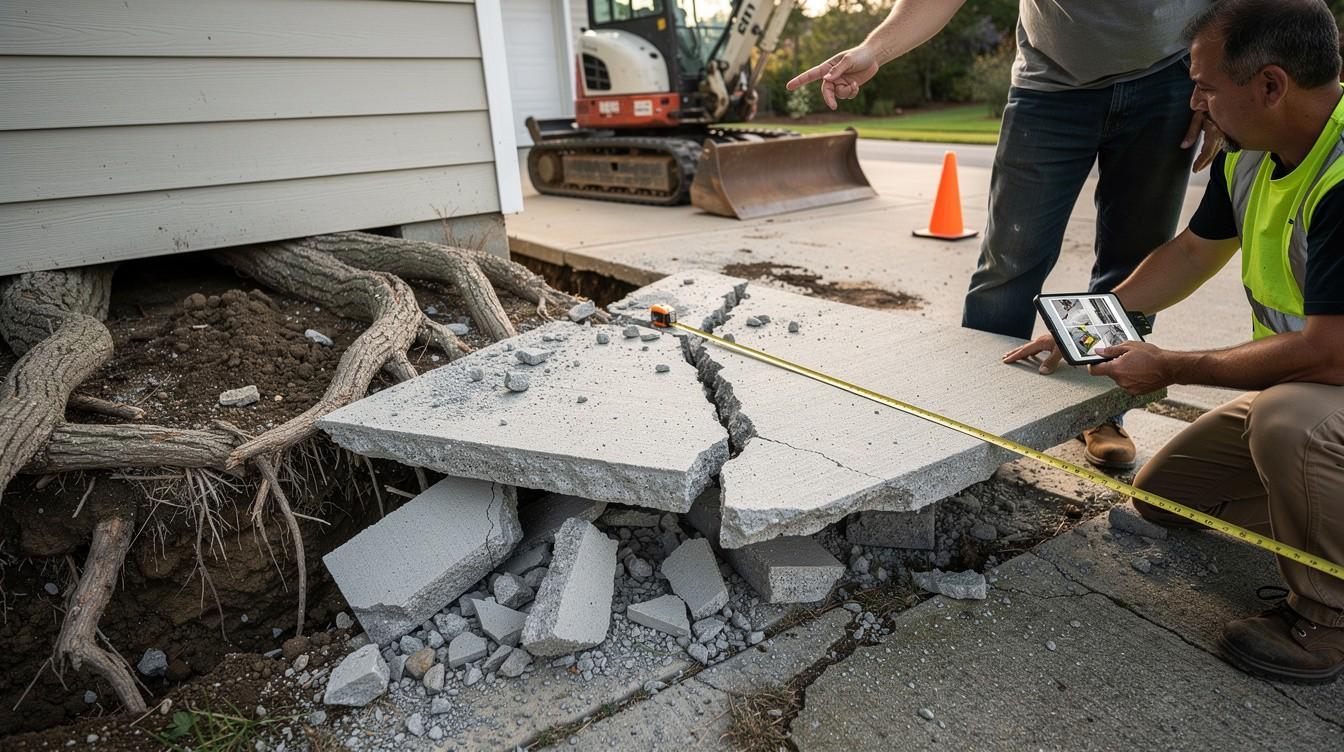
Tree root damage can cost thousands of dollars to repair, and figuring out who pays is rarely straightforward. California law treats tree root damage liability differently than most property owners expect, with rules that often favor the tree owner.
We at The Law Offices of Alan J. Carnegies, APC help residents throughout Los Angeles County and Calabasas navigate these disputes and recover what they’re owed.
How California Courts Actually Assign Tree Root Liability
The Natural Growth Rule Favors Tree Owners
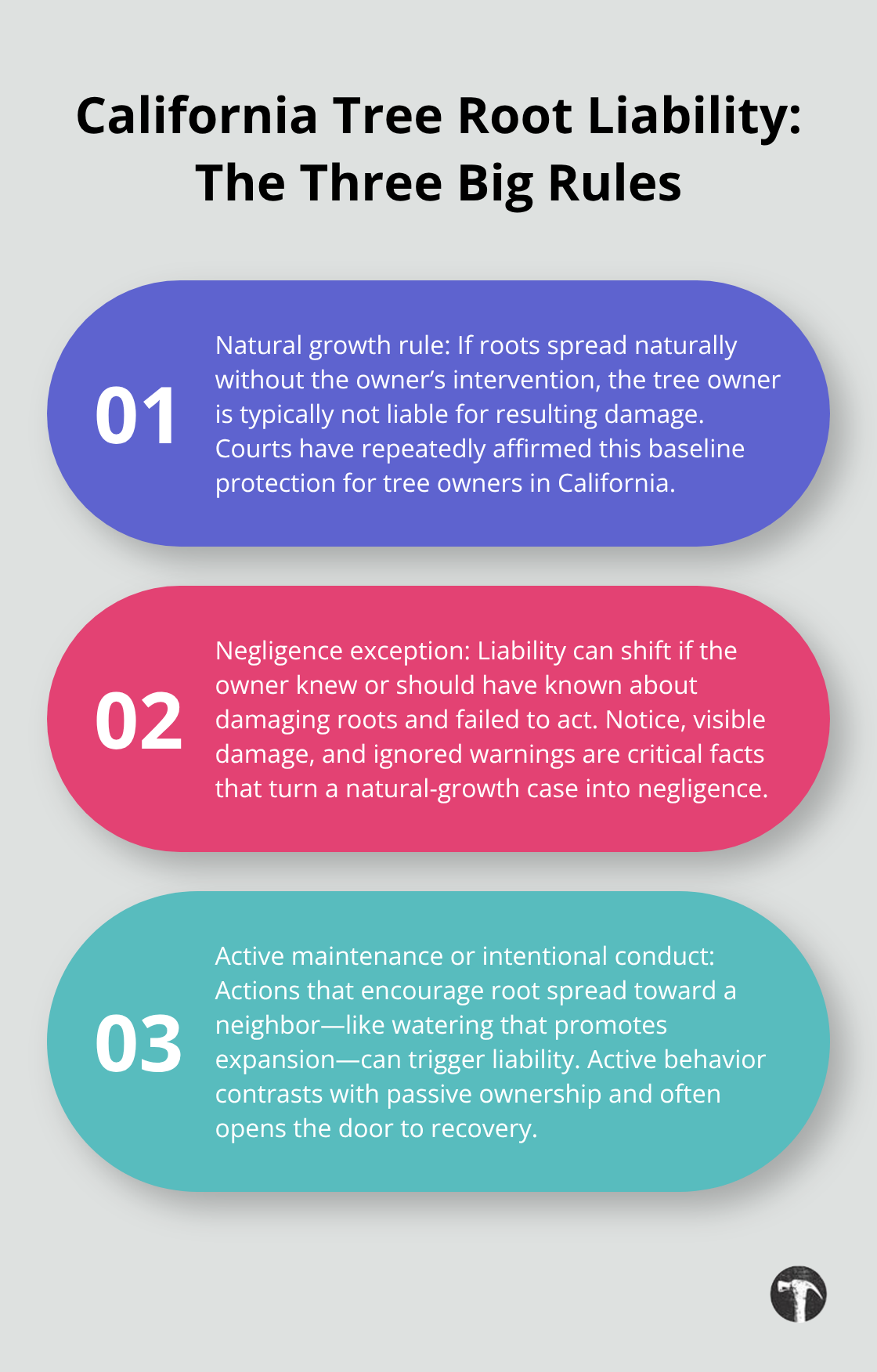
California’s natural growth rule stands as the foundation of tree liability law, and it heavily favors tree owners. Under this rule, a property owner faces no liability for damage caused by tree roots growing naturally, even if those roots damage a neighbor’s foundation, pipes, or driveway. If a tree on your neighbor’s property sends roots into your home and causes thousands in damage, you typically cannot recover those costs from your neighbor simply because the tree grew naturally. The California Court of Appeal has upheld this principle across decades of cases, making it one of the most frustrating aspects of property law for homeowners in Los Angeles County and Calabasas who suffer root damage.
When Negligence Overrides Natural Growth
California law recognizes critical exceptions that shift liability directly to the tree owner. If a neighbor knew or should have known that tree roots were damaging your property and did nothing, they may face liability for negligence. This negligence standard requires proof that the tree owner had actual knowledge of the damage or should have discovered it through reasonable inspection. If your neighbor ignored visible signs-cracked foundations, broken pipes, or buckling pavement that you clearly documented and reported-courts view this differently than purely natural growth.
Active Maintenance and Intentional Conduct
Tree owners who actively maintain or encourage root growth toward your property face different legal consequences. Watering a tree in ways that promote root expansion into your space, for example, can trigger liability. The distinction matters enormously: passive tree ownership with no knowledge of damage means you absorb the cost, but active negligence or intentional conduct opens the door to recovery. This difference between natural growth and negligence often determines whether you recover anything at all.
Understanding these liability rules helps you assess your situation, but determining which category applies to your specific dispute requires careful examination of the facts and evidence. The next section covers how insurance policies respond to root damage claims and what coverage gaps typically emerge when homeowners file claims.
Does Homeowners Insurance Actually Cover Tree Root Damage
Most homeowners assume their insurance policy covers tree root damage, then face shock when claims get denied. The reality is far more restrictive than people expect. Standard homeowners insurance policies explicitly exclude damage caused by tree roots, whether those roots originate from your property or a neighbor’s. This exclusion appears in nearly every major homeowners policy because insurers classify root damage as a maintenance issue rather than a sudden, accidental loss. According to the Insurance Information Institute, property damage from tree roots ranks among the top reasons insurers deny claims.
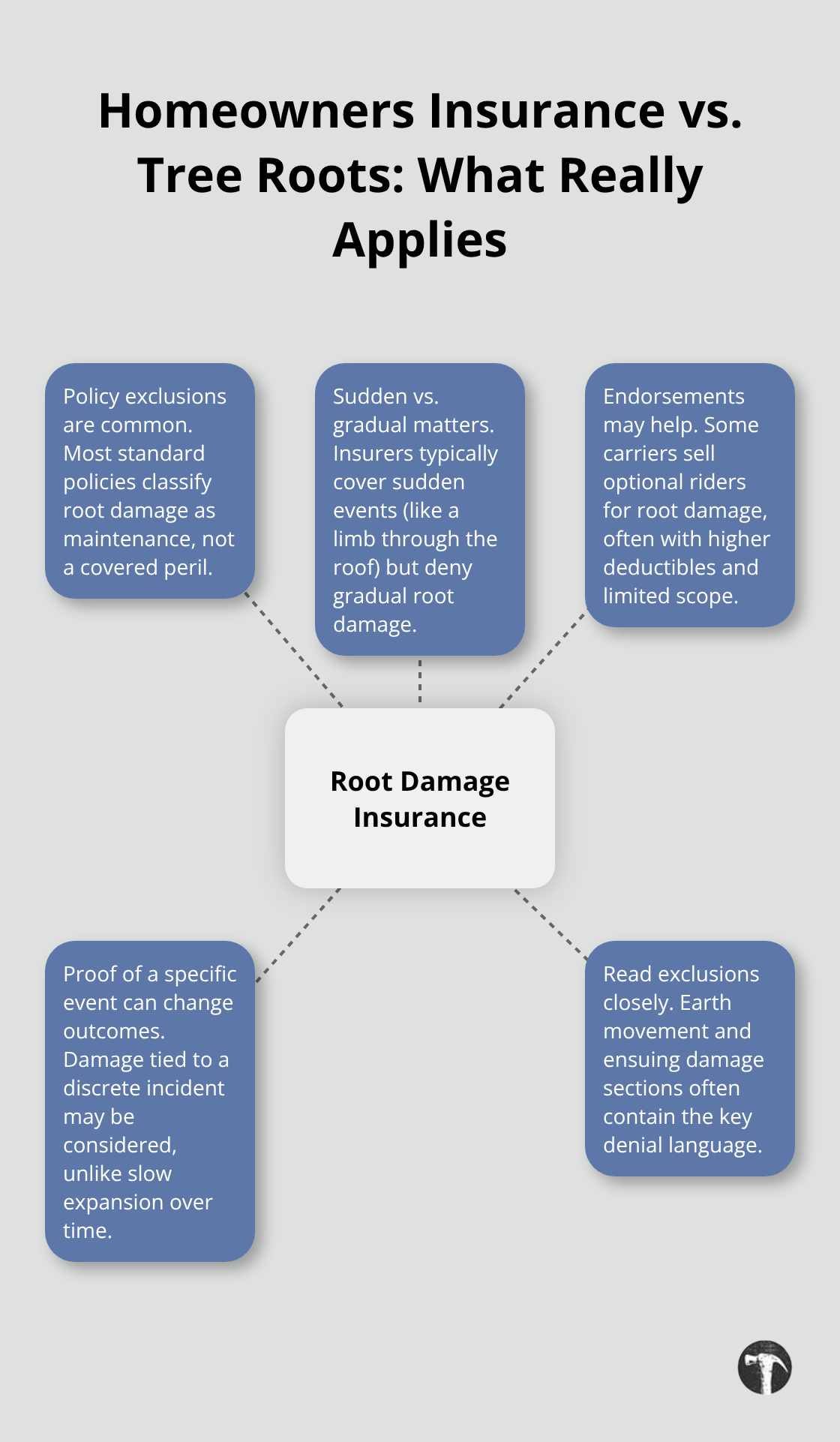
When you file a claim for foundation cracks, broken pipes, or damaged driveways caused by roots, most insurers will reject it outright unless you can prove the damage resulted from a specific event like a fallen tree limb, not the gradual expansion of roots over months or years.
Why Insurers Deny Root Damage Claims
Insurance companies distinguish between sudden events and gradual deterioration, and tree root damage falls squarely into the gradual category. A tree limb crashing through your roof gets covered. Roots slowly buckling your foundation do not. The only scenario where insurers might cover root damage is if you have a specific endorsement or rider added to your policy, which few homeowners purchase because they don’t realize the base policy excludes it. Some insurers offer optional coverage for tree root damage, but it costs extra and carries high deductibles. Before filing any claim related to root damage, contact your insurer directly and request a copy of your policy’s exclusions. Many Calabasas residents and others throughout Los Angeles County discover too late that their coverage contains language specifically denying claims for damage caused by tree roots, whether active or natural. Read your policy’s section on earth movement and ensuing damage, as this often contains the exclusion language.
What Coverage Actually Exists
Few homeowners realize that optional endorsements for tree root damage exist at all. Your insurer may offer this coverage as an add-on, though it typically carries a higher deductible (sometimes $1,000 or more) and covers only a portion of repair costs. Contact your agent and ask whether your current policy includes any tree root damage coverage or whether adding it makes financial sense for your situation. Some policies cover damage from tree roots only if the tree itself falls or a major limb breaks off, not from gradual root expansion. The distinction matters enormously when you file a claim, so understanding your specific policy language prevents disappointment later.
Documentation Protects Your Claim
If you believe you have coverage or an endorsement that applies, document everything meticulously before submitting your claim. Take photographs of the damage, the tree causing it, and any visible root systems. Get written estimates from contractors showing the damage and its cause. If you reported the problem to your neighbor previously, that written communication strengthens your position. Submit your claim in writing rather than by phone, and keep copies of every document you send. Insurers process claims differently depending on whether root damage appears sudden or gradual, and your documentation determines how they classify your situation.
When Denial Happens
Residents in Los Angeles County dealing with significant root damage should contact The Law Offices of Alan J. Carnegies, APC if an insurer denies your claim. We can review the denial letter and your policy to determine whether the denial was proper or whether you have grounds to appeal. Insurance denials often contain errors or misapply policy language, and challenging them requires understanding both your coverage and California insurance law.
With insurance coverage typically off the table, your next option involves pursuing the tree owner directly through negotiation or legal action-a path that requires understanding your liability options and the strength of your position.
Getting Money Back When Your Neighbor’s Tree Causes Damage
Build Your Evidence of Negligence
Most homeowners in Calabasas and throughout Los Angeles County assume they’re stuck absorbing root damage costs once insurance denies their claim. That assumption is wrong. You have multiple paths forward, and the strength of your position depends entirely on facts specific to your situation. Start by collecting evidence that proves your neighbor knew or should have known about the damage. Photograph visible root systems, cracked foundations, buckled pavement, or broken pipes with dates clearly marked. Written documentation matters far more than verbal conversations. Send a detailed letter describing the damage, when you first noticed it, and any prior complaints you made.
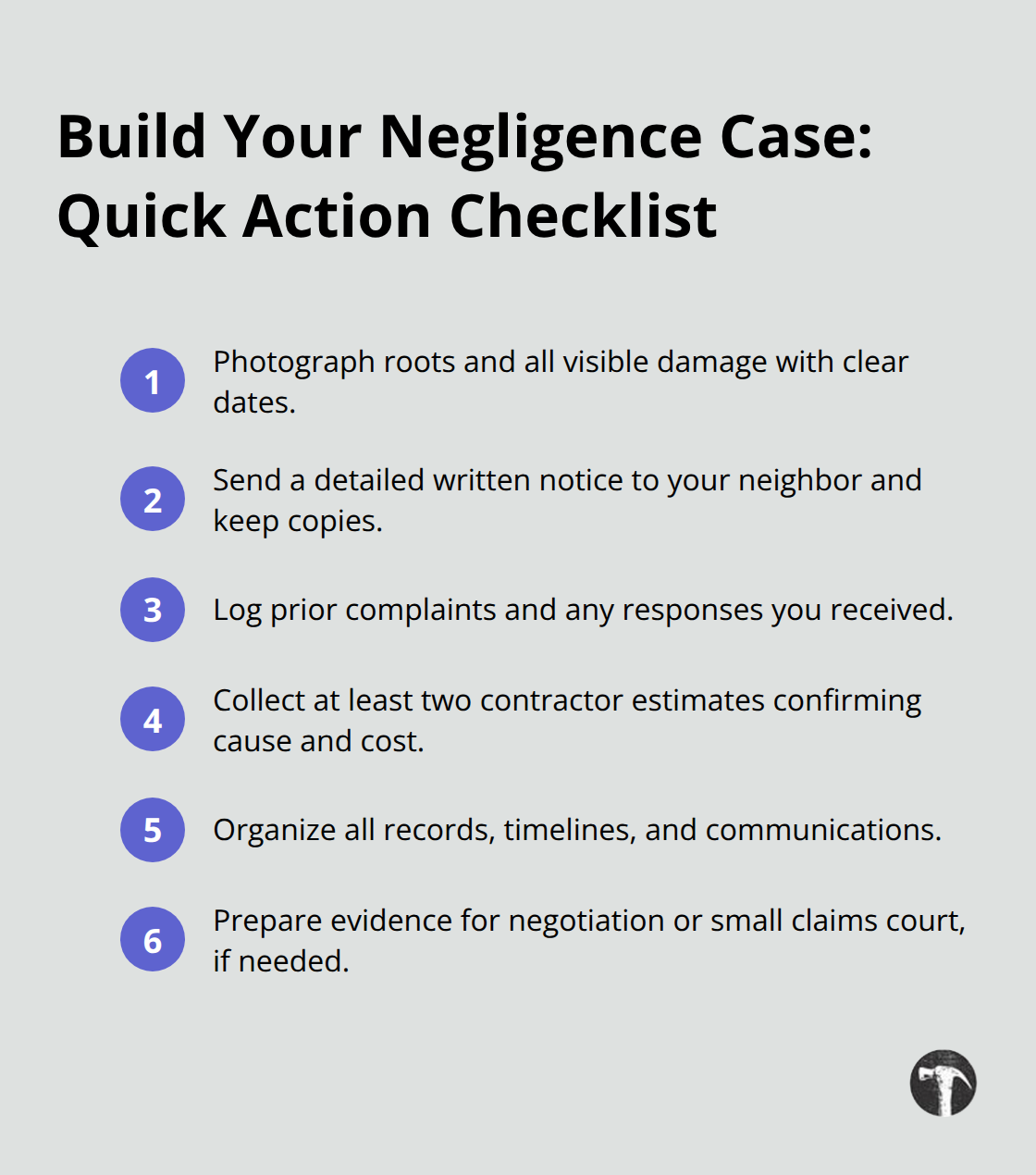
Keep a copy for your records. This letter creates a written record that your neighbor received notice and often prompts neighbors to take the problem seriously or contact their insurance company. Many disputes settle at this stage because neighbors realize they face potential liability.
Get Professional Damage Assessments
Request written estimates from at least two contractors showing the damage and repair costs. Courts in California weight evidence from multiple contractors more heavily than a single estimate. These estimates establish the actual financial impact of the root damage and provide documentation that a professional confirmed the cause. Contractors can identify whether roots actively caused the damage or whether other factors contributed. This professional assessment strengthens your negotiating position significantly when you approach your neighbor or their insurance company.
Understand Small Claims Court Options
The decision to pursue legal action hinges on the repair cost and the strength of your evidence of negligence. If repairs cost under $5,000, small claims court in Los Angeles County offers a faster, cheaper alternative to hiring an attorney. You file the claim yourself, present your evidence to a judge, and typically receive a decision within weeks rather than months or years. This path works well for straightforward cases where the damage amount is modest and your evidence of negligence is clear.
Consider Legal Representation for Larger Claims
For larger claims involving foundation damage or major plumbing work, consulting with an attorney makes financial sense. An attorney can identify whether negligence occurred, calculate actual damages, and determine whether your neighbor’s insurance will cover the liability. Many neighbors carry homeowners policies that include liability coverage for property damage they cause, even when they initially deny responsibility. An attorney can pressure the neighbor’s insurer to investigate and potentially pay your claim. Settlement negotiations often move faster once legal representation enters the picture because insurance companies take formal demands seriously. Most tree root damage disputes settle between 60 and 90 days after formal demand letters go out, according to construction litigation data from California courts. We at The Law Offices of Alan J. Carnegies, APC represent property owners throughout Los Angeles County in tree root damage disputes and can help you navigate this process.
Timing Matters in Settlement Negotiations
Pursuing legal action without settlement attempts first wastes time and money, but having an attorney ready to file suit strengthens your negotiating position significantly. The threat of litigation often motivates neighbors and their insurers to settle rather than face court costs and uncertainty. Your attorney can calculate the actual value of your claim, including repair costs, any temporary housing expenses if the damage made your home uninhabitable, and other related losses. This comprehensive damage calculation gives you a realistic settlement target and prevents you from accepting inadequate offers.
Final Thoughts
Tree root damage liability in California protects tree owners far more than most property owners realize, but negligence and intentional conduct create exceptions that shift financial responsibility to the neighbor. Your homeowners insurance will almost certainly deny your root damage claim, making direct recovery from your neighbor your primary option. Acting quickly to document damage and notify your neighbor strengthens your position in settlement negotiations or court.
Calabasas residents and others throughout Los Angeles County face particular challenges with tree root damage because older properties often have established trees with extensive root systems that cause significant harm over time. The longer you wait to document damage and notify your neighbor, the weaker your negotiating position becomes. Professional legal guidance matters because tree root damage liability disputes involve complex questions about what your neighbor knew and whether their actions constitute negligence.
Contact The Law Offices of Alan J. Carnegies, APC today to discuss your tree root damage situation. We represent property owners throughout Los Angeles County in construction litigation and can help you determine liability and pursue recovery.