

Landlord-tenant disputes in California are increasingly complex, with both property owners and renters facing significant financial and legal stakes. Whether you’re dealing with eviction proceedings, security deposit disagreements, or maintenance conflicts, understanding your rights matters.
We at The Law Offices of Alan J. Carnegies, APC serve all of Los Angeles County and help both landlords and tenants navigate these challenging situations. This guide breaks down the key rights and remedies available under California law.
Common Landlord-Tenant Disputes in California
Eviction and Unlawful Detainer Actions
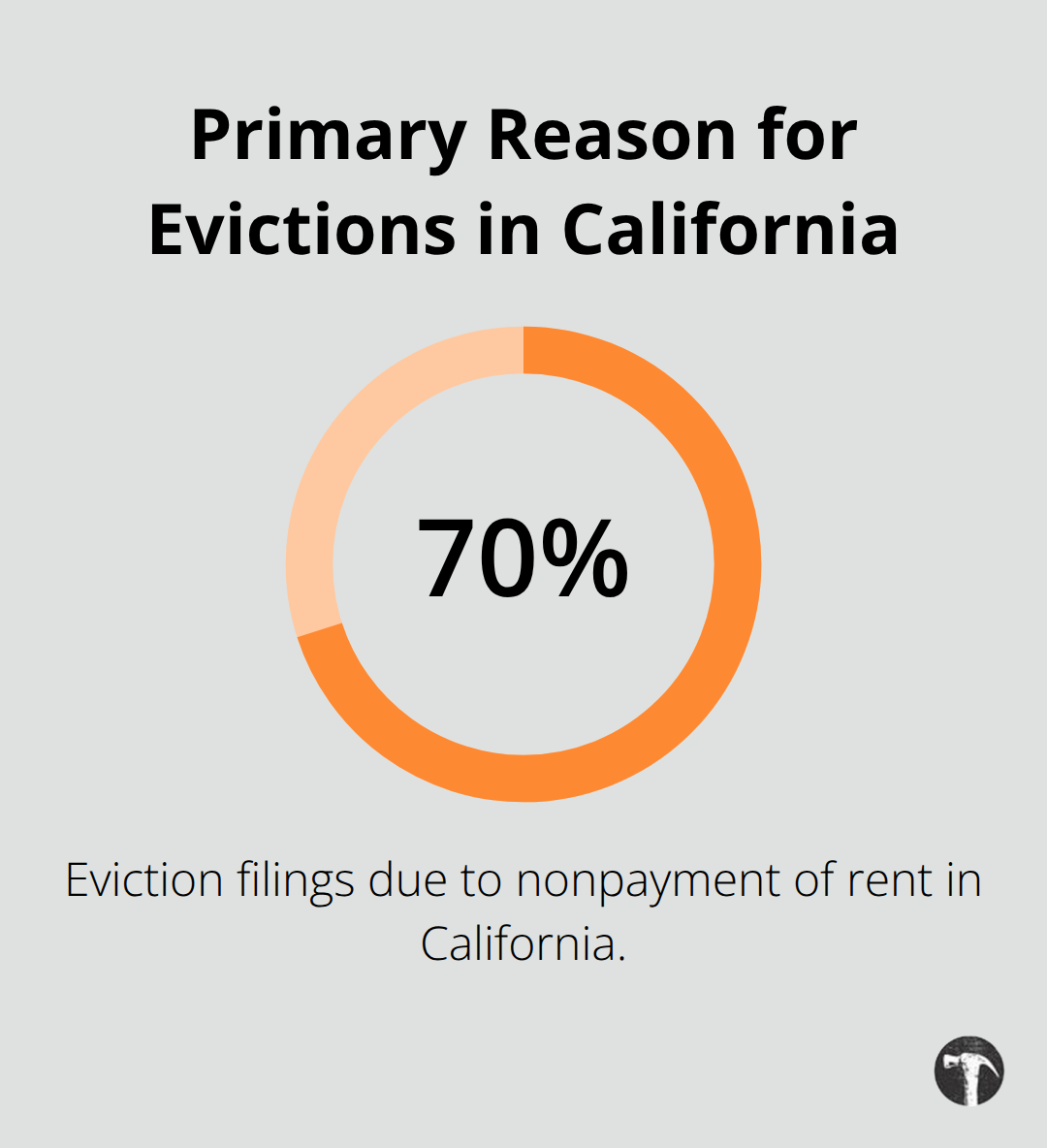
Eviction proceedings consume the majority of landlord-tenant litigation in California, and they move fast. An unlawful detainer action can proceed from filing to judgment in as little as 20 to 30 days if the tenant does not respond, according to California court records. Nonpayment of rent accounts for roughly 70 percent of eviction filings across the state, making it the primary reason landlords file these cases.
California’s eviction laws heavily favor tenants in many situations. Landlords must follow strict procedural requirements, including proper notice periods that vary depending on the reason for eviction. If a landlord fails to provide the correct notice or skips even one procedural step, the entire case faces dismissal and must start over. Many landlords stumble here, attempting to handle evictions without understanding that California courts interpret these rules with extreme strictness.
Security Deposit Disputes
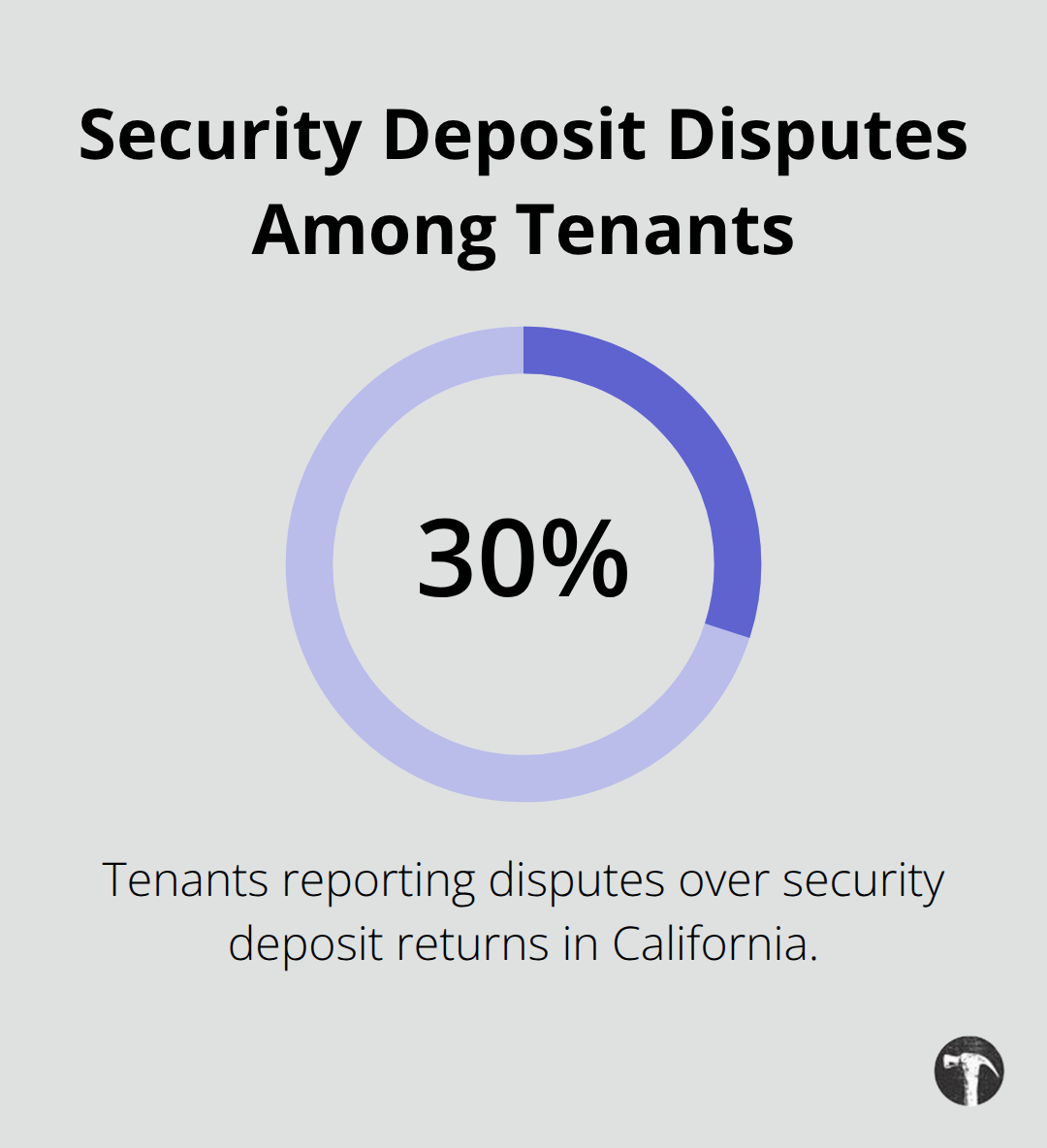
Security deposit disputes represent the second major category of landlord-tenant conflict, and they generate thousands of claims annually. California law requires landlords to return deposits within 21 days of move-out, with an itemized statement explaining any deductions. According to the California Department of Consumer Affairs, approximately 30 percent of tenants report disputes over deposit returns.
Common violations include landlords refusing to return deposits for normal wear and tear, failing to provide itemized deductions, or deducting costs that are not permitted under law. Tenants can recover up to three times the wrongfully withheld amount in damages, which makes these disputes expensive for landlords who cut corners.
Habitability and Maintenance Issues
Habitability and maintenance issues form the third pillar of landlord-tenant disputes, and they often stem from conflicting interpretations of what constitutes a habitable property. California law requires landlords to maintain housing in condition fit for human occupancy, including functioning plumbing, heating, electrical systems, and protection from weather and pests.
Tenants frequently withhold rent or repair-and-deduct rent to force landlords to address maintenance problems, which then triggers eviction filings from landlords claiming nonpayment. These disputes escalate quickly because both parties believe they are in the right (yet California courts have ruled consistently that landlords cannot evict tenants for asserting their habitability rights). Understanding what rights each party actually holds under California law becomes essential before either side takes action that could backfire in court.
Rights and Remedies Available to Tenants
California tenants hold substantial legal protections that many do not fully understand or exercise. The state’s housing laws place specific obligations on landlords and create enforceable remedies when those obligations are violated. Tenants who know their rights can avoid costly mistakes and respond effectively when disputes arise.
Right to Habitable Housing Conditions
The right to habitable housing stands as the foundation of tenant protections in California. Landlords must maintain properties in condition fit for human occupancy, which means functioning plumbing, heating, electrical systems, and protection from weather, pests, and structural hazards. If a landlord fails to maintain these conditions, tenants can withhold rent, repair-and-deduct the cost of repairs from rent payments, or break the lease without penalty.
California courts have consistently ruled that landlords cannot evict tenants for asserting habitability rights, even if the tenant withholds rent or uses repair-and-deduct remedies. Documentation of maintenance issues protects tenants significantly. Tenants should photograph and video record maintenance problems, then send written notice via email or certified mail requesting repairs within a reasonable timeframe (typically 30 days for serious issues). This paper trail proves essential if the landlord later files an eviction claiming nonpayment.
Protection Against Wrongful Eviction
Wrongful eviction claims arise when landlords attempt to remove tenants without following California’s strict procedural requirements. A landlord cannot lock a tenant out, change locks, remove belongings, or shut off utilities. These self-help evictions violate California law and expose landlords to liability for actual damages, moving costs, and attorney fees.
Landlords must file an unlawful detainer action through the courts, provide proper notice based on the reason for eviction, and wait out required notice periods. If a landlord skips even one procedural step or uses the wrong notice type, the entire case faces dismissal. Tenants also have protections against retaliatory evictions. If a tenant reports code violations, requests repairs, or asserts habitability rights within 180 days before an eviction notice, California law presumes the eviction is retaliatory unless the landlord proves otherwise (shifting the burden to the landlord to demonstrate a legitimate, unrelated reason).
Remedies for Security Deposit Violations
Security deposit violations generate significant financial consequences for landlords who violate California law. Landlords must return deposits within 21 days of move-out with an itemized statement detailing any deductions. Common violations include deducting for normal wear and tear, failing to provide an itemized statement, or deducting costs not permitted under law.
Tenants can recover up to three times the wrongfully withheld amount in damages, which means a landlord who illegally keeps a $1,500 deposit faces potential liability of $4,500. Tenants should document the property’s condition at move-in and move-out with photos and videos, request the deposit return in writing, and keep records of any move-out inspection. If a landlord fails to return the deposit or provides an improper itemized statement, tenants should send a written demand for the full amount before pursuing legal action.
Understanding these tenant protections matters, but landlords also possess significant rights under California law that tenants often overlook.
Rights and Remedies Available to Landlords
Legal Eviction Procedures
Landlords in California possess enforceable legal remedies, but they must navigate strict procedural requirements that courts interpret with zero tolerance for shortcuts. The unlawful detainer process moves quickly when executed correctly, but landlords who skip steps or use improper notice face dismissal and wasted time.
California requires landlords to provide specific notice types based on the reason for eviction: three days for nonpayment of rent, 30 days for month-to-month tenancies without cause, or 60 days for tenancies lasting over a year. Courts reject the entire case if the notice period does not match the eviction reason. After notice expires, landlords file the unlawful detainer action in court, and if the tenant fails to respond within five days, the landlord obtains a default judgment.
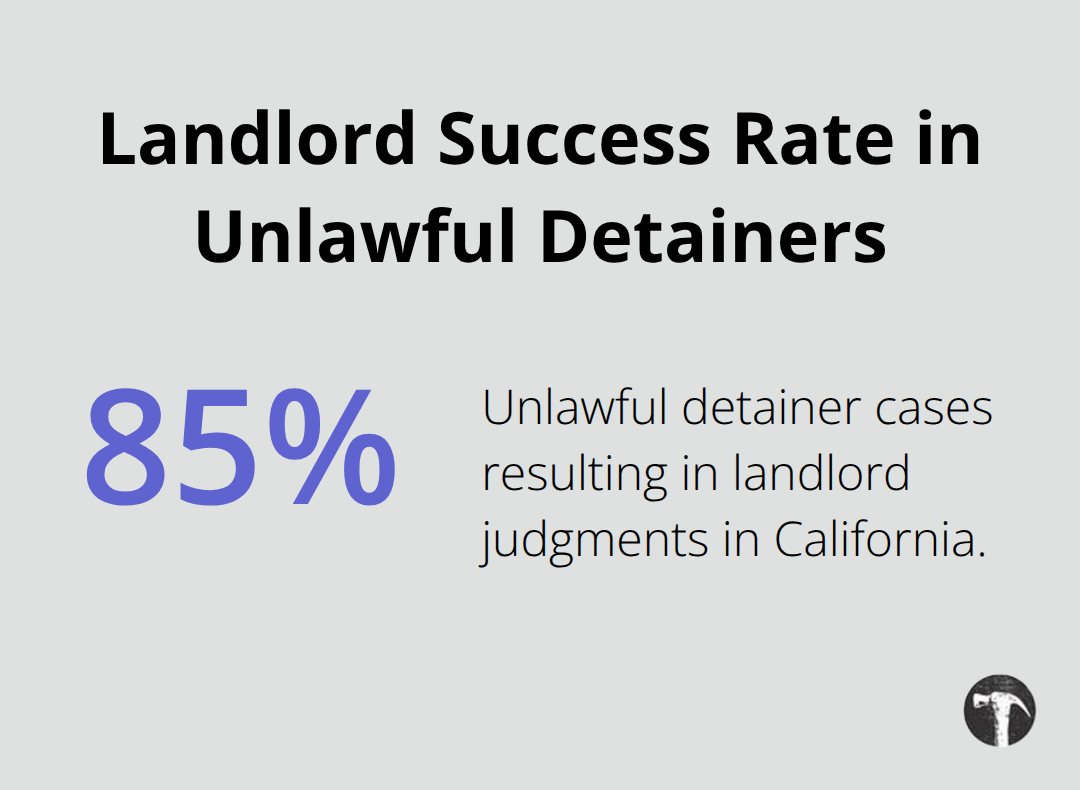
According to California court statistics, approximately 85 percent of unlawful detainer cases result in landlord judgments, but this rate drops significantly when landlords mishandle procedure. The judgment authorizes the sheriff to physically remove the tenant and their belongings, but only after the tenant receives a final notice to vacate. Landlords cannot accelerate this timeline or use self-help evictions such as changing locks or removing belongings, as these actions violate California law and create liability for damages, moving costs, and attorney fees.
Recovery of Unpaid Rent
Recovering unpaid rent requires landlords to prove the exact amount owed and that the tenant received proper notice to pay or quit. Rent judgments in unlawful detainer cases cover current rent owed at the time of filing, but landlords must file a separate small claims action or civil lawsuit to recover rent accruing after the eviction case concludes.
Landlords should document all rent payments and non-payments in writing, maintain records of payment requests, and preserve evidence of the tenant’s occupancy. This documentation proves essential if disputes arise over the amount owed or whether the tenant actually received notice to pay.
Property Protection and Maintenance Rights
Landlords retain the right to protect rental units and maintain the premises, though California law restricts how far this protection extends. Landlords cannot enter rental units without proper notice except in genuine emergencies, and they must provide 24 hours written notice for non-emergency inspections.
Tenants retain quiet enjoyment rights even during eviction proceedings, meaning landlords cannot harass or intimidate tenants to force early departure. Landlords who violate these restrictions expose themselves to counterclaims and additional liability. We at The Law Offices of Alan J. Carnegies, APC serve all of Los Angeles County and help landlords understand which remedies apply to their specific situation and how to execute them correctly without jeopardizing their case through procedural errors.
Final Thoughts
Landlord-tenant litigation in California demands understanding of both sides’ rights and obligations. Tenants hold substantial protections including habitability rights, wrongful eviction safeguards, and security deposit remedies that courts enforce consistently. Landlords possess enforceable remedies through proper eviction procedures and rent recovery, but only when they follow California’s strict procedural requirements without deviation.
Attempting to handle these disputes without legal guidance frequently backfires. Landlords who skip procedural steps face case dismissals and wasted time, while tenants who fail to document maintenance issues or deposit conditions lose leverage in disputes. Both parties risk costly mistakes when they assume California law works the way they think it should rather than how courts actually interpret it.
If you face eviction, security deposit disagreements, maintenance conflicts, or any other landlord-tenant matter in Los Angeles County, we at The Law Offices of Alan J. Carnegies, APC can help protect your interests. Contact us at carnegielawfirm.com to discuss your situation.