


Business fraud claims cost American companies an estimated $5.3 billion annually, according to the Association of Certified Fraud Examiners. Your business could be vulnerable right now, whether through employee theft, investment schemes, or false statements from partners.
We at The Law Offices of Alan J. Carnegies, APC help business owners throughout Los Angeles County identify fraud, build defenses, and recover losses. This guide walks you through the warning signs, detection methods, and legal strategies that actually work.
What Fraud Actually Looks Like Inside Your Business
Embezzlement: The Internal Threat
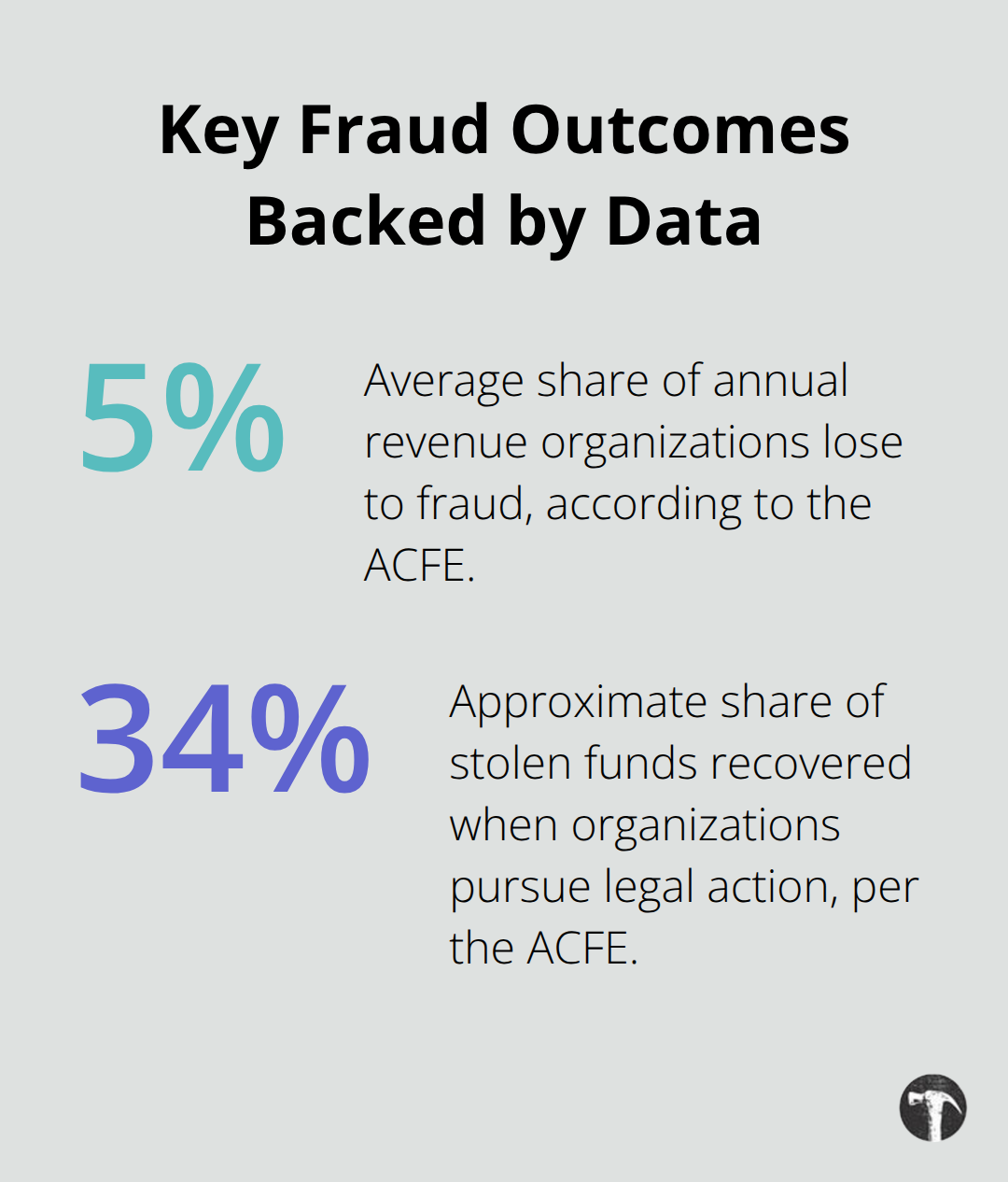
Embezzlement remains one of the most damaging forms of business fraud because it originates from within your organization. The Association of Certified Fraud Examiners reports that organizations lose an average of 5% of annual revenue to fraud, with internal theft accounting for a significant portion of detected cases. An employee with access to financial systems can siphon funds through fake invoices, falsified expense reports, or direct account transfers. The longer this activity goes undetected, the worse the damage-cases often involve losses ranging from tens of thousands to millions of dollars. Trusted employees frequently become perpetrators, meaning your most reliable team member could represent your biggest liability.
Investment Schemes and Ponzi Operations
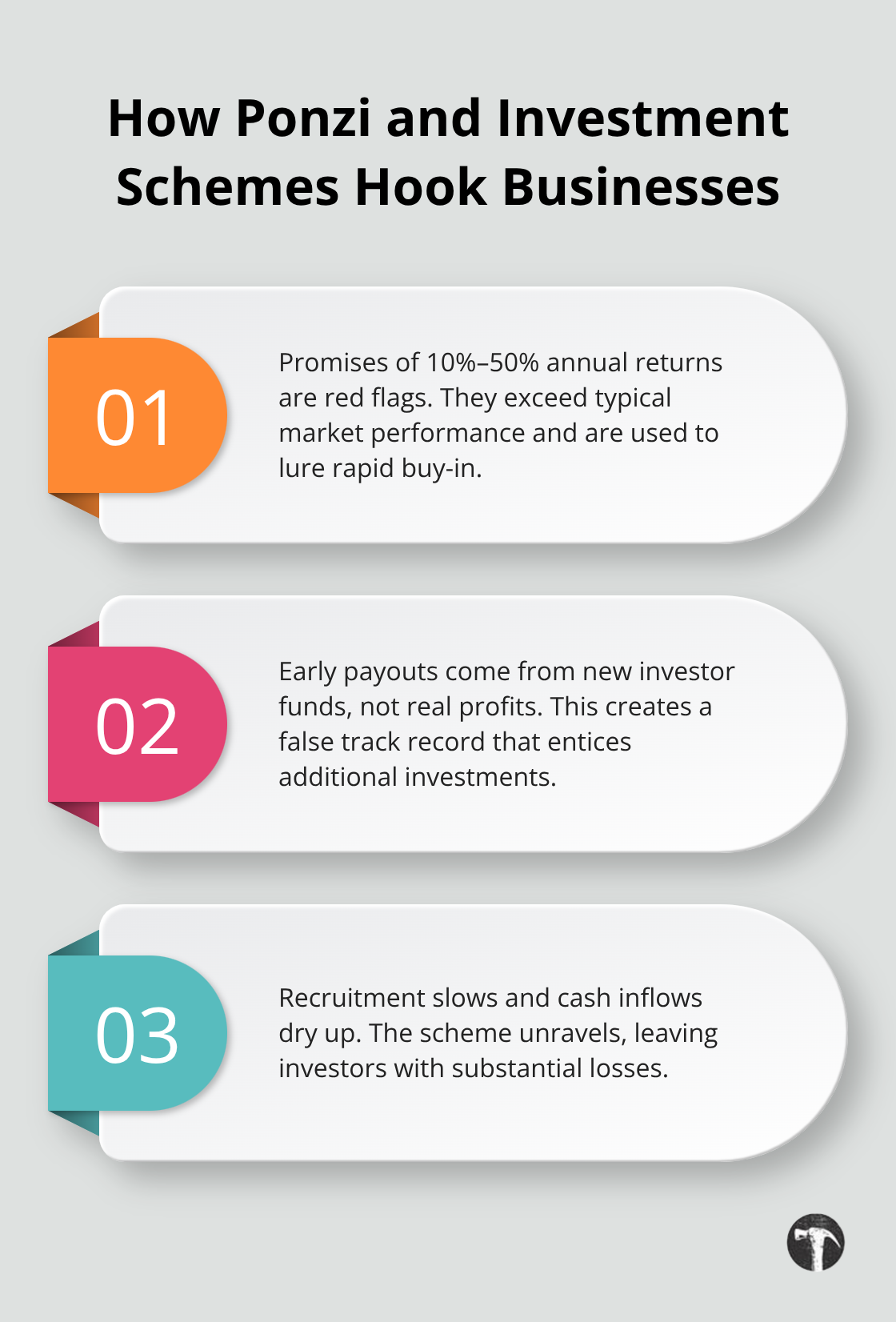
Investment fraud and Ponzi schemes operate through different mechanisms but carry equally catastrophic consequences for businesses and investors. These schemes promise unrealistic returns, typically ranging from 10% to 50% annually, which should immediately trigger skepticism since legitimate stock market returns average around 10% long-term. Fraudsters use early investor payouts funded by new investor money to create the illusion of legitimate returns, eventually collapsing when recruitment slows. The structure appears sustainable until the scheme unravels, leaving investors with substantial losses.
Misrepresentation in Business Dealings
False statements and misrepresentation in business dealings-whether in contracts, financial statements, or partnership agreements-erode trust and expose you to significant liability. A partner who misrepresents their financial health, a vendor who inflates credentials, or a contractor who falsifies project completion all fall into this category. These deceptions often surface only after you’ve committed resources, time, and capital to failed ventures. The financial and operational consequences can devastate your business operations and growth plans.
Why Early Detection Matters
The common thread across all fraud types is that early detection saves money, reduces emotional toll, and increases your chances of full recovery. Identifying fraud quickly allows you to stop ongoing losses and preserve evidence for legal action. The next section examines the specific warning signs and detection methods that help you catch fraud before it spirals out of control.
Spotting Fraud Before It Spirals
Financial Records Reveal Hidden Patterns
Financial records tell a story, and that story often reveals deception long before it becomes catastrophic. Unusual patterns in your accounts payable, cash flow inconsistencies, or unexpected gaps between bank reconciliations signal that something requires investigation. The Association of Certified Fraud Examiners found that organizations detected fraud faster when they monitored cash flow anomalies and account reconciliation discrepancies monthly rather than quarterly. Look for payments to unfamiliar vendors, repeated transfers to the same external account, or invoices that bypass your standard approval workflow.
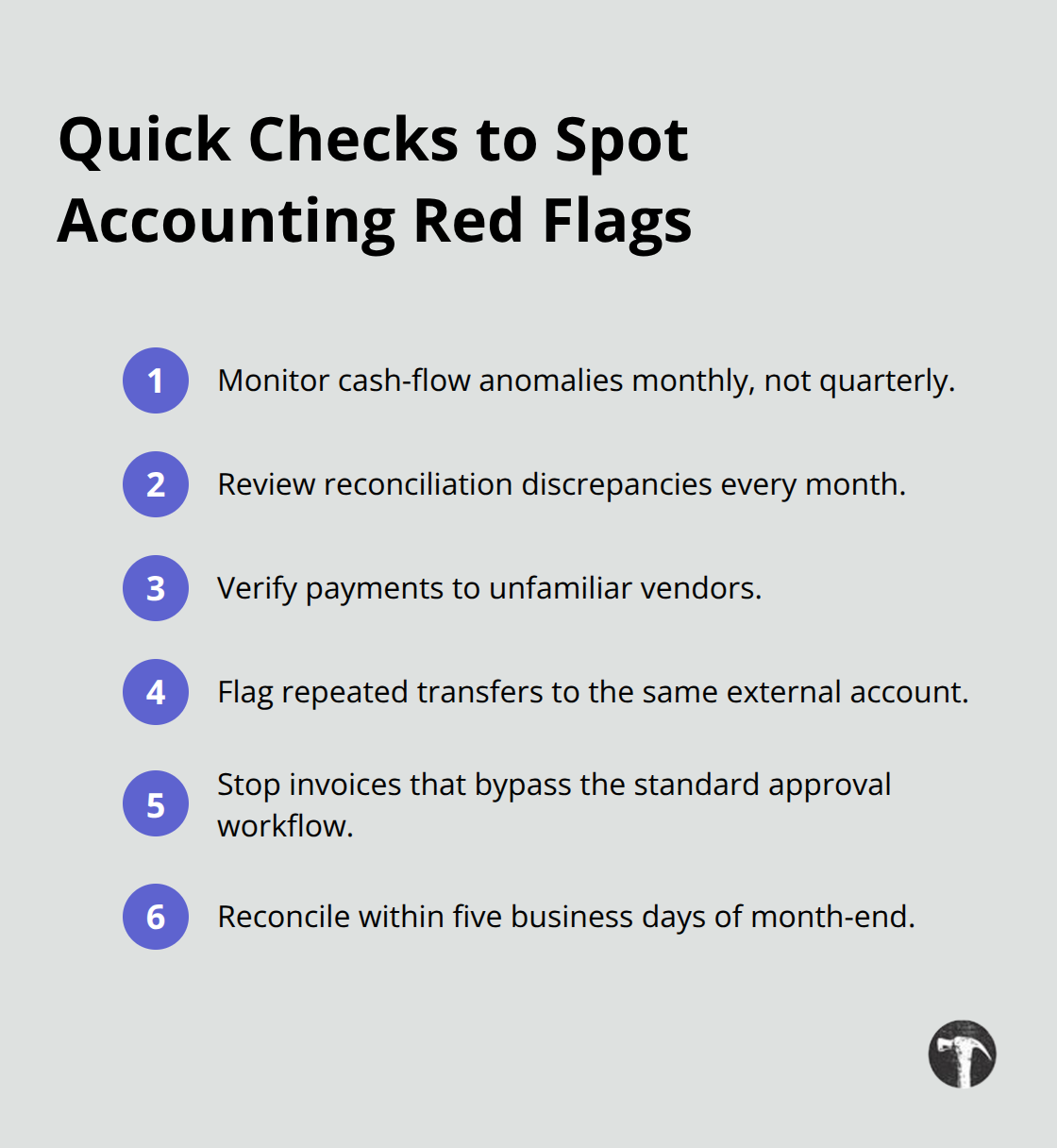
Round-dollar transactions and payments submitted just before holidays or vacation periods warrant scrutiny since fraudsters exploit gaps in oversight. Reconcile your accounts within five business days of month-end rather than waiting weeks, which compresses the window for undetected theft and helps you catch irregularities when the transaction trail remains fresh.
Employee Behavior Changes Signal Internal Threats
Employee behavior changes often precede financial discovery by weeks or months, making them valuable early indicators of fraud. An employee who suddenly displays lifestyle changes beyond their salary range, exhibits defensive reactions when questioned about their work, or resists taking vacation time frequently signals internal theft. Fraudsters avoid time off because their schemes unravel when someone else reviews their work. Implement surprise audits of high-risk departments and rotate employee responsibilities so no single person controls an entire transaction cycle.
Building Defenses Through Internal Controls
Third-party auditors provide objectivity that internal teams cannot deliver, and external audits conducted at least annually review financial controls and identify vulnerabilities. Strong internal controls require segregation of duties, meaning the person who approves payments should not process them, and the person who reconciles accounts should not have access to make transactions. Document all financial transactions with supporting evidence, establish clear approval hierarchies, and maintain audit trails that track who accessed financial systems and when.
These detection methods and internal safeguards form your first line of defense, but they work only when you act on what they reveal. When you identify fraud, your next step involves building a legal strategy that protects your business and recovers your losses.
Protecting Your Business When Fraud Strikes
Act Fast on Evidence Collection
Once you identify fraud, your legal response determines whether you recover losses or watch them disappear into the system. Documentation becomes your weapon at this stage-every email, bank statement, invoice, and communication thread strengthens your position. Start collecting evidence immediately after discovering fraud, because memories fade and documents get deleted. The Association of Certified Fraud Examiners reports that organizations recover approximately 34% of stolen funds when they pursue legal action, but recovery rates drop significantly when evidence collection begins weeks or months after the fraud occurred.
Photograph bank statements, preserve email chains, and secure access logs that show who entered financial systems and when. Do not attempt to investigate further once you suspect fraud; instead, halt the suspected activity and involve law enforcement or attorneys who understand chain-of-custody requirements. Contaminated evidence-material that has been handled improperly or altered-becomes inadmissible in court and destroys your recovery case.
Coordinate With Law Enforcement and Regulators
Your first conversation should address whether to involve police, federal agencies like the FBI or SEC, or both simultaneously. Law enforcement investigation often runs parallel to civil litigation, meaning you can pursue criminal prosecution and financial recovery through different channels at the same time. Federal agencies investigate securities fraud and Ponzi schemes aggressively, particularly when multiple victims exist. State and local police handle embezzlement and internal theft but may deprioritize cases involving smaller amounts.
Civil litigation moves faster than criminal prosecution-you can file a lawsuit and recover damages within months while criminal cases take years. Strong defense strategy means understanding which agencies have jurisdiction over your specific fraud type, then coordinating your legal action to maximize recovery potential while preserving evidence for all proceedings.
Build Your Defense Strategy
Your defense strategy depends on whether you face fraud allegations or pursue recovery from fraudsters. If someone accuses your business of fraud, you need to establish that you acted in good faith and that any misstatements were unintentional or based on information you reasonably believed to be accurate. Gather documentation showing your due diligence, communications with relevant parties, and the basis for any statements you made. If you pursue recovery against a fraudster, your strategy focuses on proving intent to deceive and quantifying your losses with precision.
Work with attorneys who understand both the civil and criminal dimensions of fraud cases (they often overlap). Your legal team should review all communications, financial records, and witness statements to identify the strongest claims and anticipate counterarguments. The strength of your evidence determines whether you settle quickly or proceed to trial.
Final Thoughts
Business fraud claims demand immediate action and strategic thinking. The patterns you’ve learned to recognize-unusual financial transactions, behavioral red flags, and control gaps-form your foundation for prevention. Organizations that act quickly recover approximately 34% of stolen funds, while delayed responses yield far lower recovery rates, which means your first hours after discovering fraud determine your financial outcome.
Stop the fraudulent activity, secure all documentation, and contact attorneys before conducting your own investigation. Contaminated evidence (material that has been handled improperly or altered) destroys cases and eliminates recovery options. We at The Law Offices of Alan J. Carnegies, APC represent business owners throughout Los Angeles County who face fraud allegations or pursue recovery against fraudsters, and we understand that these claims threaten your company’s stability and your personal financial security.
Contact us to discuss your situation and develop a defense or recovery strategy tailored to your specific circumstances. Fraud cases move quickly, and delays cost money. Visit our firm to learn how we can protect your business and maximize your recovery potential.