

Employment disputes in California happen more often than many workers realize. Wage theft, wrongful termination, and discrimination claims affect thousands of employees across Los Angeles County each year.
At The Law Offices of Alan J. Carnegies, APC, we help workers understand their rights and the paths available to resolve workplace conflicts. Whether through negotiation, agency complaints, or court action, you have options.
What Employment Disputes Actually Look Like in Calabasas, California
Wrongful Termination Claims
Wrongful termination claims dominate employment litigation in California, and they’re not what most people think. A worker gets fired and assumes it was illegal, but California’s at-will employment doctrine means employers can terminate almost anyone for almost any reason. The violation occurs only when the termination violates public policy, breaches an employment contract, or stems from discrimination or retaliation. The Society for Human Resource Management reports that the average cost to defend an employment lawsuit exceeds $75,000, which explains why many employers settle weak claims rather than fight them. In Los Angeles County, wrongful termination claims often involve retaliation after an employee reports safety violations, files a workers’ compensation claim, or refuses an illegal directive. These cases succeed because the termination itself violates California law, not because the employer lacked a general reason to fire someone.
Wage and Hour Violations
Wage and hour violations represent the most frequent employment disputes, and they’re often easier to prove than discrimination claims. Employers misclassify workers as independent contractors to avoid payroll taxes, fail to pay overtime at the correct rate of time-and-a-half, or deduct meal breaks improperly. California law requires employers to pay minimum wage for all hours worked and overtime for any hours beyond eight per day or forty per week. Many employers also violate rules around final paychecks, failing to pay accrued vacation or commissions when workers leave. The California Department of Industrial Relations enforces these rules aggressively, and workers can file administrative complaints without an attorney.
Discrimination and Harassment Cases
Discrimination and harassment cases involve illegal treatment based on protected characteristics like race, gender, disability, religion, national origin, or sexual orientation under the California Fair Employment and Housing Act. Harassment becomes actionable when it’s severe or pervasive enough to alter working conditions, and retaliation for complaining about harassment is itself illegal. The U.S. Government Accountability Office reports that more than 48% of workers who experienced workplace harassment never formally complained, often because they feared retaliation or didn’t know how to report safely.
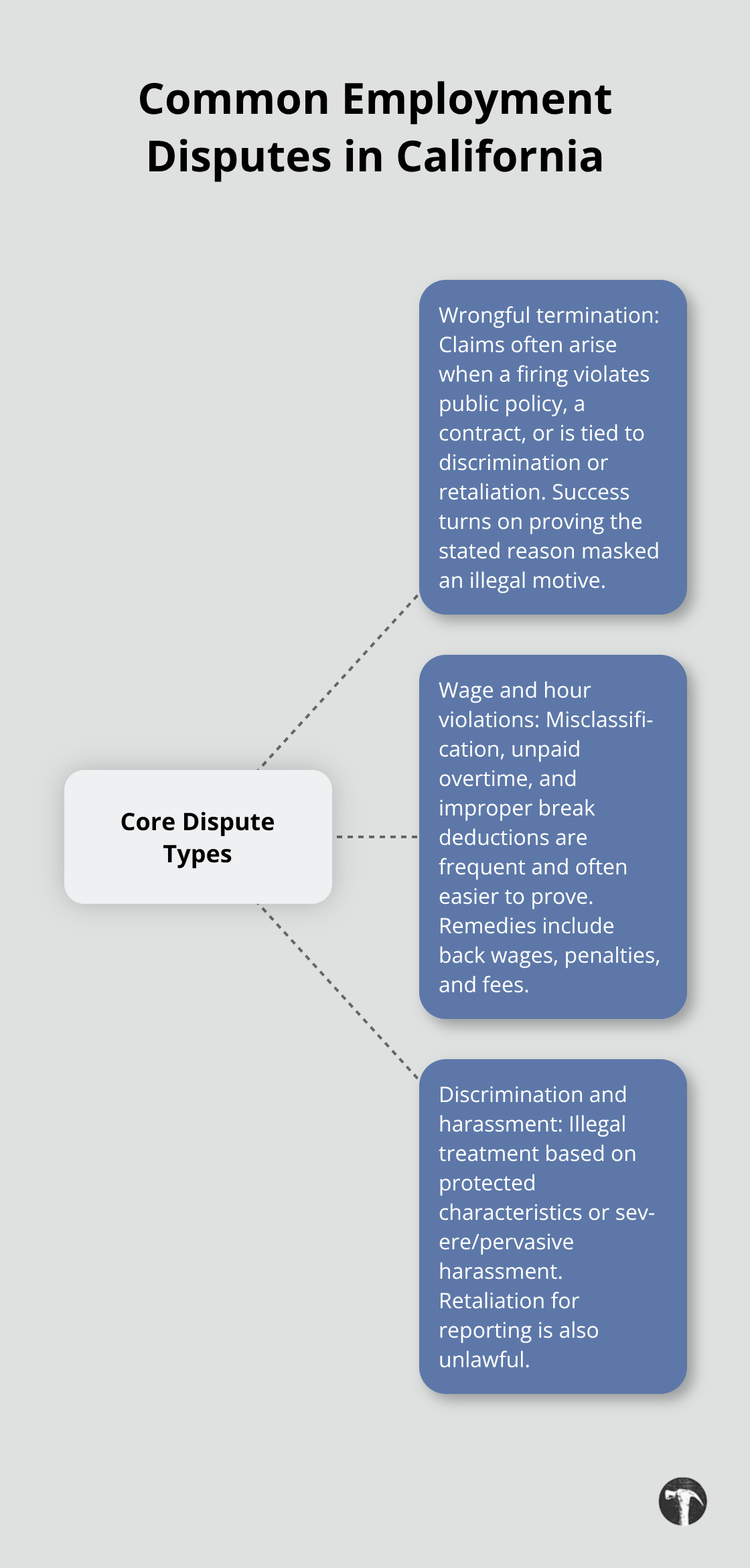
These three dispute types-wrongful termination, wage violations, and discrimination-account for the vast majority of employment claims filed in California. Each requires different evidence and remedies to resolve, and understanding which category your situation falls into shapes your next move. The path forward depends on whether you need to negotiate directly with your employer, file an administrative complaint, or pursue court action.
What California Law Actually Requires From Employers
At-Will Employment Has Real Limits
California’s employment laws are stricter than federal standards, and employers who ignore them face real financial consequences. At-will employment sounds like employers can fire anyone anytime, but that’s a dangerous oversimplification that costs companies tens of thousands in settlements. While California does allow at-will termination, it contains exceptions that protect workers. You cannot be fired for refusing an illegal act, reporting safety violations, filing a workers’ compensation claim, or taking legally protected leave like jury duty or military service. Retaliation for these actions is itself illegal under California law.
The California Fair Employment and Housing Act prohibits termination based on protected characteristics-race, gender, disability, religion, national origin, sexual orientation, and others. Employers also cannot fire someone for opposing discriminatory practices or for reporting harassment. These exceptions swallow the at-will rule so completely that many employment disputes hinge on whether the stated reason for termination masks an illegal motive. In Los Angeles County cases, an employer claims poor performance, but the timing and circumstances suggest retaliation.
Wage and Overtime Rules Are Strict and Often Violated
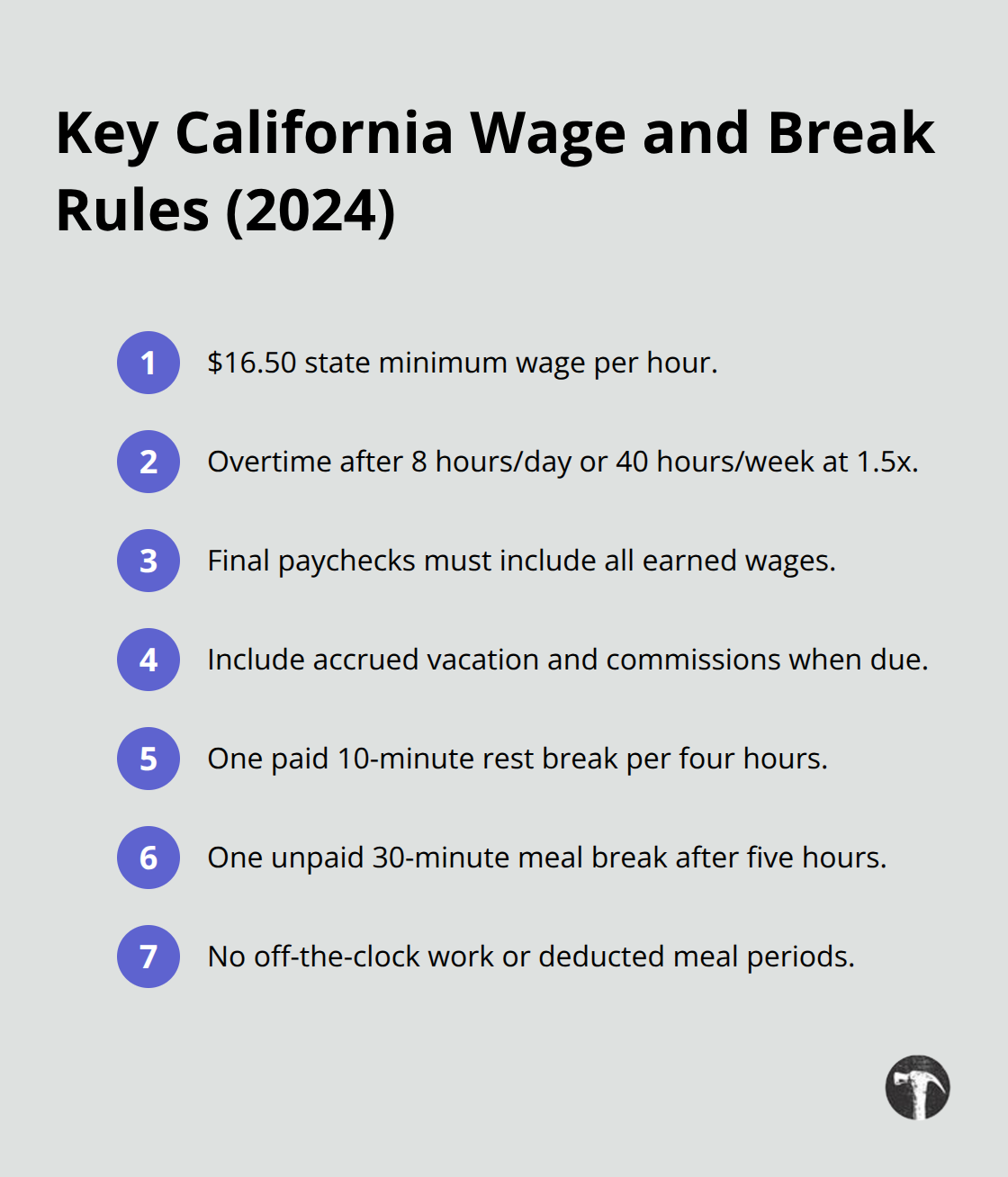
Minimum wage and overtime violations are equally straightforward and equally ignored. California requires employers to pay at least the state minimum wage for every hour worked-currently $16.50 per hour as of 2024. Overtime kicks in at eight hours per day or forty hours per week, whichever triggers first, and must be paid at one-and-a-half times the regular rate. Many employers misclassify workers as independent contractors to sidestep these requirements, a practice that exposes them to massive liability (including penalties, back wages, and attorney fees).
Final paychecks must include all earned wages, accrued vacation, and unpaid commissions within specific timeframes-failing to do so violates California law. Meal and rest breaks are not optional; workers must receive a paid ten-minute rest break for every four hours worked and an unpaid thirty-minute meal break after five hours. Deducting meal breaks from pay or requiring employees to work through breaks is illegal.
Discrimination and Harassment Carry Legal Teeth
Anti-discrimination and retaliation protections under the California Fair Employment and Housing Act create a legal floor that applies to all employers with five or more employees. Harassment based on protected characteristics must be reported through internal channels, and employers must investigate promptly and impartially. The U.S. Government Accountability Office data shows that 48% of harassed workers never complain, reflecting real fear of retaliation-a fear that California law directly addresses (by making retaliation itself illegal).
If an employee complains about discrimination or harassment and faces adverse action afterward, the burden shifts to the employer to prove the action was unrelated to the complaint. This shift in burden makes retaliation cases particularly difficult for employers to defend. Understanding these rules separates employers who manage risk from those who invite litigation and costly settlements.
The legal landscape in California creates multiple pathways for workers to challenge unfair treatment, which means employers must know not just what they can do, but what they absolutely cannot do. The next section walks through how workers actually resolve these disputes-from negotiation to agency complaints to court action.
Paths to Resolution That Actually Work
Employment disputes in Los Angeles County don’t have to end in court, and most of them don’t. The fastest path forward depends on whether you can negotiate directly with your employer, whether you need a neutral party to intervene, or whether the dispute requires formal legal action. Settlement negotiations happen first because they’re cheaper, faster, and confidential. Mediation comes next when direct talks stall but both sides want to avoid litigation. Administrative complaints through the California Civil Rights Department work well for discrimination and harassment claims because the agency investigates at no cost to the worker. Litigation remains the final option when other paths fail or when the employer refuses to negotiate. The median time to resolve an employment dispute through arbitration is 17 months according to 2025 data, compared to 34.1 months in federal court, which shows that even formal dispute resolution outside litigation saves time and money.
Settlement Negotiations Start With a Clear Demand
Settlement negotiations start with a clear demand letter that outlines the violation, the damages, and the amount needed to resolve the claim. Most employers take settlement seriously when the letter comes from an attorney because they understand the cost of defending a lawsuit exceeds $75,000 on average. A strong demand letter shifts the conversation from whether a violation occurred to how much it will cost to resolve it.
Mediation Offers Speed and Confidentiality
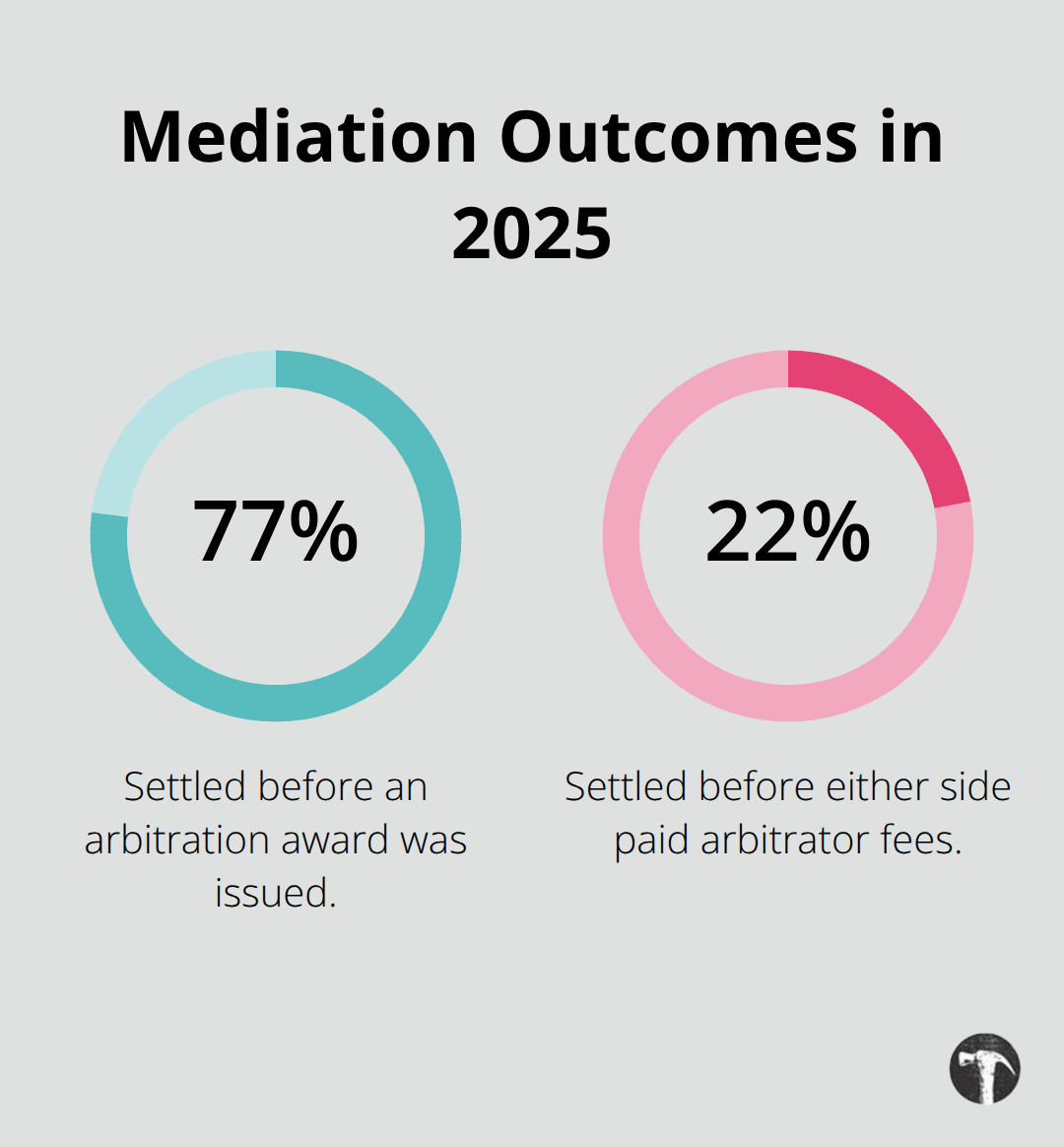
Mediation through organizations like the American Arbitration Association costs far less and moves faster than litigation. In 2025, about 77% of employment disputes settled before an arbitration award was issued, and 22% settled before either side even paid arbitrator fees. The American Arbitration Association charges a $250 non-refundable deposit to start mediation, with mediator rates published on their profiles and a $75-per-hour administrative fee with a four-hour minimum.
Both parties control the outcome in mediation, which means you avoid the unpredictability of a judge or jury deciding your case.
Administrative Complaints Provide Free Investigation
Administrative complaints filed with the California Civil Rights Department require filing an intake within three years of the last harmed date. The Department screens initial claims for jurisdiction, investigates independently, and attempts to resolve disputes through free conciliation before any litigation. If the Department finds reasonable cause to believe a law was violated, mediation is typically required before proceeding to litigation. This path works especially well for discrimination and harassment claims because the agency bears the cost of investigation.
Litigation Becomes Necessary When Other Options Fail
Litigation should be pursued only when settlement, mediation, and administrative processes have failed or when the employer’s conduct is so egregious that court action is necessary to stop ongoing harm. Court action takes longer and costs more than other options, but it remains available when the employer refuses to negotiate or when the damages justify the expense. The choice between negotiation, mediation, administrative action, and litigation depends on the strength of your claim, the amount at stake, and whether you want to preserve any ongoing relationship with your employer.
Final Thoughts
Employment disputes in California demand action, not delay. The path you choose-negotiation, mediation, administrative complaint, or litigation-depends on your specific situation, but waiting only strengthens the other side’s position. Most disputes settle before trial because both sides recognize that court costs money and time neither wants to spend, and an attorney shifts that conversation from whether you have a claim to how much it will cost to defend one.
Legal representation changes outcomes in employment disputes California cases. Employers take settlement demands seriously when counsel delivers them because they understand the average defense exceeds $75,000. You also avoid the mistakes unrepresented workers make: missing filing deadlines, accepting lowball offers, or pursuing claims that don’t fit California law. An attorney screens your claim, identifies the strongest legal theories, and positions you for the best possible resolution.
At The Law Offices of Alan J. Carnegies, APC, we help workers and employers resolve employment disputes fairly and efficiently across all of Los Angeles County, California. We offer a free initial consultation to discuss your situation and explore the resolution path that works for you. Contact us today to understand your rights.