


Franchise disputes can derail your business growth and drain your resources. Whether you’re facing termination threats, royalty disagreements, or territory conflicts, understanding franchise dispute resolution in California is essential.
We at The Law Offices of Alan J. Carnegies, APC serve franchise owners throughout Los Angeles County who need clear guidance on their rights and options. This guide walks you through the legal framework, dispute resolution strategies, and practical steps to protect your franchise investment.
What Franchise Disputes Actually Look Like in California
Termination and Non-Renewal: The Most Destructive Conflicts
Termination without warning destroys franchise businesses in California. A franchisor can claim breach of contract or performance failures and shut down your operation with minimal notice, leaving you liable for lease obligations, employee severance, and inventory write-offs. California courts have consistently ruled that franchisors must provide reasonable notice before termination, yet disputes arise because franchisors interpret the franchise agreement’s termination clause differently than franchisees do.
The California Franchise Disclosure Law requires that the Franchise Disclosure Document clearly state termination conditions, but vague language creates room for conflict. If your franchise agreement states you can be terminated for failure to maintain brand standards but doesn’t define what that means, you face real vulnerability. Non-renewal disputes follow the same pattern: a franchisor refuses to renew your agreement when it expires, often without explanation, and you lose the business you’ve built.
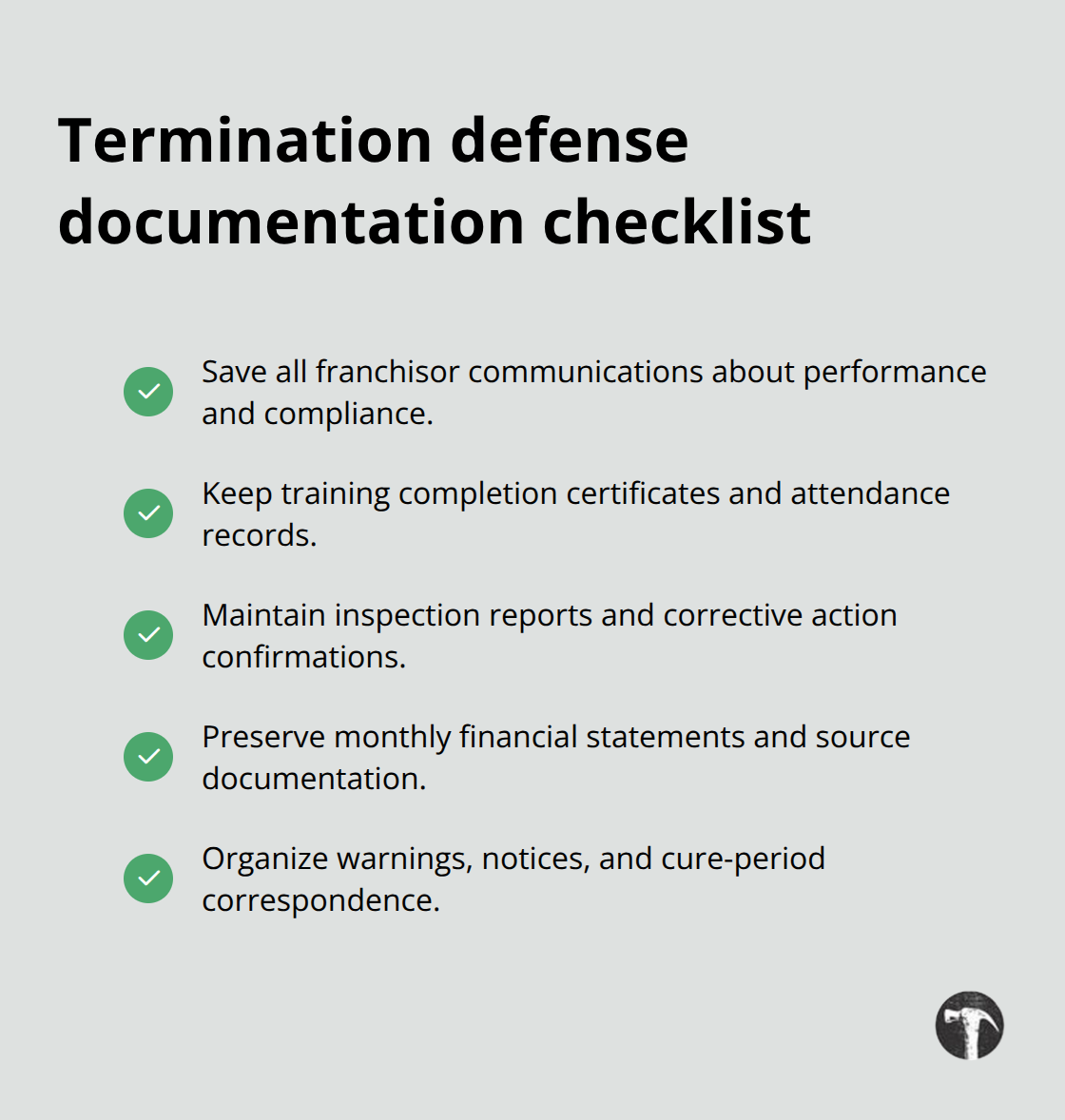
Document every communication with your franchisor about performance, compliance, and any warnings they issue. Keep records of training completion, inspection reports, and financial statements to prove you’ve met your obligations. This documentation becomes your strongest defense if termination disputes reach negotiation or litigation.
Royalty and Fee Disputes: Hidden Costs and Calculation Conflicts
Royalty and fee disputes drain franchisees because the calculations are complex and franchisors control the data. A franchisor might claim you owe 6 percent of gross sales as royalties, but disagreements emerge over what counts as gross sales-do returns, refunds, or promotional discounts reduce the amount you owe? Some franchisors charge marketing fund fees, technology fees, and renewal fees on top of royalties, and franchisees often discover these hidden costs only after signing.
Request a detailed accounting of how royalties and fees are calculated before you sign your agreement. Negotiate clear definitions of what constitutes gross sales and what deductions apply. Track your actual sales monthly and compare them to what you report to the franchisor so you can spot discrepancies early. This proactive approach prevents years of costly disputes over payment calculations.
Territory and Competition: Encroachment and Exclusivity Battles
Territory and competition issues hit hard when a franchisor opens a competing franchise two blocks away from your location or sells territorial rights to another franchisee without your consent. California law does not automatically grant exclusive territory rights, so your franchise agreement must explicitly state whether your territory is exclusive or non-exclusive. If it’s silent on exclusivity, you have no legal protection against encroachment.
Your franchise agreement should specify territorial boundaries with specific geographic coordinates or address ranges rather than vague descriptions. Include performance benchmarks that trigger remedies if the franchisor violates territorial terms. These protections (combined with clear dispute resolution procedures) prevent the franchisor from undermining your investment through competitive placement decisions that benefit their bottom line at your expense.
Understanding these three dispute categories prepares you to recognize problems early and take action before they escalate. The legal framework governing franchise relationships in California provides specific protections, but only if you understand what rights the law actually grants you and what your agreement actually says.
What California Law Actually Requires From Franchisors
The Franchise Disclosure Document: Your Legal Foundation
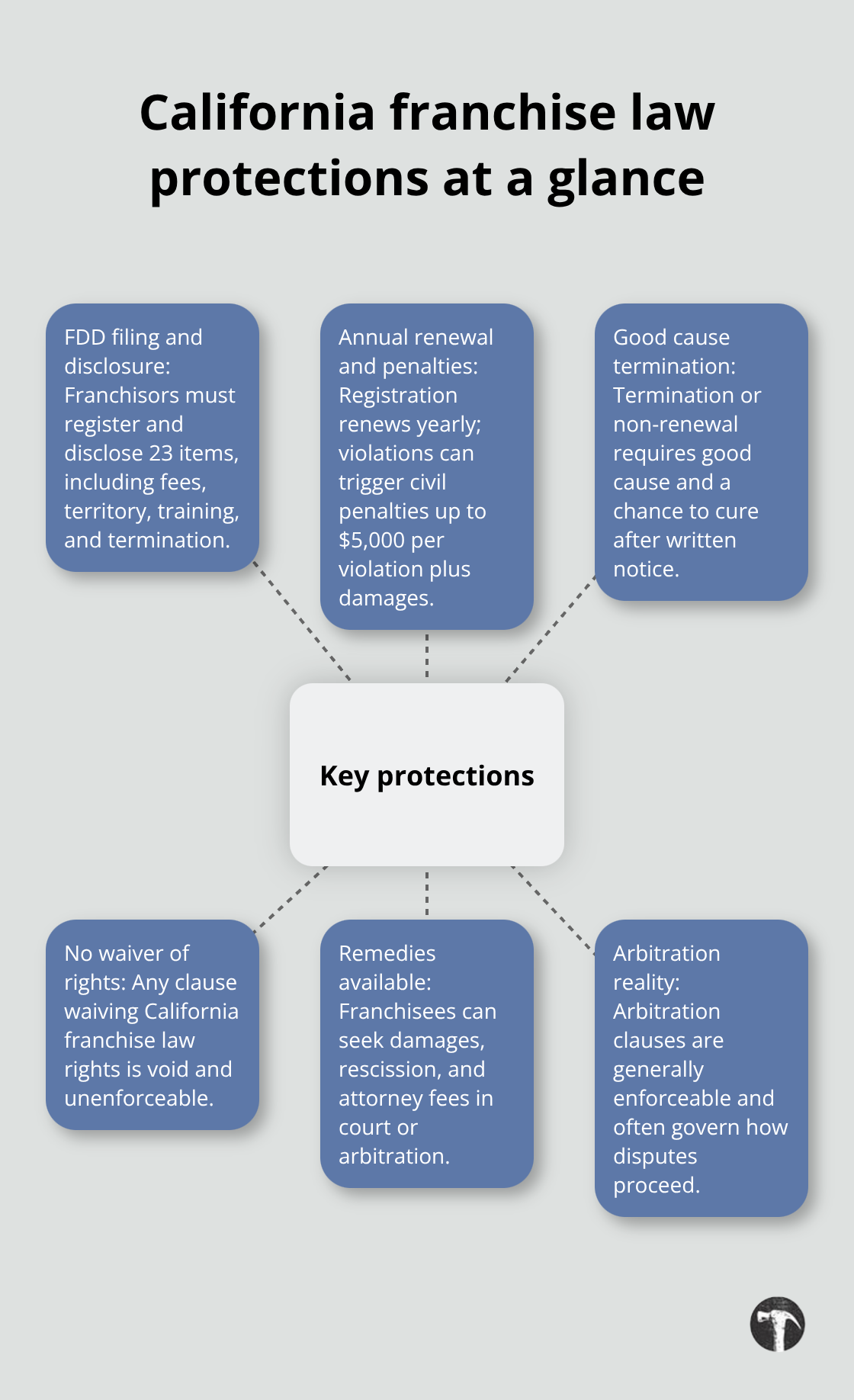
California Franchise Disclosure Law mandates that franchisors file a detailed Franchise Disclosure Document with the California Department of Financial Protection and Innovation before offering franchises to anyone in the state. This FDD must cover 23 specific items including initial investment costs, ongoing royalties, training programs, territorial rights, termination conditions, and litigation history of the franchisor and its officers. The state requires annual renewal of FDD registration, and failure to comply results in civil penalties up to $5,000 per violation plus damages to franchisees who can prove they relied on incomplete or false disclosures.
What makes this framework powerful is that it creates a paper trail: every promise the franchisor made in the FDD becomes enforceable against them, and material omissions or misstatements give you grounds to sue for rescission or damages. Track Item 3 of the FDD closely because it lists all litigation the franchisor has faced in the past five years. If you see dozens of franchise disputes listed there, that signals how the franchisor handles conflicts with their franchisees.
Good Cause Requirements and Termination Protections
Franchisors operating in California must comply with the California Franchise Relations Act, which restricts their right to terminate or refuse renewal without good cause. Good cause means the franchisee materially breached the agreement and failed to cure the breach within a reasonable timeframe after written notice. Vague termination clauses that cite failure to maintain brand standards without defining what that means do not meet the good cause standard, and California courts have struck down such provisions as unenforceable.
The law also prohibits franchisors from requiring you to waive your rights under California franchise law as a condition of the franchise relationship. This means any clause in your agreement stating you give up your right to sue over violations of the Franchise Disclosure Law is void and unenforceable.
Your Legal Remedies and Dispute Resolution Path
When disputes arise, you have access to remedies including damages for breach of contract, rescission of the franchise agreement, and attorney fees if you prevail in court or arbitration. The Federal Arbitration Act preempts California’s traditional jury-trial protections, so most franchise agreements include arbitration clauses that force disputes into private arbitration rather than public court, and these clauses are generally enforceable even in California.
This means your dispute resolution path is likely predetermined by your agreement unless you negotiated different terms before signing. Understanding what your agreement actually says about arbitration, mediation, or litigation determines how you’ll resolve conflicts when they arise-and that choice affects both your costs and your ability to control the outcome.
Resolving Franchise Disputes Without Destroying Your Business
Start With Negotiation to Preserve Your Options
Negotiation should be your first move because it costs almost nothing and preserves your relationship with the franchisor if you want to continue the franchise relationship. Send a detailed written letter that outlines the specific dispute, cites the relevant franchise agreement language, and proposes a resolution. This forces the franchisor to respond in writing, which creates documentation that strengthens your position if the dispute escalates. Most franchise owners skip this step and jump straight to threats or litigation, which hardens the franchisor’s position and makes settlement harder. If the franchisor responds to your letter with willingness to discuss, schedule a call with decision-makers, not just their legal team.
Mediation Offers Speed and Cost Control
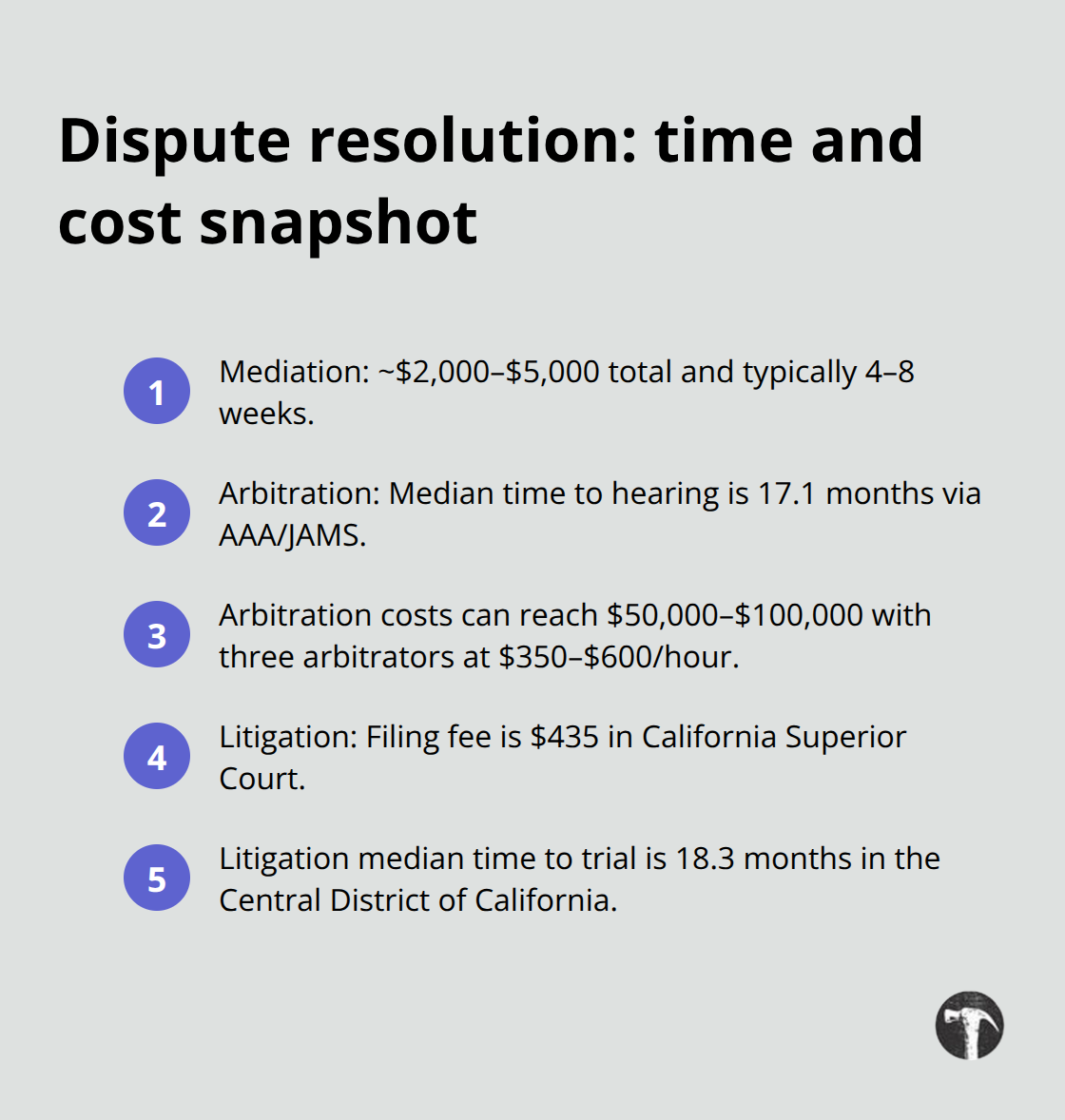
Mediation becomes the next logical step if negotiation stalls. A neutral mediator from JAMS or AAA guides both parties toward compromise, and mediation costs roughly $2,000 to $5,000 total compared to arbitration or litigation. The process takes four to eight weeks, which is fast enough to prevent your business from collapsing while you fight. Mediation also allows you to control the narrative and propose creative solutions that courts or arbitrators cannot impose, such as territory adjustments, fee reductions, or extended renewal terms.
Arbitration: Speed Versus Cost Trade-Offs
Arbitration versus litigation depends on what your franchise agreement actually requires, but arbitration is likely already mandated in your agreement. Arbitration through AAA or JAMS involves a private arbitrator or panel that hears your case, and the median time to hearing is 17.1 months according to FINRA dispute-resolution statistics. Costs escalate quickly: AAA charges substantial initial fees plus administrative fees, and if you select a three-arbitrator panel instead of one arbitrator, costs can reach $50,000 to $100,000 or more due to hourly rates running $350 to $600 per arbitrator.
Litigation in California Courts
Litigation in California Superior Court costs less initially (court filing fees are $435), but discovery expenses mount rapidly. The median time from filing to trial in the Central District of California is 18.3 months, and you cannot avoid a jury trial in arbitration, which some franchisees prefer for sympathetic juries. California courts favor arbitration enforcement under the Federal Arbitration Act, so challenging an arbitration clause in your franchise agreement is difficult unless you can prove unconscionability or mutual consent was lacking.
Choosing Your Path Forward
Your decision should depend on the amount in dispute, how quickly you need resolution, and whether preserving the franchisor relationship matters to your business survival. Franchise owners throughout Los Angeles County face this choice when disputes arise, and an experienced attorney can help you navigate the right path based on your specific circumstances and what your agreement actually requires.
Final Thoughts
Franchise disputes in California demand immediate action because delays compound your losses and weaken your negotiating position. The three core dispute types-termination conflicts, royalty disagreements, and territory encroachment-follow predictable patterns, and recognizing them early gives you leverage to resolve them before they destroy your business. California law provides real protections through the Franchise Disclosure Law and good cause requirements, but these protections only work if you understand what your franchise agreement actually says and what the FDD actually promises.
Your dispute resolution path depends on what your agreement requires and how quickly you need resolution. Negotiation costs almost nothing and should always come first, while mediation offers speed and cost control if negotiation stalls. Arbitration and litigation both take time and money, but arbitration is likely already mandated in your agreement under the Federal Arbitration Act, so you need to know whether your franchise agreement locks you into that process before disputes arise.
The franchise dispute resolution California landscape favors franchisors unless you have clear documentation, a well-drafted agreement, and legal guidance when conflicts arise. We at The Law Offices of Alan J. Carnegies, APC represent franchise owners throughout Los Angeles County in disputes involving termination, royalties, territory, and other franchise conflicts. Contact us today to discuss your specific situation and learn how we can protect your franchise investment.