
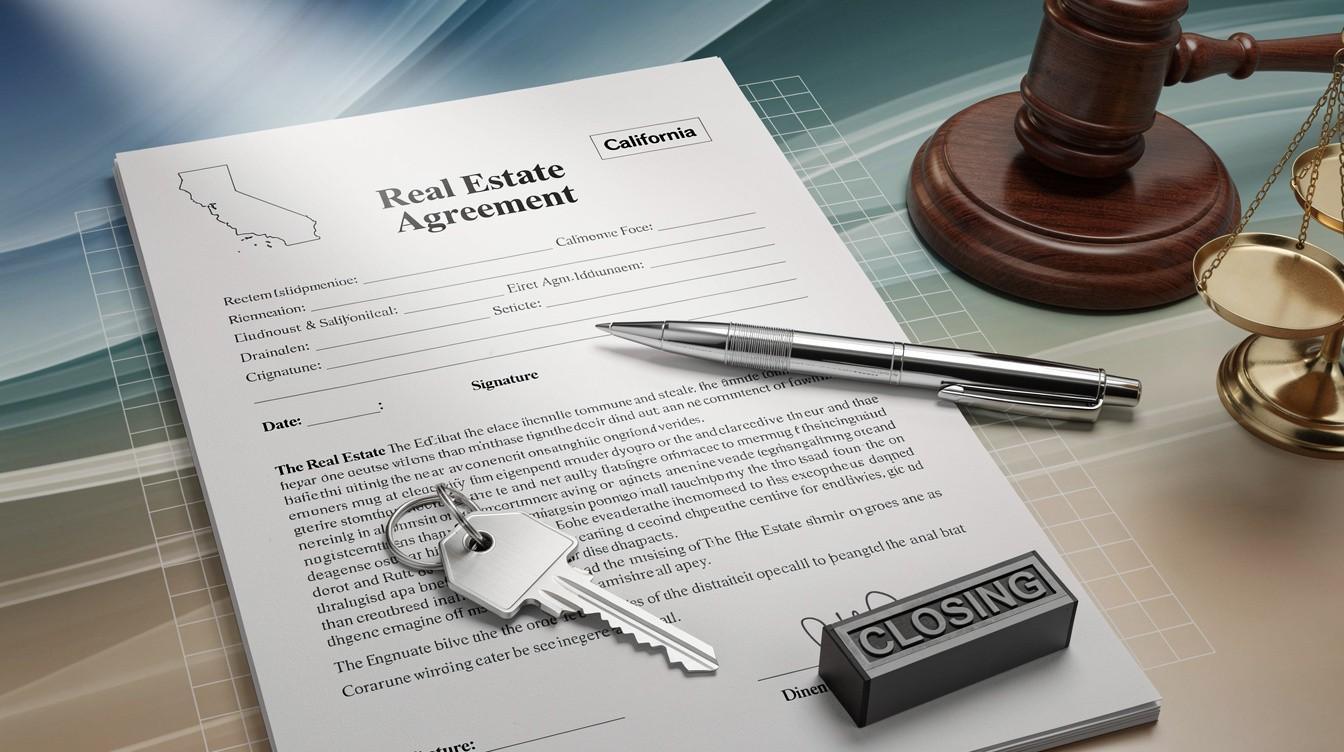
Real estate contract disputes can derail your transaction and cost you thousands of dollars. Whether you’re buying or selling property in Calabasas, California or elsewhere in Los Angeles County, a poorly written contract or misunderstanding about terms can create serious problems.
At The Law Offices of Alan J. Carnegies, APC, we’ve seen how quickly disputes arise when parties don’t understand their rights or when contracts lack clarity. This guide walks you through the common causes of disputes, your legal options, and how to protect yourself from the start.
What Causes Real Estate Contract Disputes in Calabasas, California
Vague Contract Language and Contingency Gaps
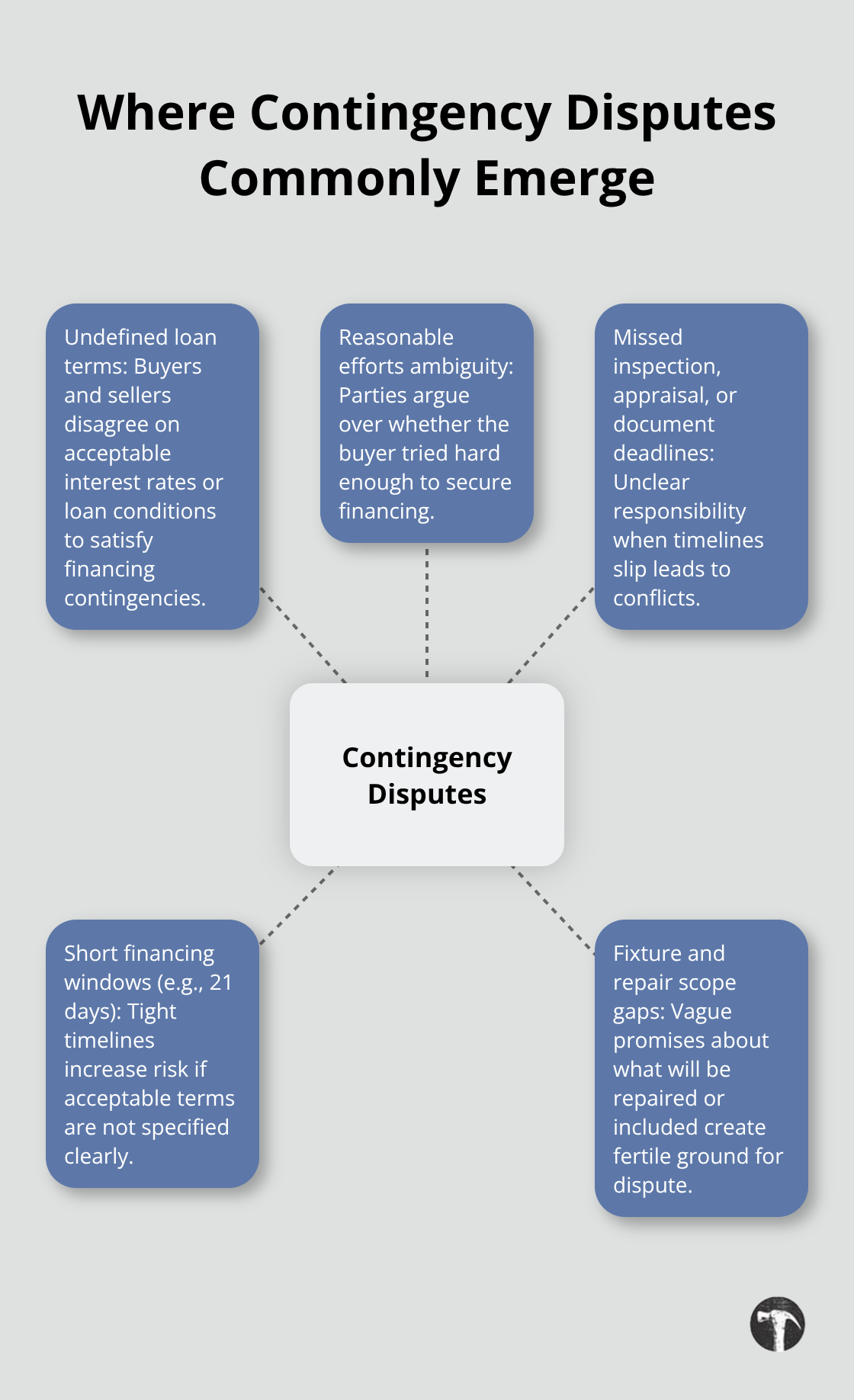
Vague contract language creates the most preventable disputes in California transactions. When a purchase agreement fails to specify which repairs the seller will complete, what fixtures transfer with the property, or exact closing deadlines, both parties operate under different assumptions. The California Association of Realtors standardized form attempts to address this, but many agents and sellers still modify terms without legal review, introducing gaps that later become expensive fights.
Contingency clauses deserve special attention because they’re where most disputes actually start. A buyer’s financing contingency might state the buyer must secure a loan within 21 days, but the contract never defines what interest rate or loan terms satisfy that contingency. This leaves room for a buyer to claim the contingency wasn’t met or a seller to argue the buyer didn’t make reasonable efforts. Missing deadlines for inspections, appraisals, or document delivery also spark conflicts because neither party knows who bears responsibility when timelines slip.
Property Condition and Disclosure Failures
Property condition disputes and disclosure failures account for the second major category of conflicts in California real estate. California Civil Code Section 1102 requires sellers to disclose known material defects, yet many sellers omit problems intentionally or claim they didn’t know about issues like foundation cracks, roof leaks, or boundary encroachments. A buyer discovers these problems after closing and has limited time to pursue remedies, which is why thorough inspections before removing contingencies matter far more than most buyers realize.
Financing Contingency Conflicts
Financing contingency disputes occur when a buyer cannot obtain a loan despite reasonable effort, or when a seller refuses to allow the buyer extra time to secure funding. This forces a buyer to either walk away and lose their deposit or breach the contract. The contract language must specify whether the buyer’s contingency requires the buyer to pay above-market interest rates or accept unfavorable loan terms to satisfy the contingency, because courts interpret ambiguous contingencies against the party who drafted them.
Clear, precise contract terms that address these three areas-conditions, disclosures, and contingencies-prevent the vast majority of disputes from reaching litigation. Understanding your legal rights and remedies becomes essential when disputes do arise, which is why the next section examines the specific remedies available to you under California law.
Legal Rights and Remedies for Contract Disputes
When a real estate contract dispute reaches the point where negotiation stalls, you have three main paths forward, and understanding which one fits your situation saves both time and money. Specific performance forces the breaching party to close the transaction as promised, damages compensate you for financial losses, and mediation or arbitration offer faster resolution than court litigation. The remedy you pursue depends on what you want to achieve-do you want the property sale to close, or do you want cash compensation for losses incurred.
Specific Performance: Forcing the Sale to Close
Specific performance is the remedy buyers typically seek because they want the property, not a refund. California courts will order a seller to close escrow if the buyer hasn’t breached and the contract is clear and enforceable. Courts favor this remedy in real estate disputes because each property is considered unique, making money damages an inadequate substitute.
However, specific performance requires you to prove three things: the contract terms are definite enough to enforce, the seller actually breached, and you’ve performed your obligations or are ready to perform. If your contract contains vague language about repairs or closing conditions, courts may refuse to order specific performance because the judge cannot determine what the seller actually promised. This is why the contract language you reviewed before signing matters so much-ambiguous terms don’t just cause disputes, they make specific performance impossible to obtain.
Damages: Recovering Your Financial Losses
Damages compensate you for quantifiable losses like inspection fees, appraisal costs, or the difference between the agreed price and the current market value if the seller wrongfully cancels. California Civil Code Section 3300 allows you to recover damages for breach of contract, but you must prove the actual financial harm. If you paid $3,000 for inspections and the seller breached, that’s recoverable. If you claim lost profits from a delayed closing, that becomes much harder to prove unless you have documented evidence of actual business losses.
Many buyers underestimate how difficult it is to recover emotional distress or inconvenience in real estate disputes-courts focus on direct financial harm. The damages you can recover depend entirely on what you can document and prove with evidence.
Mediation and Arbitration: Faster Alternatives to Court
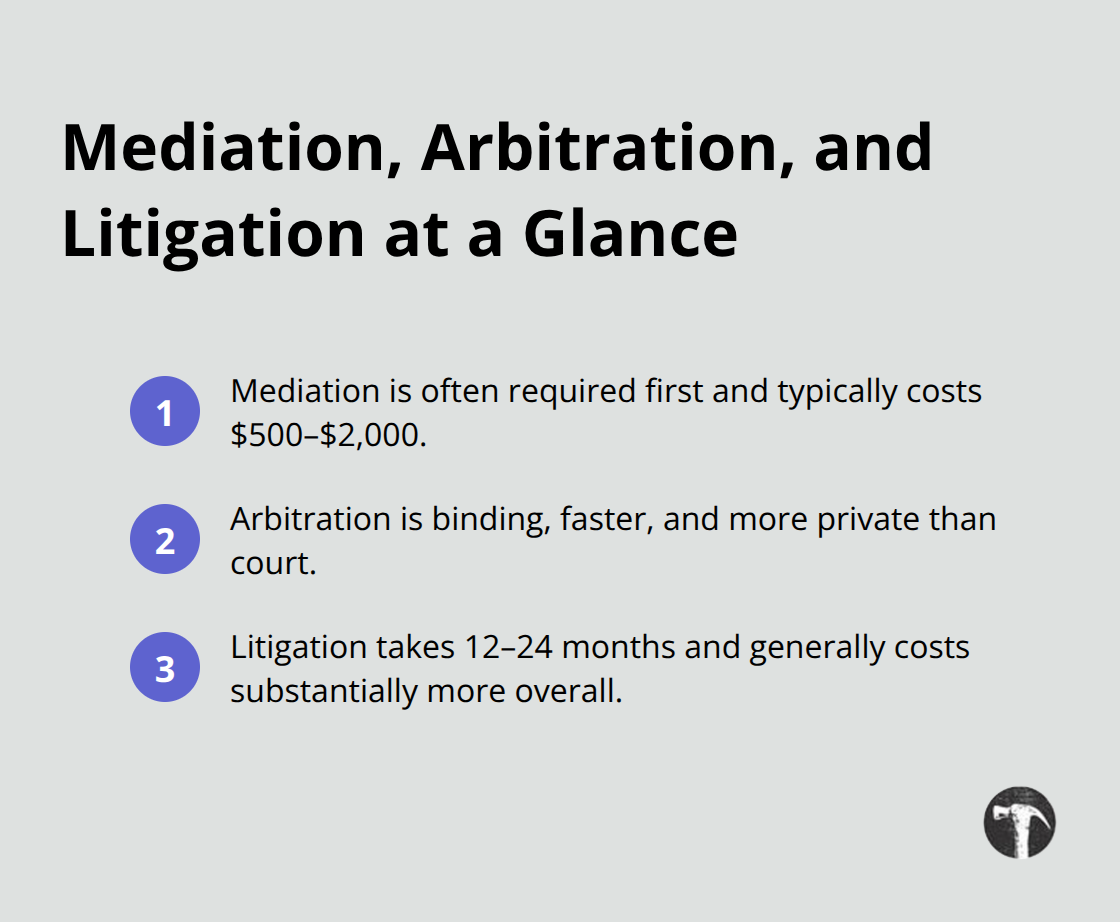
Mediation and arbitration resolve disputes faster and cheaper than litigation. Mediation brings both parties and a neutral mediator together to work toward a settlement; the mediator doesn’t decide the outcome, both parties do. Arbitration is binding-an arbitrator hears evidence and makes a final decision, similar to a judge but faster and more private.
If your contract includes an arbitration clause, you typically must arbitrate before filing a lawsuit. Many real estate contracts require mediation first, which costs between $500 and $2,000 depending on the mediator’s hourly rate and dispute complexity. Litigation in court takes 12 to 24 months and costs substantially more in attorney fees and court costs.
If you’re facing a contract dispute in Calabasas, California or anywhere in Los Angeles County, the path you choose should depend on how quickly you need resolution, whether you want the property or compensation, and whether the contract terms are clear enough to enforce through specific performance.
Understanding which remedy applies to your situation requires careful analysis of your contract language, the nature of the breach, and your actual losses. The next section examines how to prevent these disputes from arising in the first place through proper contract drafting and due diligence.
Protect Your Deal Before Disputes Start
Real estate transactions in Calabasas, California and throughout Los Angeles County fail not because of bad luck but because parties skip the steps that prevent disputes. The most effective protection happens before you sign, not after a problem emerges. Three concrete actions prevent the overwhelming majority of contract disputes: hiring a real estate attorney to review your contract before signing, conducting inspections that document property condition, and writing contract terms so specific that both parties understand exactly what they’re agreeing to. Most buyers and sellers treat these steps as optional expenses rather than investments that save thousands in dispute costs and delays.
Review Your Contract Before Signing
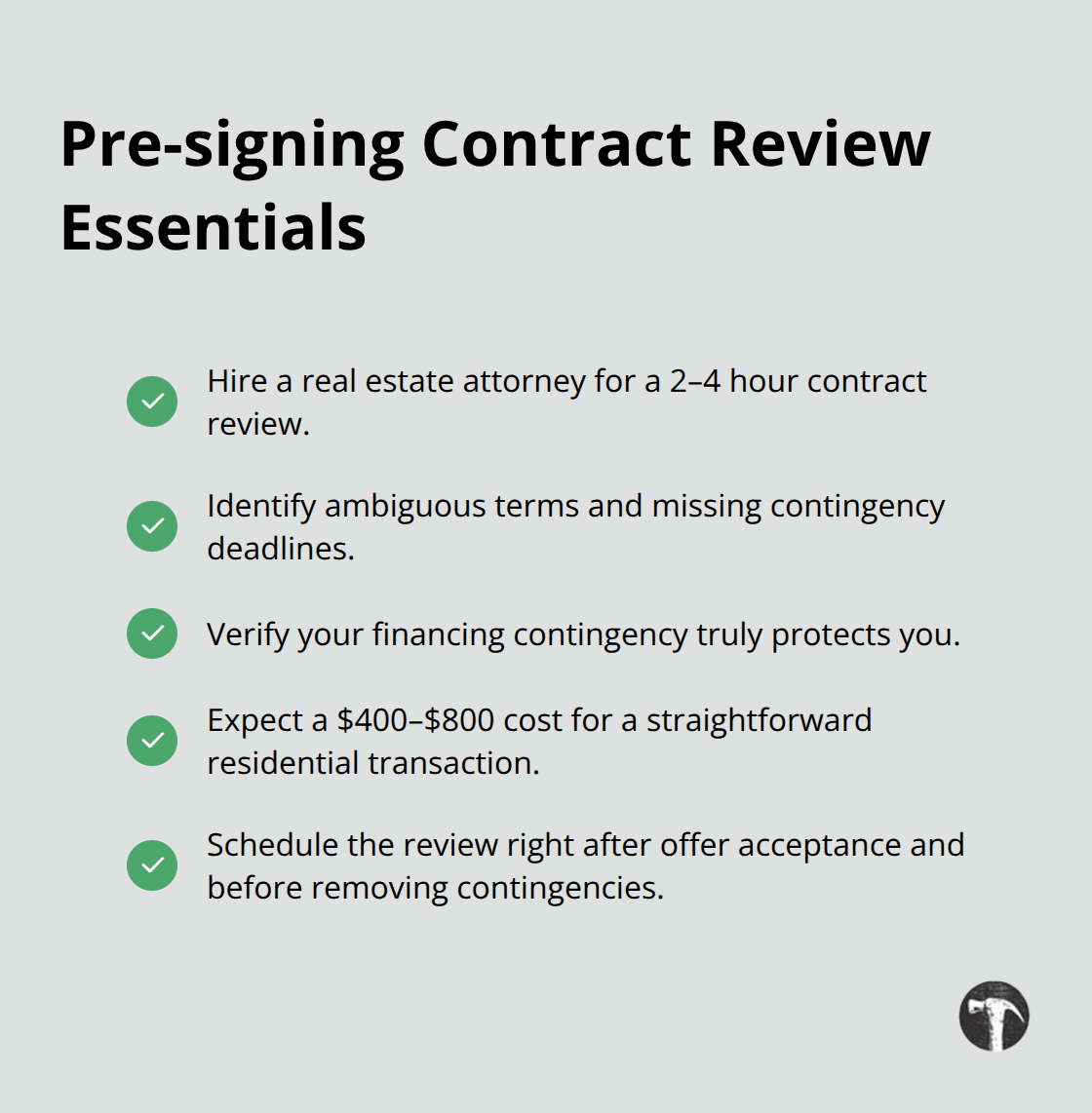
Start with contract review before you sign anything. A real estate attorney should spend 2 to 4 hours reviewing your purchase agreement to identify ambiguous language, missing contingency deadlines, and terms that don’t reflect your actual intentions. The California Association of Realtors standardized form provides a baseline, but your transaction likely includes custom modifications that create gaps. An attorney catches vague repair language like the seller will complete repairs in good faith or address any defects the inspector notes without specifying dollar limits, timelines, or standards for what constitutes completion. You’ll also learn whether your financing contingency actually protects you or whether the contract language requires you to accept unfavorable loan terms to satisfy it. This review costs between $400 and $800 for a straightforward residential transaction, which is less than one percent of a typical home purchase price yet prevents disputes that cost five to ten times that amount. Schedule this review immediately after the seller accepts your offer and before you remove any contingencies.
Conduct Professional Inspections and Appraisals
Property inspections must happen while your contingency period is still open, and you need time to act on what inspectors find. Hire a licensed home inspector and a pest inspector at minimum. Professional home inspectors in California typically charge $400 to $800 depending on property size and age, and they document defects in writing with photos and repair cost estimates. This written report becomes critical evidence if you later dispute whether the seller disclosed known conditions or whether repairs were actually completed. Don’t just scan the inspection report; walk the property with the inspector while they work and ask questions about what they find. Many buyers read the report days later and miss the opportunity to ask whether a foundation crack is cosmetic or structural, or whether the roof has five years of life remaining or needs replacement immediately. After inspections, request a professional appraisal to confirm the property’s value matches your purchase price. An appraisal costs $400 to $600 and protects you from overpaying in a competitive market where emotion overrides judgment. If the appraisal comes in below your offer price, your lender won’t fund the full loan amount, and you’ll need to renegotiate or walk away.
Create a Written Record of All Agreements
Finally, document everything in writing and keep copies of every communication with the seller, agent, and inspector. Emails confirming repair agreements, text messages about closing timeline changes, and written inspection reports all become evidence if a dispute develops. If the seller promises verbal repairs or timeline adjustments, follow up with an email stating what you understand was agreed to and ask the seller to confirm. This creates a paper trail that protects you when one party later claims they never agreed to something. Written clarity prevents disputes far more effectively than trying to enforce vague recollections months later. When you face a real estate contract dispute in Calabasas, California or Los Angeles County, the foundation for your case rests on the documentation you created during the transaction-not on what you remember or what someone said in passing.
Final Thoughts
Real estate contract disputes in Calabasas, California and throughout Los Angeles County stem from preventable mistakes made before disputes ever arise. The three actions outlined in this guide-reviewing your contract with a qualified attorney, conducting thorough inspections, and documenting everything in writing-form the foundation of protecting your interests. When you invest time and modest fees upfront to clarify contract terms and verify property condition, you eliminate the conditions that lead to costly disputes later.
If a dispute does develop despite your precautions, your options depend on what you documented during the transaction. Clear written communications, inspection reports, and contract language give you leverage in mediation, arbitration, or court. Vague terms and missing documentation leave you fighting uphill battles where courts struggle to determine what either party actually promised.
We at The Law Offices of Alan J. Carnegies, APC represent property owners and other parties in real estate disputes throughout Los Angeles County. Whether you face a contract dispute before closing or need to enforce your rights after a breach, contact us to discuss your situation and learn how we can help you navigate real estate litigation efficiently.