
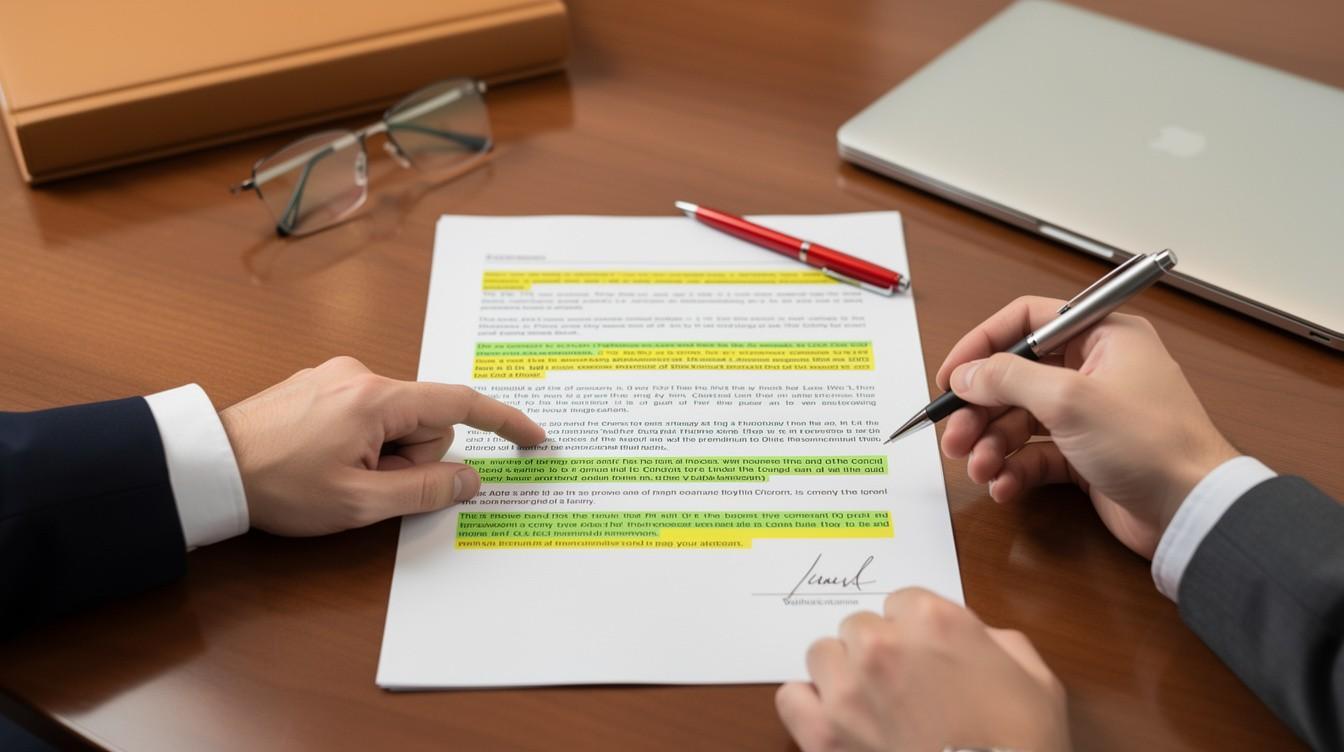
Business contract disputes cost companies time, money, and relationships. When agreements go wrong, the stakes climb fast.
We at The Law Offices of Alan J. Carnegies, APC help businesses throughout Los Angeles County, California handle these conflicts head-on. This guide walks you through what causes disputes, how to stop them before they start, and your options when resolution becomes necessary.
What Triggers Business Contract Disputes
Vague Language Creates Costly Misunderstandings
Vague language in contracts ranks as the leading cause of disputes. According to a 2022 American Bar Association survey, 59% of businesses experience disputes stemming from contract breaches, yet many of these conflicts start not with intentional wrongdoing but with misunderstandings about what the contract actually says. When one party reads a delivery deadline as firm and another interprets it as flexible, or when performance standards lack specifics, the gap between expectation and reality widens fast. The problem compounds when contracts use undefined terms like “reasonable effort” or “timely completion” without spelling out what those words mean in practice.
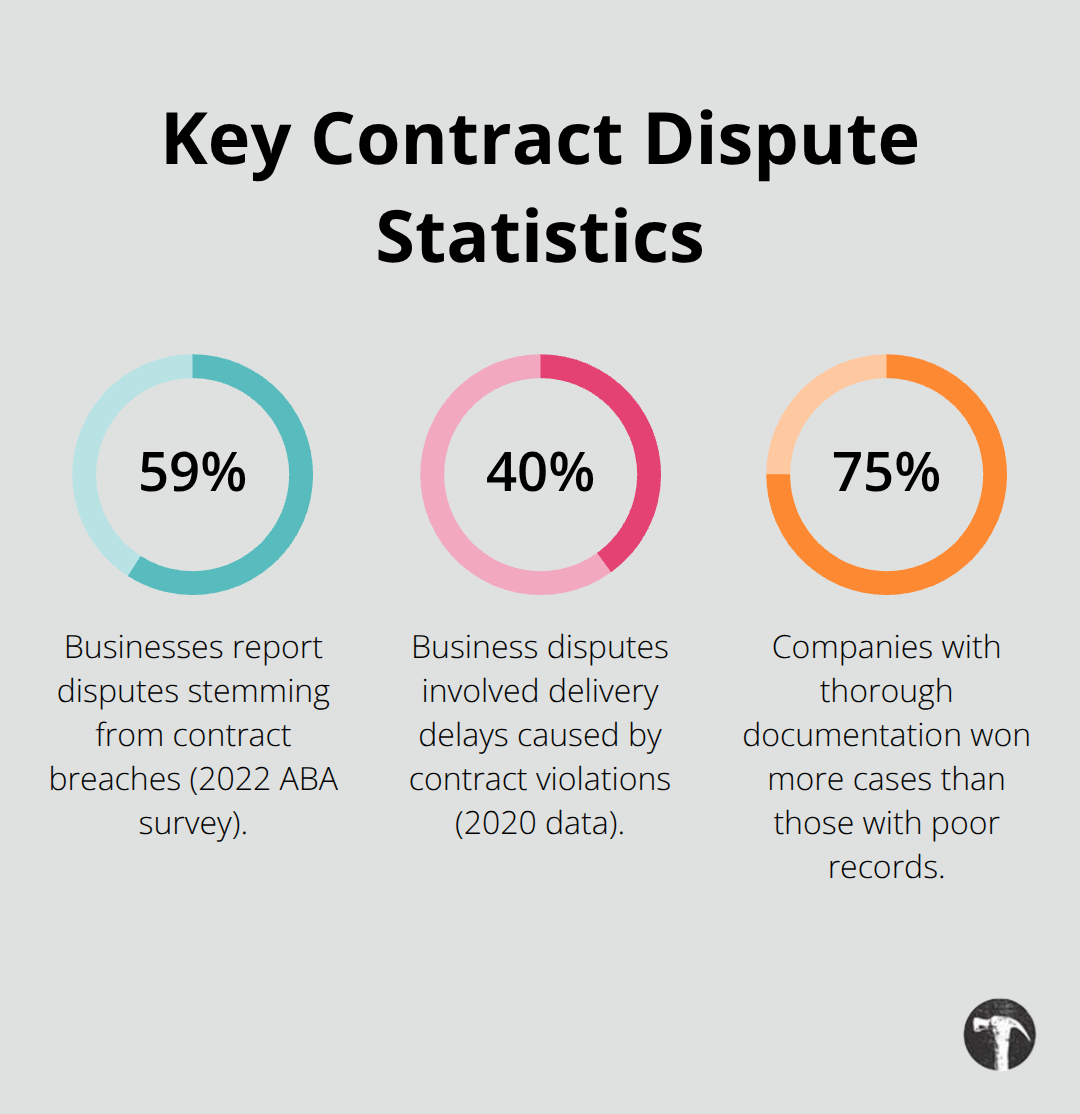
Companies with thorough contract documentation reportedly won 75% more cases than those with poor documentation, which suggests that clarity upfront saves money and relationships later. In Los Angeles County, California, where the Stanley Mosk Courthouse handles the majority of civil contract disputes, judges see this pattern repeatedly.
How to Define Terms That Stick
The fix requires precision at every level. Define every key term, set exact deadlines with dates and times, specify measurable performance metrics, and outline what happens if either party falls short. Instead of writing “delivery within a reasonable timeframe,” state “delivery by 5:00 p.m. on March 15, 2026, to the buyer’s warehouse at 123 Main Street.” Instead of “acceptable quality,” list the specific standards the product or service must meet. This approach eliminates the room for interpretation that breeds disputes.
Payment Disputes Escalate Faster Than Other Conflicts
Non-payment and late payment disputes rank second among the conflicts businesses face regularly. About 40% of business disputes involved product delivery delays caused by contract violations, according to 2020 data, and payment disputes often trigger the same chain reaction. A vendor ships goods on time but the buyer disputes the invoice amount. A service provider completes work but the client withholds payment pending undefined quality approval. These situations escalate because neither party has clarity on payment terms, invoice procedures, or dispute resolution steps. The financial pressure is immediate: cash flow stops, operations suffer, and relationships break down within weeks.
Build Payment Protocols Into Every Agreement
When disputes involve non-compete violations or confidentiality breaches, the damage goes beyond money and demands swift action to protect your rights. Build payment protocols into every contract-specify invoice format, payment due date, late fees, and the process for disputing amounts before signing anything. This single step prevents the majority of payment conflicts from becoming legal battles. Businesses that establish clear payment expectations upfront avoid the costly cycle of collection efforts, damaged vendor relationships, and potential litigation.
Understanding what causes disputes puts you in position to prevent them. The next section shows you how to build contracts that hold up under pressure and keep disputes from starting in the first place.
How to Stop Contract Disputes Before They Start
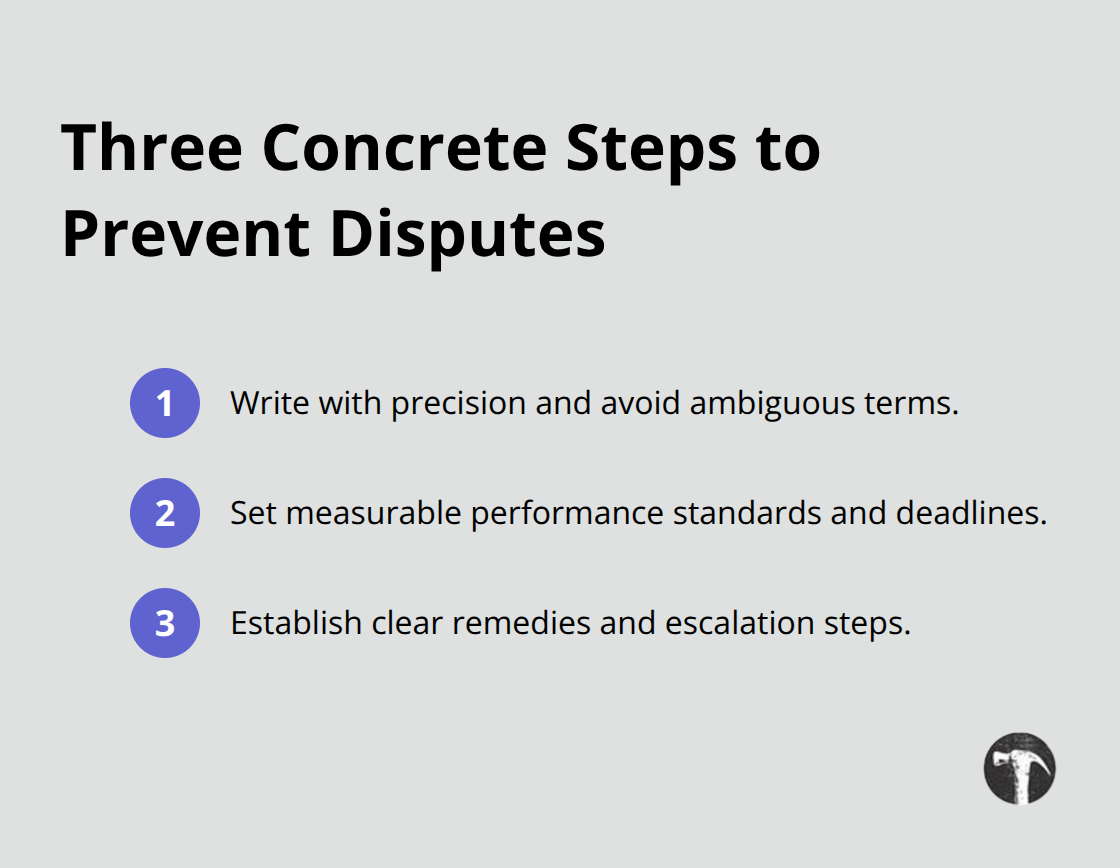
Prevention beats litigation every time. Settlements negotiated outside court reduce legal costs by 30% to 50% compared with going to trial, according to real-world outcomes. Businesses across Los Angeles County, California that invest time in clear contracts avoid the costly cycle of disputes, legal fees, and damaged relationships. This requires three concrete steps: write with precision, set measurable standards, and establish what happens when something goes wrong.
Write Contracts That Leave No Room for Interpretation
Vague contracts invite conflict. The moment you use phrases like “reasonable effort,” “timely delivery,” or “acceptable quality” without defining them, you create a dispute waiting to happen. Replace every undefined term with specifics. If the contract states performance standards must be met, list those standards point by point. If a deadline matters, include the exact date, time, and location. A real example: instead of stating the vendor will deliver goods within 30 days, write “delivery by 5:00 p.m. on May 15, 2026, to the warehouse at 456 Oak Avenue, with failure to meet this deadline triggering a 2% monthly penalty.” This level of detail eliminates the room for disagreement later.
Include definitions sections at the start of every contract. Define what constitutes breach, what acceptable performance looks like, and what each party owes the other. The Stanley Mosk Courthouse in Los Angeles sees countless disputes that could have been prevented with this single practice. Courts interpret ambiguous language against the party that drafted it, which means poor drafting can cost you the dispute even if you had a legitimate claim.
Set Measurable Standards and Clear Consequences
Vague performance expectations create chaos. Instead of expecting quality work, specify exactly what quality means for your situation. If you contract for software development, define the number of features, response times, and bug tolerance rates. If you hire a marketing firm, state the exact deliverables, timeline, and success metrics. This approach applies across every industry. When both parties know precisely what success looks like, disputes shrink dramatically.
Build cure periods into your contracts as well. A cure period gives the other party a specific window to fix a breach before you escalate to remedies. For example: if the vendor misses a delivery deadline, they have 48 hours to deliver before you can cancel the order and pursue damages. This prevents minor issues from becoming major conflicts. Include specific remedies for different types of breaches. If payment is late, state the late fee and interest rate upfront. If deliverables don’t meet standards, specify whether you can reject them, demand corrections, or withhold payment. These decisions made before a dispute starts prevent arguments about what’s fair or what’s allowed when problems actually occur.
Establish Clear Communication and Dispute Pathways
Most contract disputes escalate because neither party knows the next step when something goes wrong. Build communication protocols directly into your agreement. Specify who handles disputes, what information must be shared, and how quickly parties must respond. For example: any claim of breach must be submitted in writing within 10 days, with specific details and supporting documentation. The receiving party then has 14 days to respond with their position. This structure forces early conversation and prevents silent resentment from building into litigation.
Many contracts now include mandatory mediation before litigation. This requirement forces parties to attempt resolution through a neutral mediator before entering court, saving both time and money. If mediation fails, arbitration or litigation follows, but the early conversation often resolves the issue. Specify your dispute resolution preference in the contract: negotiation first, then mediation, then arbitration or litigation. This roadmap keeps emotions from driving decisions and creates natural stopping points where settlement becomes possible.
Document Everything in Writing
Email confirmations, meeting notes, payment records, and performance logs all become evidence if disputes arise. Businesses that maintain thorough documentation win disputes at significantly higher rates than those with poor records. Create a system that tracks all contract-related communications and transactions from day one. When a dispute does emerge, you’ll have the evidence needed to support your position and resolve the matter quickly. This documentation also protects you during discovery in litigation, where the other party requests all materials related to the contract and its performance.
When disputes do occur despite your best prevention efforts, your options for resolution range from informal negotiation to formal litigation. The next section walks you through each path and shows you how to choose the right approach for your situation.
How to Resolve Contract Disputes When Prevention Fails
When disputes emerge despite clear contracts and good intentions, your resolution path depends on the stakes, timeline, and relationship you want to preserve. Negotiation should always be your first move. Direct conversation between the parties costs nothing upfront and resolves the majority of conflicts without formal intervention. Mediation follows as a middle ground where a neutral third party helps both sides find common ground. Arbitration and litigation come next, each with different costs, timelines, and outcomes.
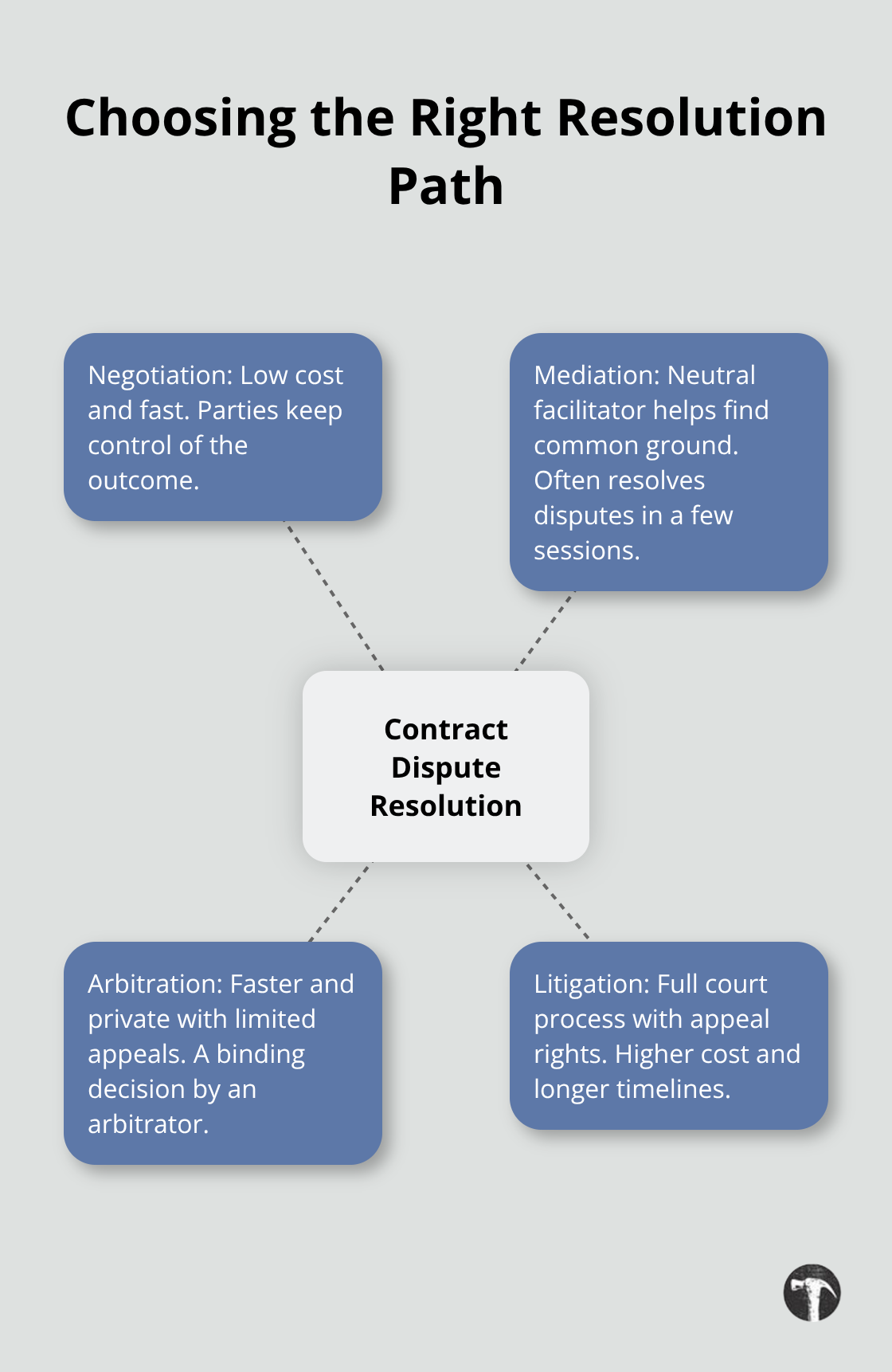
The key is matching your dispute to the right resolution method rather than defaulting to the most aggressive option.
Start With Direct Negotiation
Negotiation works because it gives both parties control over the outcome. When you contact the other party with a clear statement of the breach, the impact, and your desired remedy, many disputes resolve within days. Settlements negotiated outside court reduce legal costs by 30% to 50% compared with going to trial, according to real-world data. Present your position in writing with supporting documentation. State the specific contract language that was violated, the damage caused, and what you need to make it right. Avoid threats or inflammatory language. Instead, focus on facts and the business case for resolution. If the other party responds with their own position, you now have the foundation for a real conversation. Many businesses settle payment disputes this way within two weeks. The vendor agrees to a partial payment plan, the client agrees to expedited payment for future invoices, and both move forward. This approach preserves the business relationship and avoids the legal fees that would exceed the dispute amount.
Use Mediation When Direct Talks Stall
Mediation resolves disputes in about 75% of cases, making it far more effective than proceeding straight to arbitration or court. A trained mediator meets with both parties separately and together to identify shared interests and explore settlement options. Unlike a judge or arbitrator, the mediator has no power to decide the outcome. Instead, they guide the conversation and help both sides see the other’s perspective. This process typically takes one to three sessions and costs far less than litigation. Many contracts include mandatory mediation clauses, which means you must attempt mediation before pursuing arbitration or litigation. If your contract includes this requirement, follow it. If it does not, propose mediation to the other party in writing. Most businesses accept because the cost and time investment are minimal compared to litigation. During mediation, bring your documentation, your contract, and your settlement authority. Try to know the lowest amount you will accept before entering the room. Mediation works best when both parties genuinely want to resolve the dispute but are stuck on how.
Arbitration Offers Speed Over Court Flexibility
Arbitration is binding, faster than litigation, and final. An arbitrator (or panel of arbitrators) hears both sides and makes a decision that both parties must follow. Many commercial contracts require arbitration for disputes, which removes your option to sue in court. If your contract includes an arbitration clause, you must follow it. Arbitration typically takes three to six months from filing to decision, compared with one to three years for litigation. However, arbitration offers limited appeal rights. If you disagree with the arbitrator’s decision, you cannot appeal to a higher court unless the arbitrator made a clear error of law or acted in bad faith. This finality makes arbitration risky if you believe the law strongly favors your position. Arbitration also costs less than litigation in most cases because discovery is streamlined and the process moves faster. You will still need an attorney, but the overall legal bill is typically 40% to 60% lower than litigation. If your contract requires arbitration, prepare thoroughly. Arbitrators expect clear evidence and focused arguments. Bring your documentation, contract language, and expert witnesses if needed.
Litigation Becomes Necessary When Other Options Fail
Litigation in Los Angeles County, California involves filing a complaint in court, typically at the Stanley Mosk Courthouse, and proceeding through discovery, motions, and trial. This path takes 18 months to three years and costs significantly more than mediation or arbitration. Hourly rates for California business litigation typically range from $400 to $750 per hour, and disputes often require hundreds of hours. However, litigation gives you the right to appeal an unfavorable decision and access to the full power of the court system. If you need an injunction to stop the other party from breaching a non-compete or confidentiality clause, litigation is often necessary because arbitration cannot provide this relief. Act promptly when seeking injunctive relief. Courts will not stop a breach if you wait months to file. File your complaint within days of learning about the violation. Litigation also works when the other party refuses to negotiate or when mediation and arbitration have failed. At this point, you have exhausted less expensive options and must pursue your claims in court.
Final Thoughts
Business contract disputes drain resources and damage relationships, but they are not inevitable. Clear contracts with defined terms, measurable standards, and communication protocols prevent most conflicts before they start. When disputes do emerge, negotiation should be your first response, as direct conversation costs nothing and resolves the majority of issues within weeks.
The real advantage goes to businesses that act early. Document everything from day one, respond to breach claims in writing within days rather than weeks, and propose mediation before the other party escalates to lawyers. These steps keep disputes manageable and preserve your options for cost-effective resolution.
We at The Law Offices of Alan J. Carnegies, APC help businesses throughout Los Angeles County, California navigate business contract disputes at every stage-from drafting clearer agreements to negotiating settlements or pursuing litigation. Contact us today to discuss your situation and learn how we can protect your interests before disputes escalate or after they have already begun.