Commercial real estate disputes can drain resources and damage relationships between property owners and tenants. Whether it’s a lease disagreement, maintenance conflict, or breach of contract, these issues require swift and informed action.
We at The Law Offices of Alan J. Carnegies, APC serve property owners and tenants throughout Los Angeles County, California, helping them navigate disputes and protect their investments. This guide covers the most common disputes, prevention strategies, and legal solutions available to you.
What Disputes Actually Happen in Commercial Real Estate
Unpaid Rent and Eviction Proceedings
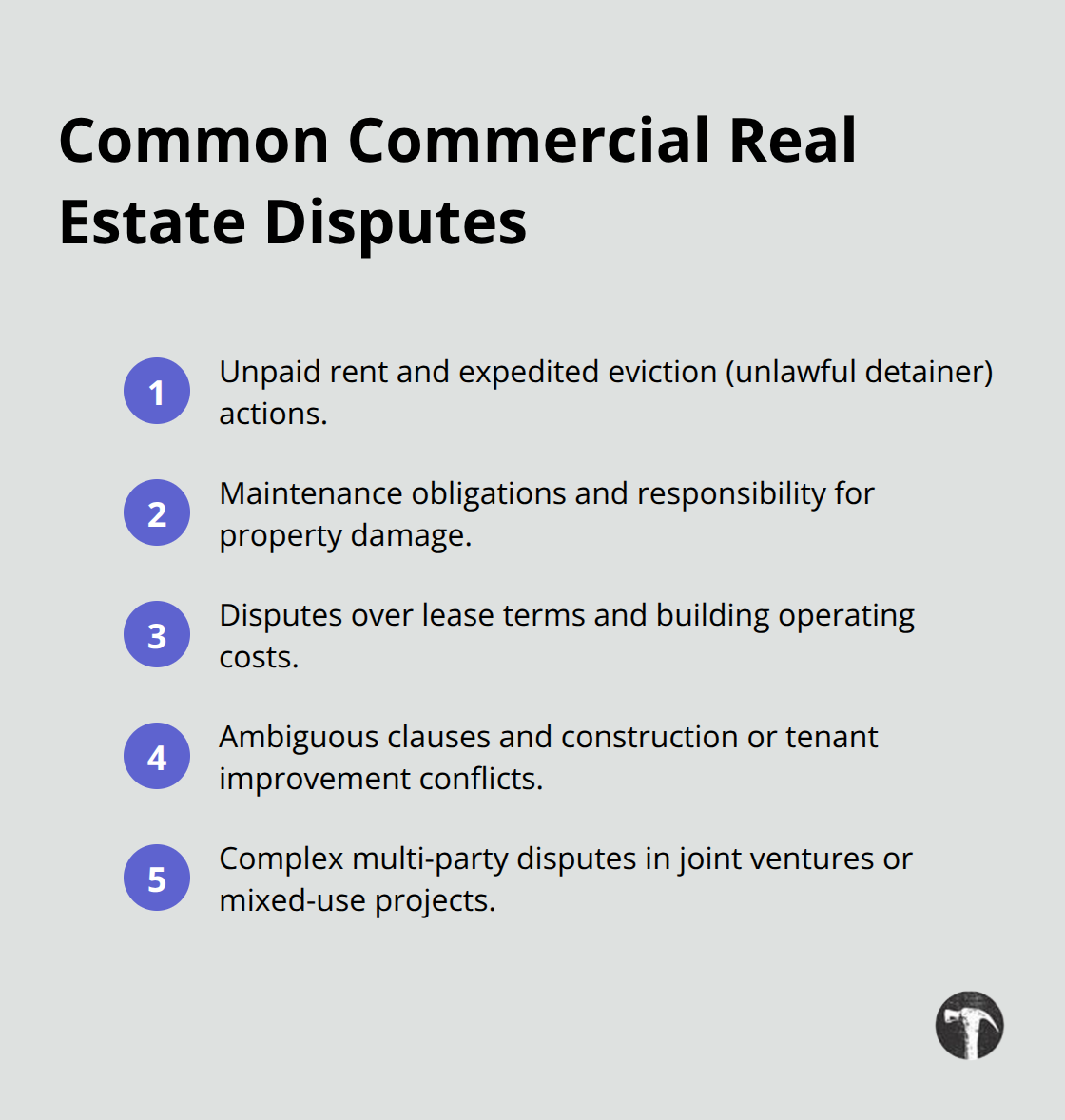
Unpaid rent remains the most frequent commercial lease dispute in Los Angeles County. Tenants fall behind for various reasons-cash flow problems, business downturns, or disagreements over lease terms-and landlords face immediate revenue loss. The California Courts reported that unlawful detainer filings (eviction cases) consistently rank among the highest civil case volumes in Los Angeles Superior Court. When rent defaults occur, landlords must serve a three-day notice to pay or quit before filing eviction.
Missing proper notice procedures or serving it incorrectly can derail the entire case, costing months of additional time and legal fees.
Maintenance Obligations and Property Damage
Beyond nonpayment, tenants and landlords clash over maintenance obligations. A tenant might claim the landlord failed to repair essential systems like HVAC or plumbing, while the landlord contends the tenant caused the damage through misuse. These disputes escalate quickly because they affect daily operations and tenant safety. Property damage claims generate disputes when neither party accepts liability. A roof leak damages tenant inventory, but the landlord claims the tenant failed to report maintenance issues timely, while the tenant claims the landlord ignored prior complaints.
Lease Terms, Building Operating Costs, and Rent Increases
Disputes over lease terms themselves create significant friction. A landlord might attempt to pass building operating costs-property taxes, insurance, utilities, common area maintenance-to a tenant without proper documentation or allocation. Under California Civil Code Section 1950.9 (effective January 1, 2025), landlords must allocate building operating costs pro rata by square footage and provide supporting documentation within 30 days of written request. Violations expose landlords to actual damages, attorney’s fees, and potentially treble damages if willful or malicious. Tenants often contest rent increases without proper notice periods. California SB 1103 requires at least 30 days’ notice for increases up to 10% and 90 days’ notice for increases exceeding 10% for qualified commercial tenants.
Ambiguous Language and Construction Conflicts
Many disputes stem from ambiguous lease language. One party interprets a clause one way; the other interprets it differently. Vague maintenance responsibilities, unclear assignment rights, or undefined use restrictions invite conflict. Construction-related disputes also plague commercial properties. A tenant improvement project might exceed budget, miss deadlines, or create defects. Contractors, property owners, and tenants blame each other for cost overruns and poor workmanship.
Complex Multi-Party Disputes
Disputes involving multiple parties-such as joint ventures, partnerships, or mixed-use developments-become exponentially more complex. Coordinating remedies across different agreements and stakeholders requires careful legal strategy. These situations demand attention to detail and proactive communication to prevent misunderstandings from hardening into litigation. When you understand what actually triggers disputes, you can prevent them through clear documentation and early communication with counsel before problems escalate. The next section covers practical prevention strategies that reduce dispute risk from the outset.
Stopping Disputes Before They Start
Write Clear and Detailed Lease Agreements
Strong lease agreements form the foundation of dispute prevention, and vague language invites conflict that could have been avoided. Explicit terms on rent payment dates, late fees, maintenance responsibilities, building operating cost allocations, assignment rules, permitted use, insurance requirements, and dispute resolution procedures protect both parties. California Civil Code Section 1950.9 mandates that landlords allocate building operating costs pro rata by square footage and provide supporting documentation within 30 days of written request; embedding this requirement directly into the lease prevents disputes over cost transparency. Specify which party handles HVAC maintenance, roof repairs, parking lot upkeep, and common area cleaning rather than leaving it ambiguous. Define what constitutes a material breach versus a minor violation, and establish clear notice and cure periods. A three-day notice to cure for nonmonetary breaches gives tenants a reasonable window to respond before escalation. Include mediation or arbitration clauses that require good-faith negotiation before litigation; this alone reduces court costs and preserves business relationships. When leases are negotiated in Spanish, Chinese, Tagalog, Vietnamese, or Korean, California law requires full written translation before signing, so provide translations upfront to avoid rescission claims later.
Document Everything and Maintain Records
Documentation and proactive communication eliminate most disputes before they harden into legal positions. Conduct property inspections at lease commencement and document the condition with photographs and written reports; this creates an objective record if damage claims arise later. Maintain a log of maintenance requests, repair completions, tenant complaints, and landlord responses. When rent arrives late, document the date received and amount paid. If you discover a lease violation, send written notice immediately and preserve copies of that communication; courts distinguish between material breaches and waived violations, and accepting repeated late payments without objection can create estoppel issues that undermine enforcement.
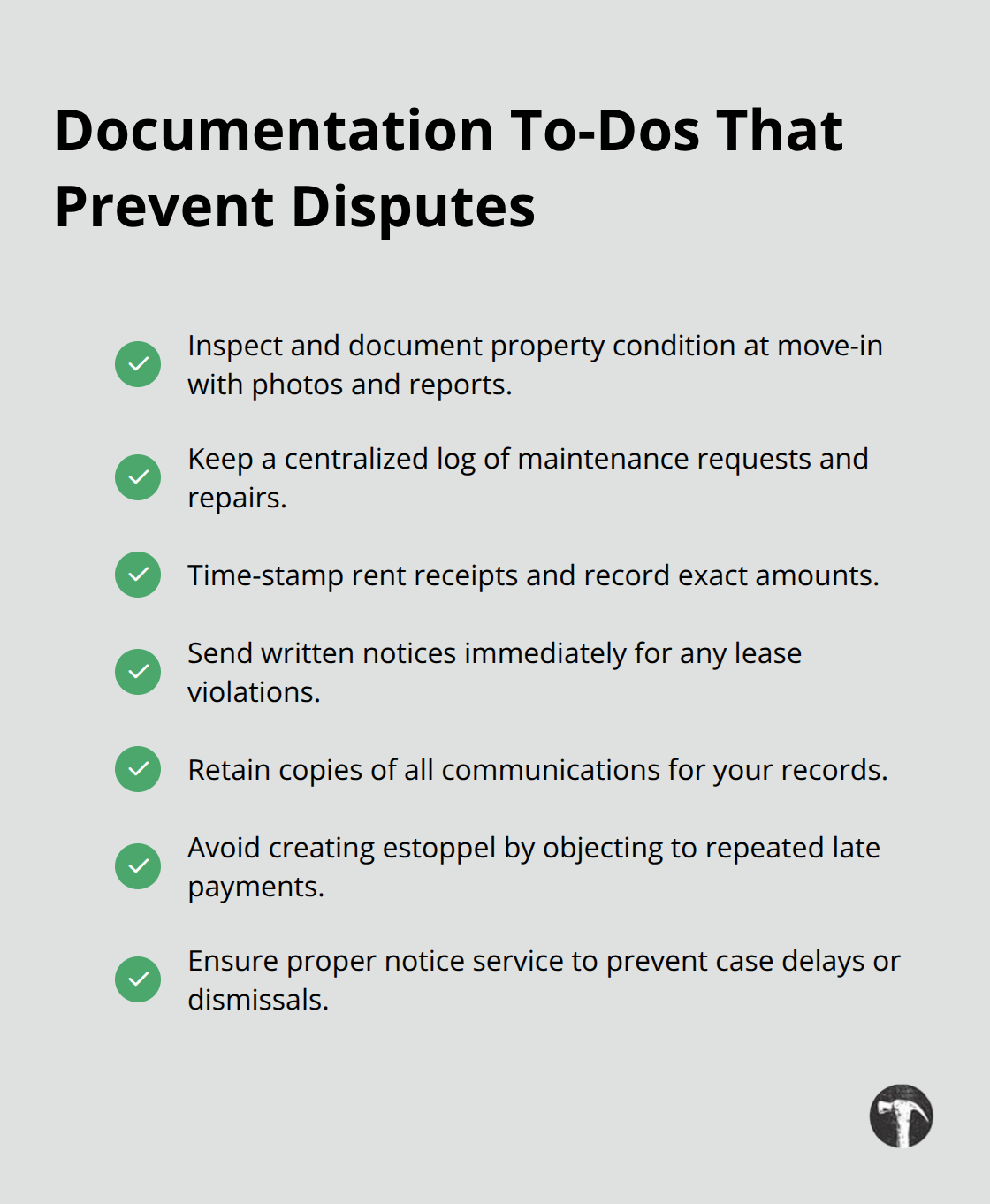
Unlawful detainer filings in Los Angeles Superior Court consistently rank among the highest civil case volumes, and many fail due to improper notice service or documentation defects.
Communicate Openly and Address Problems Early
Open communication channels prevent misunderstandings from calcifying into disputes. A landlord facing a tenant improvement project should discuss timeline, budget, design specifications, and responsibility for cost overruns in writing before work begins. If building operating costs increase unexpectedly, notify the tenant promptly with supporting documentation rather than surprising them at renewal. Respond to maintenance complaints within a reasonable timeframe and document your response. When either party senses a problem, addressing it directly through phone calls followed by written confirmation prevents assumptions from becoming grievances. This proactive approach costs far less than litigation and protects the ongoing business relationship that both parties depend on.
Resolving Disputes Through Negotiation, Arbitration, and Court Action
Start with Mediation and Negotiation
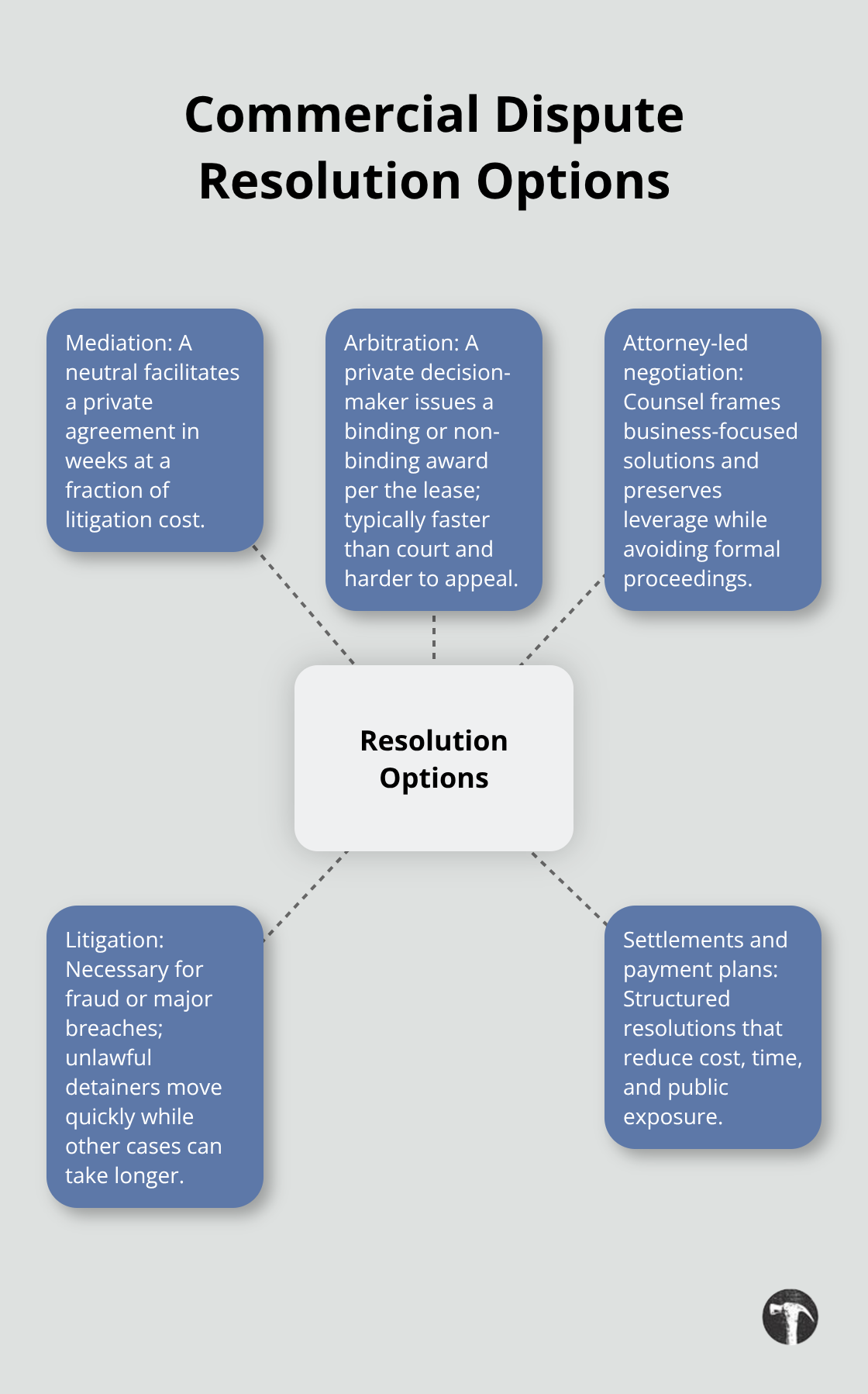
When prevention fails, you need practical remedies that match your situation and budget. The path forward depends on the dispute’s severity, the relationship you want to preserve, and how quickly you need resolution. Mediation and negotiation should be your first move because they resolve disputes in weeks rather than years and cost a fraction of litigation. In mediation, a neutral third party helps both sides reach an agreement without a judge deciding the outcome. This process remains confidential, protecting your business from public court records that competitors and clients can access.
Consider Arbitration Clauses in Your Lease
Arbitration works differently from mediation: an arbitrator hears evidence and issues a binding or non-binding decision, depending on your lease language. Many commercial leases already contain arbitration clauses that require disputes to be resolved this way before court. If your lease includes one, arbitration typically moves faster than litigation and avoids jury trials, though the arbitrator’s decision is harder to appeal than a court judgment.
Leverage Attorney-Led Negotiation
Attorney-to-attorney negotiation also works when both parties want to avoid formal proceedings. A seasoned attorney guides these conversations, preserves your leverage, and focuses on practical business solutions rather than courtroom posturing. This approach keeps costs manageable while maintaining the ongoing business relationship that both parties depend on.
Pursue Litigation When Necessary
When mediation and arbitration fail or the dispute involves fraud or major breaches, litigation becomes necessary. Unlawful detainer cases in Los Angeles Superior Court move quickly because they are designed to resolve eviction disputes in weeks rather than months, though defects in notice service can delay outcomes significantly. For other commercial real estate disputes, expect one to two years in Los Angeles and Orange County courts depending on complexity.
Calculate Damages and Recovery Options
Your damages recovery depends on the breach type and lease terms. Nonpayment of rent yields straightforward recovery of past-due amounts plus future rent discounted to present value, minus what the landlord should have earned from re-leasing the space. California law requires landlords to mitigate damages by making reasonable efforts to re-lease abandoned property, so document all marketing, broker communications, and leasing activity to prove you minimized losses. Maintenance breaches and property damage claims require proving causation and quantifying losses, which often requires expert testimony on construction defects or repair costs. Many commercial leases allow recovery of attorney’s fees to the prevailing party, making legal costs a critical settlement factor. A court judgment is only valuable if the other party can pay it; assess their financial stability before committing to expensive litigation. Settlement and payment plan agreements often resolve disputes faster than trial, especially when both parties want to avoid public exposure and extended legal costs.
Final Thoughts
Commercial real estate disputes drain time, money, and relationships when parties fail to communicate clearly or document issues early. Prevention through detailed lease agreements, thorough documentation, and open communication stops most disputes before they require legal intervention. When disputes do arise, mediation and negotiation resolve matters in weeks and preserve business relationships at a fraction of litigation costs, while arbitration clauses in your lease can accelerate resolution and keep disputes private.
Legal representation matters at every stage of a commercial real estate dispute. A qualified attorney helps you draft clear leases that prevent problems, guides you through mediation and arbitration, calculates damages accurately, and protects your rights if litigation becomes necessary. We at The Law Offices of Alan J. Carnegies, APC represent property owners, tenants, and investors throughout Los Angeles County in commercial real estate disputes, focusing on protecting your investment through early strategic assessment, disciplined documentation, and practical solutions that minimize disruption to your business.
If you face a commercial real estate dispute or want to strengthen your lease agreements before problems emerge, contact The Law Offices of Alan J. Carnegies, APC today. We help you navigate disputes efficiently and protect what matters most to your business.