

Lease disputes in Calabasas and across Los Angeles County can escalate quickly without proper intervention. Many property owners and tenants don’t realize that lease dispute mediation offers a practical path to resolution before costly litigation becomes necessary.
At The Law Offices of Alan J. Carnegies, APC, we’ve seen how the right approach at the right time makes the difference between preserving relationships and facing months of court battles. This guide walks you through your options.
What Lease Disputes Actually Look Like in Calabasas and Los Angeles County
How Small Disagreements Become Major Conflicts
Lease disputes don’t start with lawsuits. They start with small disagreements that tenants and landlords handle poorly. A tenant stops paying rent because the air conditioning broke. A landlord refuses to fix it until rent arrives. Within weeks, both sides have dug in, and the relationship is damaged beyond repair. California’s implied warranty of habitability, established in Green v. Superior Court in 1974, requires landlords to maintain premises fit for occupancy under Civil Code 1941 et seq. This means working plumbing, hot water, heating, electrical systems, and pest-free conditions are non-negotiable.
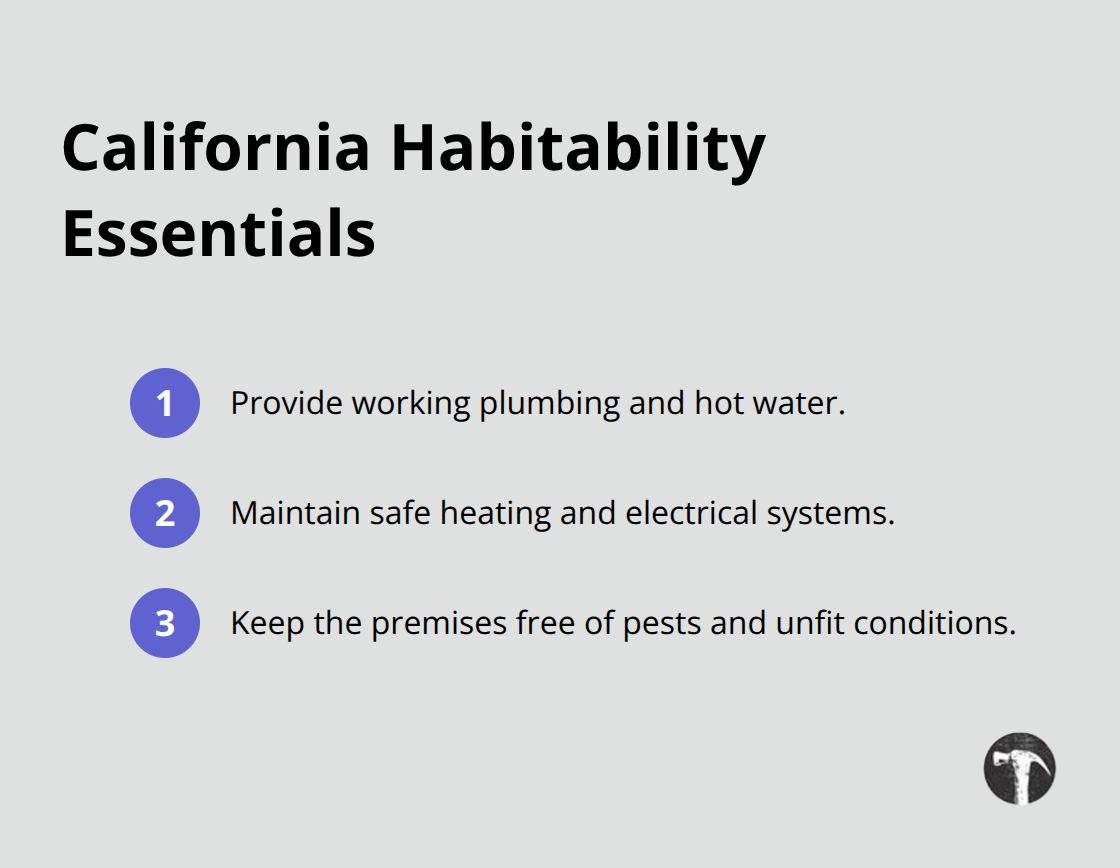
Tenants can raise habitability as a defense in non-payment actions, and courts allow recovery for damages beyond unpaid rent, including mental distress and personal property damage. This creates real financial exposure for landlords who ignore repair requests. Many property owners in Calabasas and across Los Angeles County don’t understand this exposure until a tenant withholds rent or files a claim.
Rent Disputes and Payment Disagreements
Rent disputes rank among the most common lease conflicts. Late fees, partial payments, and disputes over what constitutes timely payment spiral quickly when neither party documents the agreement clearly. Some landlords add late fees without clearly stating them in the lease, then face tenant pushback when enforcement arrives. Others accept partial payments without written acknowledgment, creating confusion about whether they waived the full amount or accepted payment on account.
Non-payment cases are frequent in commercial leases too, and California courts have made clear that disruptions alone don’t excuse rent obligations. SVAP III Poway Crossings, LLC v. Fitness International, LLC in 2023 confirmed that even COVID-era disruptions don’t automatically relieve tenants of rent duties. This means a tenant claiming hardship still owes the money unless the lease explicitly provides otherwise.
Maintenance and Repair Disputes
Maintenance and repair disputes destroy relationships fast. Tenants request repairs through email, text, or casual conversation. Landlords delay because they’re waiting for contractor quotes or because the request seems minor. Months pass. The tenant stops paying rent. The landlord files an unlawful detainer. Now both sides are in court instead of solving a repair problem that might have cost a few hundred dollars.
Documentation makes the difference between a dispute that settles in mediation and one that becomes expensive litigation. Landlords who maintain detailed repair logs, respond to requests in writing, and keep receipts for maintenance work have leverage in negotiations. Tenants who photograph conditions, document repair requests with dates and times, and keep records of communication have credible evidence. Without this documentation, both sides argue about what happened, when it happened, and who failed first-and that argument moves into a courtroom where costs multiply fast.
Why Mediation Stops Lease Disputes Before They Drain Your Resources
How Mediation Works in Practice
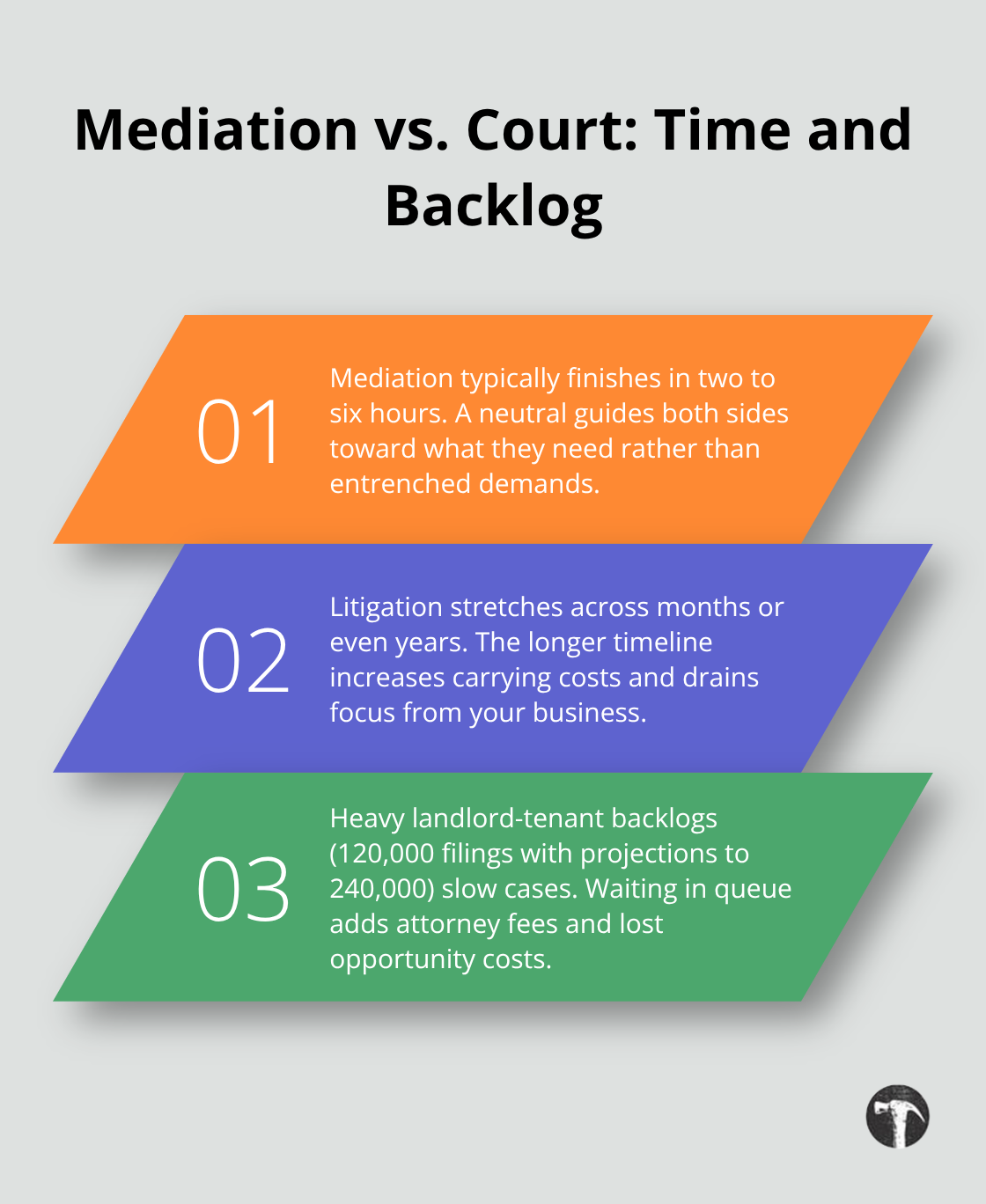
Mediation forces a conversation when neither side wants to talk. In a mediation session, a neutral third party sits with both landlord and tenant in separate rooms, moving between them to identify what each side actually needs rather than what they’re demanding. The process typically lasts two to six hours, according to Florida mediation data that applies across most states including California. This compressed timeline contrasts sharply with litigation, which stretches across months or years. California’s court backlog reached 120,000 landlord-tenant filings in 2019–2020, with projections suggesting growth to 240,000 according to Judicial Council estimates. That backlog means your case sits in queue while both sides accumulate attorney fees, expert witness costs, and lost business opportunity.
The Financial Reality of Mediation vs. Litigation
Mediation costs a few hundred to a couple thousand dollars in mediator fees plus your attorney time. Litigation in a contested lease dispute easily exceeds ten thousand dollars and often reaches fifty thousand or more before trial. Most landlords and tenants would rather negotiate a workable solution than hand that money to the court system. The financial pressure alone makes mediation the rational first step, especially when the dispute centers on repair obligations, rent abatement, or payment schedules that a creative agreement can actually resolve.
Creative Solutions That Courts Cannot Provide
What makes mediation particularly valuable for lease disputes is its flexibility to create outcomes that courts cannot order. A judge can only award money damages or enforce the lease as written. A mediator can help you structure a partial rent credit in exchange for the tenant completing repairs, establish a payment plan for back rent over six months, adjust lease terms to reflect fair market conditions, or even agree on an early termination with deposit return instead of eviction. These solutions preserve cash flow and occupancy without the destruction that comes from an unlawful detainer judgment or a habitability claim that triggers damages for emotional distress and personal property loss.
Protecting Your Privacy and Business Information
Mediation also keeps sensitive business information private. Court filings and testimony become public record, exposing your property conditions, tenant complaints, and financial arrangements to competitors and future disputes. A confidential mediation session protects that information while still resolving the conflict. If mediation fails to reach full settlement, it still narrows the issues and clarifies each side’s actual position, making any subsequent litigation far more efficient.
When Mediation Clauses Make It Mandatory
Most California leases include mediation or arbitration clauses that require attempting resolution before filing suit, which means mediation isn’t optional anyway. Starting there early, before positions harden and emotions take over, gives you the best chance of avoiding court entirely. However, some disputes resist mediation despite good-faith efforts, and knowing when to shift strategy becomes critical to protecting your interests and moving forward with litigation if necessary.
When Lease Disputes Require Court Intervention
Recognizing When Mediation Fails
Mediation works when both parties want a solution and can articulate their actual interests rather than their legal positions. Some disputes reach a point where one side refuses to negotiate in good faith, the gap between positions is genuinely unbridgeable, or the underlying claims require a court judgment to resolve. A tenant who claims the property is uninhabitable but refuses to document the specific conditions, provide repair requests, or engage with repair proposals isn’t mediating in good faith. A landlord who demands full back rent plus late fees without acknowledging any maintenance failures or considering payment arrangements signals that litigation, not negotiation, is their strategy. When one side stops responding to mediator proposals or makes demands that shift with each caucus session, the mediator will tell you settlement isn’t achievable in that session. Walking away from mediation and moving to litigation protects your interests and stops the bleeding of time and attorney fees on a dead-end process.
Claims That Require Judicial Authority
Certain claims almost always require court intervention because mediation cannot resolve them. Title disputes, quiet title actions, and boundary disagreements need a judicial declaration of who owns what or what the property lines actually are. Partition actions, where co-owners cannot agree on whether to sell or divide property, require court authority to force a sale or partition.
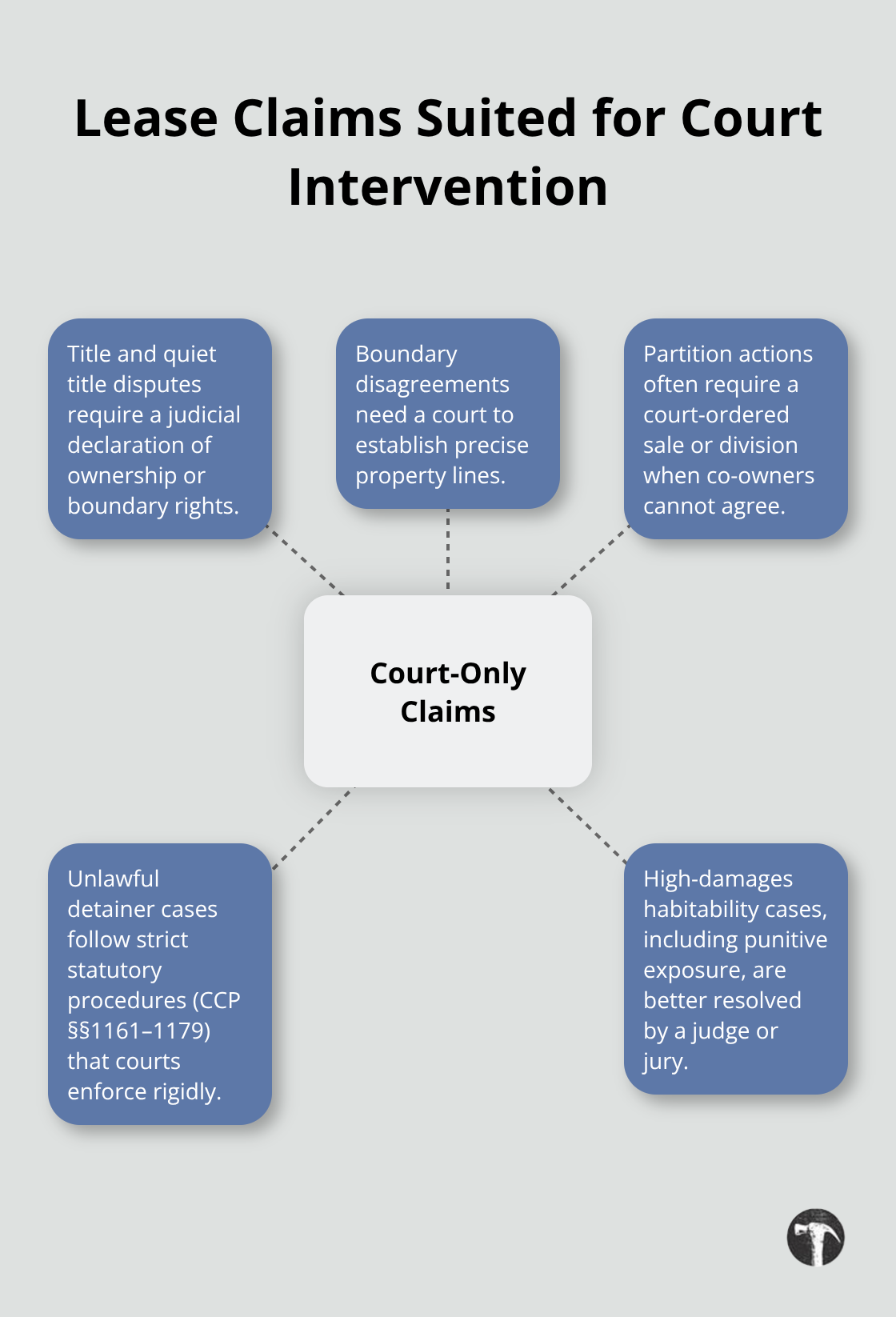
Unlawful detainer actions for non-payment or lease violation follow strict statutory procedures under California Code of Civil Procedure sections 1161 through 1179, and courts enforce those procedures rigidly. If you’ve served a notice to quit or three-day notice to pay, any procedural error can derail the entire case, so real estate litigation counsel must review every step before filing.
When Damages Exceed Settlement Range
Habitability claims that involve punitive damages or extreme slumlord conditions also belong in court rather than mediation, because a judge or jury can award damages far beyond what either party would accept in settlement. These cases create financial exposure that makes litigation the only viable path to protect your interests. Conversely, if the dispute centers on rent abatement, repair responsibility, payment schedules, or early termination, mediation usually resolves it faster and cheaper than court.
Understanding the Litigation Timeline
The litigation timeline in contested lease disputes typically runs eighteen to thirty-six months from filing to trial, depending on court backlog and discovery complexity. This extended timeline contrasts sharply with mediation’s compressed two-to-six-hour sessions. The extended duration means your capital remains tied up, your attention stays focused on the dispute, and your attorney fees accumulate month after month. We at The Law Offices of Alan J. Carnegies, APC help you decide whether mediation or litigation serves your actual goals and prepare you for whichever path protects your interests.
Final Thoughts
Action stops lease disputes faster than waiting for problems to resolve themselves. The moment a disagreement surfaces between you and a tenant or landlord, contact an attorney who handles real estate disputes so you can clarify whether lease dispute mediation or litigation serves your situation and prevent costly procedural mistakes that derail your case. Early legal guidance protects your interests and keeps disputes from becoming more entrenched and expensive to fix.
Documentation transforms vague arguments into concrete facts that mediators and judges can evaluate. Photograph property conditions, maintain repair logs with dates and contractor names, keep all written communication with the other party, and preserve payment records (whether you’re a landlord tracking maintenance work or a tenant documenting repair requests and unhabitable conditions). Without this evidence, both sides waste attorney time arguing about what actually happened instead of solving the problem.
We at The Law Offices of Alan J. Carnegies, APC represent property owners, tenants, and other parties in real estate disputes across Los Angeles County, including Calabasas, and help you decide whether mediation or litigation protects your interests. Contact us to discuss your lease dispute and learn how we can help you move forward.