

Tenant eviction disputes can escalate quickly without proper understanding of California law. The process involves strict procedures, specific timelines, and critical legal protections that apply to both property owners and tenants.
We at The Law Offices of Alan J. Carnegies, APC serve property owners and tenants throughout Los Angeles County who face these complex situations. This guide walks you through your rights, the step-by-step eviction process, and the strategies that matter most.
Legal Grounds for Eviction and Tenant Defenses in Calabasas, California
What Grounds Give Landlords the Right to Evict
California’s Tenant Protection Act requires landlords to have just cause before evicting anyone. You cannot remove a tenant simply because you want them out or because their lease has expired. The California Courts Self Help Guide identifies two categories of eviction: at-fault evictions, where tenants violate lease terms or engage in prohibited conduct, and no-fault evictions, where landlords pursue removal for business reasons unrelated to tenant behavior.
At-fault grounds include nonpayment of rent, breach of material lease terms, nuisance or waste, criminal activity on the premises or directed at the owner, refusal to allow lawful entry, and refusal to execute a new lease on similar terms. No-fault grounds are more limited and include owner move-in, substantial rehabilitation that requires vacant possession, intent to demolish, withdrawal from the rental market, and compliance with government or court orders.
Lying about your reason for eviction exposes you to penalties and liability, so the stated ground must be genuine and provable. Courts examine whether the claimed reason matches the actual reason-documentation showing the true motive can destroy your case. Eviction procedures in California are heavily regulated, and landlords cannot simply remove a tenant without following strict legal steps.
Notice Timing Depends on the Violation Type
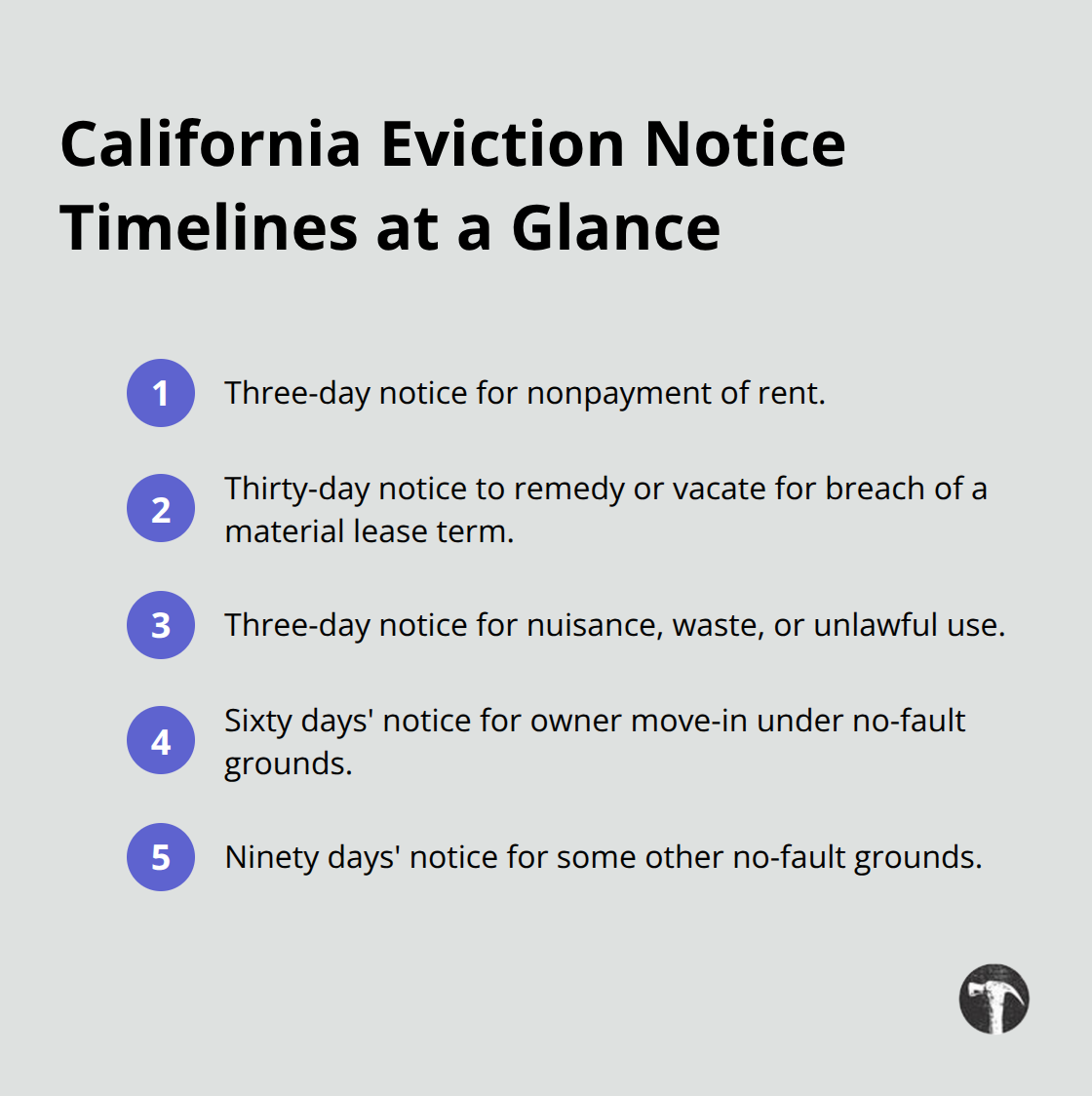
The notice you serve must specify what the tenant did wrong and give them a deadline to cure or vacate. For nonpayment of rent, California law typically requires a three-day notice. For breach of a material lease term, you generally must give the tenant 30 days to remedy the violation or move out. For nuisance, waste, or unlawful use, a three-day notice applies.
These timelines are not suggestions-courts will dismiss your case if you serve an incorrect notice period. The notice must be in writing, must describe the violation with specificity, and must state the deadline clearly. If the tenant cures the violation by the deadline, you cannot proceed with eviction. For no-fault evictions, timelines are longer: owner move-in typically requires 60 days’ notice, while some other no-fault grounds require 90 days. Serving notice correctly is your foundation; improper notice gives tenants a defense that stops your eviction cold.
Tenant Defenses That Courts Take Seriously
Tenants have legitimate defenses under California law that courts recognize and enforce. Habitability defects-failure to maintain heat, hot water, functioning plumbing, or safe conditions-can defeat an eviction for nonpayment because tenants have a right to withhold rent for uninhabitable conditions. Discrimination based on protected characteristics (race, color, religion, gender, national origin, familial status, disability, sexual orientation, or age) is an absolute bar to eviction.
The Ralph Act, codified in California Civil Code Section 51.7, also prohibits housing discrimination and violence or intimidation in housing disputes. If a tenant can show your eviction is retaliatory-filed in response to their complaint to housing authorities or their assertion of legal rights-the eviction fails. Improper notice, failure to follow statutory procedures, or service defects give tenants grounds to dismiss your case entirely. Tenants represented by counsel are far more likely to raise these defenses effectively, so do not assume an unrepresented tenant will simply accept eviction.
Understanding these defenses now allows you to address them before they derail your case in court. The next section walks you through the actual eviction process and how courts handle these disputes from filing through judgment.
From Notice to Judgment: How Eviction Cases Move Through California Courts in Los Angeles County
Filing the Unlawful Detainer Complaint
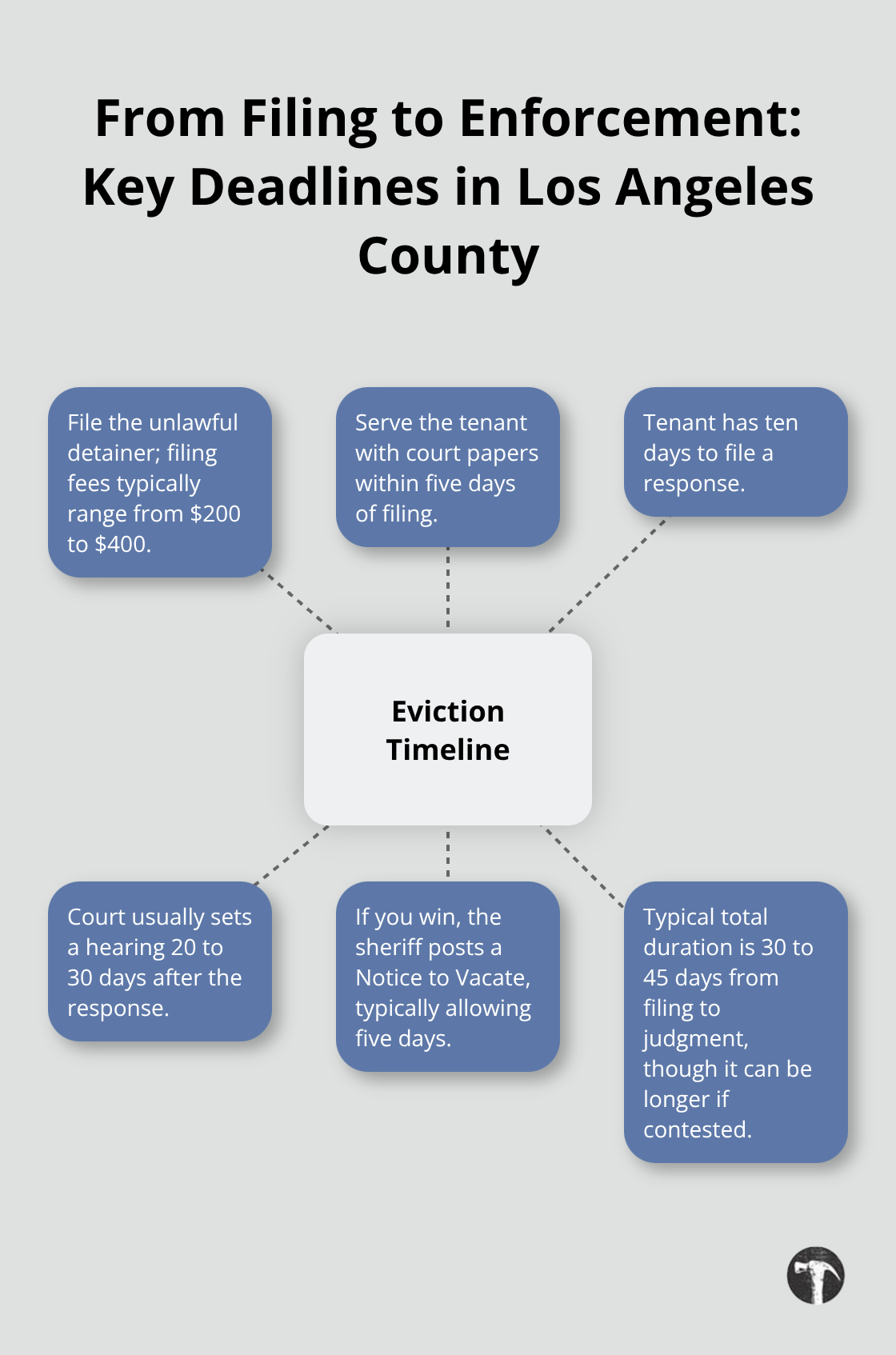
After you serve the notice and the tenant fails to cure or vacate, you must file the unlawful detainer action in Superior Court in the county where the property sits. For properties in Los Angeles County, this means the Los Angeles County Superior Court. The California Courts Self Help Guide outlines the complete procedure: you prepare and file the unlawful detainer complaint with proof of service showing the tenant received the notice. The filing fee typically ranges from $200 to $400, depending on the county. Once filed, the court assigns a case number and a judge. You must then serve the tenant with the court papers within five days of filing. Service must be proper-handed to the tenant personally, left at their residence with someone of suitable age, or served by mail if the court authorizes it.
The Tenant’s Response Window and Default Judgment
The tenant has ten days from service to file a response. If the tenant does not respond by the deadline, you can request a default judgment, meaning the judge decides in your favor without a trial. Many evictions end this way because tenants either do not understand they must respond or cannot afford representation. However, if the tenant files a response-even a simple denial-you cannot obtain a default judgment and must proceed to court.
Preparing for the Hearing on the Merits
Once the tenant responds, the case moves toward a hearing on the merits. California courts typically schedule these hearings within 20 to 30 days of the response, though some courts move faster. At the hearing, you present evidence that the notice was proper, that the tenant violated the lease or failed to pay rent, and that you complied with all statutory requirements. Bring documentation: lease agreements, photos of damage for nuisance claims, bank statements showing nonpayment, and proof of service. The burden of proof is preponderance of the evidence, meaning more likely than not.
The Judge’s Decision and Enforcement
The judge listens to both sides, examines evidence, and issues a decision immediately or within a few days. If you win, the court issues a judgment for possession and may award costs and attorney fees depending on the lease terms and applicable law. The sheriff or marshal then serves the tenant with a Notice to Vacate, typically giving them five days to move before the actual lockout occurs. If you lose, the tenant stays and the case ends. The entire process from filing to judgment typically takes 30 to 45 days, though contested cases with discovery disputes can stretch longer.
Why Self-Help Eviction Destroys Your Case
Self-help eviction-changing locks, removing belongings, or shutting off utilities-is illegal and exposes you to significant liability. Courts take these violations seriously, and tenants can sue you for damages. The court process requires patience, but it protects your rights and ensures the eviction holds up if the tenant challenges it later. Once judgment is final, enforcement through the sheriff becomes your only legal path forward. Understanding what happens after judgment-and how to protect yourself from tenant counterclaims or appeals-shapes your entire strategy moving forward.
How to Win Eviction Disputes Before Court
Document Everything From Day One
Building an unshakeable case starts months before you file anything in court. Documentation serves as your weapon, and it must be meticulous. From day one of the tenancy, photograph the unit’s condition, keep copies of all communications with the tenant, and maintain detailed records of rent payments and late notices. For nonpayment cases, bank statements showing when checks cleared or when payments arrived matter far more than your memory of what happened. If you claim the tenant caused damage, photographs taken immediately after discovery establish the condition far better than photos taken weeks later.
The California Courts Self Help Guide emphasizes that landlords bear the burden of proving their case, so weak documentation loses even strong legal claims. Text messages, emails, and timestamped photos are admissible evidence; your word alone is not. Property managers who handle multiple units should use property management software that logs every interaction, payment, and notice date automatically. This creates an audit trail that courts trust. If you operate without this documentation system, you are essentially gambling with your property and your time.
Explore Settlement Before Trial
Negotiation often resolves disputes faster and cheaper than trial. Many tenants facing eviction would rather move voluntarily than endure a court judgment on their record, which damages their ability to rent elsewhere. Offering a mutual move-out agreement with a specific date and financial terms can end the dispute in days instead of months. If nonpayment is the issue, some tenants can access emergency rent relief programs through Los Angeles County, which now provides funding to cover past-due rent and related housing costs due to emergency hardship. If the tenant qualifies and applies, you may be paid directly by the county program, making continued litigation pointless.
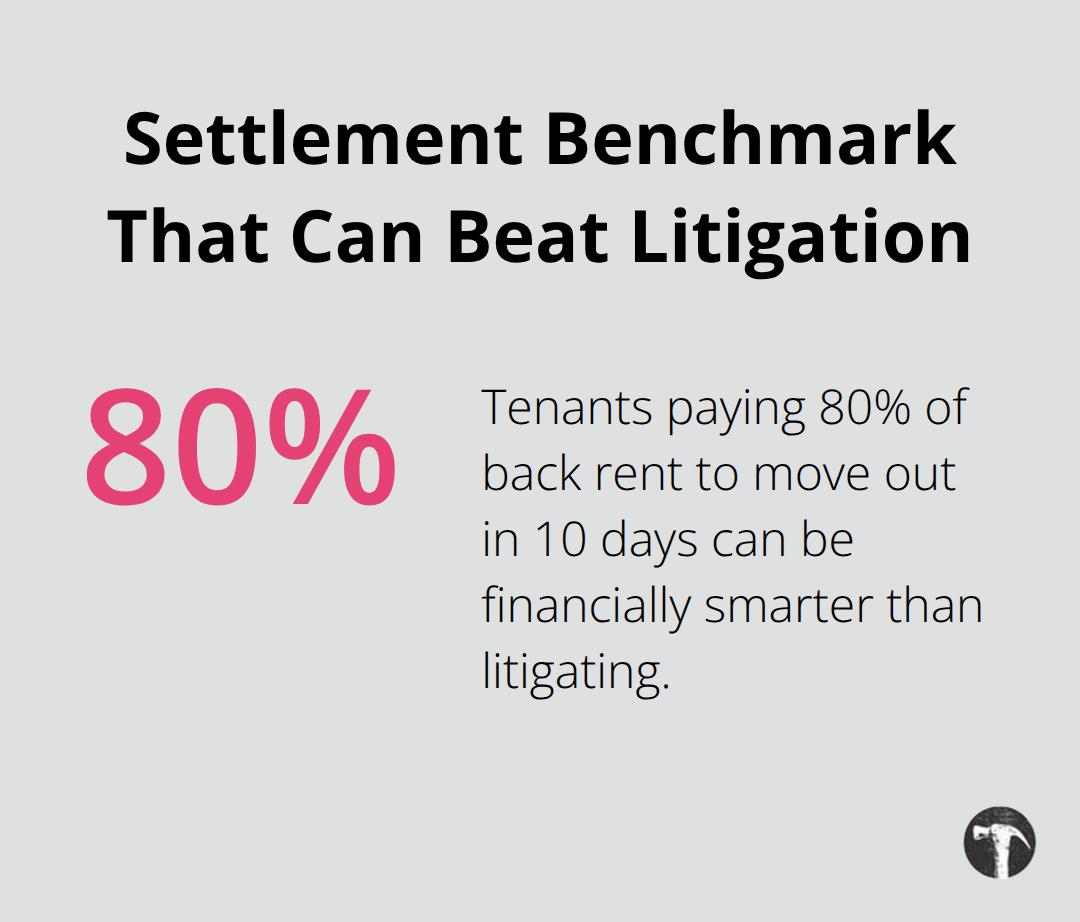
Before dismissing settlement, calculate the real costs of trial: court filing fees, service costs, lost rent during the process, and attorney fees add up quickly. A tenant paying you 80 percent of back rent to move out in 10 days often makes more financial sense than winning a judgment 45 days later and waiting another week for the sheriff to enforce it. However, some situations demand court action. If the tenant is damaging the property or engaging in criminal activity, waiting for negotiation allows the harm to continue. Try settlement only when it genuinely serves your financial interests, not when it simply feels easier than fighting.
Secure Representation in Court
Representation in court separates winners from losers in these disputes. Tenants represented by counsel raise defenses that unrepresented tenants miss entirely. They file motions to strike improper service, challenge the sufficiency of your notice, and identify habitability violations that defeat your nonpayment claim. Courts take these defenses seriously because California law is tenant-protective. If you appear without counsel against a represented tenant, you lose the ability to respond to legal arguments effectively.
The judge expects you to know procedure, evidentiary rules, and case law. Most property owners do not, and their cases suffer for it. An attorney familiar with the specific courthouse where your case is filed knows which judges move cases quickly, which ones demand extensive discovery, and which ones scrutinize landlord testimony heavily. This local knowledge shapes strategy. Filing deadlines, response requirements, and proof of service rules are technical, and mistakes in these areas give tenants grounds to dismiss your case entirely. An attorney ensures compliance with every requirement and protects your interests throughout the process.
Final Thoughts
Tenant eviction disputes in Calabasas, California and throughout Los Angeles County demand strict adherence to California law. Property owners who skip procedural steps or serve incorrect notices hand tenants a defense that stops the case before trial, while tenants who fail to respond within the deadline lose their opportunity to challenge the eviction in court. Documentation from day one-photographs, communications, and payment records-determines whether you win or lose, and settlement often makes financial sense when emergency rent relief programs can cover past-due amounts or when moving costs less than litigation fees.
Courts take tenant defenses seriously because California’s Tenant Protection Act and the Ralph Act protect renters from illegal removal based on habitability violations, discrimination, or improper notice. Representation in court separates winners from losers in these disputes, as judges expect both sides to know procedure, evidentiary rules, and applicable law. An attorney familiar with your local courthouse knows which judges move cases quickly and which ones scrutinize landlord testimony heavily, shaping your entire strategy.
We at The Law Offices of Alan J. Carnegies, APC represent property owners and tenants in landlord-tenant disputes throughout Los Angeles County. Contact our firm to protect your interests and navigate tenant eviction disputes with confidence.