Property disputes can spiral into costly legal battles when neighbors disagree about boundaries, access, or land use. These conflicts affect your ability to develop, sell, or fully enjoy your property in Los Angeles County, California.
Property rights litigation protects what’s yours by establishing clear legal ownership and stopping unauthorized use. We at The Law Offices of Alan J. Carnegies, APC help property owners in Calabasas, California and throughout the region resolve these disputes and defend their asset boundaries.
What Property Rights Disputes Actually Look Like in Los Angeles County
Boundary Line Disagreements and Survey Evidence
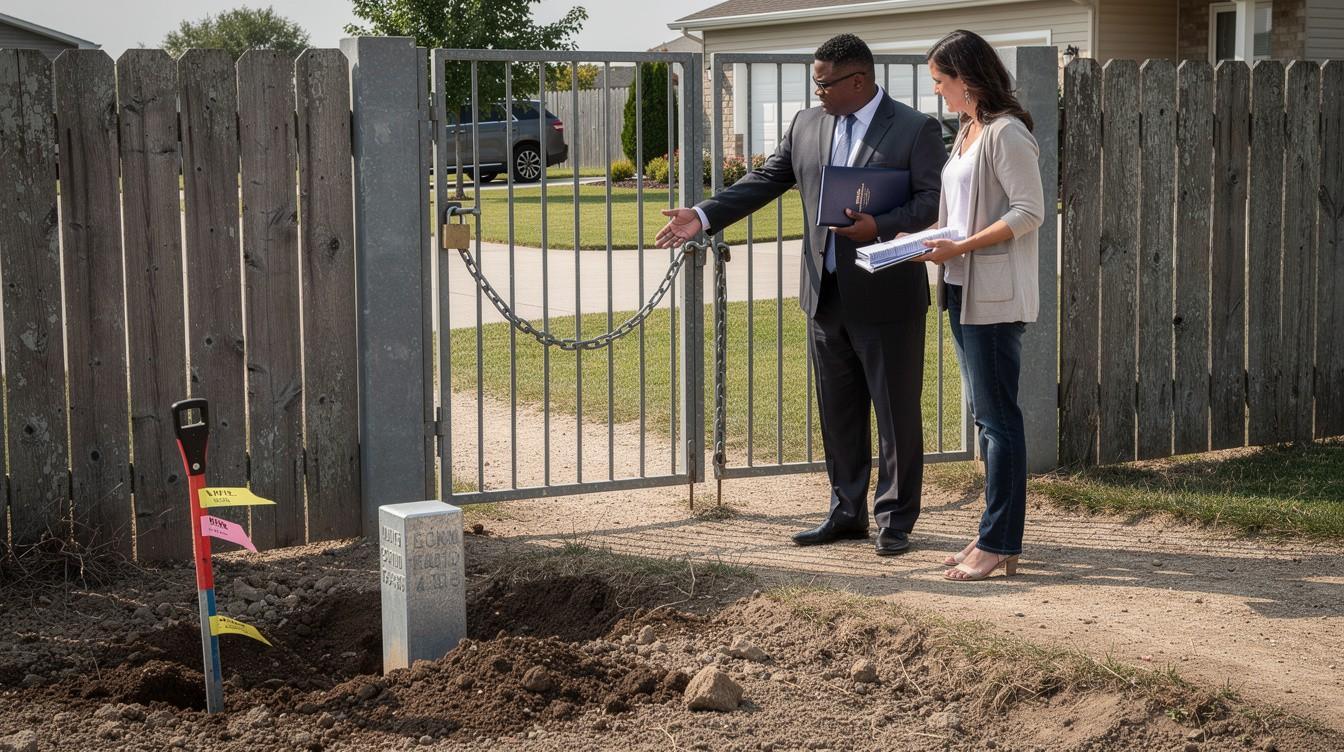
Boundary disputes between neighbors start with one simple problem: disagreement about where one property ends and another begins. In Los Angeles County, these disputes often arise because older deeds lack precise measurements, surveys are outdated, or properties have changed hands multiple times without clear documentation. A neighbor builds a fence, installs a driveway, or plants landscaping-and suddenly you discover they’ve crossed onto your land.
California Civil Code Section 841, known as the Good Neighbor Fence Law, requires 30 days written notice before building or repairing a boundary fence, yet many property owners skip this step entirely. When they do, you have grounds to challenge the construction and pursue remedies including boundary agreements or encroachment claims. A professional property survey confirms the exact boundary line; this single document often resolves disputes before they escalate to litigation.
Encroachment and Excessive Use
Encroachment occurs when a neighbor’s structure, vegetation, or use physically occupies your property without permission. This extends beyond fences-it includes driveways, pools, sheds, or tree roots that damage your foundation. Many encroachments develop gradually over years, making them harder to address once they’re established.
A 2023 California Court of Appeal ruling clarified that even permitted uses can become problematic if they’re excessive. A neighbor’s easement for access, for example, cannot involve unlimited commercial traffic or parking that burdens your land beyond what the agreement allows. You should photograph the intrusion, note dates when you first noticed it, and obtain a survey showing the exact overlap. If a neighbor built without consent on the boundary line, you can challenge the construction under California fence law and pursue remedies to restore your property rights.
Easement Disputes and Scope of Use
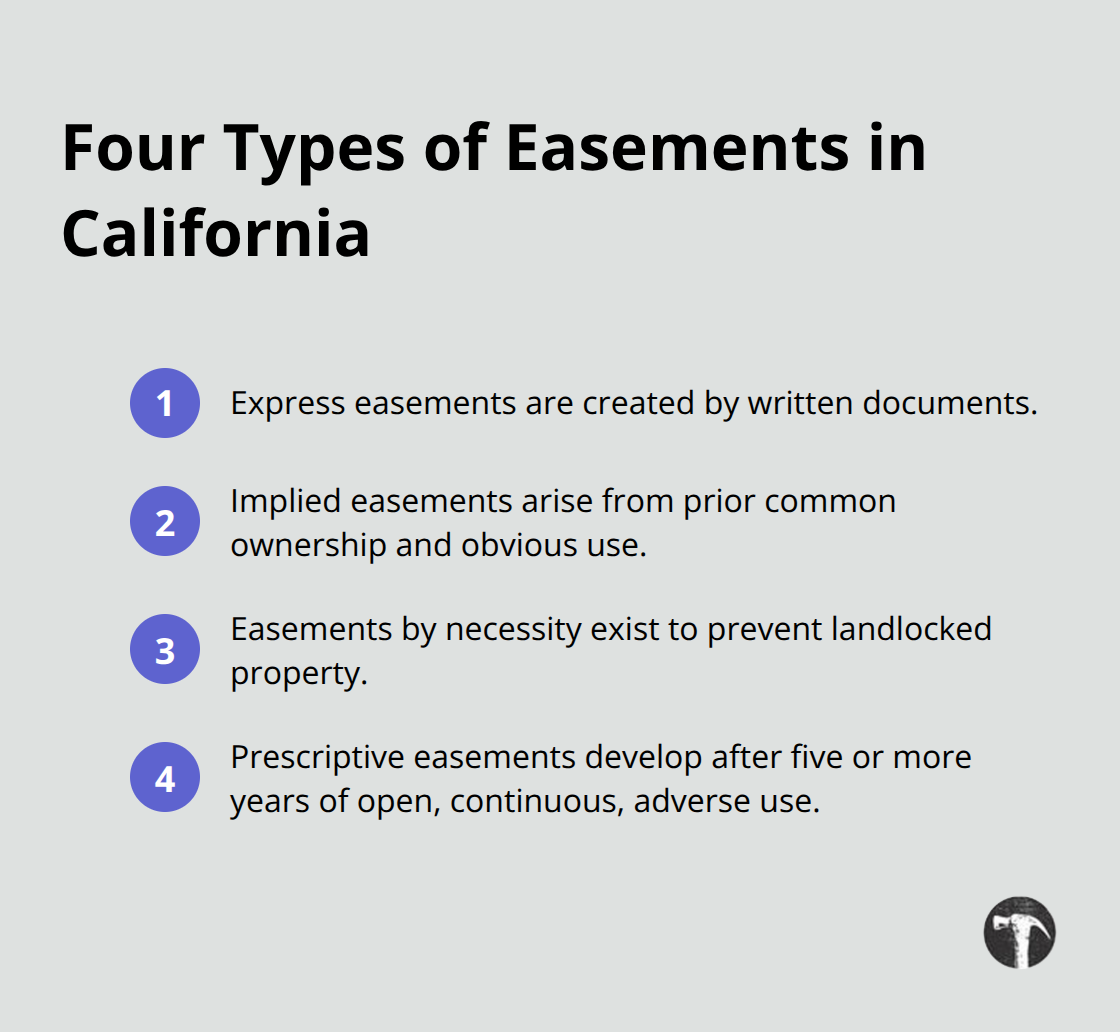
Access rights and easement conflicts create some of the most complex disputes because they involve ongoing relationships between neighbors. An easement is a non-possessory right to use another person’s land, typically for access, utilities, or drainage. California recognizes four main types: express easements created by written documents, implied easements arising from prior common ownership and obvious use, easements by necessity when a property would be landlocked without cross-property access, and prescriptive easements developed through five or more years of open, continuous, and adverse use.
Disputes over easements usually center on scope-what uses are actually permitted. If your property benefits from an access easement, you can use it for ingress and egress, but can you park multiple vehicles there or operate a business from that access point? The answer depends on the easement terms and how courts interpret reasonable use.
These distinctions matter significantly when you need to defend your boundaries or enforce your rights against a neighbor’s overreach. Understanding what type of easement affects your property and what it actually allows sets the foundation for resolving conflicts before they require formal legal action.
How Property Rights Litigation Protects Your Interests in Calabasas, California
Establishing Clear Legal Ownership Through Court Judgment
Litigation establishes ownership with legal certainty that negotiation alone cannot achieve. When a court determines boundary lines through survey evidence and deed analysis, that judgment becomes binding and enforceable against future owners. This matters because a verbal agreement with your neighbor means nothing when that neighbor sells to someone else. California courts issue injunctions that force removal of encroaching structures, award monetary damages for lost use of your property, and in some cases grant specific performance-a remedy that compels a party to complete or undo an action rather than simply pay money.
For boundary disputes involving unique properties, specific performance is the appropriate remedy when monetary damages cannot adequately compensate you for the loss of your land. Title insurance protects against unforeseen defects and liens, but it does not resolve active disputes; litigation does. A court judgment creates a permanent record that protects your rights against all future owners of the neighboring property.
Recovering Damages from Encroachment and Trespass
Recovering damages from encroachment or trespass requires proving three elements: the defendant’s entry onto your property, the lack of permission, and resulting harm. Damages can include the diminution in your property’s market value, the cost to remove the encroaching structure, lost rental income if you were prevented from using part of your property, and in cases of willful trespass, punitive damages.
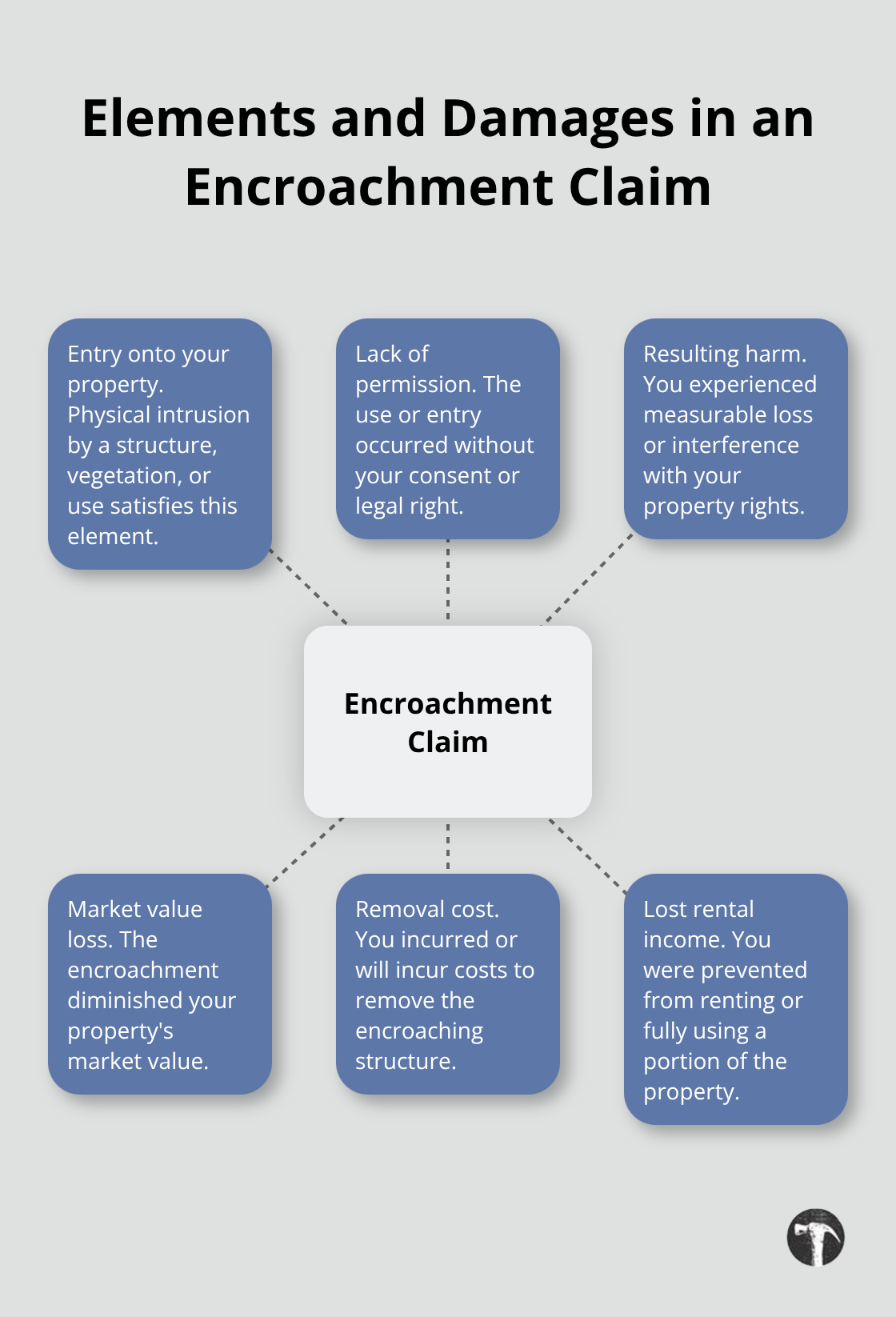
A professional appraisal documents how the encroachment reduced your property’s value; without this documentation, courts have no basis to award compensation. You should photograph the intrusion, note dates when you first noticed it, and obtain a survey showing the exact overlap. These records strengthen your claim and demonstrate the scope of the harm to your property rights.
Securing Access Rights and Preventing Future Interference
Litigation protects your ability to use and develop your property when access rights are blocked or interfered with. If you own landlocked property or rely on an easement that a neighbor is blocking, litigation can compel the neighbor to grant or respect that access. A recorded easement agreement binds all future owners, making your access rights permanent and enforceable.
Courts interpret ambiguous easement language to clarify what uses are permitted, preventing future disputes over scope. For commercial properties, clear access rights directly affect development potential and financing; lenders often require documented, enforceable easements before funding projects. A 2023 California Court of Appeal ruling clarified that even permitted uses can become problematic if they’re excessive-a neighbor’s easement for access cannot involve unlimited commercial traffic or parking that burdens your land beyond what the agreement allows.
Why Professional Documentation Matters
Litigation transforms uncertainty into documented rights that protect your investment and enable you to buy, sell, develop, or refinance your property without obstruction. The difference between a handshake agreement and a court judgment is enforceability across property transfers and time. When you face a property rights dispute, the steps you take now-obtaining surveys, documenting evidence, and pursuing formal legal remedies-determine whether your boundaries and access rights remain secure for decades to come. Understanding what type of dispute you face and what remedies apply sets the foundation for protecting your asset.
Steps to Take When a Property Boundary Dispute Emerges in Calabasas, California
Collect Evidence Immediately
Start gathering evidence right away-this is not optional. Photograph every aspect of the disputed boundary, encroachment, or access issue from multiple angles and across different dates. Obtain your property deed, title insurance documents, and any prior surveys or boundary agreements. If a survey exists from a previous transaction, pull it now; outdated surveys often contain measurement errors that triggered the dispute in the first place.
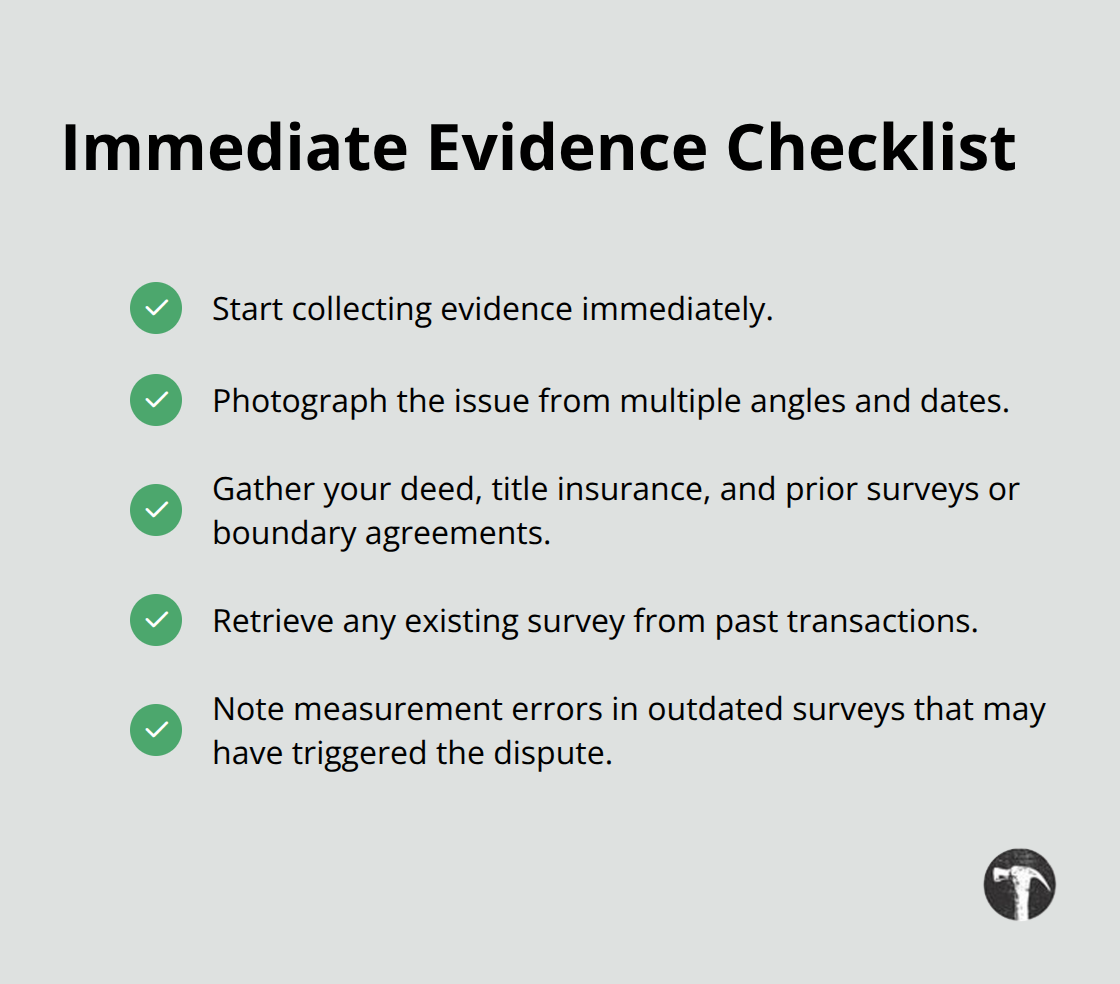
Request a current professional survey from a licensed surveyor in Los Angeles County. This single document typically costs between $400 and $1,500 depending on property size and complexity, but it eliminates guesswork about where your boundary actually sits. Document written communication with your neighbor-emails, texts, letters-that shows the dispute timeline and your attempts to resolve it. This evidence becomes critical if litigation becomes necessary because courts rely on documented facts, not recollections.
Build a Timeline and Document Conversations
Compile a timeline showing when you first noticed the encroachment, when you notified the neighbor, and what responses you received. Keep detailed notes of in-person conversations with dates and specific statements. Many property owners delay this step, thinking the dispute will resolve itself; it rarely does, and delayed documentation weakens your legal position.
Approach Negotiation With Written Proposals
Negotiation and mediation should happen next, but only after you have your evidence organized and a professional survey confirming the boundary. Approach your neighbor in writing, not verbally, to preserve documentation. State the specific issue, reference the survey or deed, and propose a concrete solution-whether that is moving the encroaching structure, establishing a formal easement agreement, or sharing fence costs under California’s Good Neighbor Fence Law.
Many neighbors respond better to written proposals than verbal confrontations because they understand you are serious. Mediation costs significantly less than litigation (typically $500 to $2,000 per session in Los Angeles County) and many disputes resolve within one or two sessions when both parties genuinely want to avoid court.
Know When to Seek Legal Counsel
If your neighbor refuses to engage or the dispute involves a commercial property or significant financial stakes, contact a trial lawyer for a consultation. A lawyer can evaluate whether your boundary claim is strong, what damages you might recover, and whether negotiation remains viable or litigation is necessary. Attempting resolution first demonstrates good faith to a judge if the case reaches court, and it often produces faster results than waiting months for trial.
Final Thoughts
Property rights disputes threaten your ability to use, develop, and sell your property without obstruction. When boundaries are unclear, access is blocked, or a neighbor encroaches on your land, the financial and emotional costs mount quickly. Property rights litigation provides the legal mechanism to establish ownership with certainty, recover damages, and secure access rights that protect your investment for decades.
We at The Law Offices of Alan J. Carnegies, APC represent property owners throughout Los Angeles County in real estate disputes involving boundary disagreements, encroachment claims, easement conflicts, and title issues. Trial lawyer Alan Carnegie handles the full range of real estate litigation, from initial negotiation and mediation through trial and appeal. Our approach combines aggressive legal advocacy with practical problem-solving to resolve disputes efficiently and protect your rights.
If you face a boundary dispute, encroachment issue, or access conflict in Calabasas, California or elsewhere in Los Angeles County, contact us for a consultation. Learn more about how we help property owners defend their asset boundaries and access rights. Call or email today to discuss your situation with a trial lawyer who understands property rights and Los Angeles County real estate law.