

Your home is likely your biggest investment, and residential real estate disputes can threaten both your property and your financial security. Boundary disagreements, construction defects, and landlord-tenant conflicts happen more often than you’d think, and they require swift action.
We at The Law Offices of Alan J. Carnegies, APC serve homeowners throughout Los Angeles County, California, and we’ve seen how quickly these disputes can escalate. This guide walks you through the most common residential real estate disputes, your legal rights, and practical steps to protect what you own.
What Disputes Threaten Your Home Most
Boundary Disputes Cost Homeowners Significantly
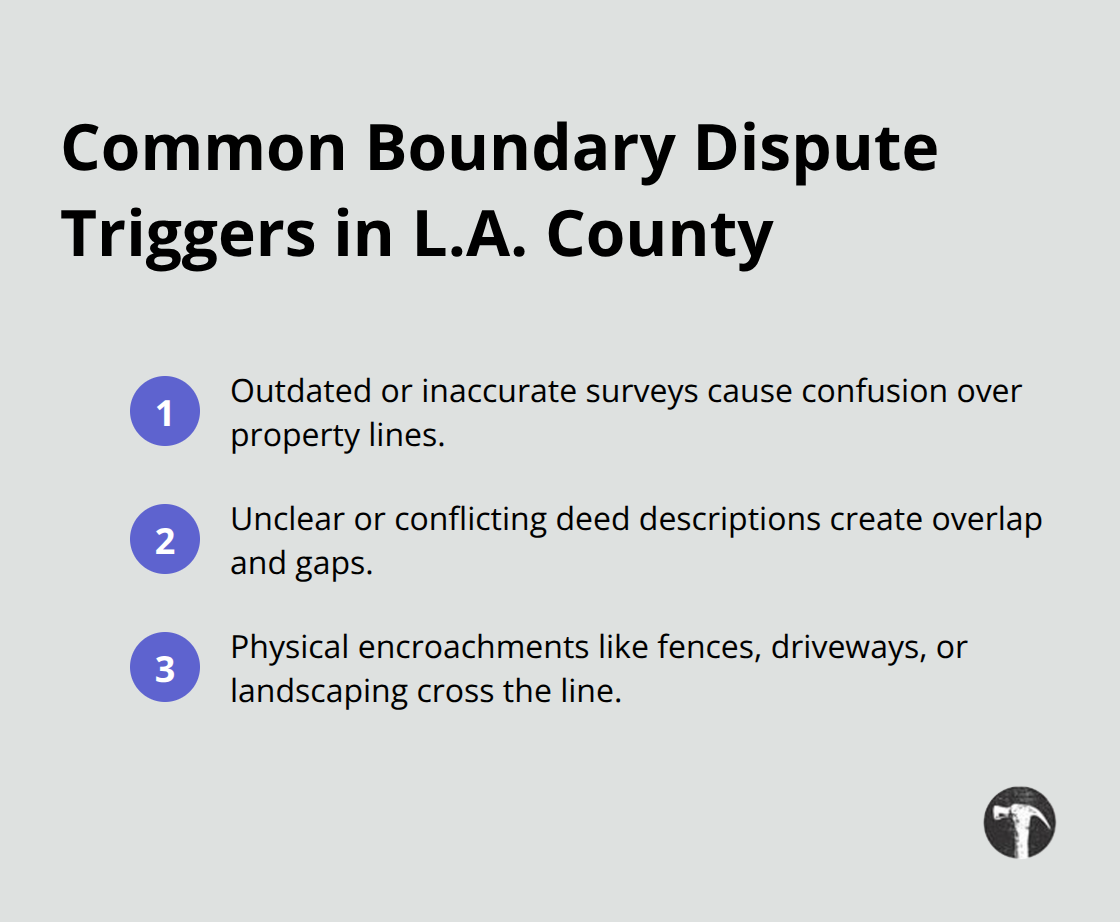
Boundary disputes rank among the costliest residential conflicts in Los Angeles County. Property line disagreements often stem from outdated surveys, unclear deeds, or encroachments that accumulate over years. A neighbor’s fence built two feet over the line, a driveway that crosses your property, or landscaping that extends beyond agreed boundaries can trigger expensive litigation.
California law recognizes property rights disputes as distinct from title disputes, and the remedies differ significantly. If a neighbor encroaches on your land, you have the right to seek injunctive relief to stop the intrusion and recover damages for loss of use.
Commission a professional survey before disputes escalate. This single step prevents most boundary conflicts from reaching litigation. The survey establishes clear property lines and identifies any existing encroachments, giving you solid documentation if you need to take legal action later.
Construction Defects Reduce Property Value and Safety
Construction defects present a different threat to homeowners. Defective workmanship, material failures, or contractor negligence can reduce property value and create safety hazards. Common defects include faulty electrical systems, plumbing leaks, foundation cracks, and roof failures. California law requires builders and contractors to stand behind their work, and you have the right to demand repairs or compensation within strict time limits.
The statute of limitations for construction defect claims is typically four years from discovery, so acting quickly preserves your legal options. Document all defects with photographs, written descriptions, and contractor communications. This evidence strengthens your position if you need to pursue a claim. We at The Law Offices of Alan J. Carnegies, APC represent property owners in construction defect disputes throughout Los Angeles County.
Landlord-Tenant Conflicts Require Clear Lease Terms
Landlord-tenant conflicts arise when lease terms are ambiguous or when either party fails to meet obligations. Rent disputes, maintenance disagreements, security deposit withholding, and unlawful eviction attempts happen regularly in Los Angeles County. California security deposit law strictly limits what landlords can deduct and requires itemized accounting within 21 days of move-out. Tenants who face illegal eviction or wrongful withholding have strong legal remedies, including recovery of deposits plus statutory penalties.
Landlords who fail to maintain habitability standards (safe plumbing, functioning heat, pest-free conditions) violate California law and expose themselves to tenant claims. Clear written leases that specify rent, maintenance responsibilities, and dispute resolution procedures prevent many conflicts before they start. When disputes do arise, understanding your rights under California law determines whether you can resolve the matter quickly or face prolonged conflict.
Legal Solutions and Your Rights as a Homeowner
Understanding Your Ownership Type
California law recognizes four distinct forms of residential property ownership: sole ownership, joint tenancy with right of survivorship, tenancy in common with undivided shares, and community property for married couples. Each form carries different implications for what happens to your property if you pass away or go through a divorce, and understanding which form applies to your home is foundational to protecting it.
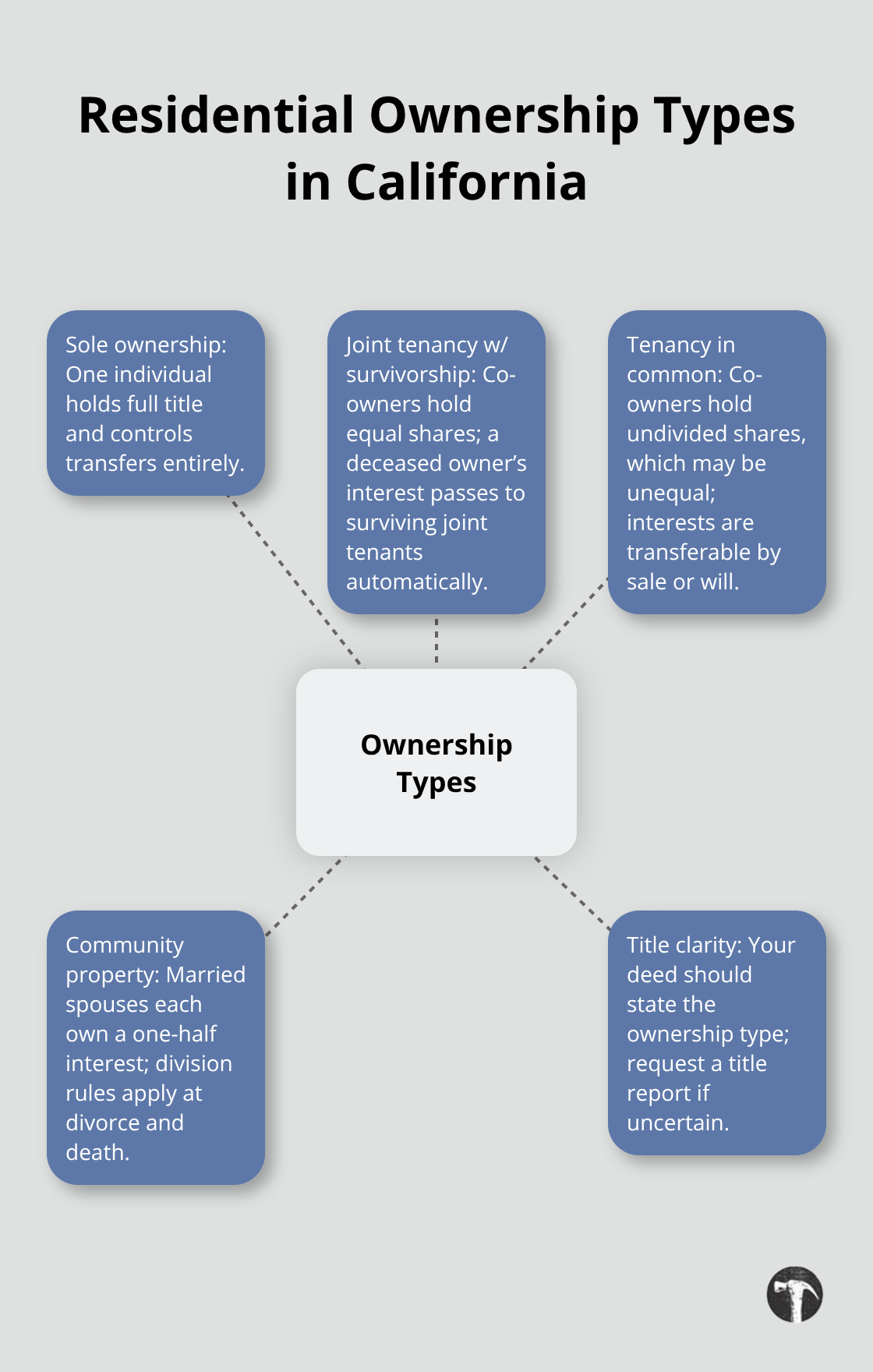
Your deed should clearly state your ownership type. If it doesn’t, or if you’re uncertain, request a title report from your county recorder’s office immediately. Vague ownership language creates disputes later, especially when multiple parties claim rights to the same property.
What the Law Grants You
The California Civil Code explicitly protects property owners’ rights to exclude others from their land, to use it as they see fit within zoning limits, and to transfer it. These rights form the legal backbone of any dispute resolution strategy, and you cannot effectively defend them without understanding what the law actually grants you. When a dispute emerges, act within the first 30 days. Most residential real estate conflicts worsen when parties delay taking action.
Gather Documentation Immediately
Your first action should involve collecting every document related to the property: deeds, surveys, contracts, title reports, HOA rules, lease agreements, inspection reports, and any written communications with the other party. This documentation becomes your evidence foundation. Next, send a written notice to the other party outlining the specific issue, your position, and your proposed resolution. Keep the tone professional and factual, never accusatory. Many disputes resolve at this stage because the other party realizes you’re serious and organized.
Mediation Offers Speed and Cost Savings
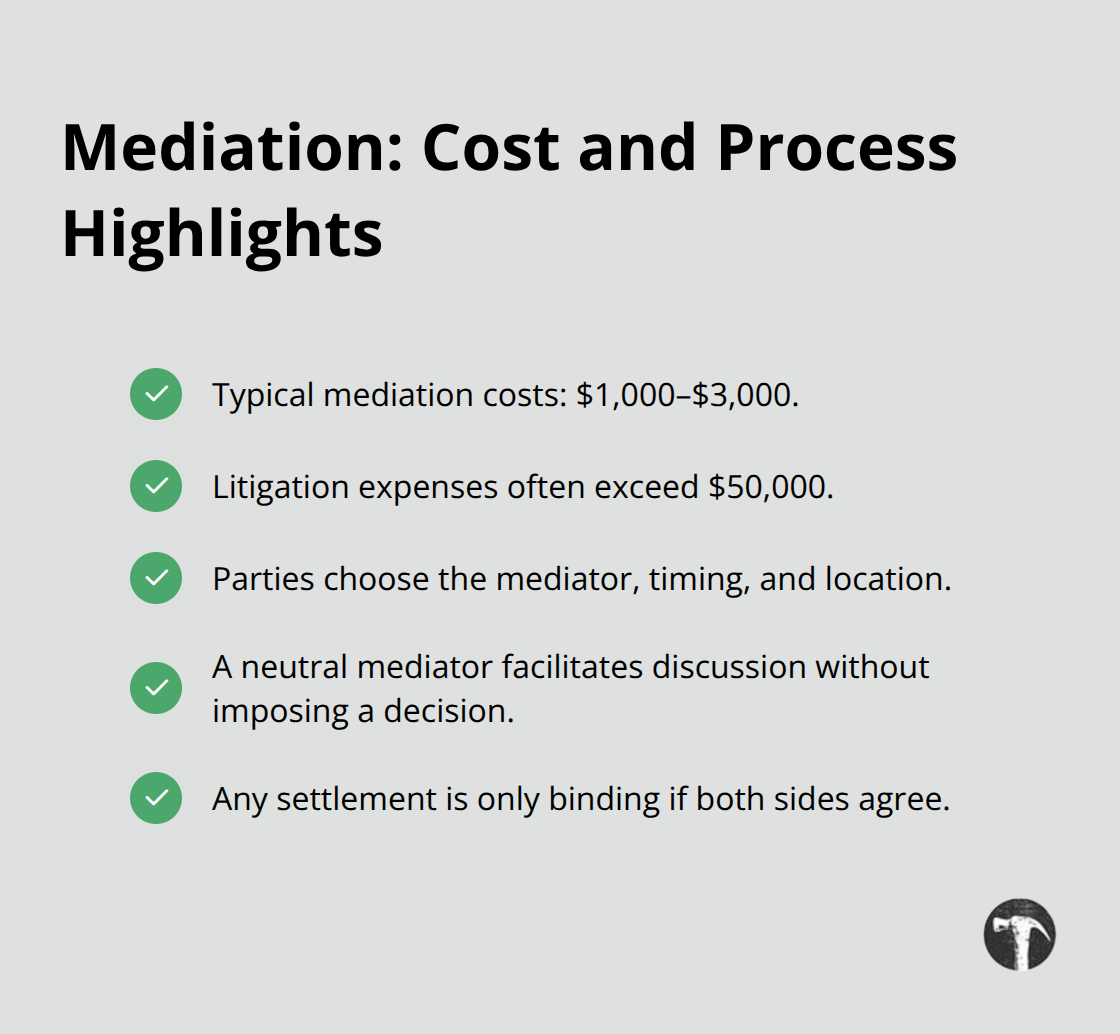
If direct communication stalls, mediation offers a faster and cheaper path than litigation. According to the National Association of REALTORS, mediation allows both parties to choose the mediator, timing, and location, giving you flexibility to shape the process. A neutral mediator facilitates discussion without imposing a binding decision unless both sides agree. Mediation typically costs between $1,000 and $3,000 compared to litigation costs that easily exceed $50,000.
When mediation fails or the dispute involves clear violations of your legal rights, litigation becomes necessary.
When Litigation Protects Your Investment
A real estate attorney can identify whether you have grounds for injunctive relief to stop ongoing harm, damages for past losses, or specific performance to force the other party to fulfill contract obligations. Throughout Los Angeles County, property owners face disputes that require skilled legal representation to navigate complex ownership issues, boundary conflicts, and contract violations. The Law Offices of Alan J. Carnegie, APC represents property owners in real estate litigation and can assess whether your case warrants litigation or settlement. Understanding your ownership rights and taking swift action positions you to resolve disputes efficiently, whether through negotiation, mediation, or court proceedings.
How to Resolve Disputes Without Going to Court
Start with a Formal Written Notice
Direct communication is non-negotiable. Write a formal letter to the other party that outlines the specific dispute, your legal position, and your proposed solution. Keep it factual and professional-avoid emotional language or accusations. According to the National Association of REALTORS, this initial written contact resolves many disputes because it signals you’re organized and serious about resolution. Include specific details: dates, property descriptions, contract terms, and dollar amounts. Send it via certified mail so you have proof of delivery.
If the other party responds constructively, you may reach agreement without escalating further. If they ignore you or respond dismissively, you’ve created documentation that strengthens your position in mediation or litigation.
Organize Your Documentation Thoroughly
Documentation forms your foundation before any formal dispute resolution process. Gather every relevant document: deeds, surveys, purchase agreements, inspection reports, title reports, lease agreements, photographs of the disputed property condition, emails, text messages, and written estimates for repairs or damages. Organize these chronologically and create a summary timeline showing when each event occurred.
This preparation serves two purposes: it clarifies your own position and demonstrates professionalism to mediators or judges. If you’ve already organized issues thoroughly, mediation becomes dramatically more efficient because both parties understand exactly what evidence exists. The National Association of REALTORS emphasizes that comprehensive documentation prevents disputes from escalating, and it’s far cheaper to organize records now than to pay attorneys to locate them later.
Mediation Provides Speed and Affordability
Mediation offers genuine advantages over litigation when both parties want resolution quickly and affordably. A neutral mediator facilitates discussion without imposing binding decisions-any settlement requires agreement from both sides. Mediation typically costs between $1,000 and $3,000 compared to litigation expenses exceeding $50,000. The process allows you to control timing, location, and mediator selection, giving you flexibility litigation doesn’t provide.
Harvard Law School’s Program on Negotiation notes that mediation focuses on underlying interests rather than just legal positions, often producing settlements that satisfy both parties more completely than court judgments do. If mediation stalls or the other party refuses to participate, you haven’t lost anything-you’ve simply gathered more information about their intentions, which helps your attorney prepare for litigation or negotiation strategies.
Escalate to Legal Representation When Needed
When disputes require court intervention, skilled legal representation becomes essential. An attorney can identify whether you have grounds for injunctive relief to stop ongoing harm, damages for past losses, or specific performance to force the other party to fulfill contract obligations. Throughout Los Angeles County, property owners face disputes involving boundary conflicts, construction defects, landlord-tenant violations, and contract breaches that demand professional guidance.
The Law Offices of Alan J. Carnegies, APC represents property owners in real estate litigation and can assess whether your case warrants litigation or settlement. Understanding your ownership rights and taking swift action positions you to resolve disputes efficiently, whether through negotiation, mediation, or court proceedings.
Final Thoughts
Residential real estate disputes threaten your financial security and property value, but swift action within the first 30 days prevents escalation and preserves your legal options. Documentation, clear communication, and professional guidance matter enormously when you face boundary conflicts, construction defects, or landlord-tenant violations. Mediation offers a practical middle ground between negotiation and litigation, typically costing between $1,000 and $3,000 compared to court proceedings that exceed $50,000.
Professional legal representation becomes essential when disputes involve complex ownership issues, boundary conflicts, or contract violations that require injunctive relief, damages recovery, or specific performance. We at The Law Offices of Alan J. Carnegies, APC represent property owners throughout Los Angeles County in real estate litigation involving boundary disputes, construction defects, landlord-tenant conflicts, and title issues. Contact us to discuss your situation and explore your options for protecting your most valuable asset.
After resolution, document the final agreement in writing and verify that all parties comply with settlement terms. Your home represents your most significant investment, and protecting it requires vigilance, organization, and willingness to seek professional guidance when residential real estate disputes arise. Act decisively today to safeguard your property and financial security tomorrow.