
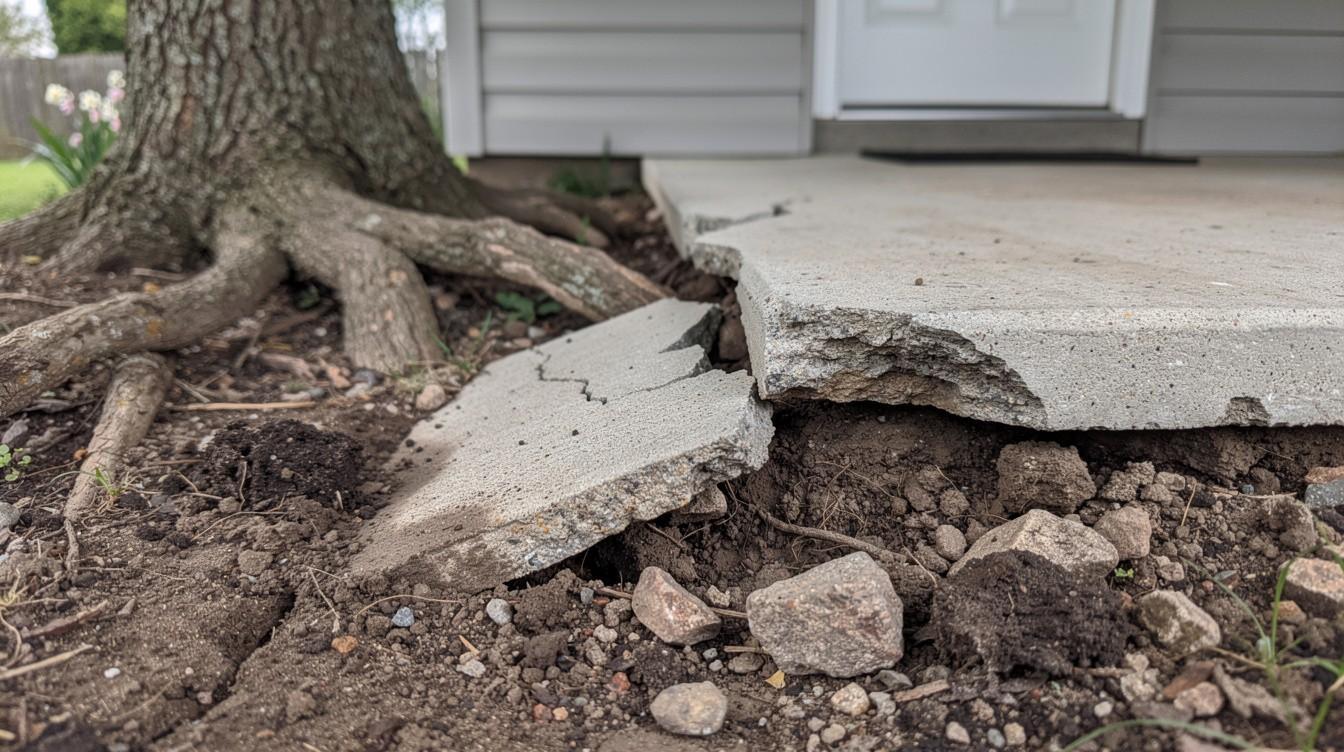
Tree roots near your porch can cause serious structural damage that threatens your home’s foundation and safety. The question of who pays for repairs often becomes complicated, especially when a neighbor’s tree is responsible.
We at The Law Offices of Alan J. Carnegies, APC help property owners throughout Los Angeles County understand their legal rights and options when tree root damage occurs. This guide covers the signs of damage, liability standards, and practical repair solutions you need to know.
How Tree Root Damage Affects Your Property
Signs of Root Damage to Porches and Foundations
Tree root damage to porches and foundations doesn’t announce itself with a single obvious sign. Instead, you’ll notice a combination of warning indicators that worsen progressively if ignored. Cracks in your porch concrete often appear first, typically in a pattern that mirrors the root’s growth direction beneath the surface. These cracks start narrow and widen over months, sometimes reaching half an inch or more. Your porch may also develop uneven settling, where one section sits noticeably higher or lower than adjacent areas. Interior foundation cracks frequently mirror exterior damage, spreading through walls, around doorways, or along basement floors. Moisture problems often accompany root intrusion because roots break through concrete and create pathways for water seepage. If your basement stays damp despite no obvious leaks, or if mold appears in corners near your property, tree roots may already be working their way through cracks you haven’t spotted yet.
Financial Impact of Waiting
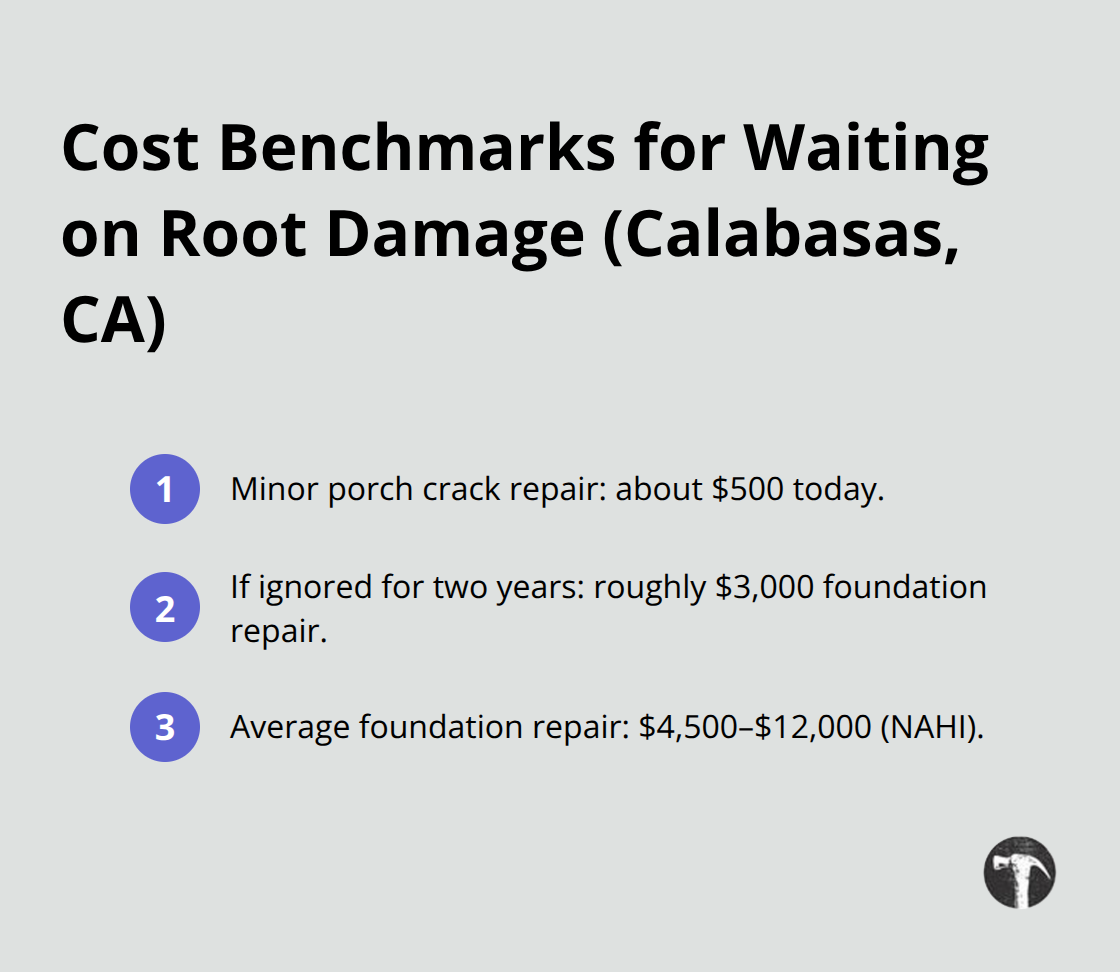
The financial consequences of waiting accelerate quickly. A minor porch crack that costs $500 to repair today becomes a $3,000 foundation repair in two years if roots continue expanding. The National Association of Home Inspectors reports that foundation damage repair costs average between $4,500 and $12,000 depending on severity. Tree roots cause this damage because they grow toward moisture and nutrients, and your foundation provides both.
Roots naturally expand as the tree matures, exerting tremendous pressure against concrete and masonry.
Common Tree Species and Root Behavior
Mature trees, particularly willows, maples, and cottonwoods, have root systems that extend far beyond their canopy, sometimes reaching 40 feet from the trunk. Trees planted too close to structures create the highest risk, especially when poor drainage concentrates moisture near foundations. Trees that have grown undisturbed for decades develop extensive root networks that cause more damage the longer they remain. The longer tree roots have to work, the more extensive the structural problems become.
Documentation Matters for Liability Claims
Photograph your damage and record the dates you first notice it. This documentation becomes essential if you need to pursue a liability claim against your neighbor and will help establish when the damage began. Your photographic record and timeline form the foundation for determining whether your neighbor bears responsibility for repairs.
Determining Legal Liability for Tree Root Damage in Calabasas, California
Natural Growth versus Negligence Standards
California property law distinguishes between a tree’s natural growth and a property owner’s negligence, and this distinction determines who pays for root damage. The natural growth doctrine protects tree owners from liability when roots cause damage through normal, healthy expansion. However, this protection disappears if the property owner knew about the problem and failed to address it.
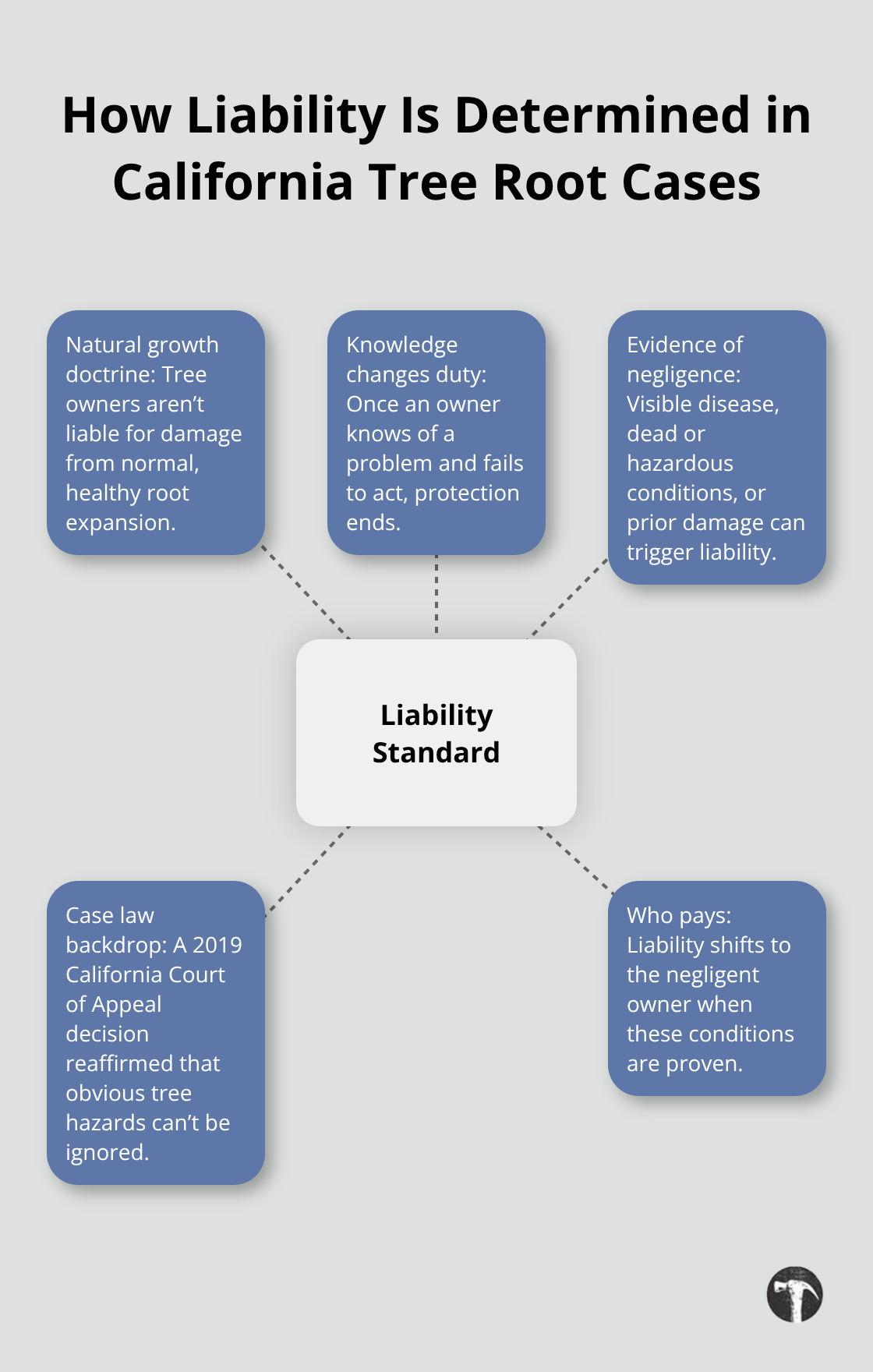
Courts in California have consistently ruled that if a neighbor’s tree is diseased, dead, or obviously hazardous, and the neighbor knew about the condition, they become liable for resulting damage. A 2019 California Court of Appeal decision reinforced this standard, establishing that property owners cannot ignore obvious tree problems on their land.
When a Neighbor Bears Responsibility
If your neighbor’s tree shows signs of disease, has dead branches hanging over your property, or has visibly damaged your porch before, you have grounds for a legal liability claim. The burden falls on you to prove the neighbor knew or should have known about the tree’s condition. Documentation of your prior complaints, photographs showing obvious damage or disease, and written communication requesting removal strengthen your position significantly. Your neighbor’s failure to act after you reported the problem transforms a natural growth situation into negligence.
Building Your Documentation Strategy
Photograph cracks from multiple angles, measure their width, and record the date immediately after you discover damage. Take photos of the tree itself, including any visible signs of disease, dead wood, or root exposure. If you’ve complained to your neighbor verbally, follow up with a written letter describing the problem and requesting action. Keep copies of all communications, repair estimates, and inspection reports. Hire a certified arborist to evaluate whether the tree is healthy or problematic, as this professional assessment carries significant weight in liability disputes (the arborist’s report should specifically address whether the tree’s condition was obvious and whether reasonable maintenance would have prevented the damage). Insurance claims often fail because homeowners lack this professional documentation.
Evidence That Courts Require
Your photographic record and timeline form the foundation for determining whether your neighbor bears responsibility for repairs. The arborist’s written assessment proves that the tree posed an identifiable hazard, which strengthens your claim considerably. Written communication with your neighbor (even a simple email or letter) establishes that you notified them of the problem. These three elements-photographs, professional assessment, and written notice-create a compelling case for liability.
Moving Forward with Your Claim
Once you’ve gathered this evidence, you’ll need to decide whether to pursue an insurance claim, negotiate directly with your neighbor, or seek legal action. The strength of your documentation determines which path makes sense for your situation.
Repair Options and Cost Considerations in Calabasas, California
Professional Assessment Before Spending Money
A certified arborist identifies exactly which tree caused the damage, whether the tree is healthy or problematic, and what repair approach makes sense for your situation. This assessment typically costs $300 to $500 and should include a written report detailing the root system’s extent, the tree’s structural integrity, and recommendations for either removal or management. Simultaneously, hire a foundation engineer or structural inspector to evaluate the damage severity and determine whether you need minor concrete work or major foundation repair. These two professionals working together provide the complete picture you need before making repair decisions. The arborist’s report also becomes critical evidence if you pursue a liability claim against your neighbor, so this initial investment protects both your property and your legal position.
Root Barrier Installation and Concrete Repair
Root barriers cost $1,500 to $3,000 and work best as a preventive measure before roots reach your foundation, though they prove less effective once damage has already occurred. Concrete repair for minor cracks runs $500 to $2,000, while major foundation repairs requiring underpinning or piering can reach $15,000 to $25,000. Root removal through excavation costs $2,000 to $5,000 depending on root size and depth, and you should only attempt this after consulting your arborist because improper removal can kill a mature tree or destabilize it.
Insurance Coverage and Damage Claims
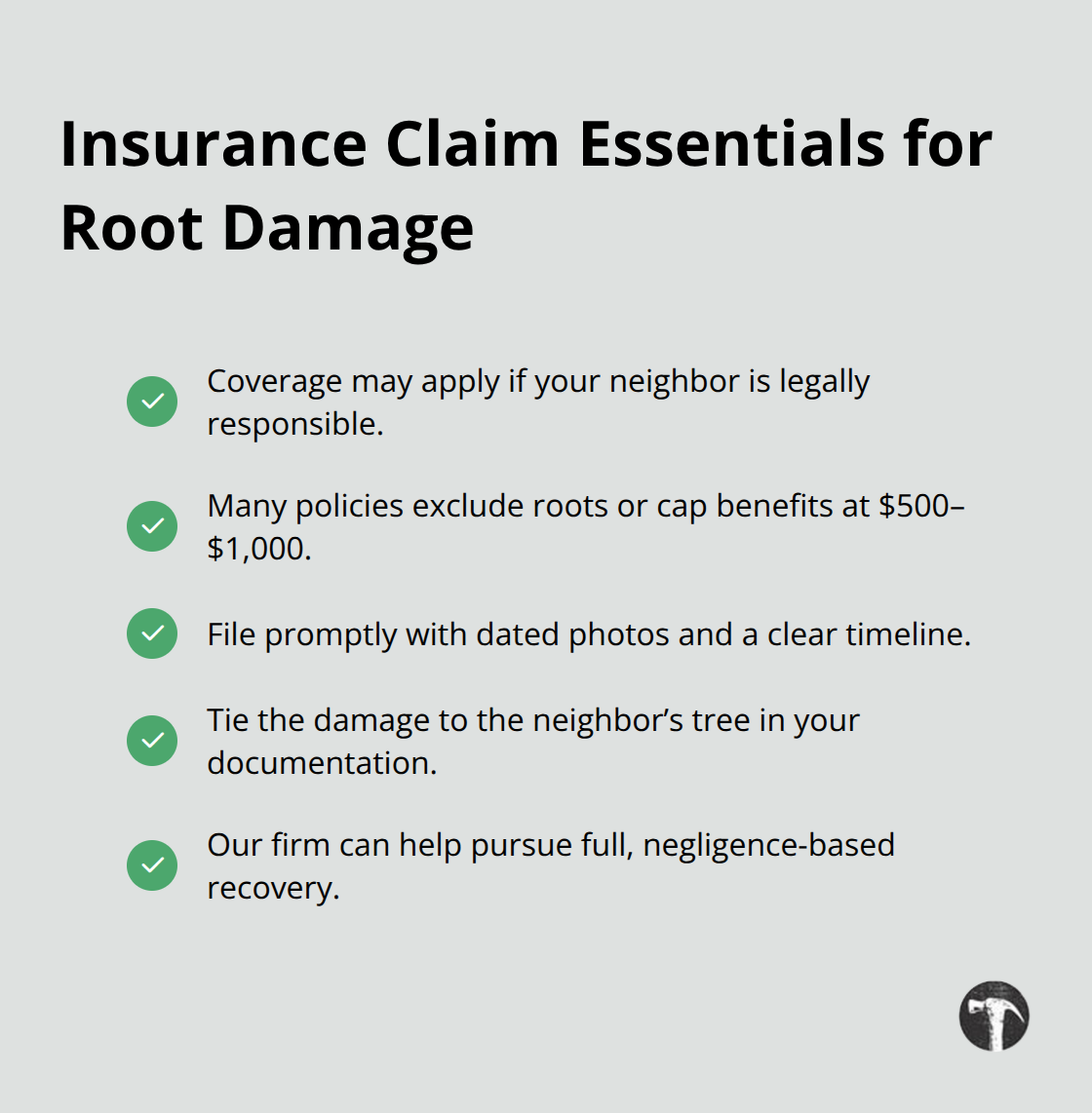
Your neighbor’s homeowner’s insurance should cover repairs if they bear legal responsibility for the damage, though many policies exclude tree root damage or cap coverage at $500 to $1,000. File your claim immediately with documentation showing when damage began and photographs proving the neighbor’s tree caused it. We at The Law Offices of Alan J. Carnegies, APC help property owners navigate these claims and determine whether your neighbor’s negligence makes them liable for full repair costs.
Final Thoughts
Tree roots near your porch create both immediate property damage and long-term financial consequences that demand prompt action. The key to protecting your interests lies in three steps: document everything from the moment you notice damage, obtain professional assessments from both an arborist and a structural engineer, and determine whether your neighbor bears legal responsibility based on California’s negligence standards. Your documentation strategy directly impacts your ability to recover repair costs through photographs, written communication with your neighbor, and a certified arborist’s report that establishes whether the tree’s condition was obvious.
California law protects tree owners from liability when roots cause damage through natural growth, but this protection vanishes if the neighbor knew about a diseased or hazardous tree and failed to act. This distinction determines whether your neighbor’s insurance covers repairs or whether you bear the cost yourself. Understanding this legal framework helps you decide whether to pursue an insurance claim, negotiate directly with your neighbor, or seek legal action.
If your neighbor refuses to cooperate, their insurance denies your claim, or you need guidance navigating the liability process, contact our litigation team to protect your property rights and recover the costs your neighbor’s tree caused. We at The Law Offices of Alan J. Carnegies, APC represent property owners throughout Los Angeles County in tree root damage disputes and help determine liability for repairs.