Commercial real estate disputes can derail your business and drain your finances. Property owners across Los Angeles County, California face conflicts over leases, boundaries, and construction issues regularly.
We at The Law Offices of Alan J. Carnegies, APC help entrepreneurs navigate these conflicts with proven strategies. This guide covers prevention tactics, resolution options, and when to bring in legal support.
What Disputes Actually Cost Property Owners in Calabasas, California
Lease Disagreements Drain Resources Fast
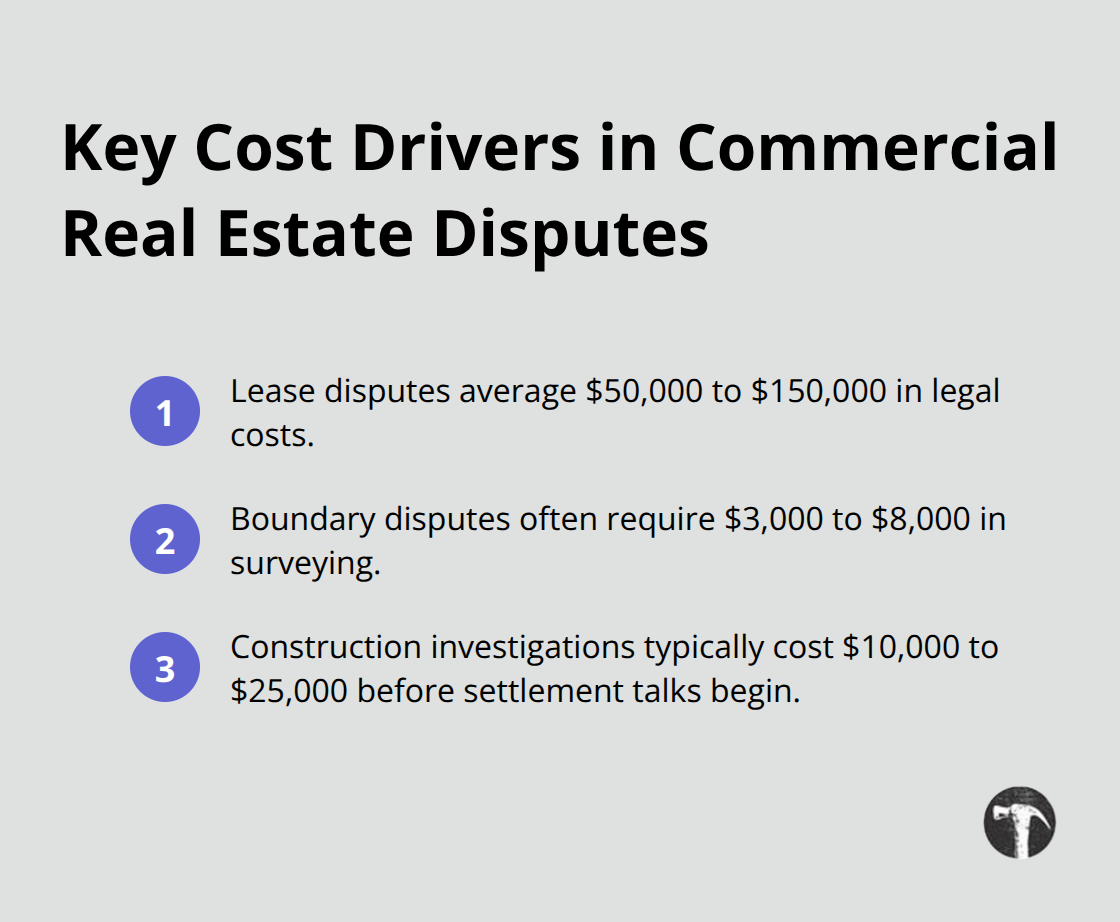
Lease disagreements represent the most frequent commercial real estate conflicts property owners face. When tenants withhold rent claiming breach of lease terms, or landlords attempt evictions without proper documentation, both parties spend thousands on legal fees before reaching resolution. The American Arbitration Association reports that commercial lease disputes average between $50,000 and $150,000 in legal costs alone.
The problem intensifies when lease language remains ambiguous about maintenance responsibilities, rent escalation formulas, or permitted use. Many owners discover their lease agreement fails to address remote work arrangements, equipment installation rights, or subleasing restrictions, creating conflict months or years after signing.
Boundary and Encroachment Issues Require Expensive Investigation
Property boundary and encroachment issues create another category of expensive disputes. A neighbor’s fence crosses property lines, parking lot drainage flows onto adjacent land, or utility lines run through your property without easement documentation-each scenario triggers litigation lasting years.
These disputes often involve surveying costs of $3,000 to $8,000 just to establish the actual boundary, then additional expenses for negotiation or court proceedings. The financial burden compounds quickly when property owners must hire multiple professionals to document the encroachment and establish liability.
Construction Defects Hit Your Bottom Line Hard
Construction defect claims and property damage disputes drain resources faster than most other conflicts. When a contractor fails to meet building code requirements, water intrusion damages your structure, or materials fail prematurely, property owners must hire engineers and inspectors to document problems (typically costing $10,000 to $25,000 in investigation alone) before any settlement discussions begin.
We at The Law Offices of Alan J. Carnegies, APC represent property owners throughout Los Angeles County in construction litigation involving mechanic’s liens, construction defects, and construction contract disputes. The financial impact of these three dispute categories makes prevention and early intervention essential for protecting your investment, which is why understanding your resolution options becomes your next priority.
How to Stop Commercial Real Estate Disputes Before They Start
Inspect Properties Thoroughly Before Purchase
Property inspections before purchase separate owners who face expensive litigation from those who avoid it entirely. Most property owners skip detailed inspections or rely on cursory walkthroughs, then discover foundation cracks, title defects, or encroachment issues months later when fixing them costs exponentially more. Commission a professional environmental site assessment and structural inspection before closing, spending $2,000 to $5,000 upfront to identify problems that could otherwise cost $50,000 or more in remediation and legal fees.
Request phase one environmental assessments specifically for commercial properties, which identify contamination risks that trigger liability for cleanup costs under California environmental law. Title companies provide preliminary reports, but hiring a title attorney to review them catches boundary discrepancies and easement restrictions that standard reports miss. Walk the perimeter of any property with a surveyor to document existing encroachments, fence lines, and utility placements before you own the liability.
Draft Lease Agreements With Precision and Clarity
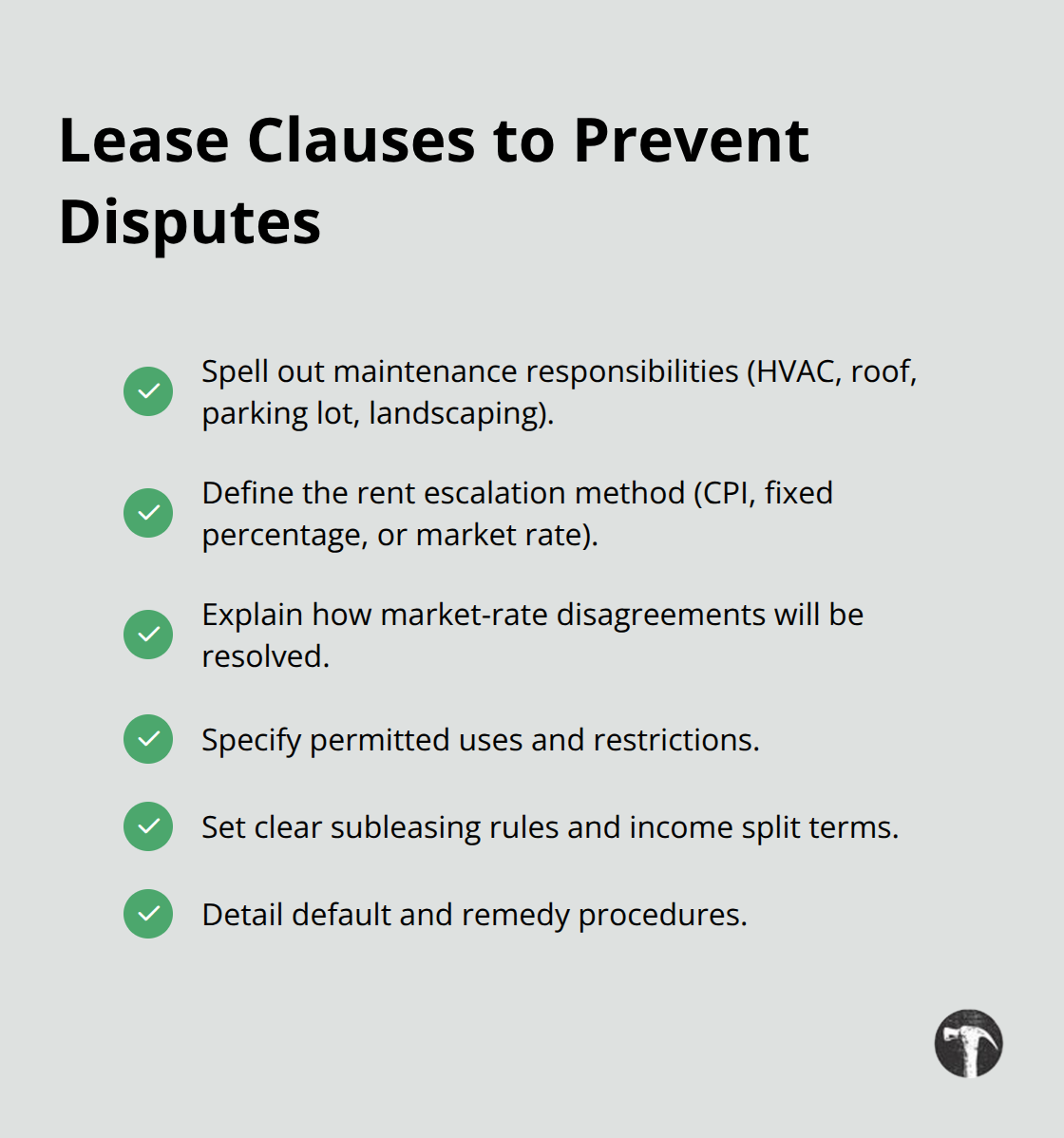
Your lease agreement determines whether disputes cost thousands or hundreds of thousands in legal fees. Generic templates or handwritten agreements create ambiguity about maintenance obligations, rent adjustments, permitted uses, and default procedures that spawn litigation years after signing.
Specify maintenance responsibilities down to who pays for HVAC repairs, roof maintenance, parking lot sealcoating, and landscaping rather than using vague language like “tenant maintains exterior.” Define rent escalation formulas precisely-state whether increases follow the consumer price index, fixed percentages, or market rate adjustments, then specify how disputes about market rate get resolved. Address subleasing restrictions explicitly, including whether tenants can sublease to competitors or whether sublease income splits between owner and tenant.
Document Every Interaction With Tenants
Document every communication with tenants about lease issues through email rather than phone calls or in-person conversations, creating records that protect you if disputes reach court. Written documentation establishes what each party agreed to, when they agreed to it, and what actions followed those agreements. This paper trail becomes invaluable when disputes escalate and you need to prove your position to a mediator, arbitrator, or judge.
Tenants who know you maintain detailed records often hesitate to make false claims about lease violations or payment disputes. The existence of documented communication shifts the dynamic in your favor before any formal dispute resolution process begins. When conflicts do arise despite your prevention efforts, you’ll have the evidence needed to resolve them efficiently-which makes understanding your resolution options the next critical step.
What Happens When Negotiation Fails in Calabasas, California
Start With Direct Negotiation
Direct negotiation with the other party should always be your first move when a commercial real estate dispute emerges. Most property owners avoid this step because they fear appearing weak or giving away leverage, but negotiation costs nothing except time and often resolves conflicts within weeks rather than months or years. The key is approaching negotiation with documented evidence of your position. If a tenant claims they paid rent when records show they didn’t, or a neighbor disputes a boundary line when your survey clearly establishes it, presenting this evidence immediately shifts the conversation toward settlement. Property owners who walk into negotiations without documentation typically leave empty-handed and frustrated.
Use Mediation to Find Common Ground
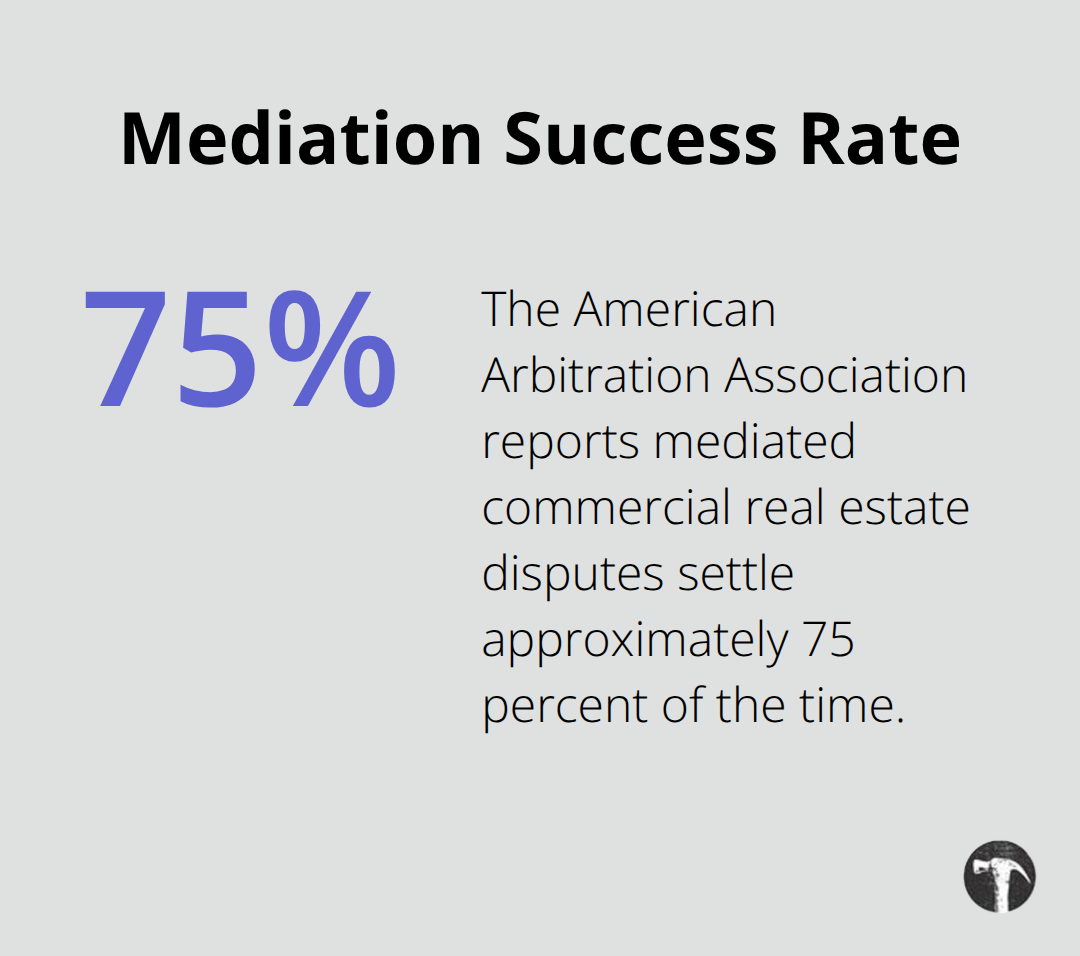
When direct negotiation stalls, mediation becomes your most cost-effective next step. A neutral mediator facilitates discussions between you and the other party, charging between $300 and $500 per hour for sessions that typically last four to eight hours total. This beats litigation by thousands of dollars. The American Arbitration Association reports that mediated commercial real estate disputes settle approximately 75 percent of the time without reaching court.
The mediator won’t decide who wins-they help both parties find common ground. You maintain control over the outcome, which matters enormously compared to litigation where a judge makes decisions that bind you regardless of your preferences.
Consider Arbitration as a Middle Path
Arbitration offers a middle ground when mediation doesn’t work and litigation feels too expensive. An arbitrator acts as a private judge who reviews evidence and makes a binding decision, costing $2,000 to $5,000 total depending on dispute complexity. Your lease agreement likely already contains an arbitration clause requiring this process before court involvement, which means you don’t have a choice anyway. Arbitration moves faster than litigation-decisions typically come within 60 to 90 days rather than the two to three years standard court cases require. You’ll present your case to someone with construction or real estate experience who understands the industry, not a generalist judge unfamiliar with commercial property disputes.
Pursue Litigation Only When Necessary
Litigation becomes necessary only when the other party refuses reasonable settlement offers and the financial stakes justify court costs. Court proceedings cost $15,000 to $50,000 in attorney fees for straightforward cases and substantially more for complex matters involving multiple parties or technical issues. You’ll spend 18 to 36 months waiting for trial, during which your capital remains tied up and business uncertainty continues. Only pursue litigation when settlement discussions have genuinely exhausted themselves and the amount in dispute justifies the expense and time investment. We at The Law Offices of Alan J. Carnegies, APC represent property owners throughout Los Angeles County, California in real estate litigation, including boundary disputes, construction defect claims, and landlord-tenant conflicts.
Final Thoughts
Commercial real estate disputes drain time, money, and focus from your business operations. The prevention strategies outlined above-thorough inspections, precise lease agreements, and meticulous documentation-stop most conflicts before they escalate into expensive litigation. Property owners who invest $5,000 upfront in inspections and legal review consistently avoid $50,000 to $150,000 in dispute costs later.
When disputes do emerge despite your prevention efforts, negotiation should always be your starting point. Direct conversations with documented evidence resolve most conflicts within weeks. If negotiation stalls, mediation offers a cost-effective alternative that settles approximately 75 percent of commercial real estate disputes without court involvement.
Arbitration provides faster resolution than litigation when mediation doesn’t work, and litigation becomes necessary only when settlement discussions have genuinely exhausted themselves and the financial stakes justify the expense. We at The Law Offices of Alan J. Carnegies, APC represent property owners throughout Los Angeles County, California in boundary disputes, construction defect claims, and landlord-tenant conflicts. Contact us to discuss your specific situation and learn how we can protect your commercial property investment.