
Contract disputes California can derail your business operations and drain your resources. Whether you’re facing a disagreement over payment terms, delivery obligations, or service quality, knowing your options matters.
We at The Law Offices of Alan J. Carnegies, APC help businesses throughout Los Angeles County navigate these conflicts-from negotiation through litigation if needed. This guide walks you through practical steps to resolve disputes efficiently and protect your interests.
What Makes a Contract Dispute in California
How California Law Defines Contract Disputes
A contract dispute in California occurs the moment one party fails to fulfill a legal obligation created by the contract. This isn’t always obvious. Non-payment is straightforward, but disputes also arise from late delivery, incomplete work, poor quality, missed deadlines, or disagreements about what the contract actually requires. California law recognizes five core elements for a valid contract: offer and acceptance, consideration (something of value from each party), legal purpose, competent parties, and in certain cases, a writing under the Statute of Frauds. The Statute of Frauds requires written agreements for real estate transactions, contracts lasting over one year, and sales of goods exceeding $500.
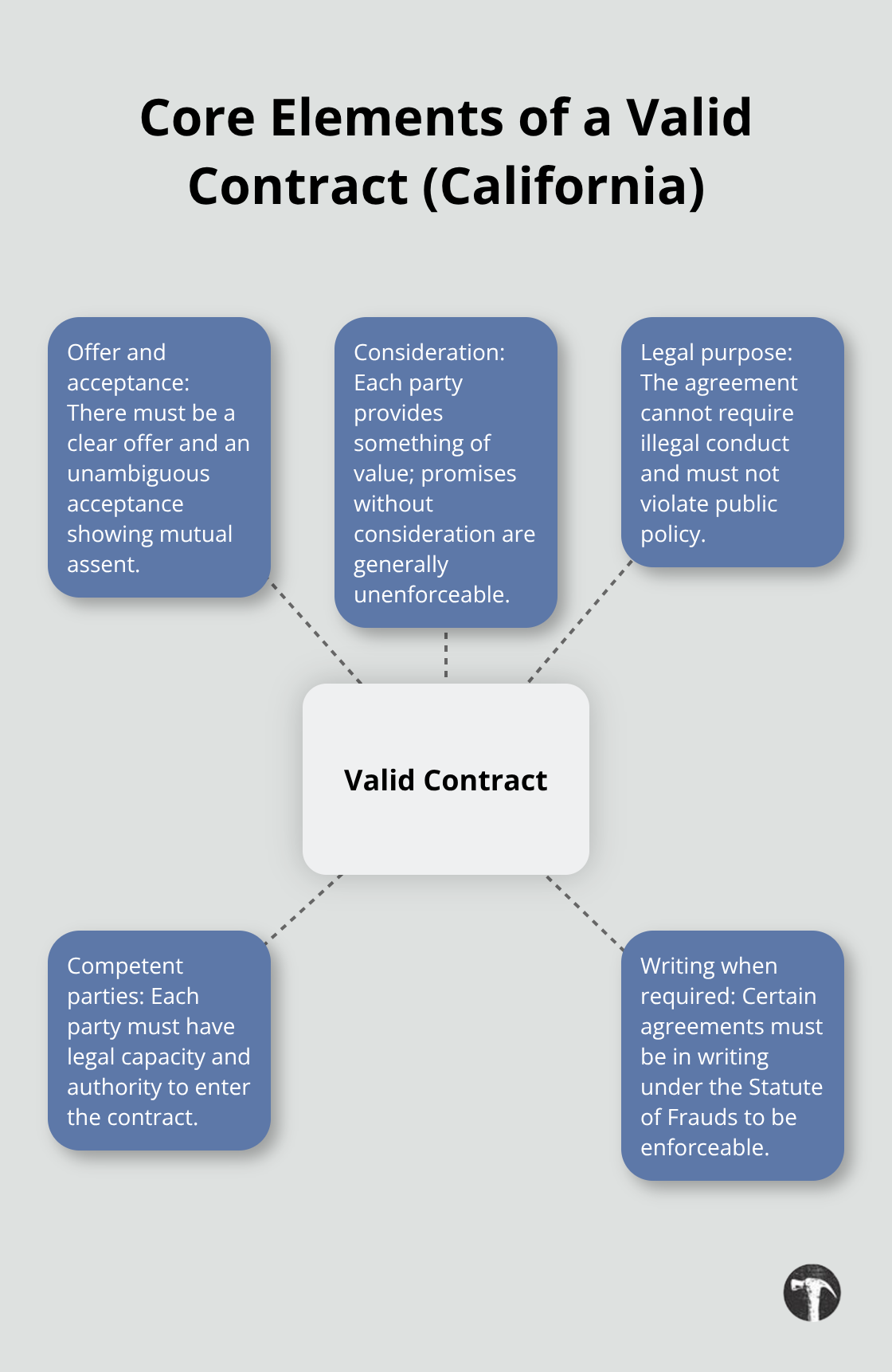
Without these elements, a contract may not be enforceable.
Why Valid Contracts Still Lead to Disputes
Having a valid contract doesn’t prevent disputes-it establishes the foundation for resolving them. The most common contract disputes in Los Angeles County involve non-payment, late performance, and failure to deliver promised goods or services. Ambiguous contract terms fuel many conflicts; vague language about deadlines, payment amounts, or deliverables creates room for interpretation battles that could have been prevented with precise drafting. Misrepresentation or fraud can invalidate a contract entirely if one party intentionally provided false information to secure the agreement.
How Disputes Escalate Quickly
Disputes typically escalate because parties wait too long to address problems. When one party notices a breach, they often send a demand letter or cease communication rather than attempting direct resolution. This delay weakens your position-evidence fades, witnesses become unavailable, and the other party may claim they weren’t given a fair chance to remedy the issue. External factors like natural disasters or regulatory changes can also create disputes if force majeure clauses weren’t included to excuse non-performance. The longer a dispute festers without action, the harder settlement becomes.
Your Obligation to Mitigate Damages
California courts recognize that plaintiffs have a duty to mitigate damages-meaning you cannot sit idle while losses mount and then demand full compensation for preventable harm. This legal principle protects both parties and encourages prompt action. Addressing disputes early through direct communication before positions harden gives you the best chance at favorable resolution. The steps you take in the first weeks after a breach occurs can determine whether you settle quickly or face months of costly conflict.
Understanding what constitutes a dispute and how quickly situations deteriorate sets the stage for your response. Your next move-whether negotiation, mediation, or another approach-depends on the specific circumstances of your situation and the other party’s willingness to resolve matters fairly.
How to Resolve Disputes Before Going to Court
Start with Direct Communication
Direct communication is your strongest first move in any contract dispute. Most parties never attempt a straightforward conversation before escalating to lawyers and formal demands. A direct call or email outlining the specific breach, referencing contract sections, and proposing a timeline for resolution often works because the other party may not realize you’re serious or may have genuinely misunderstood their obligations. Write this communication down-emails are ideal because they create an automatic record. Set a clear deadline for response, typically 10 to 14 days, and state what happens if they don’t reply. This approach costs nothing and frequently resolves disputes within weeks. If the other party responds positively, you can negotiate terms directly or with attorneys present to formalize the settlement.
Mediation: A Neutral Third Party Approach
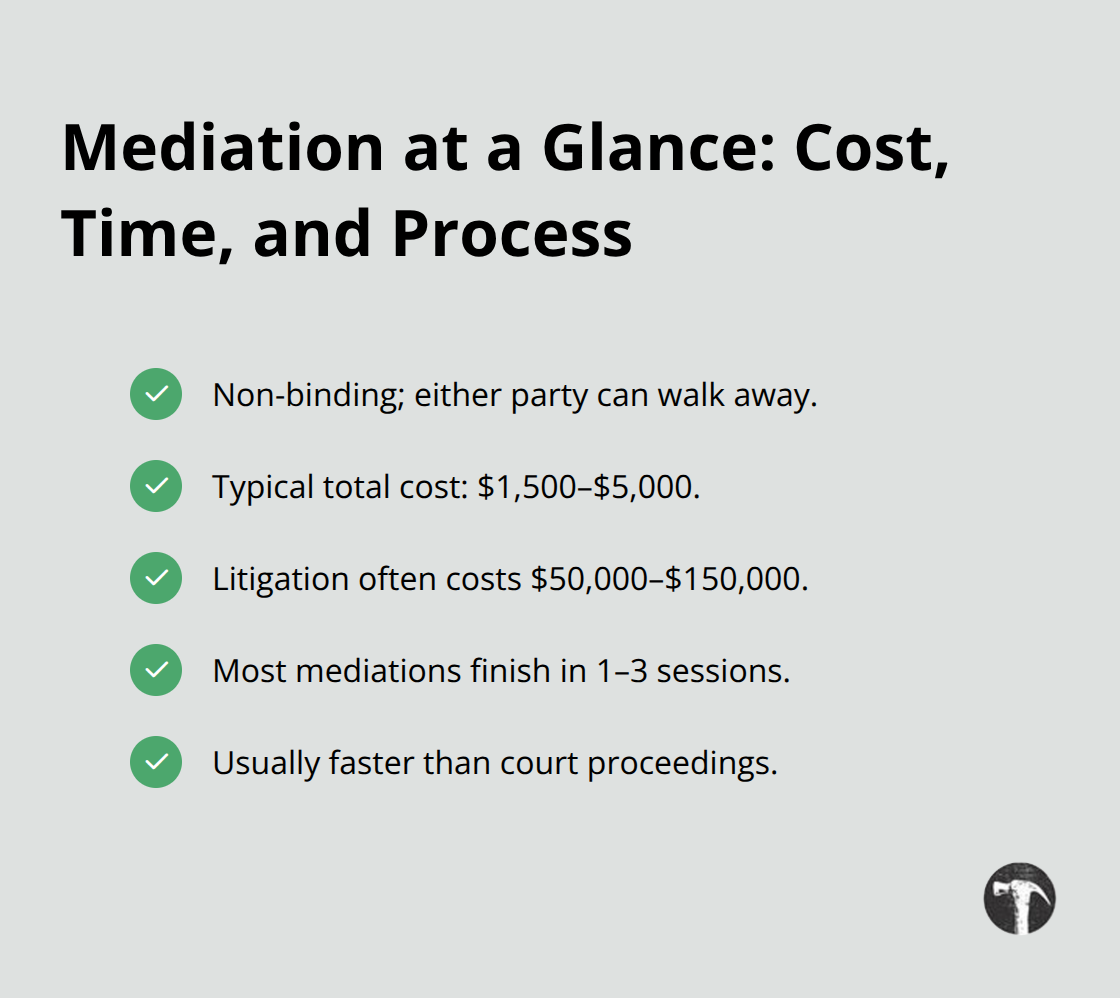
When direct negotiation stalls, mediation becomes your next practical step. Unlike litigation, mediation introduces a neutral third party to facilitate discussion without imposing a decision. The 2024 California Rules of Court require mediators to conduct proceedings fairly, and the process is non-binding, meaning either party can walk away if no agreement emerges. Mediation typically costs between $1,500 and $5,000 total, depending on the mediator’s hourly rate and session length-far less than litigation, which averages $50,000 to $150,000 for straightforward contract disputes. Most mediations conclude within one to three sessions, making this faster than court proceedings that stretch months or years.
Arbitration as a Binding Alternative
Arbitration offers a middle ground between negotiation and full litigation. A neutral arbitrator hears evidence and issues a binding decision after a hearing, similar to a private trial. California Code Regulations Title 1, Section 1232 defines arbitration as an adjudicative process with a binding merits decision. Arbitration typically costs $5,000 to $15,000 and resolves disputes in weeks rather than months. The binding nature means limited appeal options, but speed and confidentiality often outweigh that drawback.
Building Your Resolution Strategy
A tiered approach works best: negotiate first, then mediate if negotiation fails, then arbitrate or litigate only if necessary. This strategy preserves your resources and keeps relationships intact longer. Each step provides opportunities to assess the other party’s position and adjust your approach accordingly. When you move forward with this structured process, you position yourself to make informed decisions about whether to settle or pursue litigation based on actual negotiation results rather than assumptions.
When Litigation Becomes Necessary for Contract Disputes in Calabasas, California
Understanding Your Timeline and Filing Requirements
If negotiation, mediation, and arbitration have failed or aren’t viable options, litigation becomes necessary for your path forward. California law gives you four years from the breach date to file a claim for written contracts and two years for oral contracts, so timing matters. Filing within these windows preserves your legal right to pursue damages. The litigation process itself is straightforward in structure but demanding in execution. Your attorney will file a complaint that details the breach, the contract terms violated, and the damages you’ve suffered.
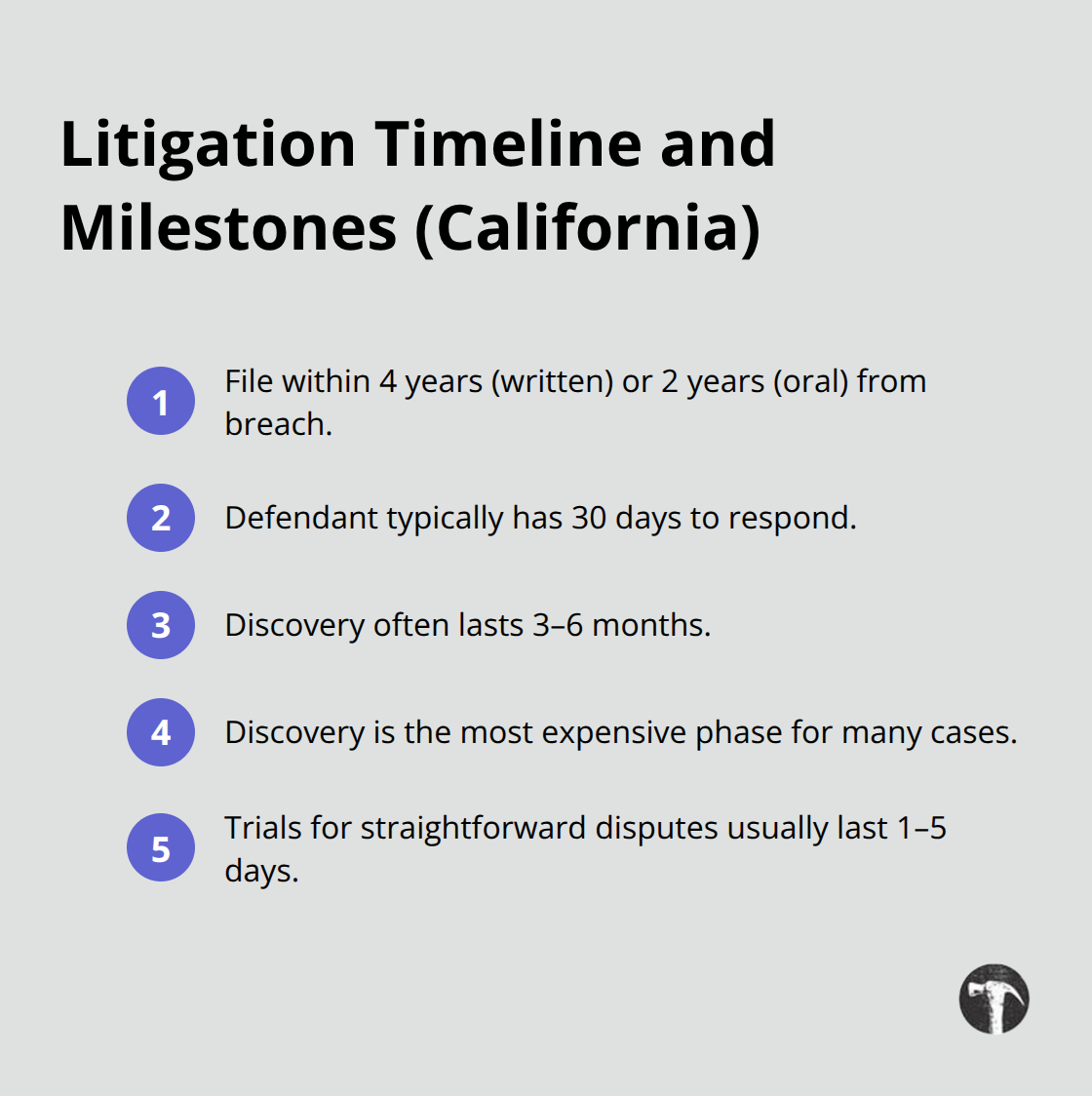
The defendant then has 30 days to respond. Discovery follows, where both sides exchange documents, emails, and witness statements to build their cases. This phase typically lasts three to six months and represents the bulk of litigation costs because attorneys bill hourly for reviewing materials and preparing arguments.
What Happens During Discovery and Settlement
Most contract disputes settle during or after discovery once both parties see the strength of evidence. If your case reaches trial, you will present testimony, cross-examine the other party’s witnesses, and let the judge or jury decide liability and damages. Trial itself usually takes one to five days for straightforward contract disputes, though complex cases stretch longer. Courts in Los Angeles County handle thousands of contract disputes annually, and judges understand these conflicts intimately.
How Courts Establish Liability
Liability in contract disputes hinges on proving four elements: a valid contract existed, you performed your obligations, the other party breached theirs, and you suffered damages as a result. Courts require concrete proof for each element. Vague assertions about what the contract meant won’t persuade a judge. You must present the actual contract language, evidence that you met your obligations, documentation of the breach, and specific proof of your losses.
Calculating Damages: What Courts Actually Award
Damages awards vary significantly based on what you can prove. Compensatory damages cover your actual losses, which must be specific and quantifiable, not speculative. If a vendor failed to deliver materials on time and you hired replacement suppliers at higher costs, you can claim that price difference as damages. Courts reject vague claims about lost opportunity or reputational harm without concrete evidence. Liquidated damages clauses, which specify a fixed payment amount for breach, are enforceable only if they reasonably estimate actual damages and aren’t penalties. A clause requiring $100,000 payment for missing a minor deadline will be rejected by California courts as unreasonable. Nominal damages may be awarded to acknowledge a breach occurred even when you suffered no measurable harm, but these awards are typically small and rarely justify the cost of litigation.
Building Your Damage Claims with Evidence
We at The Law Offices of Alan J. Carnegies, APC help clients throughout Los Angeles County build damage claims with specific evidence and realistic expectations about recovery amounts. Your success in court depends on the quality of documentation you provide-receipts, invoices, emails showing the breach, and proof of mitigation efforts all strengthen your position.
Final Thoughts
Contract disputes in California demand swift action and clear strategy. The path forward depends on your specific situation, the other party’s willingness to cooperate, and the amount at stake. Starting with direct communication costs nothing and often resolves conflicts within weeks, while mediation or arbitration can save months and tens of thousands in legal fees while preserving business relationships.
The decisions you make in the first weeks after a breach occurs shape your entire outcome. Documenting everything, meeting your duty to mitigate damages, and addressing problems promptly strengthen your position regardless of which resolution path you choose. Waiting passively while losses mount weakens your leverage and damages your credibility in settlement discussions or court.
Professional legal representation matters because contract disputes involve technical rules, strict deadlines, and strategic choices that determine whether you recover full damages or walk away empty-handed. We at The Law Offices of Alan J. Carnegies, APC represent businesses throughout Los Angeles County in contract disputes and other complex litigation, and we help you assess your options, build your case, and pursue the resolution strategy most likely to protect your interests. Contact us to review your contract and discuss your situation-we can identify your legal rights, explain realistic outcomes, and outline costs for each resolution path through litigation support.