
Construction liens Los Angeles protect contractors, subcontractors, and suppliers when payment disputes arise. If you’ve worked on a project and haven’t been paid, a mechanic’s lien gives you legal recourse to recover what you’re owed.
At The Law Offices of Alan J. Carnegies, APC, we help construction professionals throughout Los Angeles County, California understand their lien rights and navigate the filing process. This guide covers everything you need to know about mechanic’s liens in California.
Understanding Mechanic’s Liens in California
What a Mechanic’s Lien Does
A mechanic’s lien is a legal claim against a property that secures payment for labor, materials, or equipment provided to a construction project. Under California Civil Code Section 8200, contractors, subcontractors, and suppliers who haven’t received payment can record a lien against the property owner’s real estate, effectively placing a hold on the property until the debt is resolved. This lien gives you priority over many other creditors and can force a property sale to satisfy the debt. The lien applies whether you have a direct contract with the property owner or work as a subcontractor down the chain. California law recognizes that construction work adds value to property, and the lien mechanism protects those who contribute that value from absorbing payment losses when owners or contractors fail to pay.
Who Can File a Lien
Direct contractors who have a contract with the property owner can file liens, as can subcontractors and material suppliers who work under a general contractor or another subcontractor. Laborers can also file liens in certain circumstances. Your role in the construction chain determines which deadlines apply to you and what notices you must serve.
The 20-Day Preliminary Notice Requirement
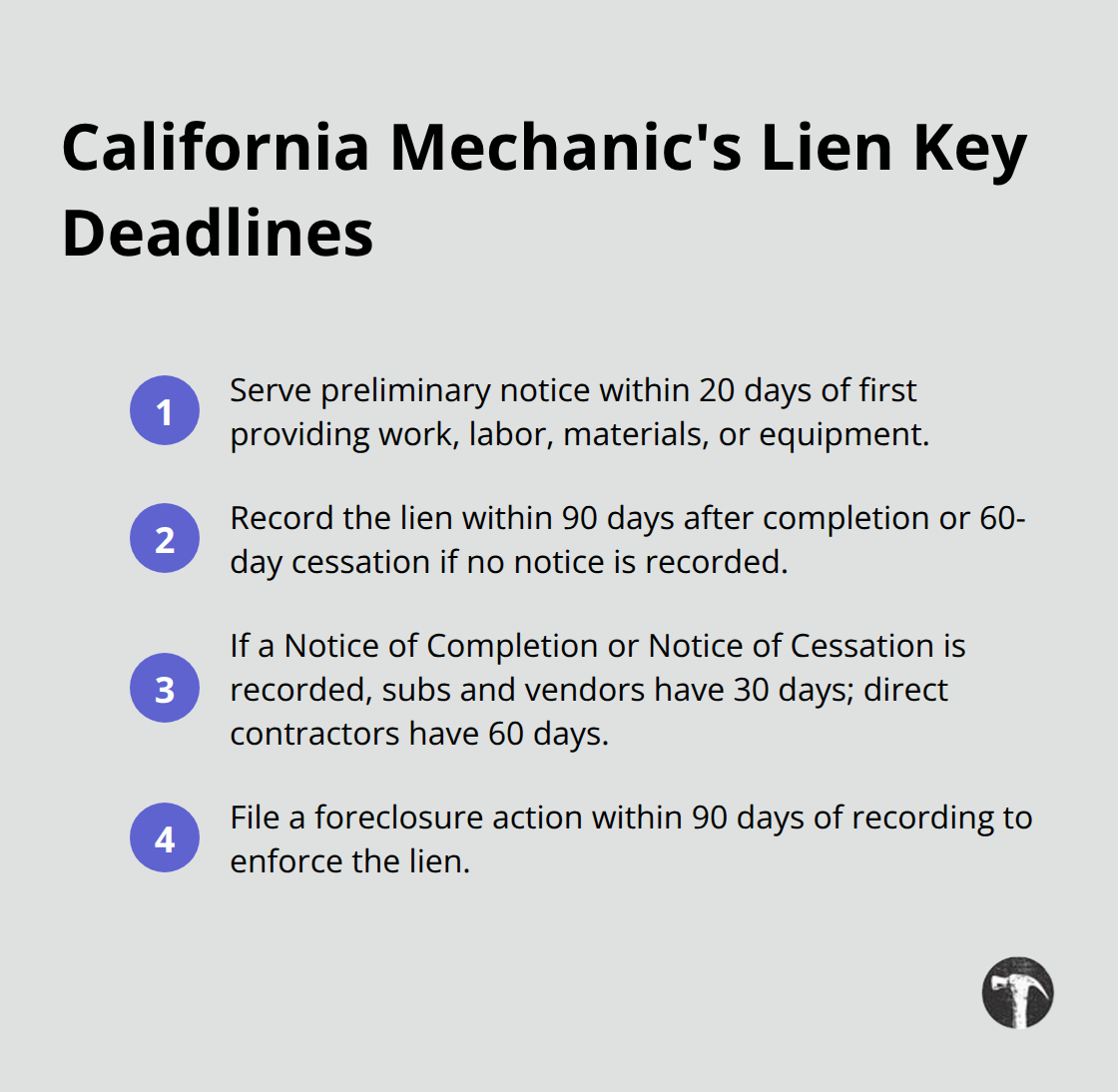
Timing rules are strict and unforgiving. You must serve a preliminary notice within 20 days of first performing work, supplying labor, materials, or equipment on the owner, direct contractor, and construction lender according to Civil Code Section 8200(e). If you have a direct contract with the owner, you only need to serve the construction lender. This preliminary notice alerts all parties that you may file a lien if payment doesn’t arrive.
Recording Deadlines After Project Completion
After project completion or a 60-day work cessation, you have 90 days to record your lien if no Notice of Completion or Notice of Cessation has been recorded. If either notice has been recorded, your deadline shrinks significantly-subcontractors and vendors have just 30 days from recording, while direct contractors have 60 days. Missing these deadlines eliminates your lien rights entirely.
Enforcing Your Lien Through Foreclosure
Once you record the lien, you must file a foreclosure action within 90 days to enforce it, or the lien becomes unenforceable. These deadlines operate independently of each other, and tracking them accurately separates successful collection from lost rights. The complexity of these overlapping timelines and statutory requirements makes it easy to miss a critical date-which is why disputes over lien validity often center on whether proper notice was served and whether recording and foreclosure actions occurred within the required windows.
How Mechanic’s Liens Protect Your Rights
Securing Priority Over Other Creditors
A mechanic’s lien transforms an unpaid invoice into a legal claim against property itself. Without it, you rank as an unsecured creditor competing with banks, tax authorities, and other claimants for whatever assets remain. With it, you hold a claim directly against the real estate, which means you rank ahead of most other creditors when recovery time arrives. California law treats construction work as adding permanent value to property, so the lien secures that value for you rather than letting it vanish into the owner’s equity.
The priority status of your lien matters enormously in practice. If a project owner owes multiple parties and runs out of money, your lien claim gets paid before general creditors and often before second mortgages or other encumbrances. This priority applies whether you work as a direct contractor with the property owner or as a subcontractor several levels deep in the payment chain.
Leveraging Liens for Settlement
The lien creates powerful leverage for settlement negotiations. Property owners cannot refinance, sell, or develop their property without clearing liens, which makes them highly motivated to negotiate or pay rather than face foreclosure on their own real estate. A recorded lien against a property title acts as a public notice that prevents clean transfers and creates urgency for resolution.
Recording and Enforcement Requirements
Recording your lien correctly and enforcing it within statutory windows separates collection from loss. You record the lien claim with the county recorder after project completion or cessation, which creates a public record and prevents the owner from transferring clear title. But recording alone does not collect money-you must file a foreclosure action within 90 days of recording to actually enforce the lien and force a sale if necessary.
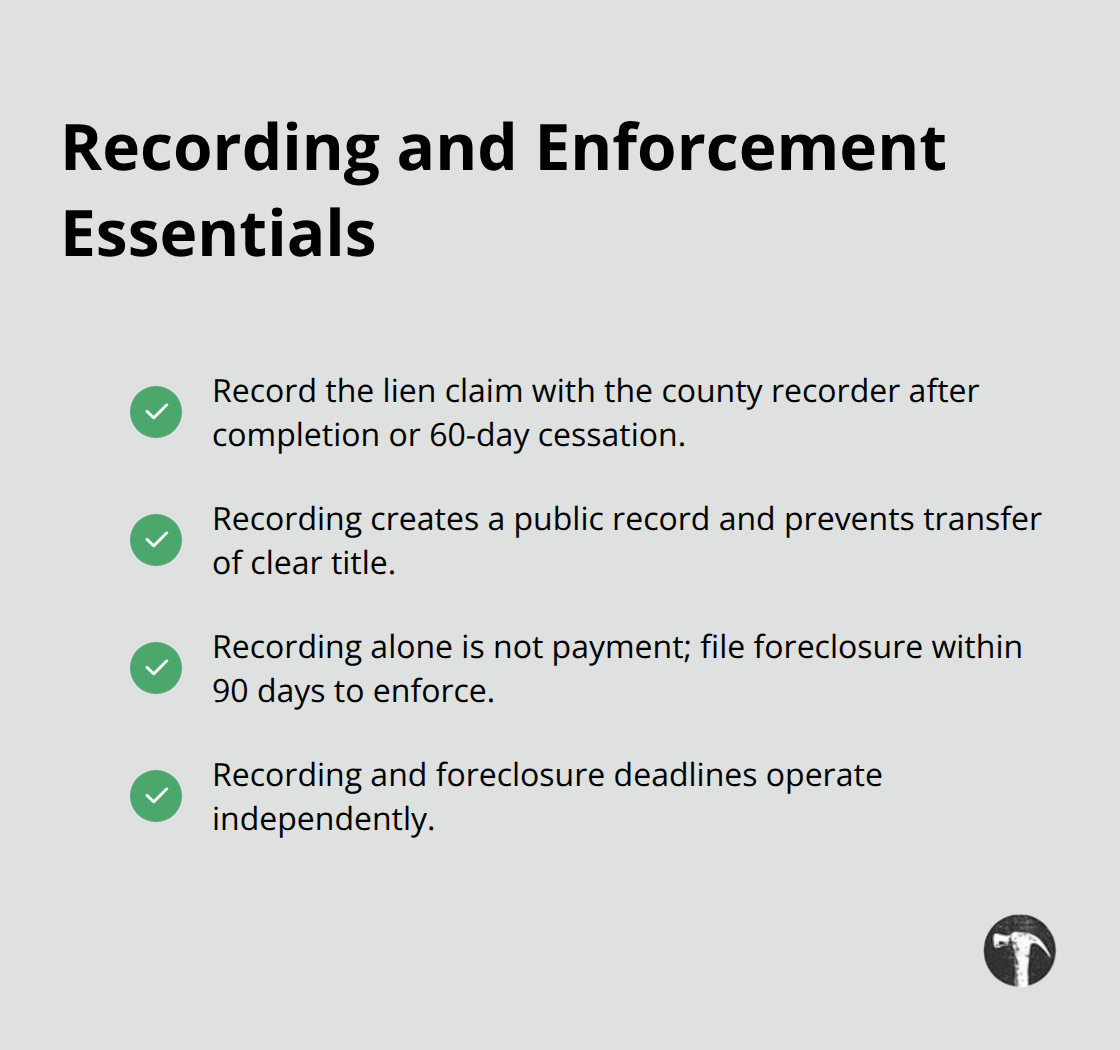
Many contractors record liens and then delay on foreclosure, only to discover that the 90-day window has closed and their lien is now dead. The foreclosure timeline runs independently from your lien recording deadline, so you cannot afford to assume you have time to decide later. Timing mistakes destroy legitimate claims, and the practical reality is that liens work best when you treat them as the enforcement tool they are, not as a paperwork requirement you can file and forget.
Why Speed Matters in Lien Enforcement
Owners facing a recorded lien and the threat of foreclosure typically move quickly to settle or pay. This is why prompt, professional handling of the lien process produces results. The moment you record your lien, the clock starts ticking on your 90-day foreclosure window-and that window does not pause or extend based on settlement discussions or owner responsiveness. Understanding this pressure point helps you negotiate from strength and move disputes toward resolution before your enforcement rights expire.
When disputes arise over lien validity, timing issues often become the central question. Whether proper notice was served, whether recording occurred within required windows, and whether foreclosure actions filed on schedule-these details determine whether your lien holds or fails.
What Causes Lien Disputes and How to Fix Them
Lien disputes fall into three categories, and each one demands a different response strategy. The first involves disagreement over how much you can lien for-the owner or contractor argues your amount is inflated, work was defective, or you’re owed less than claimed. The second centers on procedural failures: you missed the 20-day preliminary notice window, recorded your lien after the deadline passed, or served notice improperly.
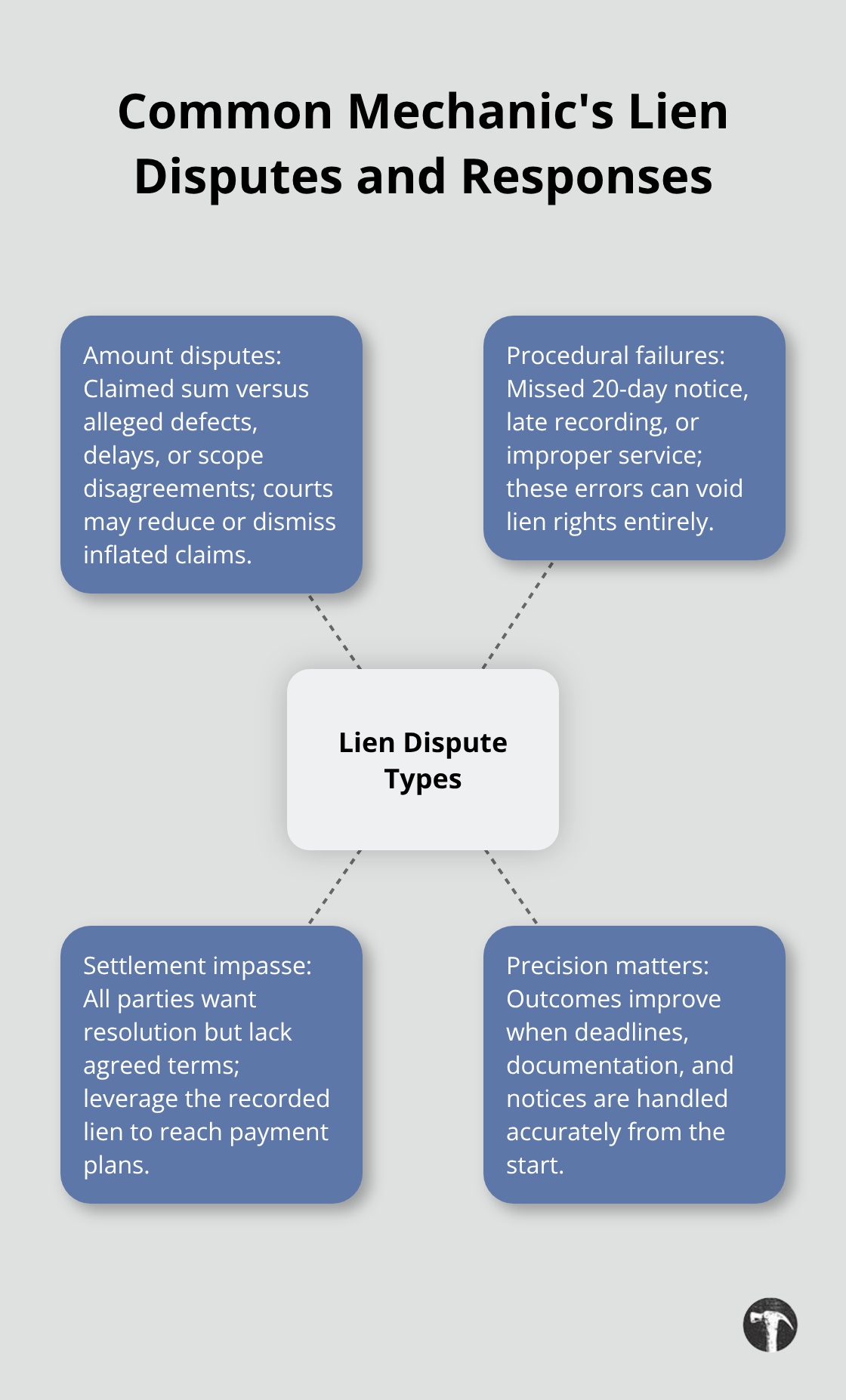
The third emerges when all parties want resolution but haven’t found common ground on payment terms. Understanding which dispute type you face determines whether you can salvage the lien or need to pivot toward settlement. We at The Law Offices of Alan J. Carnegies, APC serve clients throughout Los Angeles County, California and see these disputes repeatedly-and the ones that end in your favor are the ones handled with precision from the start.
Lien Amount Disputes and Documentation
Lien amount disputes arise when you claim you’re owed fifteen thousand dollars for materials and labor, but the property owner or contractor insists the actual value is eight thousand because work didn’t meet contract specs or was completed late. This disagreement doesn’t invalidate your lien, but it does create leverage for negotiation. You hold a recorded lien against their property, which means they cannot sell, refinance, or develop without addressing it. However, if they can prove in court that your claimed amount substantially exceeds what you actually earned, a judge may reduce the lien or dismiss it entirely.
The practical response is to document every invoice, change order, and work completion carefully before you record. Photograph work, maintain daily logs, and preserve emails showing scope changes. If a dispute arises after recording, your detailed records become your strongest negotiating tool-owners typically settle rather than litigate when documentation is solid.
Procedural Failures and Deadline Compliance
Procedural failures carry far higher stakes because they destroy your lien entirely regardless of how much you’re actually owed. Missing the 20-day preliminary notice deadline means you lose lien rights forever on that project. Recording your lien after the applicable deadline has passed renders it void and unenforceable. Serving notice on the wrong party or in the wrong manner can invalidate the entire claim. California courts do not forgive these mistakes, and no amount of subsequent good faith effort repairs them.
The solution is obsessive attention to deadlines before you ever record. Calculate your 20-day window from the first day you performed any work or supplied materials, and serve notice within that window on every required party. Track the project completion date or 60-day cessation period carefully, then count forward to your recording deadline. If a Notice of Completion or Notice of Cessation is recorded, your timeline shrinks dramatically-you drop from 90 days to either 30 or 60 days depending on your role. Most contractors lose liens because they underestimate how quickly these windows close.
Settlement and Negotiation Strategies
Settlement and negotiation strategies work best when you understand what the other side fears most. A property owner staring at a recorded lien against their real estate feels immediate pressure to resolve. They cannot refinance, sell, or develop without clearing the lien, which creates urgency. An effective negotiation strategy leverages this pressure without waiting until your foreclosure deadline approaches.
Contact the owner or their attorney within two weeks of recording and propose a payment plan or settlement figure. Many owners will negotiate seriously at this point rather than face foreclosure litigation and the cost of defending a lawsuit. Offer reasonable payment terms-thirty or sixty days for the full amount, or a structured payment schedule if cash flow is genuinely constrained. If they refuse to engage, send a formal demand letter stating your lien amount and your intent to file foreclosure within thirty days. This letter typically triggers serious settlement discussions because foreclosure means court costs, attorney fees, and the public auction of their property. The owner’s attorney will advise them that litigation is expensive and that settlement is cheaper.
Final Thoughts
California mechanic’s liens demand precision in execution, and three critical rules separate successful claims from lost rights. You must serve your preliminary notice within 20 days of starting work, record your lien within the applicable deadline after project completion or cessation, and file foreclosure within 90 days of recording. Missing any of these windows destroys your rights permanently, regardless of how much you’re actually owed, because California courts do not grant relief for procedural errors.
Construction liens Los Angeles contractors file succeed when owners face the immediate leverage that a recorded lien creates against their property title. A lien prevents refinancing, sale, or development, which motivates owners to negotiate seriously and settle disputes within weeks rather than face foreclosure litigation and the cost of defending a lawsuit. This pressure point typically produces results if you move quickly and professionally after recording.
Procedural mistakes are fatal, and timing issues become the central question whenever disputes arise over lien validity. Contact The Law Offices of Alan J. Carnegies, APC if you face questions about whether your preliminary notice was timely, whether your recording deadline has passed, or whether your lien can survive a challenge. We represent contractors, subcontractors, and suppliers throughout Los Angeles County, California in construction disputes and lien enforcement matters.