

Property disputes in California can drain your finances and derail your investment plans. Boundary conflicts, construction defects, and landlord-tenant disagreements happen more often than you’d think, and they require a clear legal strategy to resolve.
We at The Law Offices of Alan J. Carnegies, APC help property owners and investors throughout Los Angeles County navigate real estate litigation in California with practical solutions that protect your interests.
The Three Disputes Costing California Property Owners the Most
Boundary Disputes: When Property Lines Become Battlegrounds
Boundary disputes rank among the costliest real estate conflicts in California, with property line disagreements frequently escalating into five-figure legal battles. According to the American Land Title Association, approximately 1 in 5 property transactions encounter title or boundary issues, and many of these disputes stem from outdated surveys, unclear deeds, or encroaching structures. Suburban expansion and older properties with vague property descriptions create constant friction between neighbors throughout Los Angeles County.
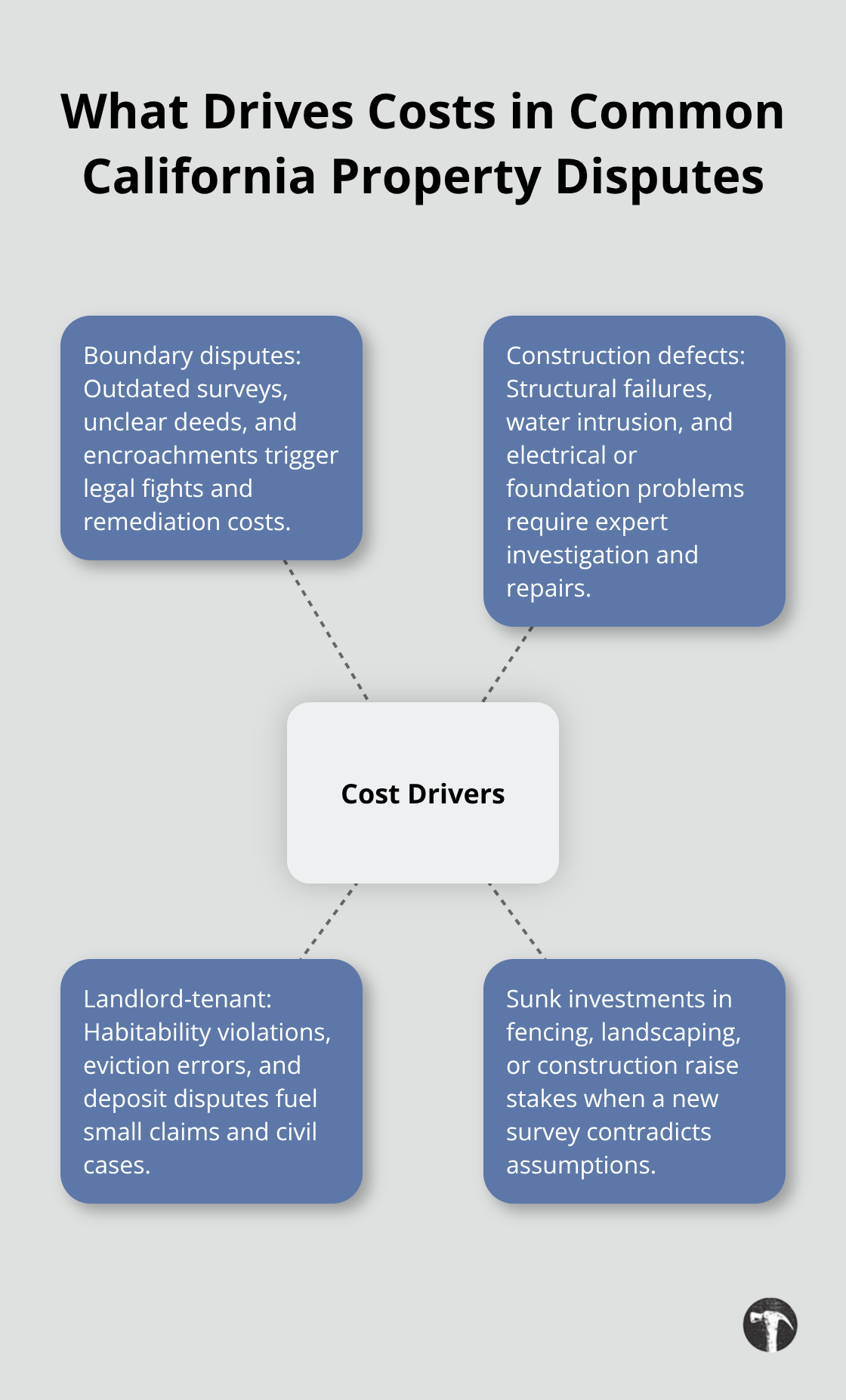
The problem intensifies when one party has already invested in fencing, landscaping, or construction based on their understanding of the property line-suddenly discovering a surveyor’s report contradicts their assumptions costs thousands to remedy.
Construction Defects: Discovering Hidden Damage After Completion
Construction defects represent another expensive category of real estate litigation in California, with the California Construction Lawyers Association reporting that defective workmanship claims average between $50,000 and $500,000 depending on the severity and scope of damage. Homeowners and investors frequently discover structural issues, water intrusion, electrical failures, or foundation problems months or years after construction completion, forcing them to choose between accepting diminished property value or pursuing litigation against contractors and builders. The challenge lies in documenting the defect timeline and proving the contractor’s negligence rather than normal wear and tear-a distinction that determines whether you recover damages or absorb the costs yourself. We at The Law Offices of Alan J. Carnegies, APC represent property owners in construction defect disputes throughout Los Angeles County.
Landlord-Tenant Disputes: Navigating California’s Rental Market
Landlord-tenant disputes create ongoing friction in California’s rental market, where conflicting interpretations of lease terms, maintenance responsibilities, and security deposit disputes generate thousands of small claims and civil cases annually across Los Angeles County. Tenant complaints about habitability violations, improper eviction procedures, or withheld deposits clash with landlord concerns about property damage, unpaid rent, and lease violations. California’s tenant-friendly laws mean property owners must navigate strict statutory requirements to avoid liability for damages and attorney fees. Understanding these legal obligations becomes your first step toward protecting your investment and avoiding costly mistakes in property management.
How to Build an Unshakeable Legal Position Before Court
Document Everything in Writing
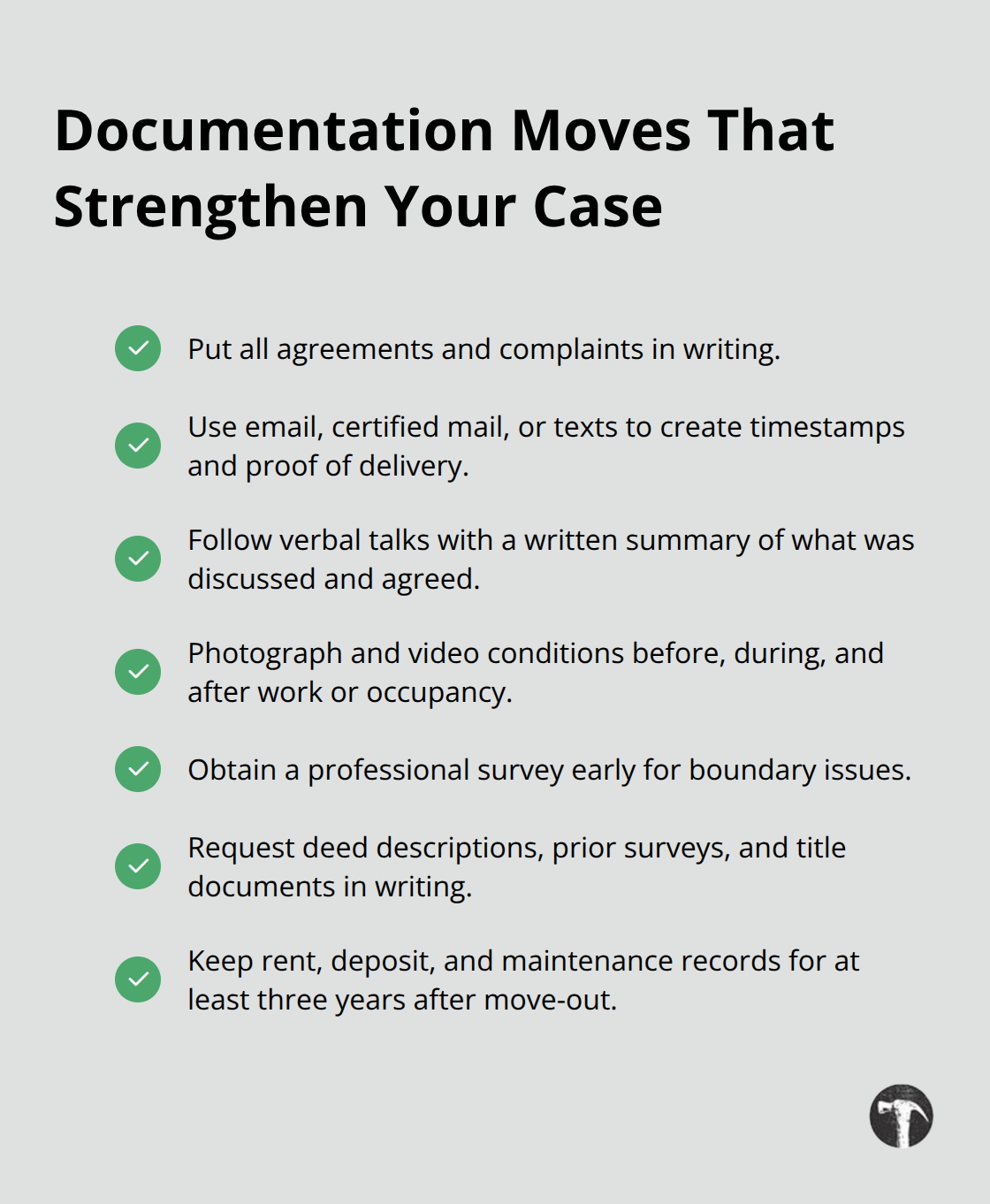
California property law heavily favors parties who document everything meticulously from day one. The moment a dispute emerges, most property owners realize they lack the evidence needed to win, and this gap costs them thousands in additional litigation expenses and sometimes the case itself. Your first actionable step is establishing a paper trail that proves your position, starting with written communication rather than phone calls or in-person conversations.
Every agreement, complaint, repair request, and boundary concern should appear in writing through email, certified mail, or text messages that create timestamps and proof of delivery. When you communicate verbally with contractors, neighbors, or tenants, follow up immediately with a written summary stating exactly what was discussed and what you understood to be agreed upon.
This single habit transforms a he-said-she-said situation into concrete evidence that courts can evaluate, and it shifts the burden of proof in your favor when disputes arise months or years later.
Photograph and Video Evidence Matters
California courts recognize that property owners often face information asymmetry, particularly in construction defect cases where contractors control the building process and knowledge of what occurred behind walls. Start collecting photographs and videos of your property before work begins, during every phase of construction or occupancy, and immediately when you notice any problems.
Property owners who delay reporting defects lose credibility because courts assume you would have complained immediately if the problem truly existed when you claim it did. Timing your documentation (from initial conditions through discovery of damage) becomes critical evidence in litigation. For boundary disputes, obtain a professional survey early and request written copies of all deed descriptions, previous surveys, and title documents from your title company, then have an attorney review them for inconsistencies.
Organize Records for Landlord-Tenant Situations
In landlord-tenant situations, photograph unit conditions at move-in and move-out, document all maintenance requests in writing, and maintain records of all rent payments and deposit amounts for at least three years after a tenant vacates. This systematic approach protects you against false claims and provides the documentation courts require to resolve disputes fairly.
The evidence you gather today determines whether you negotiate from strength or desperation tomorrow. Property owners who invest time in proper documentation avoid the scramble to reconstruct facts months later when litigation becomes necessary. Your organized records and contemporaneous evidence position you to move forward with confidence into the negotiation and settlement phase, where most real estate disputes actually resolve before trial.
Navigating the Real Estate Litigation Process
Filing Your Lawsuit in California Courts
Filing a real estate lawsuit in California initiates a structured process that typically takes 18 to 36 months from complaint to trial, though many cases settle within the first year if both parties recognize the costs of continuing litigation. The California Courts website reports that civil cases average 22 months to trial, and real estate disputes often move faster because property values create clear financial stakes that motivate settlement discussions. Your initial pleading must contain specific facts rather than vague allegations about property damage or boundary violations. When you file a lawsuit, California requires you to identify the defendant precisely, describe the property involved with legal descriptions from your deed or title report, and explain exactly how the defendant breached their obligation or violated your rights.
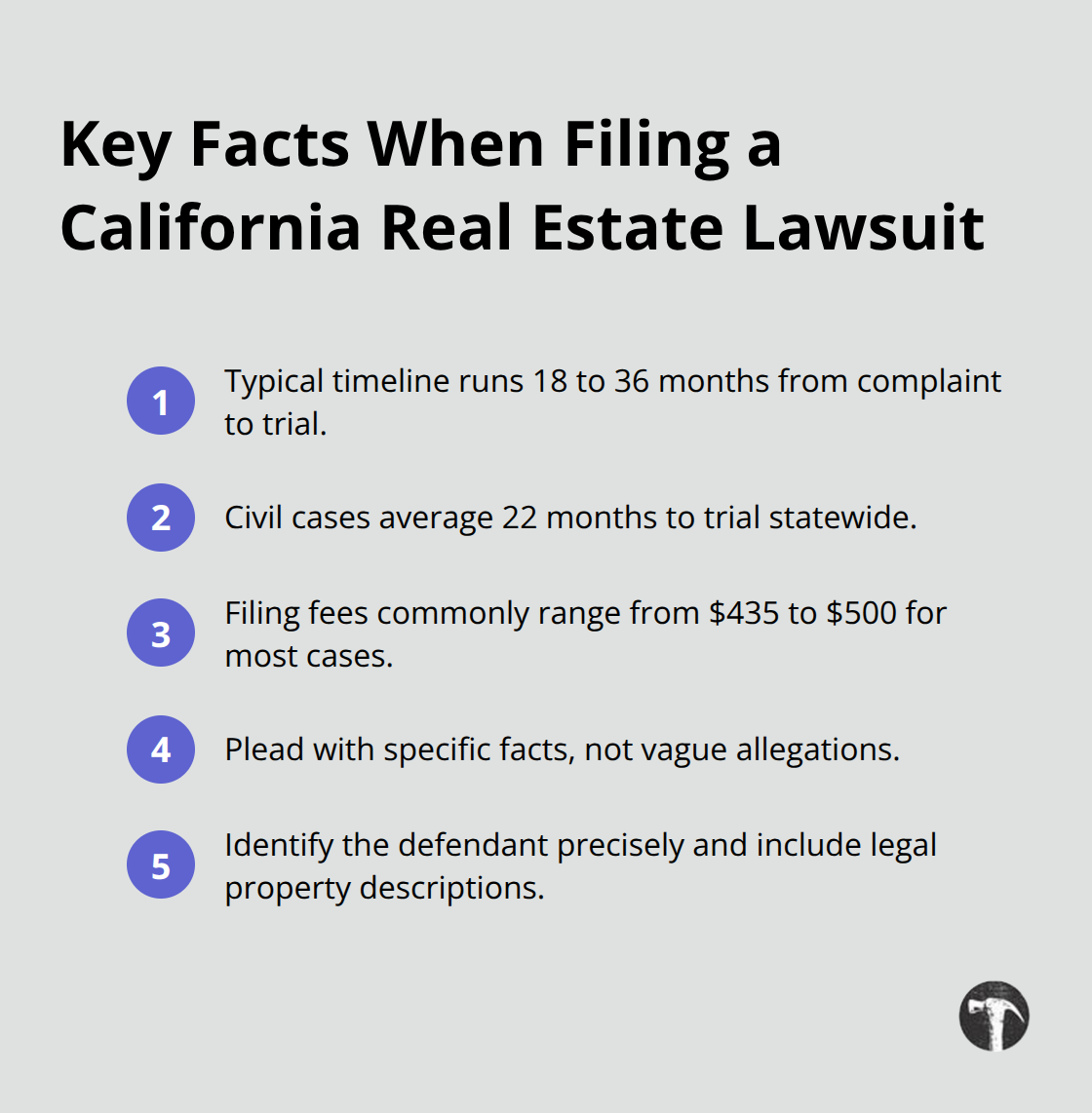
Filing fees in California courts range from $435 to $500 for most real estate cases, but this amount increases if you seek damages exceeding $10,000, making it essential to calculate your actual losses before filing rather than inflating claims that undermine your credibility.
Discovery: Where Real Estate Litigation Gets Decided
Discovery is where most real estate litigation actually gets decided, not in the courtroom. The discovery process allows both sides to demand documents, conduct depositions, and request admissions about facts relevant to the dispute, and this phase typically lasts 6 to 12 months depending on case complexity. Property owners often underestimate how aggressively the other side will pursue discovery, requesting years of emails, text messages, repair invoices, tenant communications, and financial records that expose weaknesses in your position months before trial. You must respond to interrogatories within 30 days and produce requested documents within 30 days, and failure to comply results in sanctions, adverse inferences that courts hold against you, or even case dismissal. Construction defect cases generate particularly heavy discovery because contractors and builders request your entire communication history, expert reports, and damage assessments to challenge your claimed losses.
Preparing for Trial and Courtroom Representation
Trial preparation starts months before your actual court date, and it requires developing a clear narrative about what happened, why the other party bears responsibility, and what specific damages you suffered. Your attorney must prepare you to testify credibly, anticipate aggressive cross-examination that will challenge your memory and motivations, and ensure you understand which documents support your version of events and which ones hurt your case. Courtroom representation in real estate litigation demands someone who understands California property law, knows local judges and their preferences, and can present complex evidence about property conditions, contract terms, or boundary lines in ways that jurors and judges actually understand rather than using technical jargon that obscures your position. Throughout Los Angeles County, property owners benefit from representation that transforms complicated real estate disputes into clear, persuasive arguments that courts can evaluate fairly.
Final Thoughts
Real estate litigation in California demands immediate action when disputes threaten your property or investment. Property owners who document everything in writing from the moment a problem emerges, gather photographs and video evidence that establish timelines, and organize records systematically protect themselves far better than those who wait and hope disputes resolve on their own. Acting quickly builds the credibility and evidence that courts require to evaluate your position fairly.
Knowing when to seek legal representation separates property owners who recover damages from those who absorb losses unnecessarily. If a neighbor’s boundary encroachment affects your property value, if construction defects appear after completion, or if landlord-tenant conflicts escalate beyond written communication, you need representation that understands California property law and local court procedures. Waiting too long costs you credibility and evidence, while acting too quickly on minor disagreements wastes resources on disputes that settle through negotiation.
We at The Law Offices of Alan J. Carnegies, APC represent property owners throughout Los Angeles County, including Calabasas, in real estate litigation California disputes involving boundary conflicts, construction defects, landlord-tenant disagreements, and title problems. Our approach focuses on building strong evidence early, negotiating settlements that protect your financial interests, and preparing thoroughly for trial when necessary. Contact The Law Offices of Alan J. Carnegies, APC today to discuss your specific situation and learn how we can protect your property interests before disputes escalate into expensive courtroom battles.