
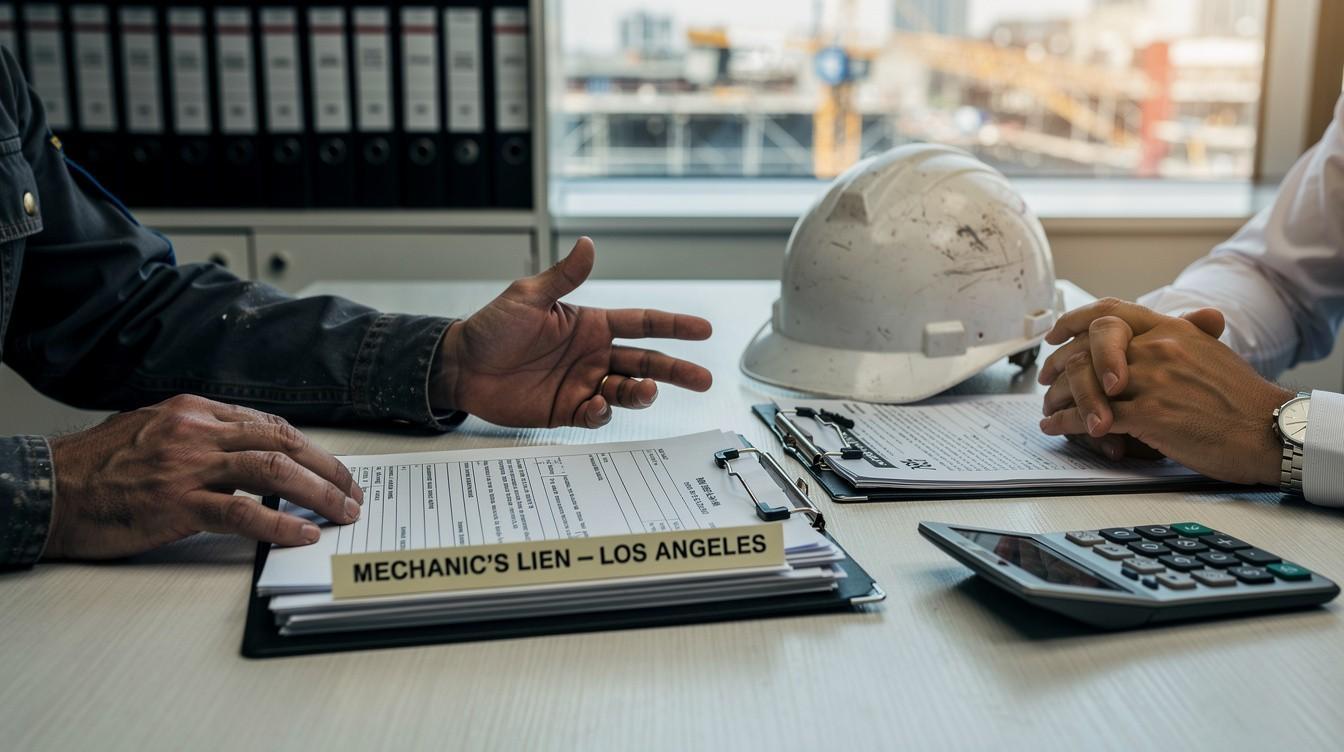
Construction projects in Los Angeles County involve complex financial relationships. When contractors and suppliers don’t get paid, mechanic’s lien laws give them powerful legal tools to recover what they’re owed.
Property owners face real risks from these liens, which can cloud title to real estate and complicate sales or refinancing. We at The Law Offices of Alan J. Carnegies, APC help both sides understand their rights and obligations under California’s mechanic’s lien system.
What a Mechanic’s Lien Actually Is in Calabasas, California
A mechanic’s lien is a legal claim against your property filed by an unpaid contractor, subcontractor, laborer, or material supplier and recorded with the county recorder’s office. Under California Civil Code sections 8000 to 9566, these liens give unpaid parties a powerful tool to secure payment by placing a hold on your property title. The moment a lien is recorded in Los Angeles County, it clouds your title-meaning you cannot sell, refinance, or borrow against the property without resolving the lien first. A recorded lien can trigger foreclosure proceedings if the debt remains unpaid, forcing a property sale to satisfy the claim. The ultimate responsibility falls on you as the property owner, even if you already paid the direct contractor. If that contractor failed to pay subcontractors or suppliers, you face the risk of double payment: once to the contractor and again through lien enforcement.
How the Filing and Recording Process Works
California law requires specific steps for a mechanic’s lien to be valid and enforceable. A claimant must serve a Preliminary Notice within 20 days after first providing labor or materials-this notice must reach the property owner, direct contractor, and construction lender. The lien itself must be recorded with the county recorder in the county where the property is located and must include required statutory language. A copy must be served on the property owner, with service complete upon mailing. The lien amount is limited to the lesser of the reasonable value of work performed or the contract price. California is considered a full-price lien state, meaning the lien can secure the total unpaid amount, not just the portion owed to the direct contractor, subject to statutory limits. Errors in a lien claim do not automatically invalidate it, but certain intentional misrepresentations or omissions can render the lien invalid, making accuracy of owner, site, and property description details absolutely critical.
Deadlines You Cannot Ignore
Timing is everything in California mechanic’s lien law, and missing deadlines eliminates your rights entirely. The lien deadline is the earlier of 90 days after project completion or 60 days after a recorded Notice of Completion for direct contractors, or 30 days after a Notice of Completion for subcontractors, laborers, and suppliers. Enforcement of the lien must begin within 90 days after recording through a foreclosure lawsuit-this window can be extended if the owner agrees to extend credit. If a payment bond is posted on the project (often for at least 50% of the contract price), claimants may pursue payment on the bond instead, with bond-related remedies typically involving a 125% figure for release. A Notice of Completion filed in Los Angeles County dramatically shortens these timelines for everyone except the direct contractor, making it a critical document for property owners. On projects with multiple direct contracts, separate deadlines apply per contract, requiring careful tracking of notices and recording dates to preserve rights. If you are served with a summons and complaint related to a lien foreclosure, seek legal advice as soon as possible-waiting creates unnecessary risk.
Understanding these mechanics lien fundamentals prepares you for the next critical step: recognizing your specific rights and responsibilities based on your role in the construction process.
Who Can File a Mechanic’s Lien and When in Calabasas, California
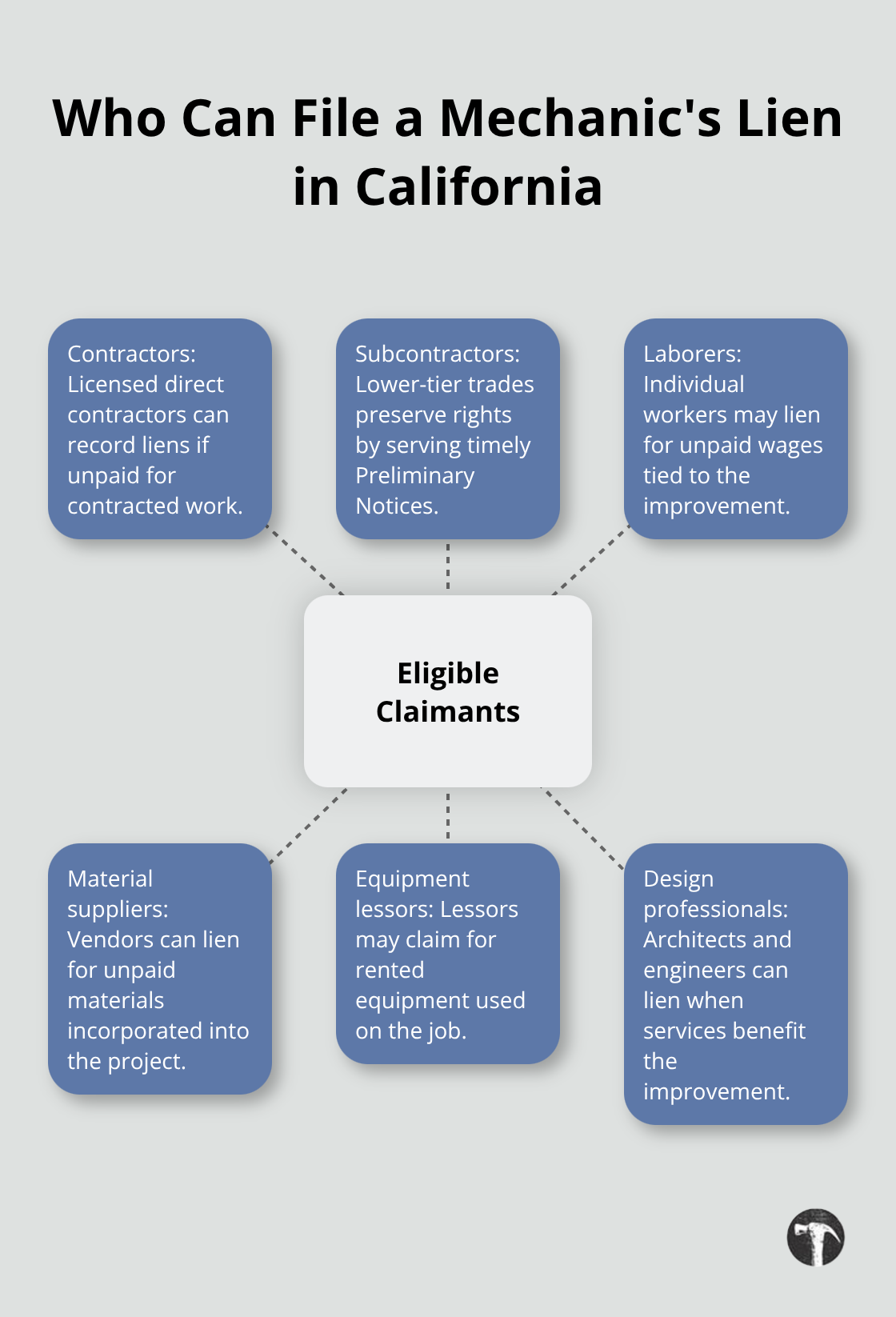
Contractors, subcontractors, laborers, material suppliers, equipment lessors, and design professionals all hold the right to file a mechanic’s lien under California law if they provide work or materials to a construction project and receive no payment. Your right to file depends entirely on when you provided your labor or materials and whether you served the proper notices within the required timeframe.
The 20-Day Preliminary Notice Requirement
If you work as a subcontractor or supplier, you must serve a Preliminary Notice within 20 days after you first provide labor or materials to the project. This notice must reach the property owner, the direct contractor, and any construction lender. Missing this 20-day window eliminates your lien rights entirely-many contractors and suppliers lose their ability to file before they even realize the deadline has passed. The Contractors State License Board treats this 20-day requirement as non-negotiable and applies it to virtually every party except the direct contractor who holds a contract directly with the property owner.
Filing and Recording Deadlines
Once you serve the Preliminary Notice, you face a limited window to file and record your lien claim. For direct contractors, this window closes at the earlier of 90 days after project completion or 60 days after a Notice of Completion is recorded. Subcontractors, laborers, and suppliers face tighter deadlines-30 days after a Notice of Completion is recorded, or 90 days after the project is complete if no Notice of Completion has been filed. A Notice of Completion filed by the property owner in Los Angeles County dramatically compresses these timelines for everyone except the direct contractor, making it a document you must monitor carefully.
Accuracy and Content Requirements
When you file your lien, it must include required statutory language, identify the property owner accurately, describe the property location clearly, and state the amount you’re owed based on either the reasonable value of your work or the contract price, whichever is less. Recording the lien with the county recorder where the property is located is only the first step-you must also serve a copy on the property owner by mail.
The 90-Day Enforcement Window
You have only 90 days from the date you record the lien to begin enforcement through a foreclosure lawsuit. Many contractors wait too long to enforce their liens and find themselves locked out of recovery entirely once this window closes. If a payment bond has been posted on the project (often for at least 50% of the contract price), you may pursue your claim against the bond instead of foreclosing on the property, which can sometimes be faster and more practical. Bond-related remedies typically involve a 125% figure for release or settlement purposes.
Next Steps for Unpaid Contractors
Understanding your filing rights and deadlines protects your ability to recover payment, but the documentation and notice requirements demand precision at every stage. The Law Offices of Alan J. Carnegie, APC represents contractors and suppliers navigating these complex requirements to recover unpaid amounts. Your next critical step involves gathering and organizing the specific documentation that proves your right to file and strengthens your position if disputes arise.
How Property Owners Can Stop Mechanic’s Liens Before They Happen in Calabasas, California
Track Preliminary Notices Like Your Property Depends On It
The moment a Preliminary Notice arrives in your mailbox, you have entered dangerous territory as a property owner. This notice signals that a subcontractor, supplier, or laborer has started work on your project and has preserved their right to file a mechanic’s lien if payment problems occur. The Contractors State License Board requires subcontractors and suppliers to serve this notice within 20 days of starting work or delivering materials, and you cannot simply ignore payment disputes and hope they disappear. Create a dedicated file for every Preliminary Notice you receive and note the date on your calendar. If you never receive a Preliminary Notice from a particular subcontractor or supplier, that gap itself represents information worth investigating, since their failure to serve proper notice may eliminate their lien rights entirely. The notice must reach you, the direct contractor, and any construction lender, so verify that all three parties received it. Los Angeles County property owners often make the critical mistake of assuming the general contractor handles all lien prevention, but California law places ultimate responsibility on you as the property owner.
Use Payment Bonds and Joint Checks to Block Liens
Payment bonds and joint checks are your most powerful tools for preventing liens entirely. When a construction lender or project owner requires a payment bond covering at least 50 percent of the contract price, subcontractors and suppliers can pursue claims against the bond instead of foreclosing on your property, which removes the title cloud and foreclosure threat. The bond amount typically involves a 125 percent figure for release and settlement purposes, giving claimants motivation to resolve disputes without dragging your property into court. The joint check strategy works immediately: pay subcontractors and suppliers with checks made payable to both the direct contractor and the subcontractor or supplier. This forces cooperation between parties and prevents a contractor from pocketing payment without passing it down the chain.
Collect Waivers and File Notices of Completion
Collect signed lien waivers with every progress payment, not just at the end of the project, because these waivers eliminate the recipient’s right to file a lien for that portion of work. File a Notice of Completion within 15 days of finishing the project to dramatically shorten the window for subcontractors and suppliers to file liens, reducing their deadline from 90 days to just 30 days. Do not make final payment until you have received lien releases or waivers from every party who touched your project.
Challenge Invalid or Fraudulent Liens
If a dispute arises and you believe a lien is invalid or fraudulent, contact the lien claimant in writing to request a Voluntary Release. If that fails, you can pursue a Formal Demand to Remove Lien under California Civil Code section 8480 or file a Petition in Superior Court to challenge the lien’s validity. An attorney can help you navigate these options and determine which approach fits your situation best.
Final Thoughts
Mechanic’s lien Los Angeles disputes arise when money stops flowing through the construction chain, and California law responds by giving unpaid parties the right to file liens that cloud property titles and trigger foreclosure. Property owners who ignore this risk face blocked sales, refinancing complications, and forced property sales, while contractors and suppliers who miss deadlines lose their recovery rights entirely. The stakes demand immediate action because a 20-day Preliminary Notice window, a 90-day filing deadline, and a 90-day enforcement window leave no room for delay.
Property owners must track notices, demand lien waivers, use joint checks, and file Notices of Completion strategically to prevent liens before they attach to the property. Contractors must serve notices promptly, file liens accurately, and begin enforcement before the window closes, since one missed deadline eliminates years of work and materials from recovery. The California Civil Code sections governing mechanics liens run to hundreds of pages, and the rules shift based on whether you operate as a direct contractor, subcontractor, supplier, or property owner (payment bonds, bond percentages, and priority disputes add further complexity).
We at The Law Offices of Alan J. Carnegies, APC represent property owners, contractors, and other parties in construction disputes throughout Los Angeles County. Whether you need to prevent liens before they happen, challenge a lien that has been filed, or enforce a lien you have recorded, contact us today to discuss your specific situation and learn how we can help resolve your construction dispute.