
Patent infringement litigation can threaten your business’s competitive advantage and bottom line. Companies across Los Angeles County face costly disputes over intellectual property every year, and the stakes only grow higher as markets become more competitive.
We at The Law Offices of Alan J. Carnegies, APC help businesses understand their rights and defend against infringement claims. This guide walks you through what infringement actually means, how litigation unfolds, and the practical strategies that work.
What Counts as Patent Infringement
Patent infringement happens when someone makes, uses, sells, or imports a patented invention without permission from the patent owner. Under 35 U.S. Code § 271, this violation triggers federal liability and opens the door to lawsuits seeking damages and court orders to stop the infringing activity. The critical point: infringement isn’t about intent or good faith. A company can infringe accidentally and still face significant liability.
Direct Infringement Is Straightforward
Direct infringement occurs when a defendant manufactures, sells, uses, or imports the patented invention. This is the most common form and the easiest to prove. If your product performs the same function as the patented invention in substantially the same way, you’re likely infringing. The patent owner must show they hold a valid, registered patent and that your product meets all the essential elements of the patent claims-not just some of them. Courts analyze this claim-by-claim, element-by-element, and a single missing element can defeat infringement allegations. Mapping your product against the exact language of the patent claims matters far more than general similarity.
Indirect Infringement Creates Hidden Exposure
Indirect infringement includes active inducement and contributory infringement, and these forms carry higher stakes because they require proving knowledge or intent. Active inducement means you knowingly encourage or instruct someone else to infringe. Contributory infringement means you sell components or materials specifically designed to work with a patented system, knowing those components will be used to infringe. Real examples include selling specialized parts marketed as compatible with a patented device or providing instructions on how to modify a product to circumvent patent protections. Patent infringement can be a complicated legal matter, and infringers often defend their use based on technical details. Indirect infringement claims are harder to defend because they hinge on what you knew and when you knew it. Internal emails, marketing materials, and product specifications become critical evidence.
High-Risk Technology Sectors
Patent disputes cluster in Information Technology, Telecommunications, and Life Sciences, according to recent litigation analytics. Virtual Reality hardware shows roughly 10x growth in litigation over the past decade. Wi-Fi standards and cellular technologies (2G through 5G) dominate standards-essential patent disputes. Audio and music processing, speech recognition, television technologies, Bluetooth, and cloud services are rising rapidly in dispute counts.
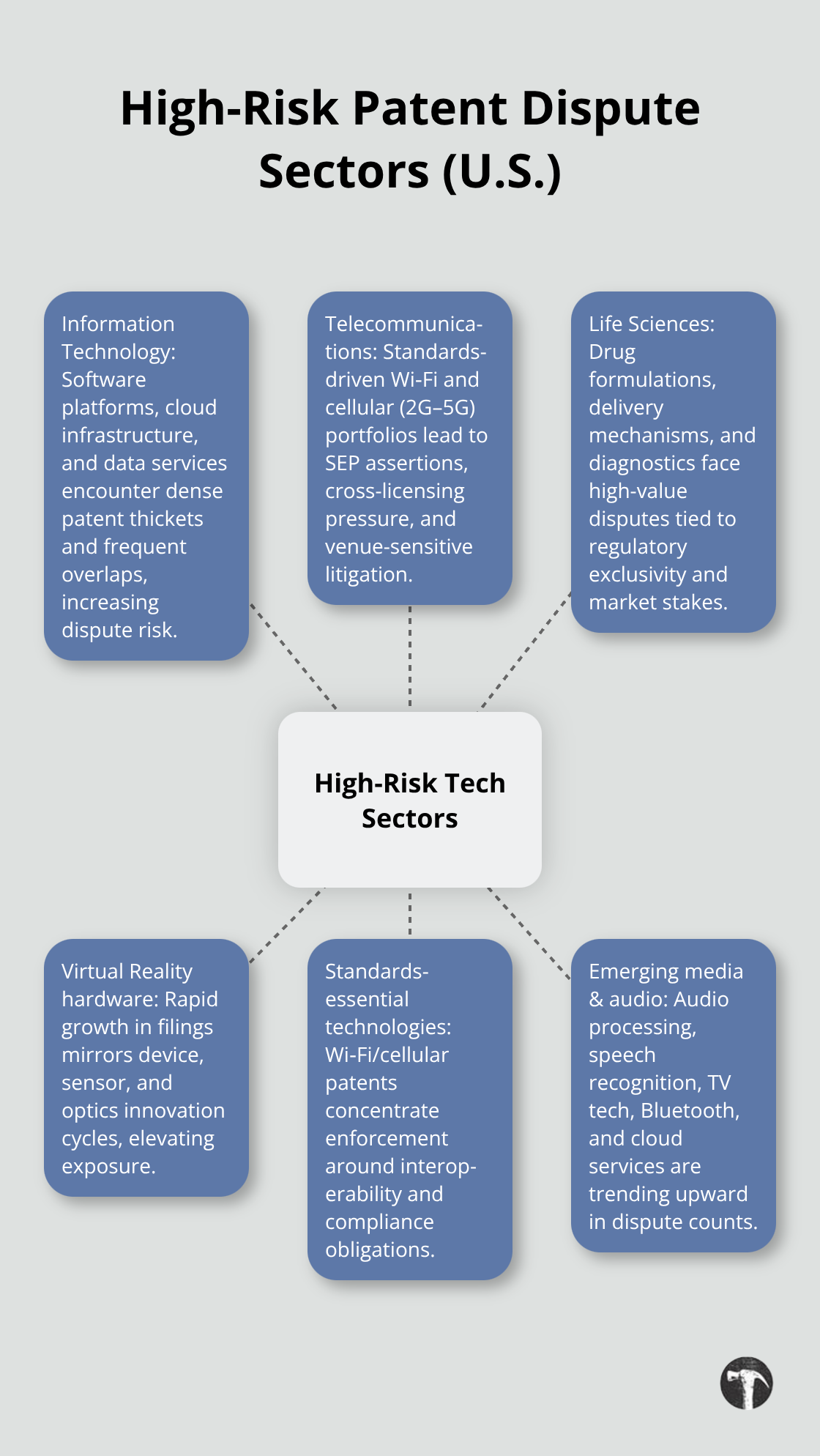
If your business operates in these areas, the probability of facing a patent challenge is substantially higher than in other industries.
Patent Assertion Entities Drive Enforcement Growth
Patent Assertion Entities (PAEs)-companies that buy patents specifically to enforce them-file approximately 4,000 patent lawsuits annually in the U.S. The Eastern District of Texas remains the leading venue for patent litigation with consistent double-digit annual growth, while the International Trade Commission shows the fastest growth in patent enforcement activity overall. Understanding where litigation concentrates helps you assess your exposure and prepare your defense strategy accordingly.
How Patent Litigation Unfolds From Cease and Desist to Trial
The Cease-and-Desist Letter: Your First Warning
A cease-and-desist letter signals the start of most patent disputes, but it’s not the end of the road-it’s a warning shot that forces your hand. Patent owners send these letters when they believe infringement is occurring, demanding you stop the infringing activity within a set timeframe, usually 30 to 60 days. Ignoring the letter doesn’t make the problem disappear. Instead, it strengthens the patent owner’s position by establishing notice of infringement, which can lead to enhanced damages if litigation proceeds.
You should respond immediately, even if you disagree with the allegations. Assess whether the claims have merit and whether you should negotiate, design around the patent, or challenge its validity. During this pre-litigation window, you control the narrative.
Building Your Evidence Foundation
Gather internal documents showing your product’s independent development, purchase records, manufacturing specifications, and any evidence that your design differs meaningfully from the patented claims. This evidence becomes your foundation for defense. Courts analyze claim-by-claim and element-by-element, so documentation of your innovation process-prototypes, development milestones, design decisions-helps prove independent development and distance from the patent.
Patent litigation costs average around $3.5 million according to the American Intellectual Property Law Association, with cases involving stakes between $1 million and $10 million typically costing closer to $1.5 million. Discovery alone accounts for roughly half of those costs, making early strategy decisions critical to controlling expenses.
Discovery: The Information Exchange Phase
Once litigation begins, discovery transforms into a grueling information exchange. The patent owner will demand your product designs, internal communications, financial records, and anything showing knowledge of the patent. You’ll face interrogatories asking detailed questions about your development process, depositions where your engineers and executives answer questions under oath, and requests for admission forcing you to confirm or deny specific facts.
This phase typically lasts 18 to 24 months and reveals whether your non-infringement defense holds up or whether settling makes financial sense. The evidence you preserved earlier now becomes your strongest asset or your greatest liability.
The Markman Hearing and Expert Testimony
Before trial, the Markman hearing occurs-a critical moment where the judge interprets the language of the patent claims. This hearing often determines the outcome because narrow claim interpretations favor defendants while broad interpretations favor patent owners. Prepare detailed technical analysis showing how your product avoids each claim element.
Expert witness testimony becomes essential here. Expect expert costs exceeding $100,000 per expert, and most cases involve multiple experts covering different technical domains. Your expert must demonstrate clear, measurable differences between your product and the patented invention.
Settlement, Trial, and Appeals
Most patent cases settle before trial, often through licensing agreements that prove cheaper than continued litigation. If you reach trial, expect a jury to decide infringement and damages, with decisions typically coming within weeks. Appeals to the Federal Circuit take roughly one year, extending your timeline significantly.
Litigation rarely follows a straight path, and early decisions about evidence preservation, expert selection, and settlement readiness directly impact whether you control costs or watch them spiral. The choices you make now determine whether you face a manageable dispute or a years-long battle that drains resources and attention from your core business operations.
How to Attack a Weak Patent or Prove Your Product Doesn’t Infringe
Scrutinize the Patent Through Prior Art Search
Your first instinct after receiving a cease-and-desist letter should be to scrutinize the patent itself. Patents granted by the USPTO are presumed valid, but that presumption crumbles when you examine the prior art. A thorough prior art search uncovers publicly available information, earlier patents, academic publications, or commercial products that existed before the patent was filed. If prior art shows the invention was already known or obvious, the patent becomes unenforceable. Inter partes review challenges to patent validity typically cost between $300,000 and $500,000 according to the American Intellectual Property Law Association, making this a significant but often worthwhile investment when patent quality is questionable.
Fast-moving sectors like streaming technology, artificial intelligence, and digital media see patents attacked frequently for obviousness because innovation moves so rapidly that yesterday’s breakthrough becomes today’s obvious solution. Before committing to a validity challenge, work with technical advisors to assess the strength of invalidating arguments. A weak validity case wastes resources and signals desperation to the patent owner, weakening your negotiating position.
Map Your Product Against Exact Claim Language
Non-infringement defenses require precise claim-by-claim analysis mapping your actual product against the exact language of each patent claim. The Markman hearing determines how broadly or narrowly the judge interprets claim language, and this single event often decides the entire case. Focus your pre-trial strategy on documenting measurable differences between your product and the patented invention.
If the patent requires component A to function with component B, but your design uses component C instead, you have a non-infringement argument. Collect design specifications, development timelines, and technical documentation proving independent development. Avoid copying competitors’ features or designs, as this creates inference of knowledge and strengthens indirect infringement allegations against you.
Evaluate Settlement Through Licensing Agreements
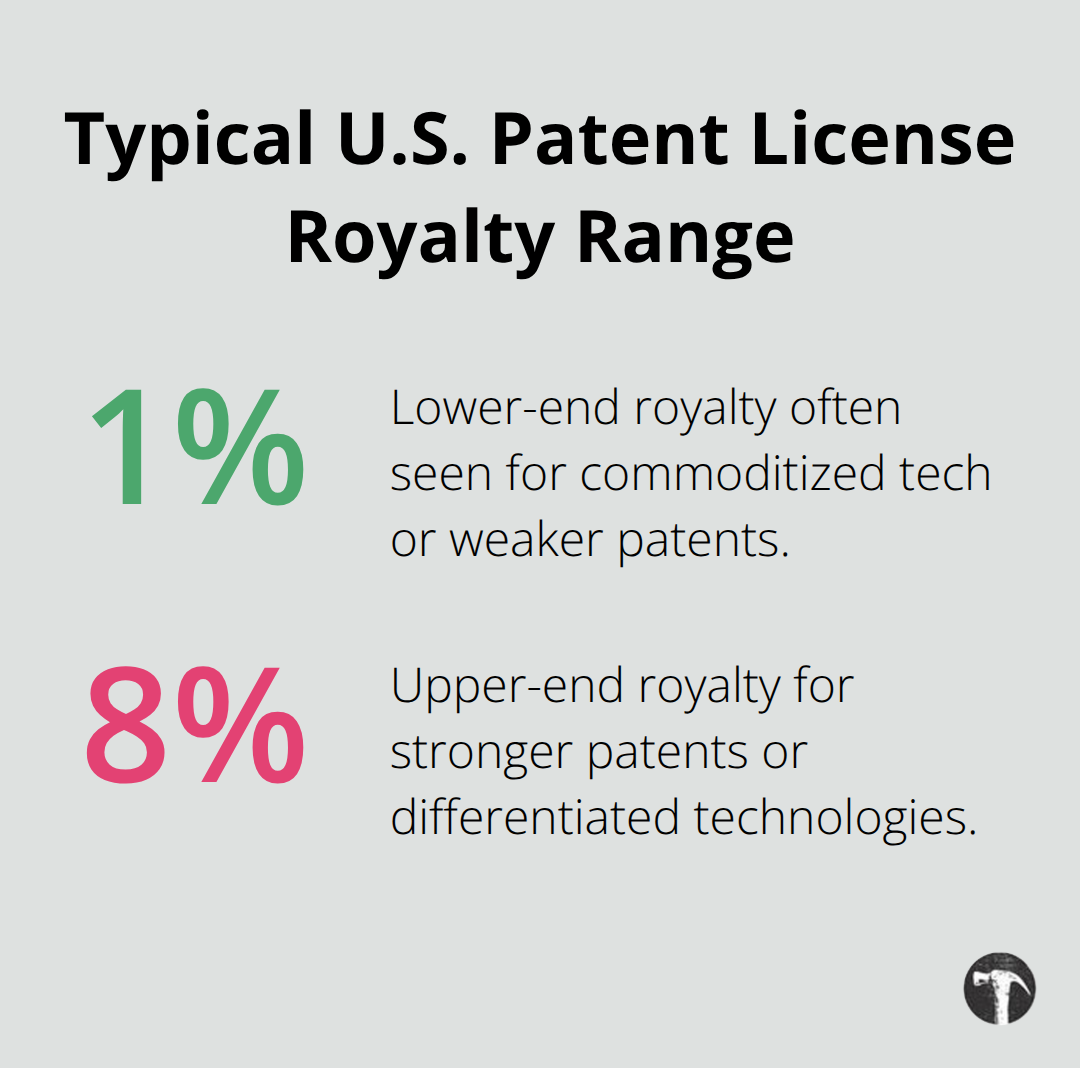
Many companies settle through licensing agreements because the mathematics favor settlement over litigation risk. Royalty rates typically range from 1% to 8% of net sales depending on the technology, industry, and patent strength, while litigation costs exceed $3 million on average. A defensive licensing agreement signals good faith and mitigates willful infringement arguments that could triple damages.
The decision between challenging validity, pursuing non-infringement defenses, or negotiating early licensing depends on the specific strength of your position and the patent claims against you. Each path carries different costs, timelines, and risks that require careful evaluation of your circumstances.
Final Thoughts
Patent infringement litigation demands swift action and clear strategy. The window between receiving a cease-and-desist letter and filing a lawsuit is your opportunity to gather evidence, assess your position, and make informed decisions about defense. Waiting costs you time and strengthens the patent owner’s case by establishing notice of infringement, which can lead to enhanced damages if litigation proceeds.
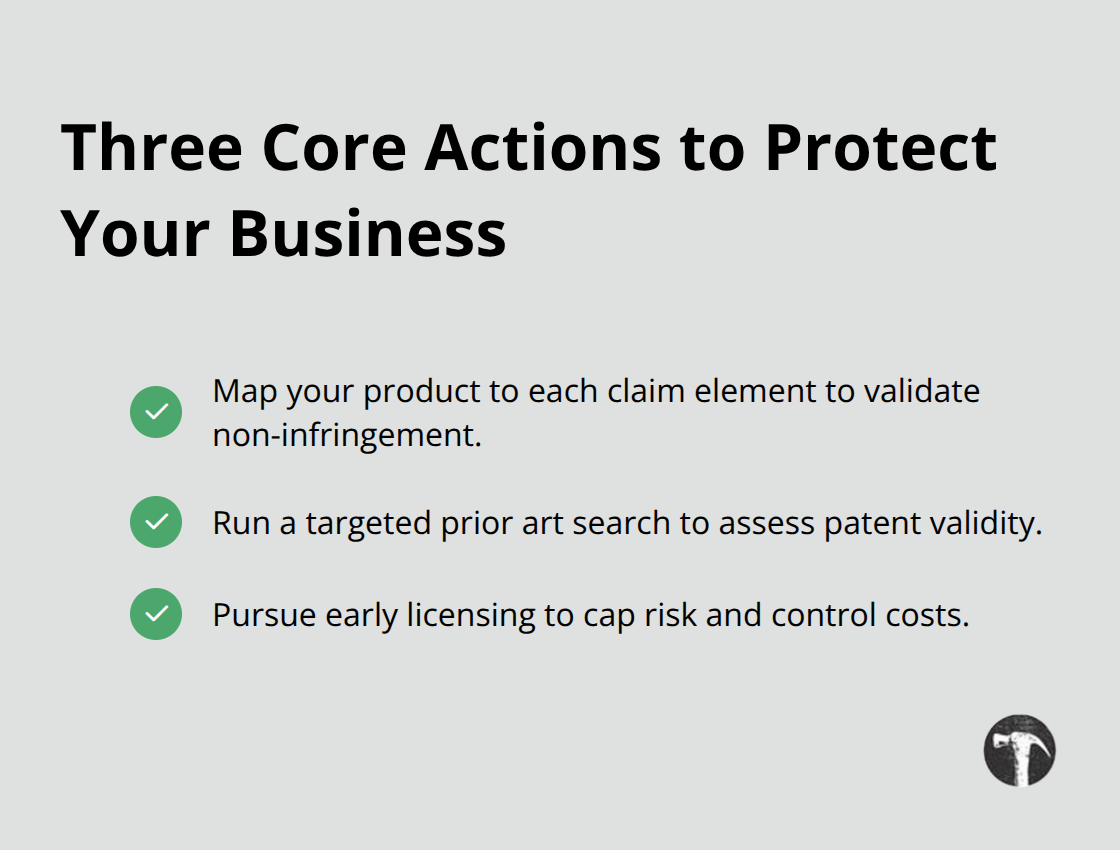
Three core actions protect your business: validate whether non-infringement arguments hold by mapping your product against exact claim language element-by-element, evaluate patent validity through prior art searches if the patent appears weak or obvious given your industry’s rapid innovation cycle, and explore early licensing as a practical option that often costs less than discovery and trial combined. Data shows most patent disputes settle before trial, and early negotiation gives you control over terms and timelines rather than leaving outcomes to unpredictable jury decisions. Patent litigation averages $3.5 million, with discovery alone consuming roughly half those expenses, inter partes review challenges costing $300,000 to $500,000, and expert witnesses exceeding $100,000 each-figures that underscore why strategy matters more than hope.
Businesses across Los Angeles County face patent challenges with increasing frequency, particularly in Information Technology, Telecommunications, and Life Sciences. Contact us at The Law Offices of Alan J. Carnegies, APC to discuss your situation and develop a defense strategy tailored to your circumstances. Early intervention separates manageable disputes from years-long battles that drain resources and distract from your core operations.