
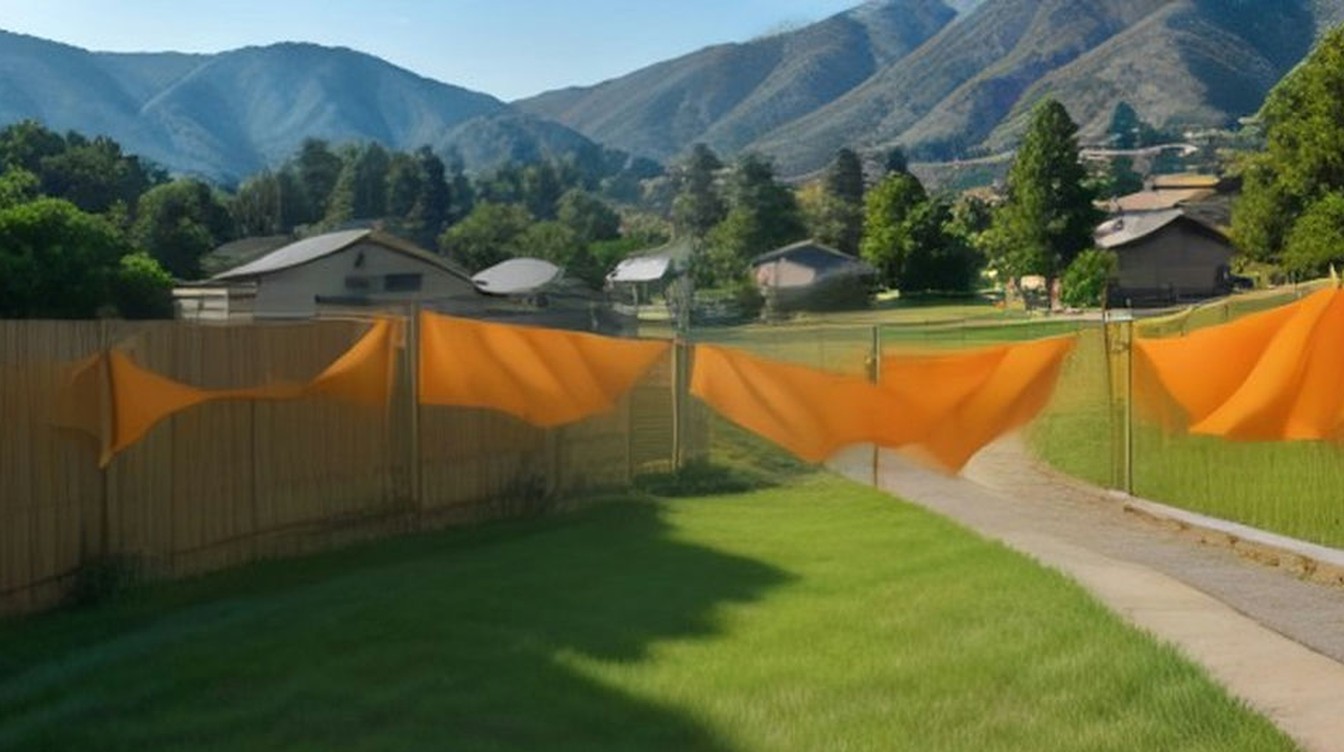
Property encroachment disputes in Calabasas, California often begin quietly. A neighbor builds a new fence a few feet onto your side of the line, a garage addition creeps past the setback, a retaining wall leans onto your slope, or a structure that has stood for years turns out to sit partly on your land once a survey is finally done. However it starts, an encroachment can affect how you use your property, what you can build, and how easily you can sell. Understanding your rights and remedies gives you real control over a situation that can otherwise feel personal and overwhelming.
At The Law Offices of Alan J. Carnegies, APC, we help property owners in Calabasas and throughout Los Angeles County resolve boundary and encroachment disputes, so you can move forward with confidence. This guide explains what an encroachment actually is under California law, the legal tools available to address one, and the mistakes that most often weaken an owner’s position.
What Property Encroachment Actually Means in Calabasas, California
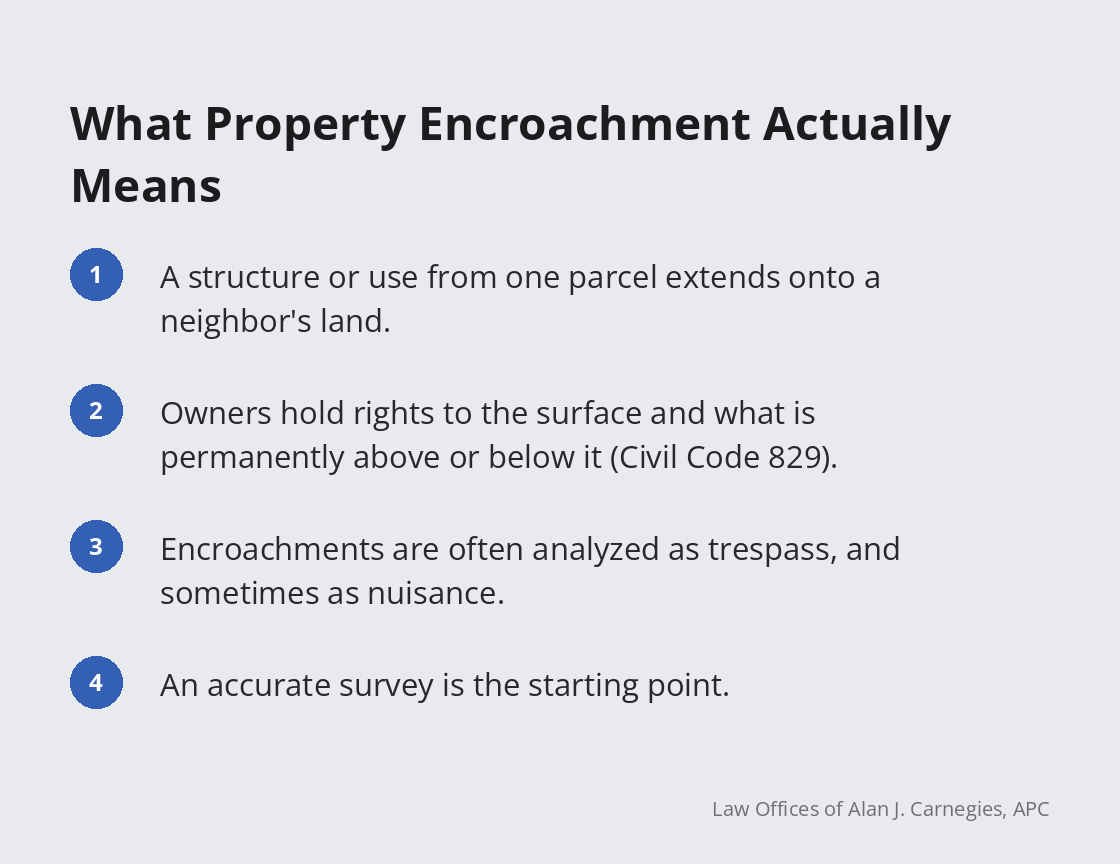
An encroachment occurs when a structure, improvement, or use from one property physically extends onto a neighboring property without permission. California law starts from a clear principle about ownership. Civil Code section 829 provides that a landowner holding full ownership has the right to the surface and to everything permanently situated beneath or above it. When a neighbor’s fence, wall, foundation, overhang, or other improvement occupies part of your parcel, it interferes with that right.
Common Types of Encroachments
Encroachments in hillside and suburban communities like Calabasas take many forms. Fences and walls built on an assumed boundary rather than a surveyed one are among the most frequent. Others include driveways, patios, sheds, pool equipment, landscaping, drainage improvements, and roof eaves or second-story additions that extend over the line. Some encroachments are obvious, while others are measured in inches and only appear when a buyer’s lender, a title company, or a contractor orders a survey.
Encroachment, Trespass, and Nuisance
An encroachment is often analyzed as a trespass, meaning a physical intrusion onto land owned by someone else. Some situations also involve nuisance. Civil Code section 3479 defines a nuisance to include anything that is an obstruction to the free use of property so as to interfere with the comfortable enjoyment of life or property, and section 3481 provides that every nuisance not included in the definition of a public nuisance is private. Which legal theory fits your situation affects the remedies available and the deadlines that apply.
Why the Survey Comes First
Every encroachment dispute turns on where the boundary actually is. Fence lines, old landscaping, and neighborly understandings are not reliable evidence of the legal boundary. A survey prepared by a licensed land surveyor, reviewed alongside the recorded deeds and maps for both parcels, gives everyone an objective starting point. Many disputes become far easier to resolve once both owners can see the same measurements.
A survey can also reveal that the problem is different from what either neighbor assumed. Sometimes the structure sits entirely on the neighbor’s side and the dispute disappears. Other times the encroachment is larger than expected or involves more than one improvement. Knowing the true extent of the issue before making demands helps you choose a proportionate response and avoid positions you may later have to walk back.
Gathering the Right Documents
Before any conversation with a neighbor turns into a formal dispute, it helps to assemble the paperwork that defines your property. That usually includes your grant deed, the recorded tract map or parcel map, any recorded easements or covenants, prior surveys, building permits for the structures involved, and photographs showing when the improvement appeared. In Calabasas, some neighborhoods are governed by homeowners associations with their own architectural guidelines and approval records, which can also shed light on who built what and when. A complete file makes it easier to evaluate the strength of your position and to explain it clearly.
Legal Remedies for Encroachment Disputes
California provides several legal tools for owners dealing with an encroachment, and the right choice depends on the facts, the relationship between neighbors, and the outcome you want. Some owners want the structure removed. Others are willing to let it remain if their ownership is clearly documented. Courts can address both kinds of goals.
Quiet Title and Declaratory Relief
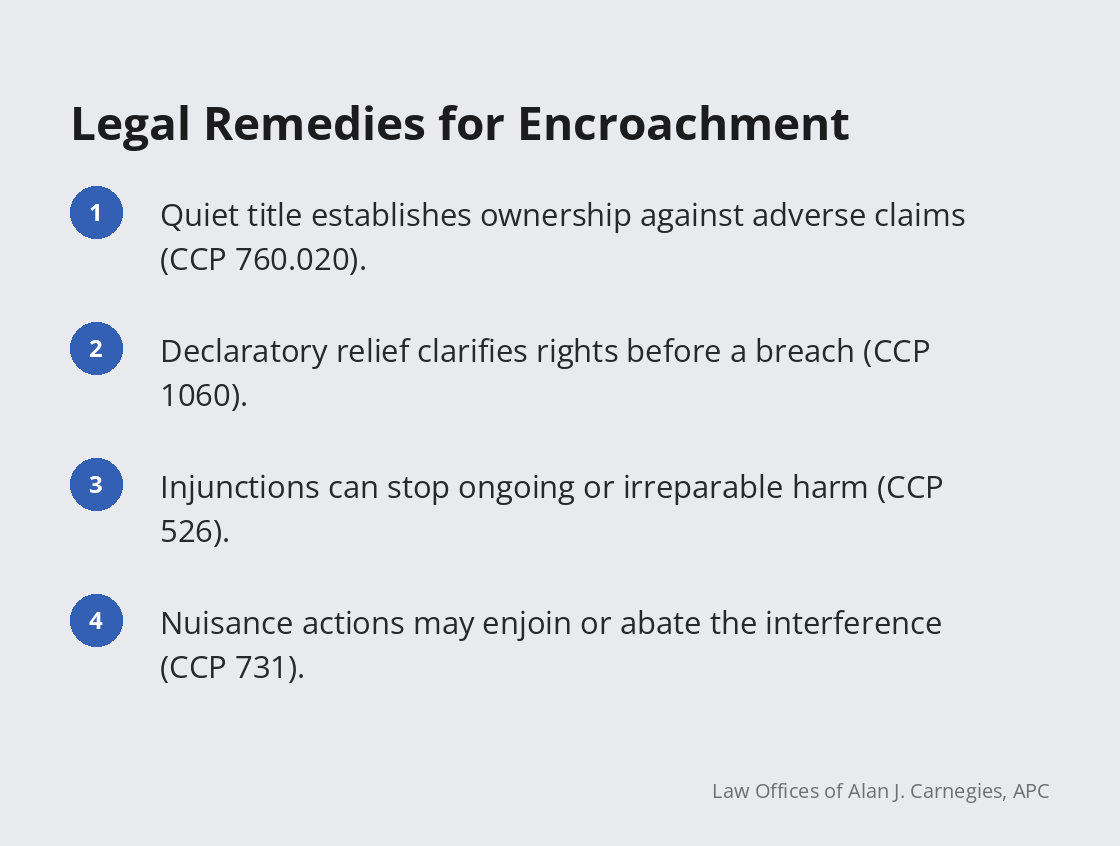
When the dispute is fundamentally about who owns a strip of land, a quiet title action can settle the question. Code of Civil Procedure section 760.020 allows an action to establish title against adverse claims to real property or any interest in it. Declaratory relief is another option. Under Code of Civil Procedure section 1060, a person who wants a declaration of their rights or duties with respect to property may, in cases of actual controversy, bring an action in the superior court, and that declaration may be obtained before any breach has occurred.
Injunctions Requiring Removal or Stopping Construction
If a neighbor is actively building onto your land, or an encroachment is causing ongoing harm, an injunction may be appropriate. Code of Civil Procedure section 526 allows a court to grant an injunction in several situations, including when the continuance of an act during the litigation would produce waste or great or irreparable injury, and when monetary relief would not be adequate. Courts weigh the facts carefully before ordering a structure removed, so the strength of your evidence matters.
Nuisance Actions
When an encroachment interferes with the use and enjoyment of your property, a nuisance claim may also apply. Code of Civil Procedure section 731 allows an action by any person whose property is injuriously affected, or whose personal enjoyment is lessened, by a nuisance as defined in Civil Code section 3479. In that action, the judgment may enjoin or abate the nuisance as well as award damages. Drainage improvements that send water onto a neighbor’s slope or structures that block access are examples where nuisance theories can come into play.
Negotiation and Mediation
Not every encroachment needs to end in a courtroom. Many owners resolve these disputes by negotiating a written solution once the survey is complete, such as relocating a fence, modifying a structure, or documenting a permanent arrangement that both sides accept. Mediation with a neutral third party can help neighbors who still have to live next to each other find middle ground without the strain of a trial. Even when negotiation is the goal, preparing as though the matter could go to court keeps your position strong and encourages the other side to engage seriously.
Mistakes That Weaken an Encroachment Claim
Encroachment cases are often won or lost long before anyone files a complaint. The way an owner reacts in the first weeks and months can shape the evidence, the available remedies, and whether the dispute can be resolved without litigation. Avoiding a few common mistakes keeps your options open.
Waiting Too Long to Act
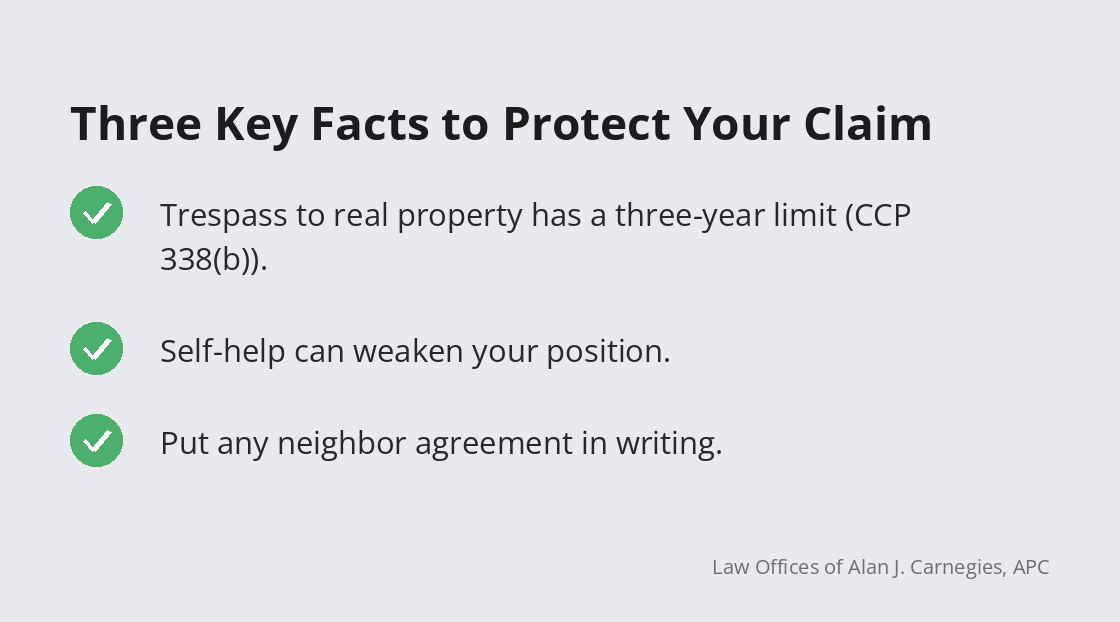
Time limits apply to property claims. Code of Civil Procedure section 338(b) sets a three-year period for an action for trespass upon or injury to real property. California law also recognizes doctrines such as prescriptive easements and adverse possession, which can, under strict requirements, affect rights in land that another person has used openly over time. Because these rules are technical and fact-specific, an owner who discovers an encroachment should not assume the problem can wait indefinitely.
Resorting to Self-Help
Tearing down a neighbor’s fence, removing landscaping, or blocking a driveway without a clear legal basis can quickly turn a strong position into a weak one. Self-help can escalate tensions, invite counterclaims, and complicate what a court later sees as the facts. Documenting the encroachment, communicating in writing, and pursuing a negotiated or court-supervised solution protects your credibility.
Relying on Informal Agreements
Neighbors sometimes resolve encroachments with a handshake, agreeing that a fence or wall can stay where it is. Those informal understandings can create uncertainty when either property is sold or refinanced. A written agreement, such as a recorded easement, license, or boundary line agreement prepared with care, gives both owners clarity and protects future buyers and lenders.
Ignoring the Impact on a Sale
An unresolved encroachment can surface during escrow when a buyer’s title review or survey reveals the problem. At that stage, the pressure to close can limit your options. Addressing a known encroachment before listing a property, or as soon as one is discovered, usually leads to a cleaner result and fewer surprises for everyone involved.
Final Thoughts
Property encroachment in Calabasas, California can involve fences, walls, additions, drainage, and structures that cross a boundary by inches or by feet. California law protects an owner’s right to their land and provides tools such as quiet title, declaratory relief, injunctions, and nuisance actions, but those tools work best when you act promptly, rely on an accurate survey, and avoid self-help.
A calm, well-documented approach often opens the door to a negotiated resolution, and it puts you in a stronger position if litigation becomes necessary.
If a neighbor’s structure or improvement is encroaching on your property, contact The Law Offices of Alan J. Carnegies, APC today to discuss your options. We serve clients in Calabasas and throughout Los Angeles County.