

California’s real estate market moves fast, and disputes follow just as quickly. Property line conflicts, construction defects, and landlord-tenant disagreements happen regularly across Los Angeles County.
We at The Law Offices of Alan J. Carnegies, APC know that a real estate dispute in California can derail your investment or leave you uncertain about your rights. This guide walks you through common conflicts, market pressures that fuel them, and practical paths to resolution.
What Disputes Actually Happen in California Real Estate
Boundary Disputes and Property Line Conflicts
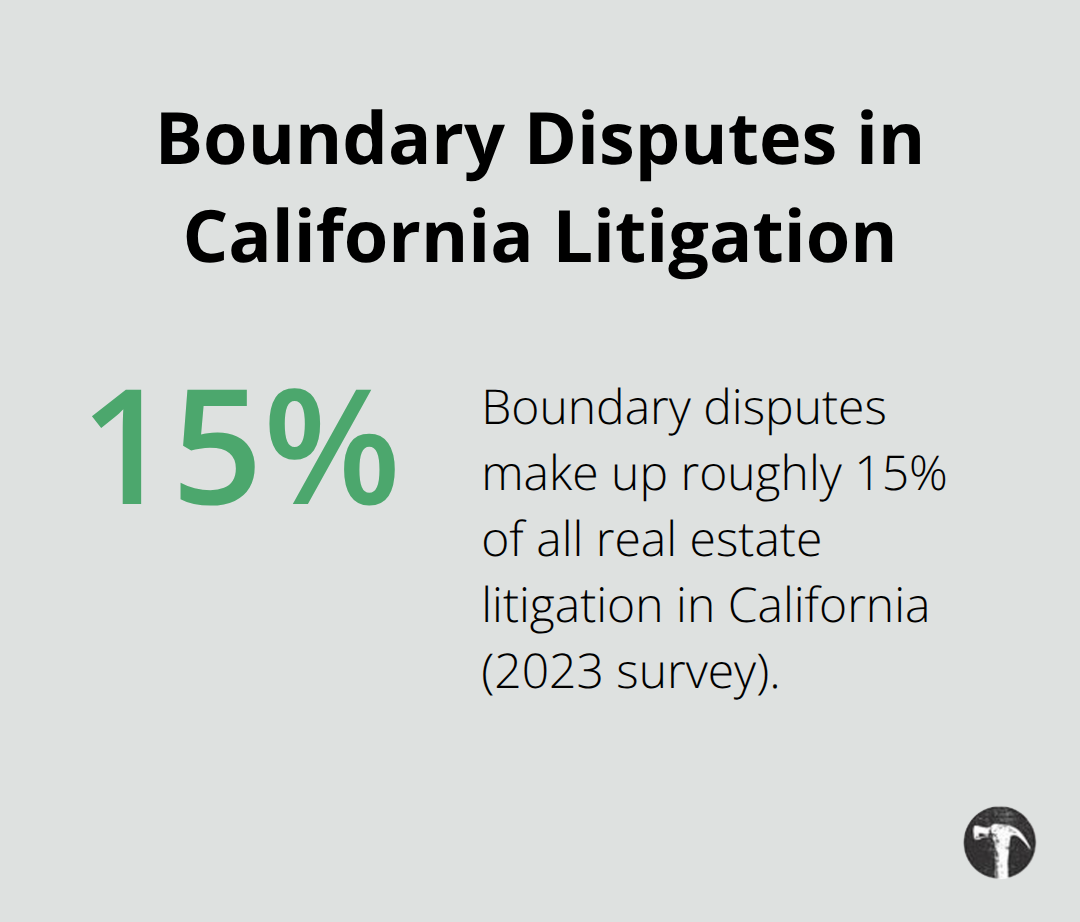
Property line conflicts rank among the most contentious disputes we see in Los Angeles County. These disagreements typically arise when property owners discover that fences, driveways, or structures encroach across surveyed boundaries, or when historical survey records contradict current improvements. A 2023 survey found that boundary disputes account for roughly 15% of all real estate litigation in California. The costs mount quickly-professional surveys run $500 to $2,000, and if litigation becomes necessary, expenses easily exceed $10,000.
Many boundary disputes stem from outdated surveys conducted decades ago, especially in older neighborhoods where original property markers have been lost or destroyed. Obtain a current professional survey before assuming your property line is correct. When a neighbor’s structure crosses your boundary, documentation matters enormously. Photographs, the original deed, and a current survey create the foundation for either negotiated resolution or formal action.
Construction Defects and Hidden Problems
Construction defects present a different challenge entirely. Faulty workmanship, substandard materials, or failure to meet building codes can render a property substantially diminished in value. California law recognizes claims for latent defects-problems hidden at the time of purchase that emerge later. A homeowner might discover foundation cracks, water intrusion, or electrical hazards months or years after closing.
These claims have strict timelines; California’s statute of limitations for construction defect claims is generally four years from discovery, though some defects have longer windows. The challenge is proving causation and quantifying damages. Contractors often dispute whether defects resulted from their work or from poor maintenance, weather exposure, or normal wear. Get a qualified inspector’s report early to strengthen your position considerably.
Landlord-Tenant Disputes and Lease Conflicts
Landlord-tenant disputes dominate real estate conflict. Lease violations, rent disputes, and maintenance disagreements create friction that damages both parties’ interests. Under California law, landlords must provide habitable premises-a standard that includes functioning plumbing, heating, and protection from pests and mold. Commercial tenants have fewer implied warranty protections than residential tenants, but disputes still arise over lease terms, rent adjustments, and repair obligations.
Post-pandemic market volatility has intensified lease disputes, particularly around rent resets and force majeure provisions. Many disputes could be avoided with clear, written lease language specifying maintenance responsibilities, rent payment terms, and procedures for requesting repairs. When conflicts emerge, California courts strongly favor mediation before trial. Early mediation in landlord-tenant disputes costs substantially less than litigation and often preserves the business relationship.
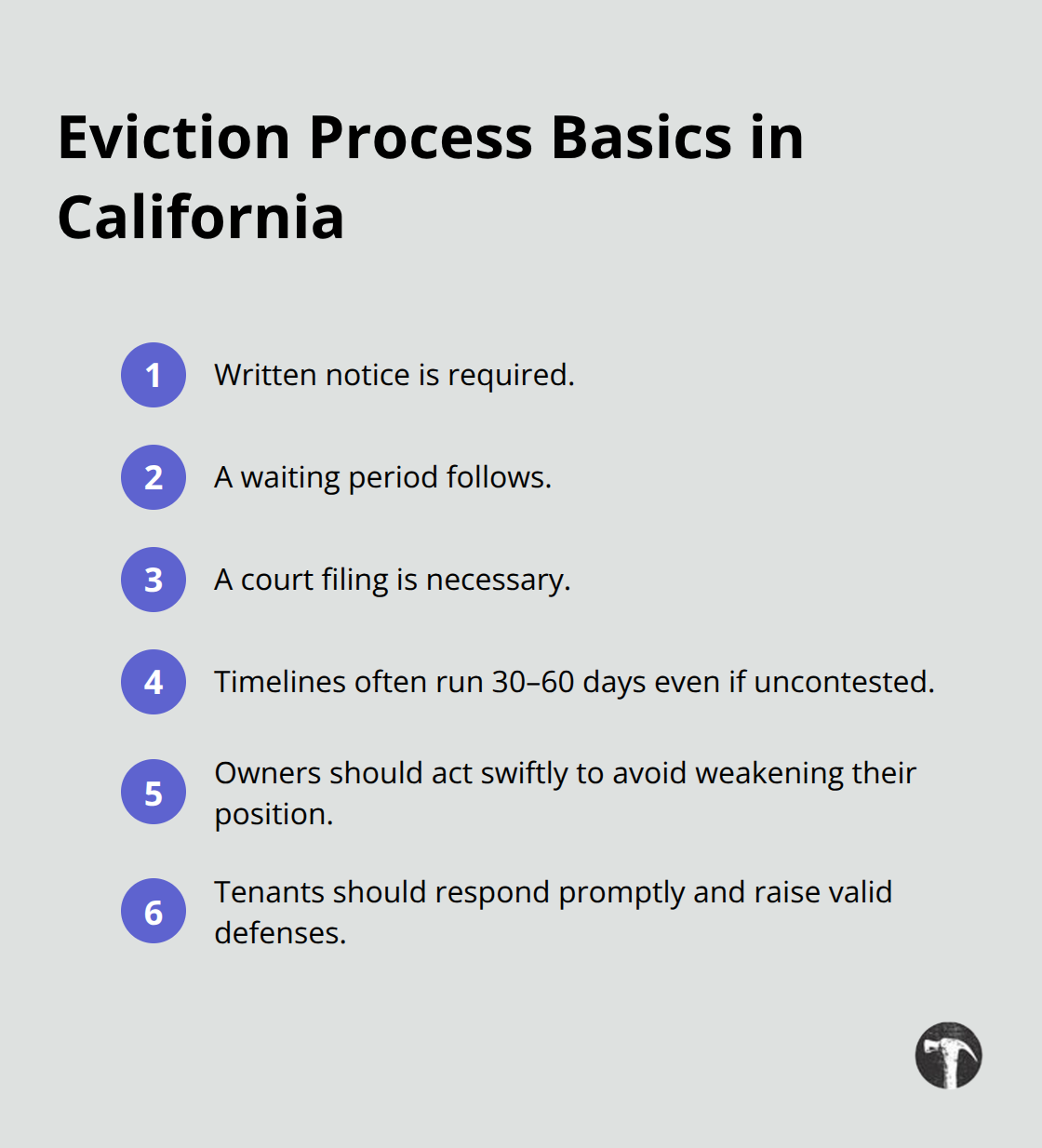
If a tenant stops paying rent, the eviction process in California requires written notice, a waiting period, and court filing-timelines stretch to 30 to 60 days minimum even in uncontested cases. For property owners, swift action matters; waiting weakens your position. For tenants facing unlawful detainer actions, responding promptly and raising valid defenses can shift leverage toward settlement.
These disputes-whether boundary conflicts, construction defects, or lease violations-demand practical solutions tailored to your circumstances and the current market landscape.
How Market Pressures Fuel California Real Estate Conflicts
Rising Property Values Intensify Competition
California’s real estate market has become a pressure cooker for disputes. Property values in Los Angeles County have climbed significantly over the past decade, with median home prices reaching $650,000 to $750,000 depending on location. When stakes climb this high, patience erodes and conflicts intensify. Rising competition for limited properties pushes buyers and sellers into aggressive positions, creating tension throughout transactions. Landlords facing post-pandemic rent resets encounter tenants unwilling to accept steep increases, particularly in areas where wages haven’t kept pace with property appreciation.
Construction and Regulatory Shifts Create New Friction Points
Construction defect claims spike during market upswings because buyers scrutinize properties more closely and demand higher standards before closing. The regulatory landscape has shifted too. California’s elimination of buyer’s agent commission rules through the National Association of Realtors settlement means parties now negotiate fees directly, adding another friction point. Property owners must present upfront written fee agreements before showings, creating transparency but also complexity that wasn’t present before. These changes force stakeholders to communicate more explicitly about expectations, which sounds positive but often reveals misalignments that trigger disputes.
Interest Rates and Lease Pressures Compound Conflict
Market volatility compounds these pressures considerably. Interest rate fluctuations affect financing availability and property affordability, forcing borrowers and lenders into uncomfortable renegotiations. Commercial tenants facing higher occupancy costs may breach leases rather than absorb losses, particularly in sectors hit by remote work trends. Landlords holding properties with fixed-rate leases watch inflation erode their returns and grow frustrated with tenants they perceive as benefiting from outdated terms.
Construction Delays and Cost Overruns
Construction delays and material cost spikes create disputes between property owners and contractors over change orders and timeline extensions. These conflicts demand practical solutions tailored to your circumstances and the current market landscape. The practical takeaway is straightforward: document everything in writing now, before disputes emerge. Clear lease language addressing rent adjustment mechanisms, maintenance responsibilities, and force majeure provisions prevents conflicts later. For property owners considering construction projects, detailed contracts specifying material costs, labor timelines, and dispute resolution procedures protect your investment. For tenants, understanding lease language around rate escalation clauses and renewal terms prevents surprises. In this market environment, proactive communication and written clarity matter far more than they did when real estate moved slower and stakes felt lower. When conflicts do arise despite your best efforts, understanding your resolution options becomes essential.
How to Resolve Real Estate Disputes Without Destroying Your Timeline
Mediation Puts Control Back in Your Hands
Mediation works because it puts control back in your hands. Unlike litigation, where a judge imposes a decision, mediation lets you and the other party negotiate a settlement with a neutral facilitator guiding the conversation. California courts strongly favor mediation before trial, and for good reason. The average real estate dispute that goes to trial takes 18 to 24 months, costs $15,000 to $50,000 or more in attorney fees alone, and leaves both parties frustrated with an outcome neither fully wanted.
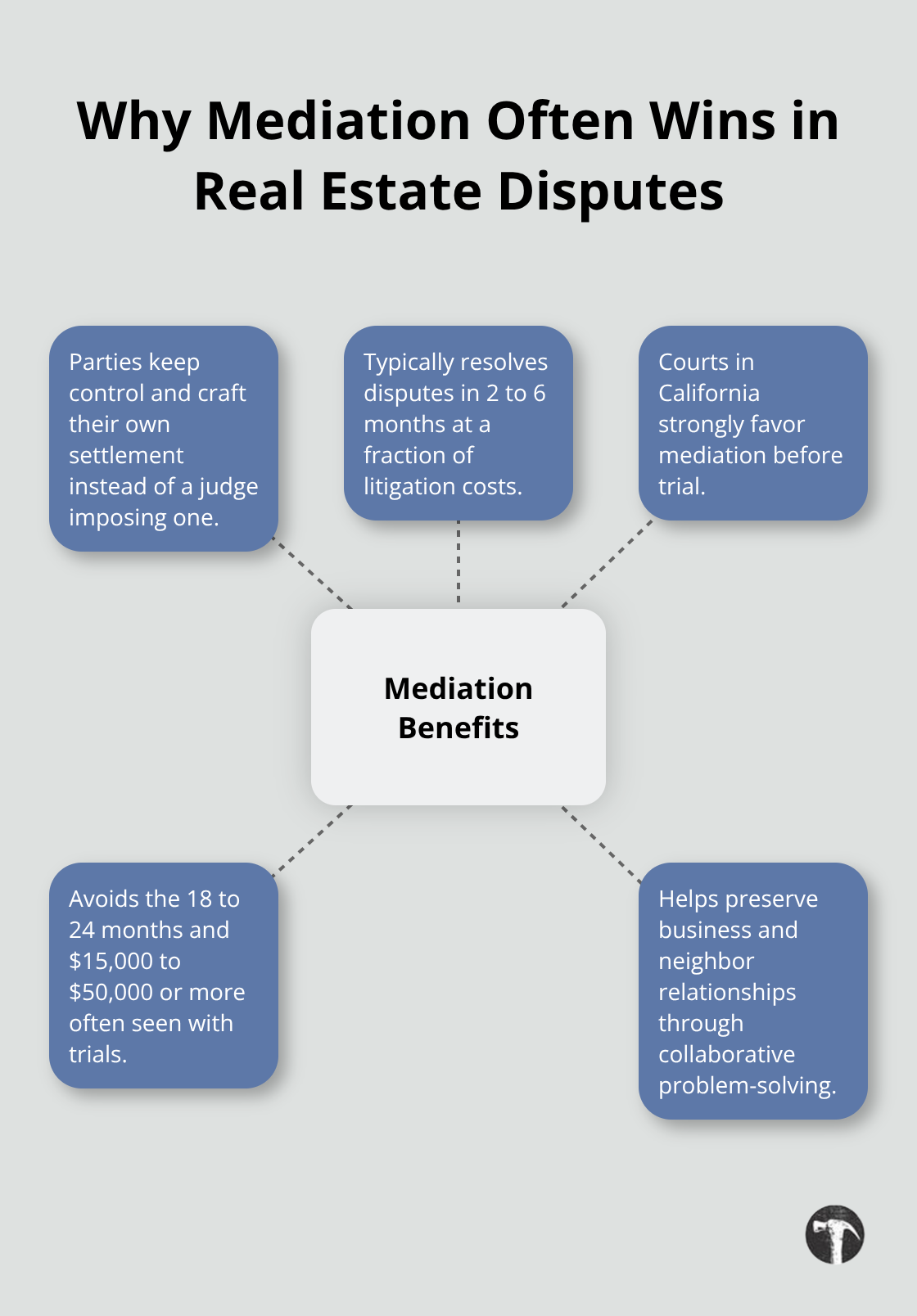
Mediation typically resolves disputes in 2 to 6 months at a fraction of the cost. The mediator does not decide who wins; instead, they help both parties understand each other’s positions, identify common ground, and craft solutions the court could never impose. In boundary disputes, a mediator might help neighbors agree on a new fence line with a small easement adjustment. In construction defect cases, the mediator facilitates discussions about repair costs, timelines, and responsibility allocation.
Creative Solutions in Landlord-Tenant Conflicts
In landlord-tenant conflicts, mediation often produces creative solutions like rent adjustments, maintenance schedules, or lease modifications that preserve the business relationship. Start mediation early, before positions harden and legal costs escalate. Bring documentation-surveys for boundary issues, inspection reports for construction defects, lease agreements and payment records for landlord-tenant conflicts. The mediator needs facts, not emotions, to guide productive negotiation.
When Litigation Becomes Necessary
Litigation becomes necessary when mediation fails or when the other party refuses to negotiate reasonably. Understand what litigation actually costs and demands before you commit. Real estate trials in California involve discovery, depositions, expert witness fees, and court appearances that stretch timelines and budgets. Construction defect litigation routinely exceeds $100,000 because you need structural engineers, contractors, and cost estimators to establish damages.
Boundary disputes require professional surveyors and title specialists. Landlord-tenant litigation demands documentation of every rent payment, repair request, and communication. If you proceed to trial, prepare for 2 to 3 years of active litigation. California’s statute of limitations for written contracts is four years, for fraud claims three years, but timelines vary by dispute type and require legal guidance on your specific facts.
Financial Analysis Drives the Decision
Do not litigate a boundary dispute over a 2-foot encroachment if the property value difference is negligible and the litigation cost exceeds the actual loss. Litigate if a neighbor’s encroachment prevents you from building or substantially diminishes your property’s marketability. The decision hinges on concrete financial analysis, not principle. We at The Law Offices of Alan J. Carnegies, APC represent property owners, contractors, tenants, and other parties in real estate litigation and can help you evaluate whether trial is genuinely your best path or whether settlement through mediation makes financial sense.
Final Thoughts
Real estate disputes in California demand practical action, not hesitation. Document everything in writing now-photograph property conditions, preserve communications, gather surveys and inspection reports, and maintain detailed records of rent payments and repair requests. This foundation protects you whether resolution comes through negotiation, mediation, or litigation, and it strengthens your position considerably when disputes over boundary lines, construction defects, or lease terms arise.
Mediation should be your starting point in most real estate dispute California situations. The cost difference is substantial-mediation typically runs $2,000 to $5,000 total compared to litigation expenses that easily exceed $25,000. More importantly, mediation preserves your control over the outcome and often maintains relationships that matter for ongoing business or neighborly coexistence, and California courts strongly encourage this approach before trial.
Seek legal representation when disputes involve substantial property value, complex contract language, or parties unwilling to negotiate. We at The Law Offices of Alan J. Carnegies, APC help clients evaluate whether settlement or trial makes financial sense for their specific situation, and we represent property owners, contractors, and tenants throughout Los Angeles County. Based in Calabasas, California, we serve all of Los Angeles County and work with you to move forward with confidence in your real estate dispute.