

HOA conflicts in California create tension between homeowners and their associations every day. Disagreements over fees, architectural changes, and rule enforcement can escalate quickly without proper guidance.
We at The Law Offices of Alan J. Carnegies, APC help homeowners throughout Los Angeles County understand their rights and navigate these disputes effectively. This guide walks you through the most common conflicts, your legal protections, and the practical steps to resolve them.
Common Types of HOA Conflicts in Calabasas, California and Throughout Los Angeles County
Assessment and Fee Disputes Lead California HOA Conflicts
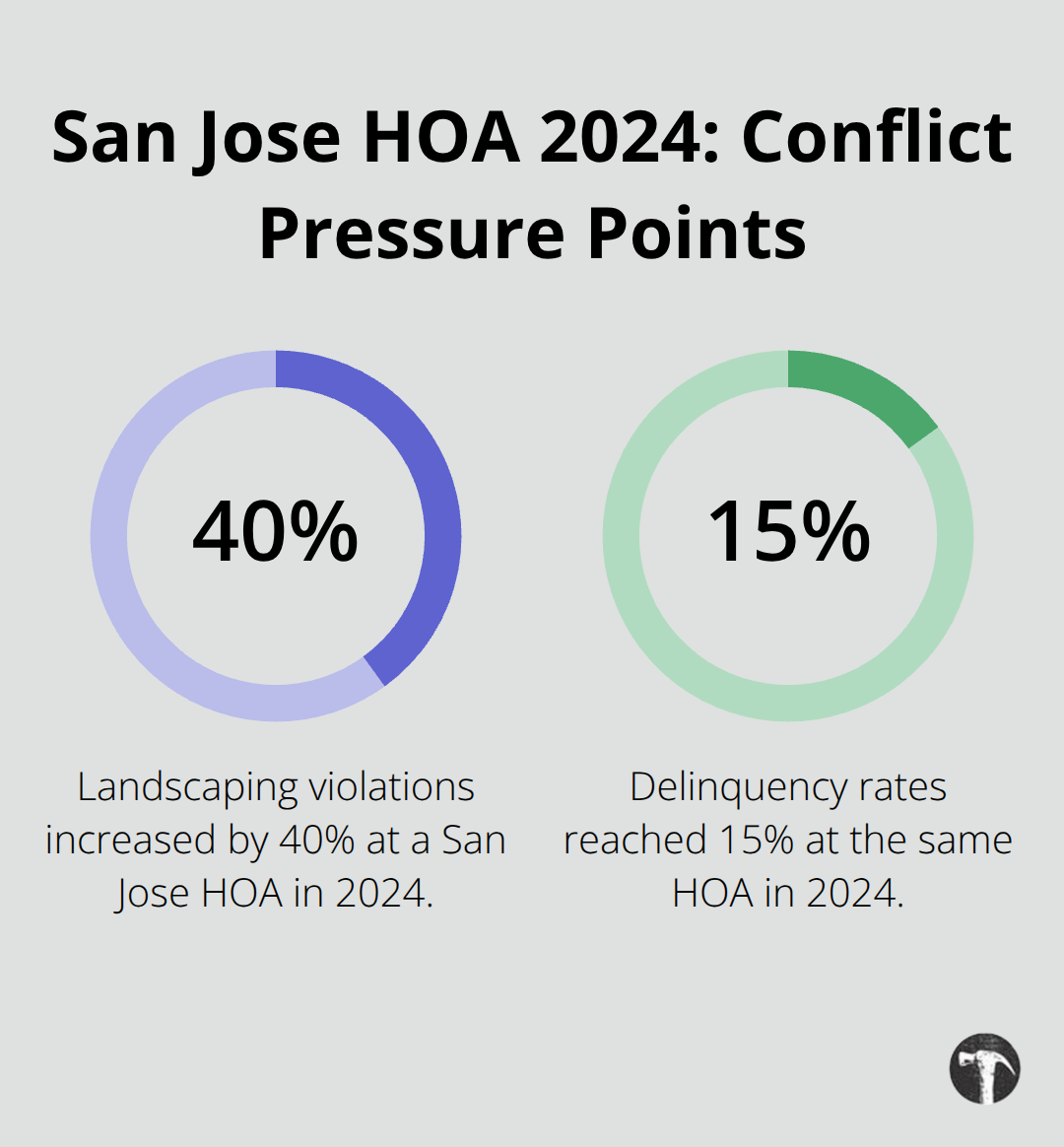
Assessment and fee disputes dominate California HOA conflicts, and they intensify each year. A San Jose HOA saw a 40% rise in landscaping violations in 2024, while delinquency rates reached 15% that same year, largely because homeowners resist assessments they view as unfair or poorly explained. Financial transparency gaps drive over 60% of disputes, according to the California Department of Consumer Affairs. When a board fails to explain why a special assessment exceeds $5,000 or how reserve funds are spent, homeowners push back hard.
The problem compounds when boards impose fines without clear justification. AB 130, which took effect in 2024, capped HOA fines at $100 per violation, down from $500 daily, but selective enforcement still erodes trust. Homeowners rightfully question why one neighbor gets cited for a fence color while another ignores the same rule.
Architectural Review and Modification Disagreements
Unauthorized exterior modifications create significant conflict in Los Angeles County HOAs. Solar panels, landscaping changes, and paint color violations drive about 40% of Santa Clara County HOA disputes. The California Solar Rights Act (Civil Code § 714) prohibits HOAs from banning solar panels or imposing restrictions that unreasonably raise costs or reduce efficiency, yet disputes continue because boards either don’t know the law or ignore it. Homeowners want to improve their properties, and boards want to maintain community standards, but poor communication and unclear rules create unnecessary friction. When a homeowner submits an architectural request, the board must respond within a reasonable timeframe and provide written reasons for any denial.
Enforcement of CC&Rs and Rules Violations
Enforcement of CC&Rs and rules violations creates conflict when boards apply rules inconsistently or fail to follow proper due process. Civil Code § 5855 requires HOAs to follow due process when enforcing architectural standards, including notice and hearing opportunities. Many boards skip these steps, leaving homeowners with grounds to challenge citations. Selective enforcement particularly damages board credibility and community trust.
Documentation and Written Communication Prevent Escalation
Most disputes stem from poor communication and lack of documentation. A written complaint to the board president and property manager, detailing the issue with specific dates and citing governing documents, creates an official record that strengthens your position later. If the board ignores your complaint or responds dismissively, you have evidence to support mediation or arbitration. Early documentation prevents escalation and gives you leverage in future negotiations. Before disputes reach litigation, which costs about $75,000 and lasts 18–24 months, mediation typically costs between $2,000 and $5,000 and resolves disputes within 60–90 days. The American Arbitration Association reports that mediation yields settlements in over 80% of HOA disputes. Organizing documents before mediation (CC&Rs, violation notices, board correspondence, photos, and professional inspections) gives you a clear advantage when presenting your case. Understanding these common conflicts and your documentation options positions you to address disputes before they spiral into costly litigation.
What Laws Protect You in California HOA Disputes
The Davis-Stirling Act Sets the Rules Your Board Must Follow
California’s Davis-Stirling Common Interest Development Act forms the legal backbone of every HOA dispute in the state. This law, codified in Civil Code sections 4000 and beyond, governs how boards operate, how they spend money, and how they enforce rules. The Davis-Stirling Act is not theoretical-it directly limits what your board can do. For example, Civil Code § 5605 caps regular assessment increases at 20% without a member vote, and most special assessments over 5% require majority member approval. If your board bypasses these rules, the law gives you grounds to challenge the assessment. The California Department of Real Estate and the Attorney General’s Public Inquiry Unit both provide guidance on HOA compliance, but knowing the statute yourself puts you in a stronger position during disputes. When you sit down to challenge a board decision, cite the specific Civil Code section that the board violated. This shifts the conversation from opinion to law.
Internal Dispute Resolution Saves Time and Money
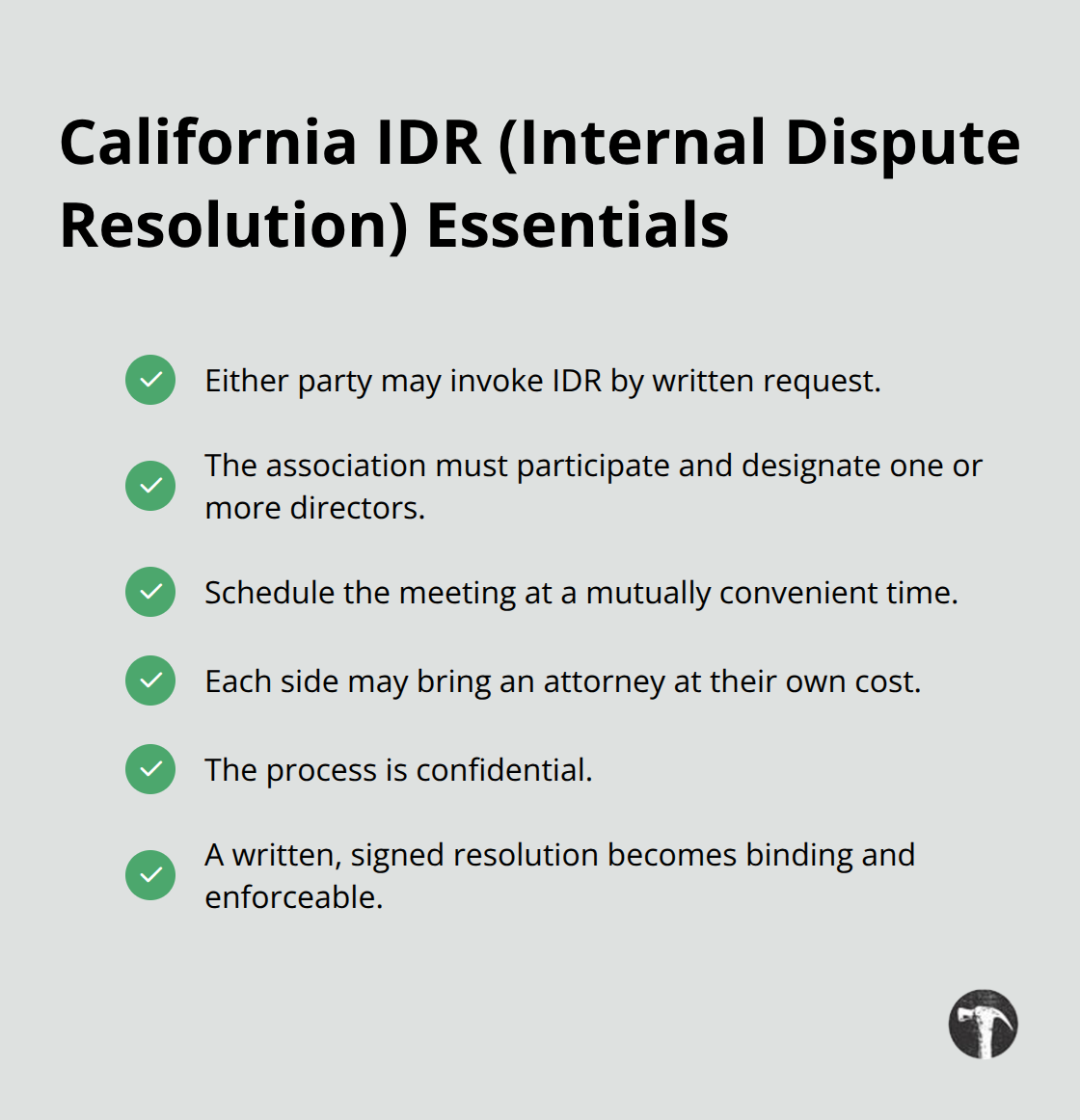
California mandates a structured dispute resolution process before litigation can proceed, and this requirement saves homeowners thousands of dollars. Civil Code § 5910 requires Internal Dispute Resolution, which means you must attempt a written complaint and good-faith negotiation with the board before filing a lawsuit. Either party can invoke IDR by sending a written request; the association must participate, and the board designates one or more directors to represent it. An IDR meeting must occur at a mutually convenient time, and both sides can bring an attorney at their own cost. The process is confidential, and any written resolution signed by both parties becomes binding and enforceable without further litigation.
If IDR fails or the board refuses to negotiate in good faith, you can then pursue mediation or arbitration.
Attorney’s Fees and Cost Recovery Protect Your Interests
Civil Code § 5975(c) allows the prevailing homeowner to recover reasonable attorney’s fees and costs if litigation becomes necessary, which means a board that acts unreasonably faces financial consequences. Traditional litigation costs about $75,000 and lasts 18–24 months, but mediation typically costs between $2,000 and $5,000 and resolves disputes within 60–90 days according to the American Arbitration Association. This cost differential makes early negotiation and mediation far more attractive than court battles.
Your Right to Records and Information
California Civil Code §§ 5200 and 5210 guarantee you access to current-year HOA records within 10 business days and prior fiscal year records within 30 calendar days, giving you the documentation needed to support your position. If the board denies your records request, you can pursue a penalty of up to $500 per denial. These statutes arm you with the information necessary to challenge board decisions and hold leadership accountable.
Fair Housing Protections Apply to HOA Enforcement
The Fair Employment and Housing Act protects you from discrimination based on protected characteristics, and federal fair housing laws apply equally to HOA enforcement. Boards cannot selectively enforce rules against homeowners based on race, religion, national origin, disability, or other protected status. When a board’s enforcement pattern targets specific residents unfairly, you have legal recourse under both state and federal law. Understanding these protections helps you recognize when a board crosses the line from rule enforcement into unlawful discrimination.
The legal framework protecting California homeowners is robust, but only if you know how to use it. Your next step involves taking concrete action to document violations and communicate your concerns to the board in writing.
How to Resolve Your HOA Dispute in Calabasas, California and Beyond
File a Written Complaint to Create an Official Record
Start with a written complaint to the board president and property manager that details the specific issue, cites relevant sections of your CC&Rs or California Civil Code, and requests a written response within 10 business days. This single step transforms a casual disagreement into an official record. The board must document your complaint, and if they ignore it or respond dismissively, you have concrete evidence to support mediation or arbitration later.
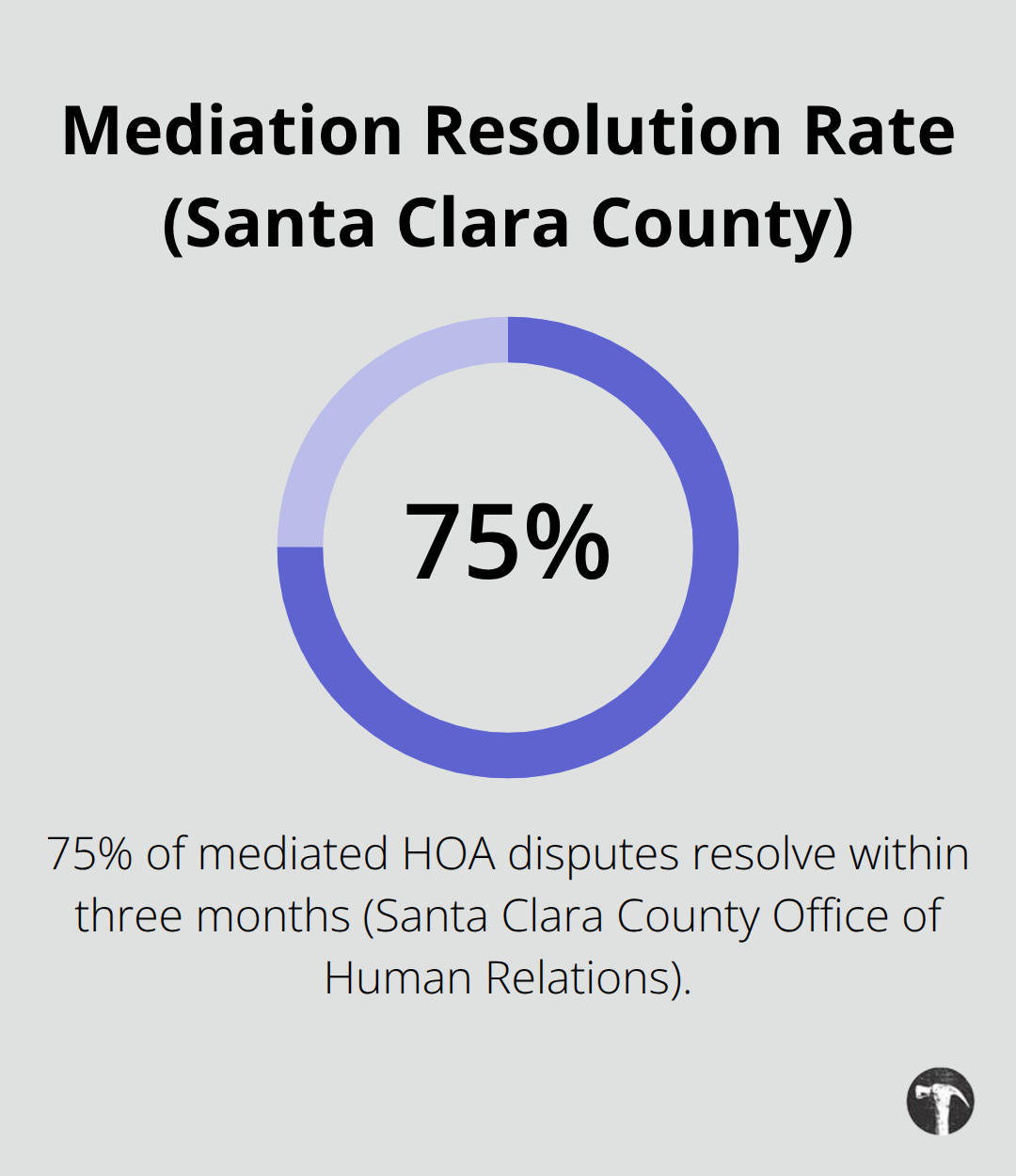
Attach copies of any violation notices, board correspondence, photos of the disputed property, inspection reports, and financial records if the dispute involves assessments. Before you meet with anyone from the board, organize these documents chronologically and draft a one-page position statement that explains your position without emotion. The Santa Clara County Office of Human Relations reports that 75% of mediated disputes resolve within three months, and the American Arbitration Association confirms that mediation yields settlements in over 80% of HOA disputes. This means most boards will negotiate once they see you have documentation and are serious about resolution.
Expect Negotiation, Not Automatic Compliance
Do not expect the board to fix things without pressure, but do not assume they will fight you either. Many board members simply lack training in dispute resolution and respond well when presented with organized facts rather than complaints. Your written complaint and supporting documents shift the conversation from emotion to evidence, which changes how boards respond.
Request Mediation Before Litigation
If the board refuses to negotiate or your written complaint yields no meaningful response, request mediation through a neutral third party before pursuing litigation. Mediation typically costs between $2,000 and $5,000 and resolves disputes within 60–90 days, compared to traditional litigation that costs about $75,000 and lasts 18–24 months. California law requires Internal Dispute Resolution under Civil Code § 5910, meaning both sides must attempt good-faith negotiation before any lawsuit can proceed anyway.
During mediation, present your documentation calmly and let the facts speak for themselves. The process is confidential, and any written agreement both parties sign becomes legally binding and enforceable without additional court action. If mediation stalls or the board refuses to participate in good faith, you have not wasted months or years of your life. Your documented record now supports court action if necessary, and Civil Code § 5975(c) allows the prevailing homeowner to recover reasonable attorney’s fees and costs.
Pursue Litigation When Negotiation Fails
This fee-recovery provision means a board that acts unreasonably faces financial consequences for forcing you to litigate. At this point, contact The Law Offices of Alan J. Carnegies, APC to evaluate whether litigation serves your interests and what remedies you can pursue under California law. We represent property owners in real estate litigation, including HOA conflicts, and can help you determine the best path forward based on your specific situation and the strength of your documented evidence.
Final Thoughts
HOA conflicts in California demand a structured approach, and you now understand the path forward. Start by documenting everything in writing and communicating directly with your board. If negotiation stalls, request mediation before spending tens of thousands on litigation, since California law backs you at every step through the Davis-Stirling Act, Internal Dispute Resolution requirements, and attorney’s fee recovery provisions that punish boards acting in bad faith.
Your rights as a homeowner are substantial, but only if you assert them. You can access board records within 10 business days, challenge unfair assessments under Civil Code § 5605, and hold boards accountable for selective enforcement. Fair housing protections shield you from discrimination, and due process requirements prevent arbitrary rule enforcement (these safeguards transform you from a passive resident into an informed advocate for your own interests).
When HOA conflicts in California escalate beyond your ability to resolve them alone, The Law Offices of Alan J. Carnegies, APC represents property owners in real estate litigation throughout Los Angeles County. We help you evaluate whether your documented evidence supports mediation, arbitration, or court action, and our approach focuses on protecting your interests through negotiation first, then litigation only when necessary. Contact us to discuss your specific situation and determine the best resolution strategy for your dispute.