
Tree roots don’t respect property lines. When they crack foundations, burst pipes, or damage sewers, the question of who pays becomes complicated fast.
We at The Law Offices of Alan J. Carnegies, APC help property owners in Calabasas, California and throughout Los Angeles County navigate tree root damage insurance claims and disputes. This guide covers what your policy actually covers, how to file a claim, and what legal options exist when insurance won’t pay.
What Causes Tree Root Damage and Who Pays
How Tree Roots Damage Your Property
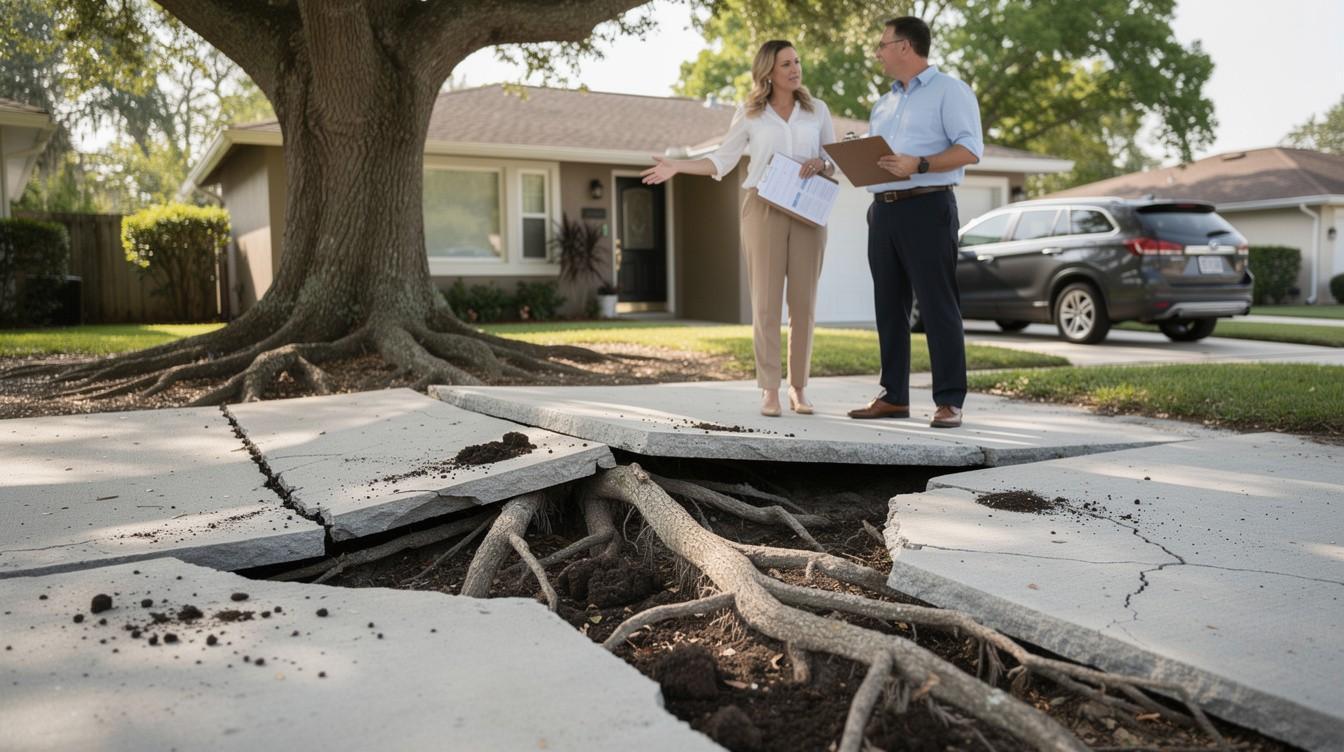
Tree roots travel far underground seeking water and nutrients, often moving 30 feet or more from the tree trunk. When they encounter your foundation, sewer line, or driveway, they exploit any crack or weakness they find. Ficus, Camphor, and Eucalyptus trees-common in Southern California-spread roots particularly aggressively. The damage accumulates slowly at first (a small foundation crack, minor sewer backup), then suddenly becomes catastrophic.
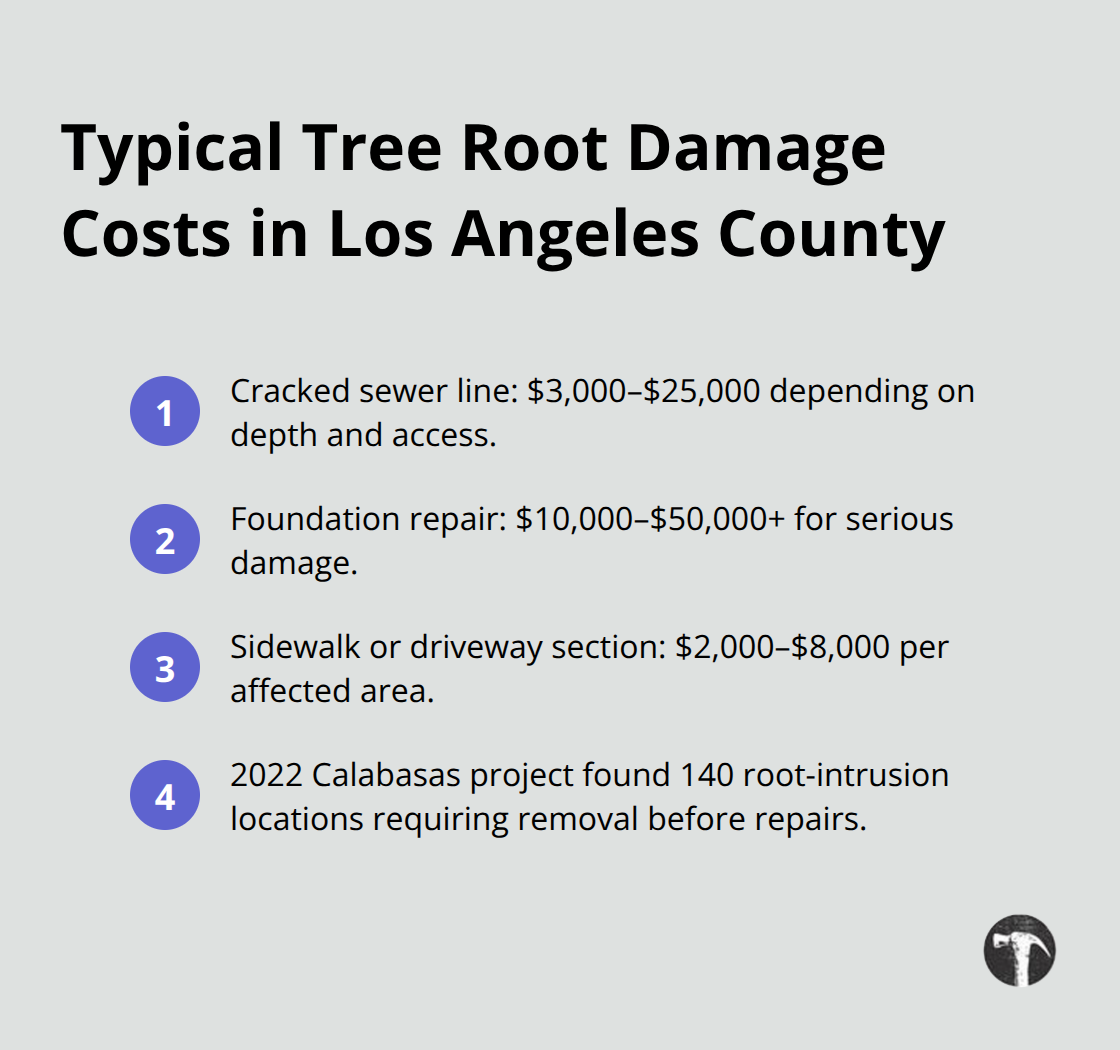
A cracked sewer line costs $3,000 to $25,000 to repair depending on depth and access. Foundation damage runs $10,000 to $50,000 or more. Sidewalk and driveway repairs average $2,000 to $8,000 per affected section. The 2022 Calabasas sidewalk repair project identified root intrusion at 140 locations, requiring tree removal and stump extraction before any pavement work could begin. This scale shows how widespread the problem is across Los Angeles County.
California Law Assigns Liability to the Tree Owner
California law since 1886, established in Grandona v. Lovdal, assigns strict liability to tree owners for root damage to neighboring properties. You need not prove the neighbor was negligent or failed to maintain the tree-only that roots from their tree caused your damage. The tree owner’s homeowners insurance typically covers third-party root-damage claims through their property-damage liability section.
However, State Farm and some other carriers have required proof of negligence before paying, even when root damage is obvious. This resistance means you must obtain professional documentation. A certified arborist from the International Society of Arboriculture can verify which tree caused the damage and trace the root path. Arborist assessments cost $300 to $800 and are essential for serious claims.
Building Your Evidence for Insurance Claims
Next, obtain a structural engineer report confirming the causal link between roots and your damage-expect $1,500 to $3,500. Together, these reports shift the conversation from dispute to fact. Professional documentation (arborist findings plus engineer analysis) gives insurers the confidence they need to settle without prolonged negotiation.
The Law Offices of Alan J. Carnegies, APC coordinates with arborists and engineers throughout Los Angeles County to build evidence that supports your claim and accelerates insurance resolution. With solid documentation in hand, you’re ready to file your claim and navigate the insurance process.
Insurance Coverage for Tree Root Damage Claims
Your Homeowners Policy Has Hidden Limits
Your homeowners insurance policy likely contains a cap on tree damage coverage that you’ve never noticed. The Insurance Information Institute reports that many policies limit outdoor tree damage to roughly 5% of your dwelling coverage, with per-tree payouts as low as $500 in older policies. If your dwelling coverage is $300,000, tree damage might be capped at $15,000 total-far below the $10,000 to $50,000 foundation repairs often required. Check your policy declarations page now and look for the line item on tree coverage limits. If it says $500 or $1,000 per tree, you’re underinsured and need to know this before filing a claim.
What Your Policy Covers and What It Excludes
Most standard homeowners policies exclude coverage for tree roots that originate on your own property and damage your own structures (your foundation, your driveway). The exclusion makes sense from an insurer’s perspective-you control maintenance of your own trees. However, if a neighbor’s tree roots damage your property, the neighbor’s liability coverage typically pays, not your own policy. This is the critical distinction: your policy covers you when you’re liable to others; the neighbor’s policy covers damage their tree causes to you.
The catch is that many insurers, including State Farm in some cases, have demanded proof of negligence before paying tree root claims, even when root intrusion is professionally documented. This resistance is why arborist and structural engineer reports matter so much-they overcome insurer skepticism by shifting the conversation from assumption to evidence.
How to File a Claim and Document Damage
Filing a claim requires a specific sequence. First, photograph all visible damage with dates clearly marked or recorded in your phone’s metadata. Second, obtain the arborist assessment ($300–$800) identifying which tree caused the damage and confirming root intrusion across your property line. Third, get the structural engineer report ($1,500–$3,500) linking root damage to your specific property harm.
Only then contact your neighbor’s homeowners insurer with these documents in hand. Provide them with the arborist findings, engineer analysis, repair estimates from licensed contractors, and a clear timeline of when damage was discovered. Insurers move faster when they see professional documentation rather than homeowner observations alone.
Negotiating with Adjusters and Insurers
If your neighbor’s insurer accepts liability, they may file a claim on your behalf and handle settlement negotiations. If they deny the claim or demand negligence proof, you have options: request that the insurer provide their reasoning in writing, escalate to their claims supervisor, or contact an attorney who handles tree root disputes throughout Los Angeles County and can pressure insurers to honor their obligations under California law.
Document everything in writing-emails, not phone calls. Keep copies of all repair estimates, receipts, and correspondence. Request that the insurer cover investigative costs (arborist and engineer fees) as part of the claim, not as your out-of-pocket expense. Many adjusters will agree to this if you ask directly and reference your policy’s provisions for investigation costs. The goal is not to accept the first settlement offer; it’s to ensure the insurer reimburses actual repair costs plus any related professional assessment fees you incurred to prove causation.
When insurance settlements fall short or insurers refuse to pay, California law provides additional remedies that protect your property rights and hold negligent tree owners accountable.
Legal Options When Insurance Falls Short
When an insurer denies your claim or caps the settlement far below actual repair costs, California law provides additional remedies that don’t depend on insurance coverage. California’s strict liability rule for tree root damage means the tree owner is responsible regardless of negligence, and you can pursue that liability directly through the courts if insurance fails. The threshold question is whether the cost of litigation justifies the recovery you’re likely to win. For foundation damage running $20,000 to $50,000, litigation often makes financial sense. For a $3,000 cracked driveway, small claims court becomes your practical path.
Small Claims Court for Damage Under $10,000
Small claims court in California accepts cases up to $10,000 (or $5,000 if you’re the plaintiff and have filed more than two cases in the past year in that court). Filing costs roughly $30 to $100 depending on your claim amount. You represent yourself-no attorney required, and you don’t need perfect documentation. However, bringing your arborist report and structural engineer analysis dramatically improves your odds. Judges in Los Angeles County see tree root cases regularly and respect professional findings. Your presentation should be straightforward: show the engineer’s report linking roots to damage, present repair estimates from licensed contractors, and explain the timeline of discovery and repair. Most small claims cases resolve within 30 to 60 days of filing. The judge issues a binding decision, and if you win, the neighbor owes you the judgment amount plus costs. If they don’t pay voluntarily, you can pursue wage garnishment or property liens to collect.
Superior Court Litigation for Larger Claims
For damage exceeding $10,000, you file in Los Angeles County Superior Court. This path requires an attorney and typically costs $15,000 to $50,000 in legal fees depending on case complexity and whether settlement occurs before trial. Litigation timelines run 12 to 18 months from filing to judgment. Your attorney coordinates with arborists and engineers, files motions to establish liability, and negotiates with the neighbor’s insurance carrier and legal counsel. Most cases settle before trial once both sides see the strength of your professional documentation. The neighbor’s homeowners liability insurance usually covers the judgment and legal costs, so they have strong incentive to settle rather than proceed to trial. If the case goes to trial, you present your evidence to a judge or jury, and they determine liability and damages. A court judgment is enforceable and carries the weight of law, unlike insurance settlements that can be disputed later.
Nuisance Law and Self-Help Remedies
California nuisance law gives you the right to trim tree branches and roots that cross your property line-but with strict limits. You may cut roots and branches up to your property boundary without the neighbor’s permission. You cannot enter their property, you cannot kill the tree, and you cannot cause disproportionate damage. If you trim carelessly and damage the tree, you become liable to the neighbor. Hiring a licensed arborist to perform boundary trimming ($500 to $2,000) protects you legally and ensures the work is done correctly. Document the trimming work with photos and keep receipts. This self-help approach prevents future damage but does not recover past damages already incurred. Nuisance law is your shield against ongoing intrusion, not your sword for compensation.
When to Pursue Legal Action
The decision to litigate depends on three factors: damage severity, neighbor cooperation, and your willingness to invest time and money. If your neighbor’s insurer accepts liability and negotiates in good faith, settlement often arrives within weeks. If they deny the claim or demand negligence proof despite professional documentation, litigation becomes necessary to protect your property rights. An attorney can assess your specific situation and recommend whether small claims court, mediation, or Superior Court litigation fits your circumstances. The Law Offices of Alan J. Carnegies, APC represents property owners throughout Los Angeles County in tree root disputes and can evaluate your case at no obligation.
Final Thoughts
Tree root damage strikes without warning, but professional documentation and swift action transform a crisis into a manageable claim. Photograph all visible damage immediately, then hire a certified arborist ($300–$800) to confirm which tree caused the problem and trace the root path across your property line. Follow with a structural engineer report ($1,500–$3,500) that links roots to your specific damage, and contact your neighbor’s homeowners insurer with these documents in hand. Most carriers settle quickly once they see arborist findings and engineer analysis rather than homeowner observations alone.
If your neighbor’s insurer denies the claim or demands negligence proof despite clear evidence, California law provides direct remedies that don’t depend on insurance coverage. Small claims court handles damage under $10,000 with minimal filing costs and no attorney required. Superior Court litigation resolves larger claims within 12 to 18 months, with the neighbor’s liability insurance typically covering both the judgment and legal costs, giving them strong incentive to settle before trial. Tree root damage insurance claims often fail because homeowners lack professional documentation-arborist and engineer reports eliminate that weakness and shift negotiations in your favor.
We at The Law Offices of Alan J. Carnegies, APC represent property owners throughout Los Angeles County in tree root disputes and coordinate with arborists and engineers to build the evidence you need. Contact us today to discuss whether your case warrants small claims court, mediation, or full litigation and to protect your property rights under California law.