Property disputes can threaten your investment and peace of mind. Boundary disagreements, contract breaches, and liability issues are common in Los Angeles County, and they often escalate quickly without proper guidance.
Real property litigation offers specific legal tools to protect your rights and resolve conflicts. We at The Law Offices of Alan J. Carnegies, APC help property owners understand their options, from negotiation to court action.
What Causes Property Disputes in Los Angeles County
Boundary Disputes and Survey Issues
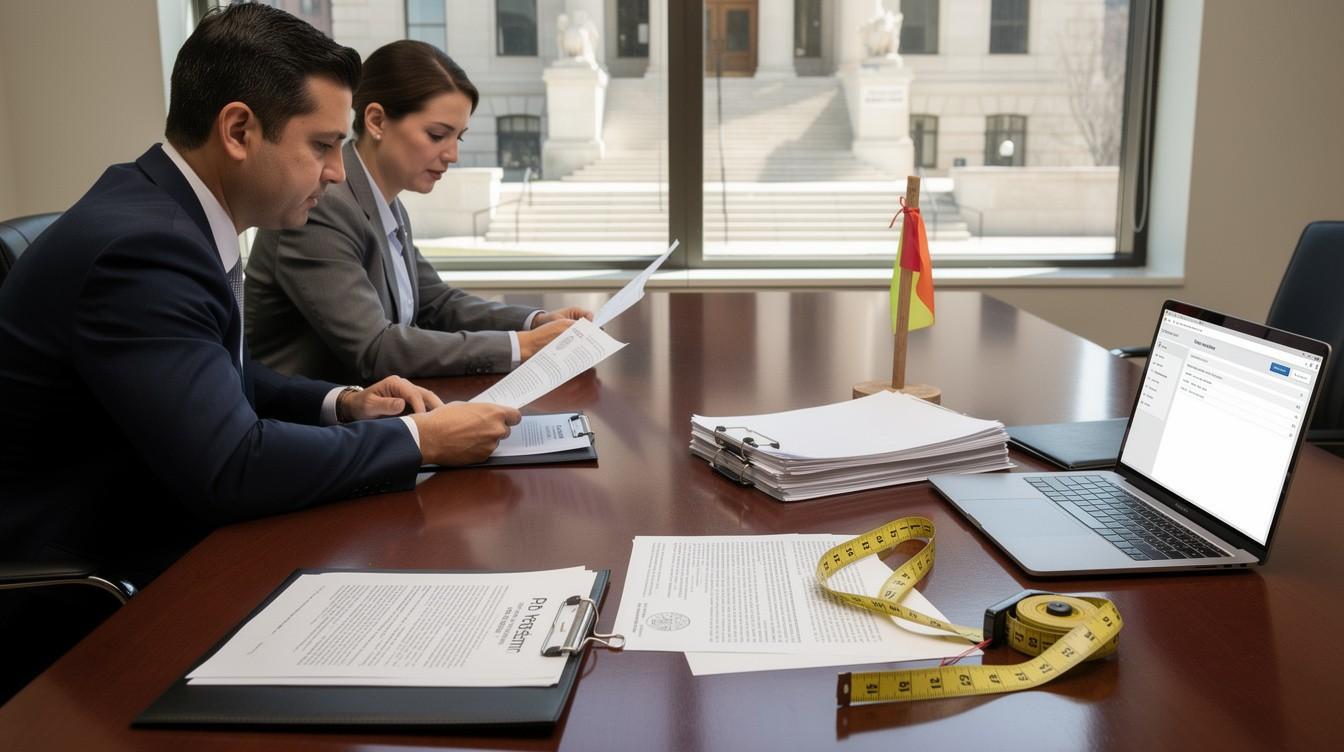
Boundary disputes rank among the most frequent real estate conflicts in Los Angeles County. When a property owner plans construction-a driveway, deck, or fence-disputes often emerge because the actual boundary line differs from where neighbors believe it sits. A licensed surveyor reveals the true property lines and uncovers encroachments that fences or structures may already have created. Without a survey, property owners frequently waste thousands on construction only to discover they’ve built on a neighbor’s land.
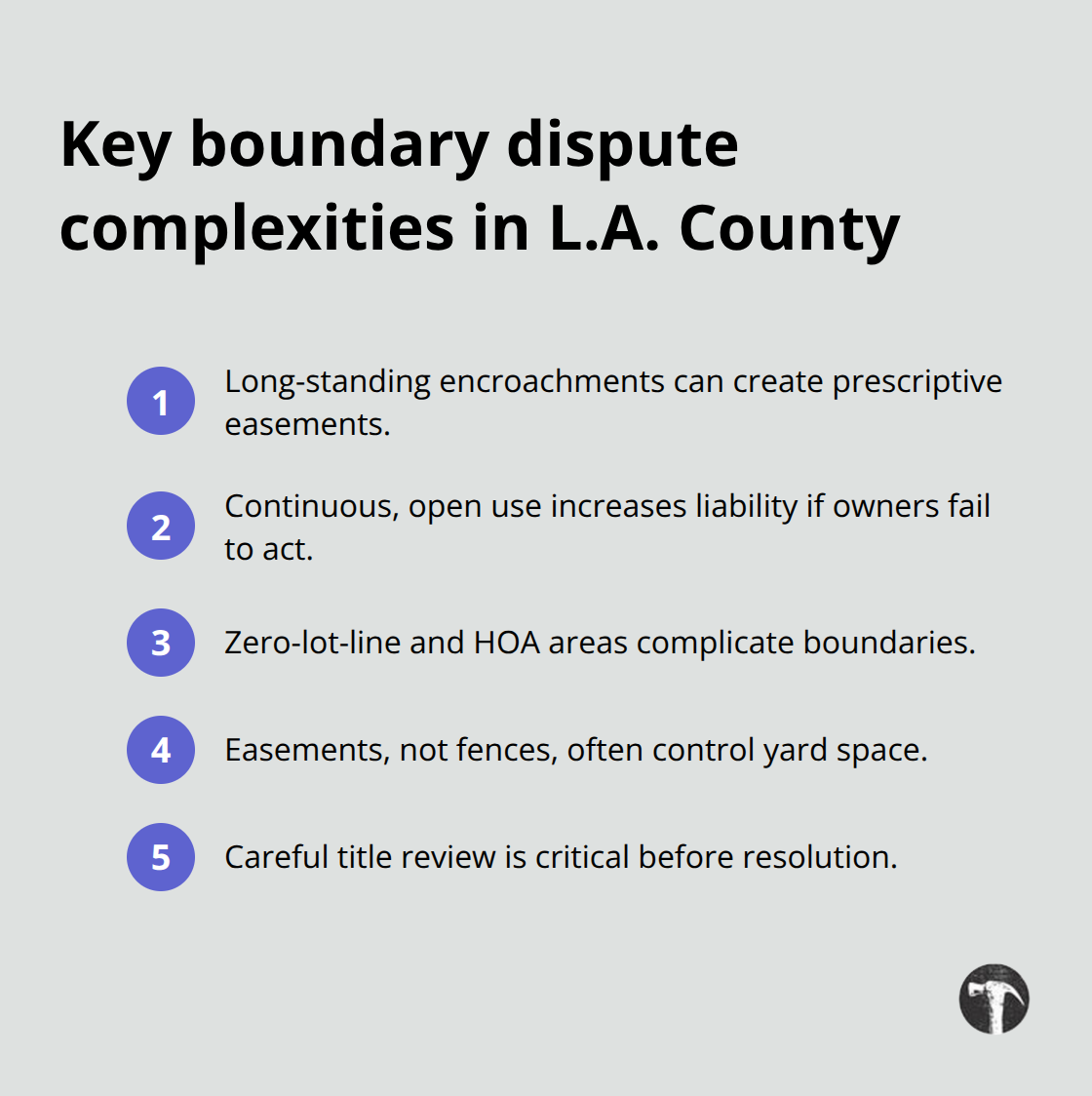
Long-standing encroachments present additional complexity. A neighbor’s garage extending over the line for decades can establish prescriptive easement rights under California law, meaning the encroacher may gain legal rights to continue that use. The time requirement varies, but continuous, open use creates serious liability for the property owner who fails to act. Zero-lot-line properties and HOA common areas compound boundary problems because easements govern yard space rather than visible fences, requiring careful title review before any dispute resolution begins.
Contract Breaches and Performance Failures
Contract breaches in real estate transactions create significant financial exposure. Purchase agreements, development agreements, and lease arrangements contain specific performance obligations, payment terms, and condition precedents that frequently trigger disputes when one party fails to perform. Developers may breach construction timelines or quality standards, sellers may misrepresent property conditions, and tenants or landlords may violate lease provisions.
Property Damage and Liability Claims
Property damage and liability issues arise when one owner’s actions harm another’s investment. Tree roots damage foundations, drainage problems affect neighboring properties, or structural failures cause harm. These disputes demand immediate documentation of damages, photographs, repair estimates, and professional assessments to establish causation and quantify losses. Without clear evidence and early legal guidance, property owners often settle for inadequate compensation or face counterclaims that eliminate their recovery.
When property damage occurs, the path forward depends on understanding what legal remedies apply to your situation and how courts evaluate liability in these cases.
What Legal Tools Stop Property Disputes and Recover Losses
Injunctive Relief: Stopping Violations Before They Worsen
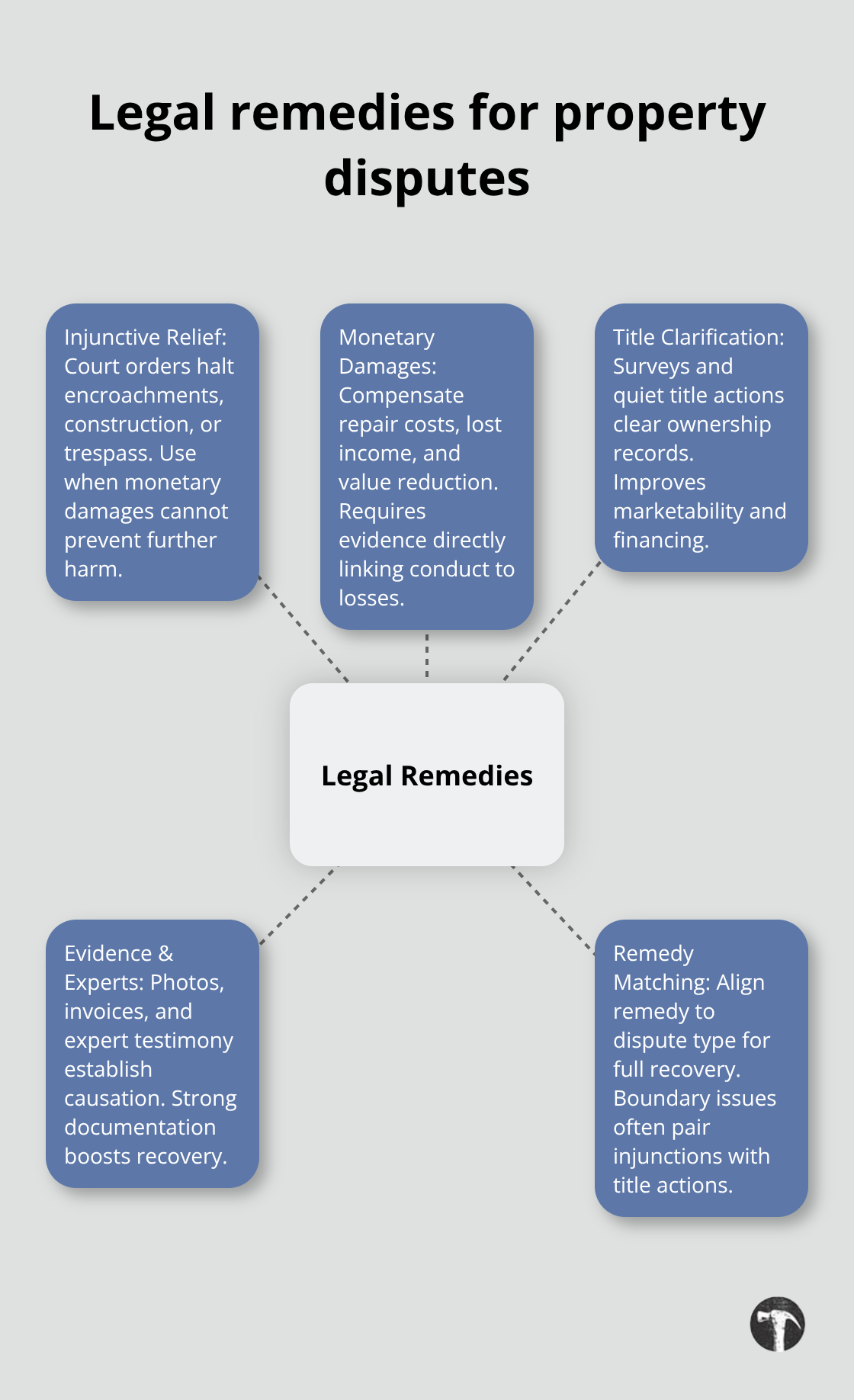
Property disputes demand specific legal remedies tailored to your situation. When a neighbor builds a fence on your land or a developer fails to complete work, you need tools that either stop the violation or compensate you for losses. Injunctive relief works best when you need immediate action-a court order forces a neighbor to remove an encroaching structure, halt construction, or cease trespass before additional damage occurs. This remedy is powerful because it prevents further harm rather than merely compensating you afterward. Courts in Los Angeles County grant injunctive relief when a property owner demonstrates that monetary damages alone cannot adequately address the harm.
Monetary Damages: Recovering Financial Losses
Monetary damages address past losses through compensation for repair costs, diminished property value, lost rental income, or business interruption. Courts calculate these damages based on documented evidence: repair estimates, appraisals showing value reduction, and expert testimony from surveyors or engineers establishing causation. California courts award damages when a property owner proves the defendant’s actions directly caused measurable financial loss. Documentation strengthens your claim significantly-photographs, repair invoices, and professional assessments create the foundation for recovery.
Title Clarification: Removing Ownership Uncertainty
Title clarification through boundary surveys and quiet title actions removes clouds on your ownership record, making your property marketable and financeable. A licensed surveyor determines true property lines using deed descriptions, historical records, and field measurements, creating definitive evidence for dispute resolution. Quiet title actions formally eliminate competing claims or encroachments from your deed, protecting future sales and refinancing. These actions resolve disputes that linger in property records and prevent title insurance companies from refusing coverage.
Matching Remedies to Your Dispute Type
Boundary encroachments typically require injunctive relief combined with title clarification-you want the structure removed and your boundary confirmed in court records. Contract breaches and construction defects demand monetary damages calculated from repair costs and professional assessments. Property damage claims require documented causation linking the defendant’s actions to your losses through engineer reports or arborist evaluations. Identifying which remedies apply to your specific situation determines whether you recover fully or settle for inadequate compensation.
Early legal guidance prevents you from accepting inadequate settlements or missing statute of limitations deadlines that can eliminate your claims entirely. The path to recovery depends on understanding your options and gathering supporting evidence before disputes escalate further.
Settling Property Disputes Before Court
Most property disputes in Los Angeles County resolve through negotiation rather than trial, and this path saves significant time and expense. Property owners who move quickly into settlement discussions recover faster than those who wait for court dates that arrive months or years later. The strategy depends on your position: if you have strong evidence of boundary encroachment or contract breach, early settlement talks from a position of strength yield better results than hoping a judge agrees with you. Conversely, if your position weakens under scrutiny, negotiation allows you to control the outcome rather than accepting a court verdict.
Building Your Settlement Position with Documentation
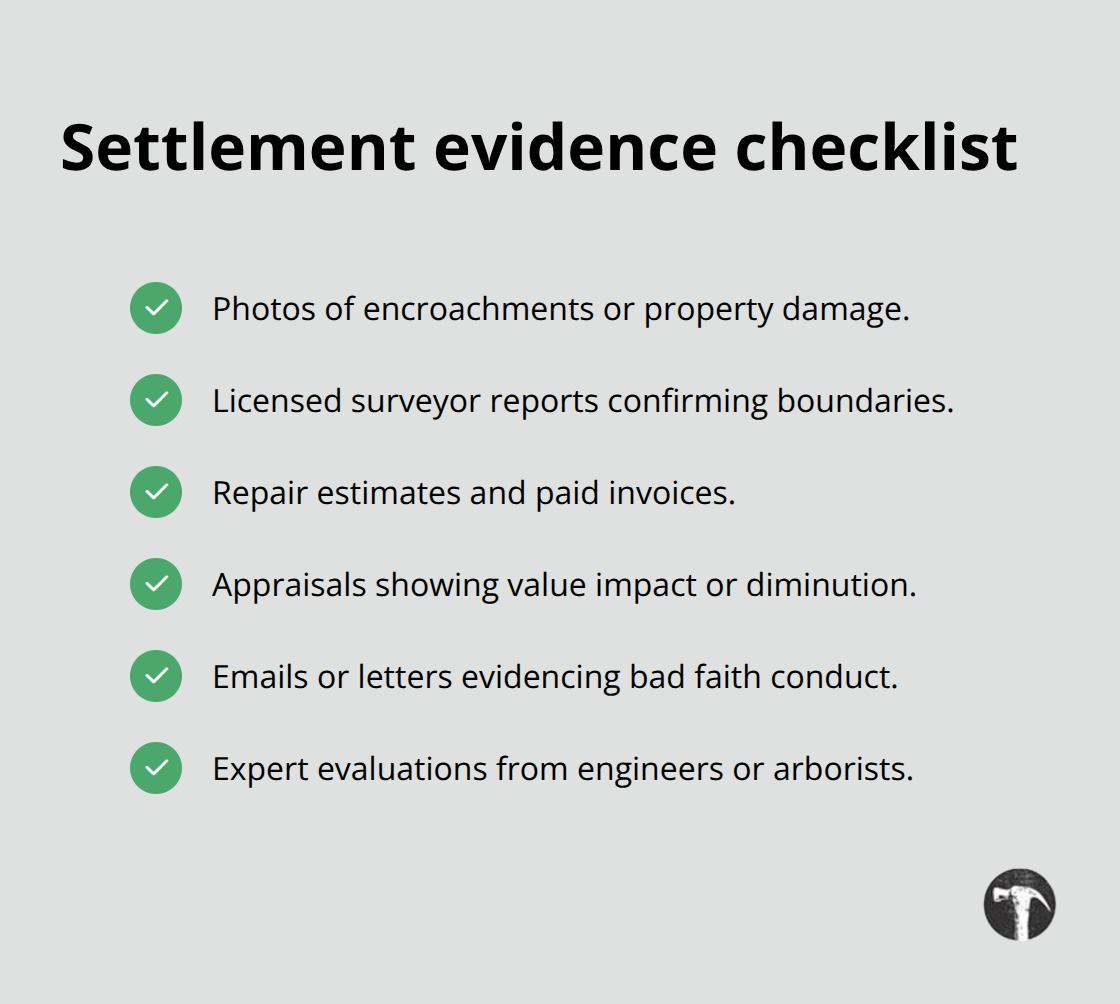
Documentation matters enormously during this phase. Photographs of encroachments, surveyor reports confirming boundary lines, repair estimates quantifying damages, and email chains showing bad faith conduct all strengthen your negotiating position. Property owners who enter settlement discussions without this evidence typically accept inadequate offers because they cannot prove their damages. Gather complete documentation before any settlement conversation, ensuring you know exactly what your claim is worth before accepting an offer.
Mediation as a Faster Alternative
Mediation offers a faster path when negotiation stalls, bringing in a neutral third party to facilitate discussion without the formality and cost of litigation. Mediators in Los Angeles County charge between $300 and $500 per hour, and most property disputes resolve within one to three sessions, making mediation substantially cheaper than trial preparation (which can cost $50,000 or more). You retain complete control over settlement terms in mediation-unlike a judge who imposes a ruling, a mediator helps you and your neighbor reach an agreement both parties accept. This matters because mediated settlements stick; parties who feel heard and respected honor agreements more consistently than those forced into judgment.
When Litigation Becomes Necessary
Litigation makes sense only when mediation fails and your evidence clearly supports recovery, or when the defendant refuses to negotiate and you have documented proof of substantial damages. Courts in Los Angeles County increasingly require mediation before trial, so attempting resolution early positions you to move forward efficiently if litigation becomes necessary.
Final Thoughts
Property disputes in Los Angeles County demand swift action and clear understanding of your legal position. Boundary encroachments, contract breaches, and property damage claims threaten your investment and require immediate attention before disputes escalate into costly litigation. The remedies available to you-injunctive relief, monetary damages, and title clarification-work best when you gather documentation early and understand which tools apply to your specific situation.
Real property litigation protects your rights when disputes cannot be resolved through discussion alone. The difference between recovering fully and accepting inadequate compensation often comes down to timing: property owners who seek legal guidance early position themselves to negotiate from strength or prepare for trial with complete evidence. Waiting months or years to address boundary problems, contract breaches, or property damage allows encroachments to deepen, statutes of limitations to approach, and your negotiating position to weaken.
We at The Law Offices of Alan J. Carnegies, APC represent property owners, contractors, businesses, and other parties in real estate disputes throughout Los Angeles County. Whether your dispute involves boundary lines, construction defects, contract performance, or property damage, contact us today to discuss your situation and learn how we can help resolve your property dispute efficiently and effectively.